

Download Class 12 Chemistry Concept Summaries: CBSE Class 12 Chemistry Alcohols Phenols And Ethers Notes Set 02
Access comprehensive revision notes for Unit 7 Alcohols, Phenols and Ethers using the CBSE Class 12 Chemistry Alcohols Phenols And Ethers Notes Set 02. Designed to align with the 2026-27 academic syllabus for Class 12 Chemistry, these concept summaries help students streamline their exam preparation and review complex topics efficiently.
Access Unit 7 Alcohols, Phenols and Ethers Notes and Study Material
Navigate directly to the revision notes for Unit 7 Alcohols, Phenols and Ethers using the digital viewer below. Each summary is structured to highlight high-weightage sections, allowing students to instantly access critical definitions and focus on core exam topics.
ALCOHOLS, PHENOLS AND ETHERS
IMPORTANT QUESTIONS
1. Alcohols are comparatively more soluble in water than the hydrocarbons of comparable molecular masses? Explain?
Alcohols can form hydrogen bonds with water and therefore these are soluble whereas hydrocarbon cannot form H-bonding and therefore are insoluble in water.
2. Explain why is orthonitrophenol more acidic than orthomethoxy phenol?
The nitro- is an electron withdrawing group .the presence of this group in the ortho position decreases the electron density .As a result, it is easier to lose a proton. Also the orthonitrophenoxide ion formed is stabilized by the resonance. Hence, ortho nitrophenol is a stronger acid On the other hand, methoxy group is an electron-releasing group. Thus, it increases the electron density. Therefore proton cannot be given out easily. So, ortho nitrophenol more acidic than orthomethoxy phenol.
3. Why lower alcohols soluble in water but higher alcohol not?
Due to the formation H-Bonds lower alcohol are soluble in water. Higher alcohol are less soluble due to the resence of higher alcohols.
4. Why phenols have higher boiling point than arenes?
Due to H-Bonding.
5. Prepare phenol from Diazonium salts?

6.How will you distinguish between primary, secondary and tertiary alcohols?
When primary, secondary, tertiary alcohols are treated with Lucas reagent at room temperature, then
(i) If turbidity appears immediately, alcohols is tertiary
(ii) If turbidity appears in 5 minutes, alcohols is secondary
(iii) If no reaction, alcohols are primary.
(Lucas reagent is conc.HCl +anhydrous zinc chloride)
7. Phenol is acidic in nature.
Phenol is acidic in nature because:
a) phenol , due to resonance, the positive charge rests on oxygen making the shared pair of electrons more towards oxygen and hydrogen as H+
b) The carbon attached to OH is SP2 hybridize and is more electronegative, this decreases the electron density on oxygen, increasing the polarity of O-H bond and ionization of phenol.
c) The phenoxide ion formed by loss of H+ is more resonance stabilized than phenol itself.
8. Diethyl ether does not react with sodium. Explain.
Diethyl ether does not contain any active hydrogen.
9. Write the reaction showing formation of aspirin?
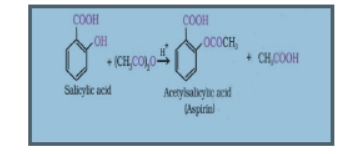
10. What is the main product obtained when vapors of t-butyl alcohol are passed over Copper at 300°C ?
Ans. It undergoes dehydration to form 2- Methylpropene.
11. Phenol has smaller dipole moment than methanol. Why?
Ans. Due to the electron withdrawing effect of phenyl group present in contrast to the electron releasing group present in alcohols.
12. Why are Grignard reagents soluble in ether but not in benzene?
Ans. Because being polar nature of both ether as well as of Grignard reagents ,but benzene is non polar solvent .
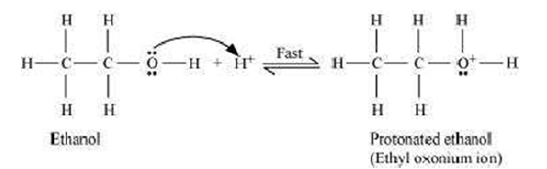
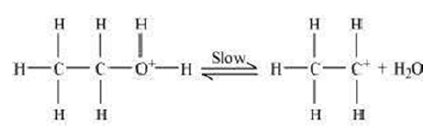
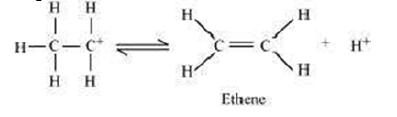
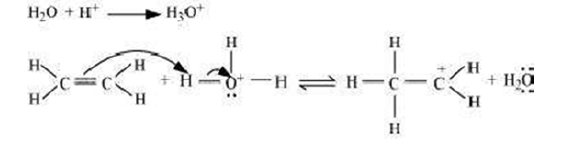
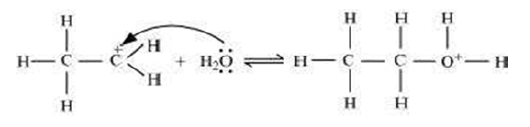

Please click the link below to download pdf file for CBSE Class 12 Chemistry-Alcohol, Phenol & Ether.
Free study material for Chemistry
Study Material and Revision Notes for Class 12 Chemistry Unit 7 Alcohols, Phenols and Ethers
Download Chapter Summary: Class 12 Chemistry Unit 7 Alcohols, Phenols and Ethers
Review targeted chapter notes for Class 12 Chemistry Unit 7 Alcohols, Phenols and Ethers. Built according to official CBSE guidelines, these summaries highlight high-yield topics frequently tested in school evaluations.
Concept Clarification for Unit 7 Alcohols, Phenols and Ethers
Built using the official NCERT book for Class 12 Chemistry, these notes provide reliable academic guidance. Pair your summary review with our recommended NCERT solutions to master optimal problem-solving approaches.
Additional Study Resources for Class 12 Chemistry
Explore our broader library of printable assignments, chapter notes, and mock tests designed to support continuous revision and secure higher marks in CBSE assessments.
FAQs
You can download the teacher prepared revision notes for CBSE Class 12 Chemistry Alcohols Phenols And Ethers Notes Set 02 from StudiesToday.com. These notes are designed as per 2026-27 academic session to help Class 12 students get the best study material for Chemistry.
Yes, our CBSE Class 12 Chemistry Alcohols Phenols And Ethers Notes Set 02 include 50% competency-based questions with focus on core logic, keyword definitions, and the practical application of Chemistry principles which is important for getting more marks in 2026 CBSE exams.
Yes, our CBSE Class 12 Chemistry Alcohols Phenols And Ethers Notes Set 02 provide a detailed, topic wise breakdown of the chapter. Fundamental definitions, complex numerical formulas and all topics of CBSE syllabus in Class 12 is covered.
These notes for Chemistry are organized into bullet points and easy-to-read charts. By using CBSE Class 12 Chemistry Alcohols Phenols And Ethers Notes Set 02, Class 12 students fast revise formulas, key definitions before the exams.
No, all study resources on StudiesToday, including CBSE Class 12 Chemistry Alcohols Phenols And Ethers Notes Set 02, are available for immediate free download. Class 12 Chemistry study material is available in PDF and can be downloaded on mobile.