

Official CBSE Study Materials for Class 12 Biology
Explore structured advanced study materials through the CBSE Class 12 Biology Human Health and Diseases Diagrams. Tailored for Class 12 learners, utilizing these Biology resources ensures thorough preparation and strengthens foundational knowledge before final CBSE evaluations.
Advanced Resources for Biology
View or download the dedicated CBSE Class 12 Biology Human Health and Diseases Diagrams resource below. Engaging with these advanced study guides under focused conditions ensures continuous academic progress and mastery of the 2026-27 curriculum for Chapter 07 Human Health and Diseases.
CBSE Class 12 Biology Human Health and Diseases Diagrams. Please refer to the examination notes which you can use for preparing and revising for exams. These notes will help you to revise the concepts quickly and get good marks.
HUMAN HEALTH AND DISEASES
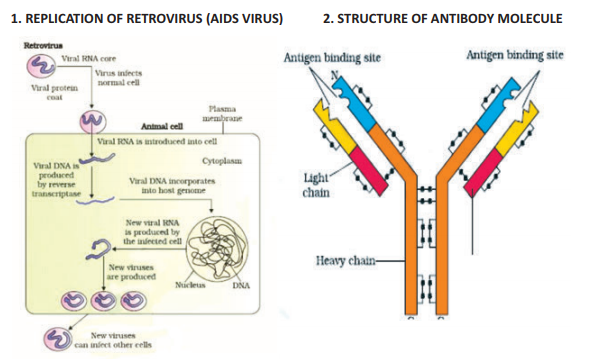
Important Questions for NCERT Class 12 Biology Human Health and Diseases
Ques. The infective stage of malarial parasite, Plasmodium
that enters human body is
(a) merozoite (b) sporozoite
(c) trophozoite (d) minuta form.
Answer: B
Ques. A bite of tse-tse fly may pass to humans
(a) Leishmania donovani
(b) Trypanosoma gambiense
(c) Entamoeba histolytica
(d) Plasmodium vivax.
Answer: B
Ques. Malaria fever coincides with liberation of
(a) cryptomerozoties
(b) metacryptomerozoites
(c) merozoites
(d) trophozoites.
Answer: B
Ques. The vector for sleeping sickness is
(a) housefly (b) tse-tse fly
(c) sandfly (d) fruit fly.
Answer: B
Ques. The causal organism for African sleeping sickness is
(a) Trypanosoma cruzi (b) T. rhodesiense
(c) T. tangela (d) T. gambiense.
Answer: D
Ques. Identify the wrong statement with reference to immunity.
(a) When exposed to antigen (living or dead) antibodies are produced in the host’s body. It is called “Active immunity”.
(b) When ready-made antibodies are directly given, it is called “Passive immunity”.
(c) Active immunity is quick and gives full response.
(d) Fetus receives some antibodies from mother, it is an example for passive immunity.
Answer: C
Ques. Which of the following immune responses is responsible for rejection of kidney graft?
(a) Cell-mediated immune response
(b) Auto-immune response
(c) Humoral immune response
(d) Inflammatory immune response
Answer: A
Ques. Colostrum, the yellowish fluid, secreted by mother during the initial days of lactation is very essential to impart immunity to the new born infants because it contains
(a) immunoglobulin A (b) natural killer cells
(c) monocytes (d) macrophages.
Answer: A
Ques. Which of the following is not an autoimmune disease?
(a) Psoriasis
(b) Rheumatoid arthritis
(c) Alzheimer’s disease
(d) Vitiligo
Answer: C
Ques. Transplantation of tissues/organs fails often due to non-acceptance by the patient’s body. Which type of immune response is responsible for such rejections?
(a) Cell-mediated immune response
(b) Hormonal immune response
(c) Physiological immune response
(d) Autoimmune response
Answer: A
Ques. MALT constitutes about percent of the lymphoid tissue in human body.
(a) 20% (b) 70%
(c) 10% (d) 50%
Answer: D
Ques. Antivenom injection contains preformed antibodies while polio drops that are administered into the body contain
(a) gamma globulin (b) attenuated pathogens
(c) activated pathogens (d) harvested antibodies.
Answer: B
Ques. In higher vertebrates, the immune system can distinguish self-cells and non-self. If this property is lost due to genetic abnormality and it attacks selfcells, then it leads to
(a) autoimmune disease (b) active immunity
(c) allergic response (d) graft rejection.
Answer: A
Ques. If you suspect major deficiency of antibodies in a person, to which of the following would you look for confirmatory evidence?
(a) Haemocytes
(b) Serum globulins
(c) Fibrinogen in plasma
(d) Serum albumins
Answer: B
Ques. Which of the following immunoglobulins does constitute the largest percentage in human milk?
(a) IgA (b) IgG
(c) IgD (d) IgM
Answer: A
Ques. Grafted kidney may be rejected in a patient due to
(a) passive immune response
(b) innate immune response
(c) humoral immune response
(d) cell-mediated immune response.
Answer: D
Ques. Increased asthmatic attacks in certain seasons are related to
(a) eating fruits preserved in tin containers
(b) inhalation of seasonal pollen
(c) low temperature
(d) hot and humid environment.
Answer: B
Ques. Lysozyme that is present in perspiration, saliva and tears, destroys
(a) certain types of bacteria
(b) all viruses
(c) most virus-infected cells
(d) certain fungi.
Answer: A
Ques. Antibodies in our body are complex
(a) glycoproteins (b) lipoproteins
(c) steroids (d) prostaglandins.
Answer: A
Ques. Damage to thymus in a child may lead to
(a) a reduction in haemoglobin content of blood
(b) a reduction in stem cell production
(c) loss of antibody mediated immunity
(d) loss of cell mediated immunity.
Answer: D
Ques. Short-lived immunity acquired from mother to fetus across placenta or through mother’s milk to the infant is categorised as
(a) active immunity
(b) passive immunity
(c) cellular immunity
(d) innate non-specific immunity.
Answer: B
Please click the link below to download pdf file of CBSE Class 12 Biology Human Health and Diseases Diagrams.
Free study material for Biology
Free CBSE Study Guides: Class 12 Biology Chapter 07 Human Health and Diseases
Quick Revision Material for Chapter 07 Human Health and Diseases
Explore essential learning tools for Class 12 Biology Chapter 07 Human Health and Diseases. This curated collection features in-depth notes and targeted practice questions built around the active 2026 curriculum to streamline your daily revision.
Expert Notes and Solved Exam Questions
Built using official NCERT guidelines for Class 12 Biology, these materials provide reliable academic support. Integrating past examination questions and step-by-step solutions helps students understand official CBSE grading criteria.
Additional Study Resources for Class 12
Maximize your grade potential by utilizing Class 12 Biology practice papers in tandem with these structured notes. All printable assignments and interactive mock tests on our platform are updated for the 2026 session and available free of charge.
FAQs
Our advanced study package for Chapter 07 Human Health and Diseases includes detailed concepts, diagrams, Mind Maps, and explanation of complex topics to ensure Class 12 students learn as per syllabus for 2026 exams.
The Mind Maps provided for Chapter 07 Human Health and Diseases act as visual anchors which will help faster recall during high-pressure exams.
Yes, teachers use our Class 12 Biology resources for lesson planning as they are in simple language and have lot of solved examples.
Yes, You can download the complete, mobile-friendly PDF of the Biology Chapter 07 Human Health and Diseases advanced resources for free.
Yes, our subject matter experts have updated the Chapter 07 Human Health and Diseases material to align with the rationalized NCERT textbooks and have removed deleted topics and added new competency-based questions.