

Official Class 11 Chemistry Worksheets: Chapter 04 Chemical Bonding and Molecular Structure
Review targeted academic worksheets with the CBSE Class 11 Chemistry Chemical Bonding And Molecular Structure Worksheet Set 02. Built according to official educational standards for the 2026-27 term, these downloadable Class 11 Chemistry resources support effective daily practice and detailed self-evaluation for Chapter 04 Chemical Bonding and Molecular Structure.
Solved Practice Worksheets for Chemistry
Access the complete worksheet PDF for Class 11 Chemistry below. Regular practice with these targeted academic tasks builds familiarity with standard question patterns and helps secure higher marks in final school examinations.
Chemical Bonding and Molecular Structure MCQ Questions with Answers Class 11 Chemistry
Question. Which species does not exhibit paramagnetism?
(1) N 2+
(2) O 2–
(3) CO
(4) NO
Answer (3)
Question. Which one of the following species does not exist under normal conditions?
(1) Li2
(2) Be2-
(3) Be 2
(4) B 2
Answer (3)
Question. The maximum number of 180° angle possible between X-M-X bond for compounds with sp3d2 and sp3 dhybridisation respectively are
(1) 3, 3
(2) 3, 1
(3) 1, 3
(4) 3, 0
Answer (2)
Question. Which of the following molecule stabilizes by removal of electron?
(1) C 2
(2) O 2
(3) N 2
(4) H 2
Answer (2)
Question. In NO 3 – ion number of bond pair and lone pair of electrons on nitrogen atom are
(1) 2, 2
(2) 3, 1
(3) 1, 3
(4) 4, 0
Answer (4)
Question. Which of the following statement is correct?
(1) The hybridisation of Cl in ClF 3 is sp 2
(2) The number of lone pairs and bond pairs in I 3 – are 2 and 2 respectively
(3) The shape of XeF 6 is distorted square bipyramidal
(4) Hybridisation of S is sp 3 in SO 2
Answer (3)
Question. Which of the following is not a correct statement?
(1) Multiple bonds are always shorter than corresponding single bonds
(2) The electron-deficient molecules can act as Lewis acids
(3) The canonical structures have no real existence
(4) Every AB 5 molecules does in fact have square pyramid structure
Answer (4)
Question. A certain diatomic molecule, AB has dipole moment 1.6 D and the internuclear distance is 100 pm. The percentage of electronic charge existing on more electronegative atom is
(1) 33%
(2) 25%
(3) 50%
(4) 10%
Answer (1)
Question. The hybrid orbital having only 20% d character
(1) CCl 4
(2) SF6
(3) SF4
(4) Cl2O
Answer (3)
Question. Which of the following is correct for XeO2F2 and PCl5 ?
(1) Both have same hybridisation and shape
(2) Both have same hybridisation but different geometry
(3) Both have different hybridisation but same shape
(4) Both have same hybridisation but different shape
Answer (4)
Question.Which one of the following has the strongest O – O bond?
(1) O2+
(2) O2
(3) O2–
(4) O2 2–
Answer (1)
Question. Some of the properties of the two species, NO3- and H 3 O+ are described below. Which one of them is correct?
(1) Dissimilar hybridization for the central atom with different structures
(2) Isostructural with same hybridization for the central atom
(3) Isostructural with different hybridization for the central atom
(4) Similar hybridization for the central atom with different structures
Answer (1)
Question. From the following which group of elements easily forms cation?
a. F, Cl, Br
b. Li, Na, K
c. O, S, Se
d. N, P, As
Answer : B
Question. Lattice energy of an ionic compound depends upon:
a. Charge on the ion only
b. Size of the ion only
c. Packing of ions only
d. Charge on the ion and size of the ion
Answer : D
Question. The sulphate of a metal has the formula M2(SO4)3 The formula for its phosphate will be:
a. M(HPO4)2
b. M3(PO4)2
c. M2(PO4)3
d. MPO4
Answer : D
Question. Which of the following has a high polarising power?
a. Mg2+
b. Al3+
c. Na+
d. Ca2+
Answer : B
Question. Maximum covalent character is associated with the compound:
a. NaI
b. MgI2
c. AlCl3
d. AlI3
Answer : D
Question. Chemical formula for calcium pyrophosphate is o 120 The formula for ferric pyrophosphate will be:
a. Fe3(P2O7)3
b. Fe4P4O14
c. Fe4(P2O7)3
d. Fe3PO4
Answer : C
Question. Out of the following, which compound will have electrovalent bonding?
a. Ammonia
b. Water
c. Calcium chloride
d. Chloromethane
Answer : A
Question. Two element have electro-negativity of 1.2 and 3.0. Bond formed between them would be:
a. Ionic
b. Polar covalent
c. Co-ordinate
d. Metallic
Answer : C
Question. Atoms or group of atoms which are electrically charged are known:
a. Anions
b. Cations
c. Ions
d. Atoms
Answer : D
Question. When NaCl is dissolved in water the sodium ion becomes?
a. Oxidized
b. Reduced
c. Hydrolysed
d. Hydrated
Answer : C
Question. Which is the most covalent?
a. C − O
b. C − Br
c. C − S
d. C − F
Answer : C
Question. The correct sequence of increasing covalent character is represented by:
a. LiCl < NaCl < BeCl2
b. BeCl < NaCl < LiCl2
c. NaCl < LiCl < BeCl2
d. BeCl < LiCl < NaCl2
Answer : C
Question. The electronic configuration of four elements are given in brackets
L(1s2 , 2s2 2p1); M(1s2 , 2s2 2p3 )
Q(1s2 , 2s2 2p6 , 3s2); R(1s2 , 2s2 2p2)
The element that would most readily form a diatomic molecule is:
a. Q
b. M
c. R
d. L
Answer : B
Question. For the formation of covalent bond, the difference in the value of electro-negativities should be:
a. Equal to or less than 1.7
b. More than 1.7
c. 1.7 or more
d. None of these
Answer : A
Question. The valence of phosphorus in H3PO4 is:
a. 2
b. 5
c. 4
d. 1
Answer : B
Question. The inter-atomic distances in H2 and Cl2 molecules are 74 and 198 pm respectively. The bond length of HCl is:
a. 272 pm
b. 136 pm
c. 124 pm
d. 248 pm
Answer : B
Question. Which of the following compounds does not follow the octet rule for electron distribution?
a. PCl5
b. PCl3
c. H2O
d. PH3
Answer : A
Question. Which type of bond is present in H2S molecule?
a. Ionic bond
b. Covalent bond
c. Co-ordinate
d. All of three
Answer : B
Question. Which of the following does not obey the octet rule?
a. CO
b. NH3
c. H2O
d. PCl5
Answer : A, D
VA simple example of a coordinate covalent bond is exhibited by:
a. C2H2
b. H2SO4
c. H2O
d. HCl
Answer : B
Question. The bond that exists between NH3 and BF3 is called:
a. Electrovalent
b. Covalent
c. Coordinate
d. Hydrogen
Answer : C
Question. Which of the following compounds has coordinate (dative) bond?
a. CH3NC
b. CH3OH
c. CH3Cl
d. NH3
Answer : A
Question. The compound containing co-ordinate bond is:
a. O3
b. SO3
c. H2SO4
d. All of these
Answer : D
Question. Sulphuric acid provides a example of:
a. Co-ordinate bonds
b. Non-covalent compound
c. Covalent and co-ordinate bond
d. Non-covalent ion
Answer : C
Question. Which molecule is linear?
a. NO2
b. ClO2
c. CO2
d. H2S
Answer : C
Question. A sp3 hybridized orbital contains:
a. (1/4) s − character
b. (1/2) s − character
c. (2/3) s − character
d. (3/4) s − character
Answer : A
Question. The shape of IF7 molecule is:
a. Octahedral
b. Pentagonal bipyramidal
c. Trigonal bipyramidal
d. Tetrahedral
Answer : B
Question. Which of the following is non-linear molecule?
a. CO3
b. CO2
c. CS2
d. BeCl2
Answer : A
Question. The trigonal bipyramidal geometry results from the hybridisation:
a. dsp3 or 3 sp3 d
b. dsp3 or 2 sp3 d
c. d2 sp3 or sp3 d2
d. d3 sp3 or d2 sp3
Answer : A
Question. For which of the following hybridisation the bond angle is maximum?
a. sp2
b. sp
c. sp3
d. dsp2
Answer : B
Question. Which of the following hybridisation has maximum scharacters?
a. sp3
b. sp2
c. sp
d. None of these
Answer : C
Question. The percentage s-character of the hybrid orbitals in methane, ethene and ethyne are respectively:
a. 25, 33, 50
b. 25, 50, 75
c. 50, 75, 100
d. 10, 20, 40
Answer : A
Question. Among the following compounds the one that is polar and has central atom with 2 sp − hybridization is:
a. H2CO3
b. BF3
c. SiF4
d. HClO2
Answer : A
Question. In which compound, the hydrogen bonding is the strongest in its liquid phase?
a. HF
b. HI
c. CH4
d. PH3
Answer : A
Question. Point out incorrect statement about resonance:
a. Resonance structures should have equal energy
b. In resonance structures, the constituent atoms should be in the same position
c. In resonance structures, there should not be the same number of electron pairs
d. Resonance structures should differ only in the location of electrons around the constituent atoms
Answer : C
Question. The number of possible resonance structures for CO32− is:
a. 2
b. 3
c. 6
d. 9
Answer : B
Question. Which of the following molecule contains one pair of non-bonding electrons?
a. CH4
b. NH3
c. H2O
d. HF
Answer : B
Question. In the cyanide ion, the formal negative charge is on:
a. C
b. N
c. Both
C and N
d. Resonate between C and N
Answer : B
Question. Of the following species the one having a square planar structure is:
a. NH4+
b. BF4−
c. XeF4
d. SCl4
Answer : C
VIn which of the following is the angle between the two covalent bonds greatest?
a. CO2
b. CH4
c. NH3
d. H2O
Answer : A
Question. As the s-character of hybridized orbital decreases, the bond angle:
a. Decreases
b. Increases
c. Does not change
d. Becomes zero
Answer : A
Question. Of the following sets which one does NOT contain isoelectronic species?
a. PO43− ,SO42− ,ClO4−
b. CN− ,N2 ,C32−
c. SO32− ,CO32− ,NO3−
d. BO32− ,CO32− ,NO3−
Answer : C
Question. Which has the least bond angle?
a. NH3
b. BeF2
c. H2O
d. CH4
Answer : C
Question. The bond angle in ammonia molecule is:
a. 91o 8′
b. 93o 3'
c. 106o 45'
d. 109o 28'
Answer : C
Question. The bond order in N2+ ion is:
a. 1
b. 2
c. 2.5
d. 3
Answer : C
Question. Which of the following molecule is paramagnetic?
a. Chlorine
b. Nitrogen
c. Oxygen
d. Hydrogen
Answer : C
Question. Out of the following which has smallest bond length?
a. O2
b. O2+
c. O2+
d. O22-
Answer : B
Question. Which of the following is paramagnetic?
a. O2+
b. CN−
c. CO
d. N2
Answer : A
Question. The bond order in NO is 2.5 while that in NO+ is 3. Which
of the following statements is true for these two species?
a. Bond length in NO+ is equal to that in NO
b. Bond length in NO is greater than in NO+
c. Bond length in NO+ is greater than in NO
d. Bond length is unpredictable
Answer : B
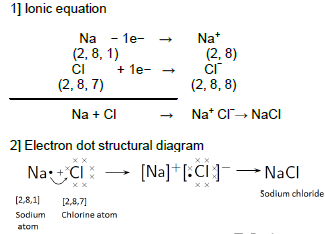
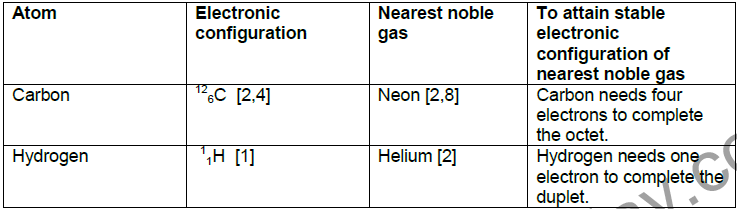
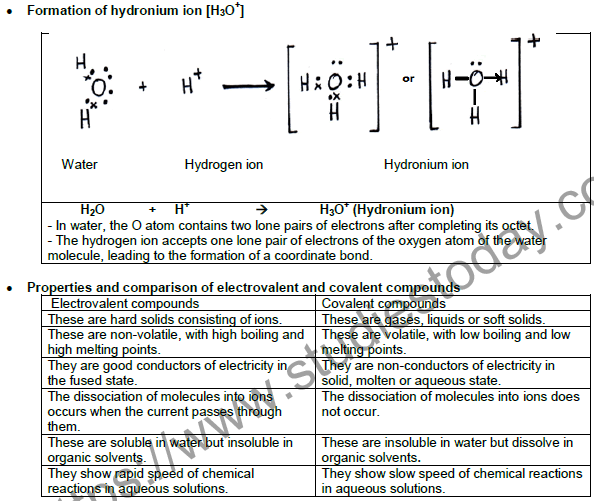
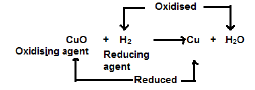
Notes for Class 11 Chemistry Chemical Bonding

Instructions:
1. All questions are compulsory.
2. Please give the explanation for the answer where applicable.
Q1 - What is hydrogen bonding? Name the two types of hydrogen bonding?
Q2 -Find
(i) Formal charge on S in HSO4-
(ii) Formal charge on P in orthophosphoric acid
Q3 - Which of the following bond is most polar?
(i) Cl-F
(ii) Br-F
(iii) I-F
(iv) F-F
Q4 - Which of the following compound will have highest solubility in water CCl4, CHCl3, CS2,C2H5OH.
Q5 - Name the type of hybridisation in each carbon atom of the following compounds —
(i) 1, 2 – butadiene
(ii) Propyne
Q6 - Find the bond order of NO and CO.
Q7 - How is bond order related to the stability of a molecule?
Q8 - What is the maximum number of hydrogen bonds in which a water molecule can participate?
Q9 - Arrange F2, N2, Cl2, O2 in increasing order of bond strengths.
Free study material for Chemistry
CBSE Class 11 Chemistry Worksheets for Chapter 04 Chemical Bonding and Molecular Structure
Practice Exercises for Class 11 Chemistry Chapter 04 Chemical Bonding and Molecular Structure
Review targeted practice exercises for Class 11 Chemistry Chapter 04 Chemical Bonding and Molecular Structure. Curated to match official CBSE guidelines, these printable problem sets support daily revision and improve overall test readiness.
Step-by-Step Solutions and Practice Guidelines
Built using official NCERT guidelines for Class 11 Chemistry, these practice sheets provide reliable academic support. Cross-reference your completed work with our detailed solutions to learn standard answer-writing formats for CBSE exams.
Enhance Speed with Online Practice
Wrap up your chapter revision by testing your knowledge against standard objective question formats. Explore our full library of free, up-to-date printable assignments to maximize your academic results in upcoming CBSE evaluations.
FAQs
You can download the latest chapter-wise printable worksheets for Class 11 Chemistry Chapter 04 Chemical Bonding and Molecular Structure for free from StudiesToday.com. These have been made as per the latest CBSE curriculum for this academic year.
Yes, Class 11 Chemistry worksheets for Chapter 04 Chemical Bonding and Molecular Structure focus on activity-based learning and also competency-style questions. This helps students to apply theoretical knowledge to practical scenarios.
Yes, we have provided solved worksheets for Class 11 Chemistry Chapter 04 Chemical Bonding and Molecular Structure to help students verify their answers instantly.
Yes, our Class 11 Chemistry test sheets are mobile-friendly PDFs and can be printed by teachers for classroom.
For Chapter 04 Chemical Bonding and Molecular Structure, regular practice with our worksheets will improve question-handling speed and help students understand all technical terms and diagrams.