

Official Class 12 Accountancy Revision Material: CBSE Class 12 Accountancy Partnership Cash Flow Statement Notes
Review targeted revision notes for Class 12 Accountancy with the CBSE Class 12 Accountancy Partnership Cash Flow Statement Notes. Built according to official educational guidelines for the 2026-27 academic year, these downloadable summaries for Part 2 Chapter 06 Cash Flow Statement support daily study and last-minute exam readiness.
Chapter-wise Concept Summaries: Part 2 Chapter 06 Cash Flow Statement
Navigate directly to the revision notes for Part 2 Chapter 06 Cash Flow Statement using the digital viewer below. Each summary is structured to highlight high-weightage sections, allowing students to instantly access critical definitions and focus on core exam topics.
CBSE Class 12 Partnership - Cash-Flow Statement Notes. Learning the important concepts is very important for every student to get better marks in examinations. The concepts should be clear which will help in faster learning. The attached concepts made as per NCERT and CBSE pattern will help the student to understand the chapter and score better marks in the examinations.
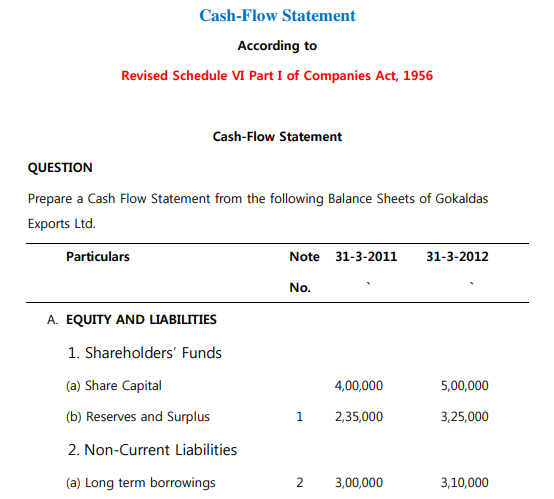
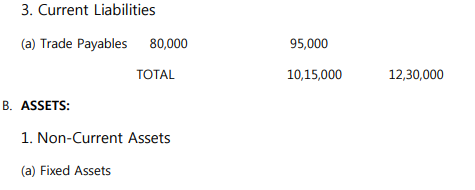
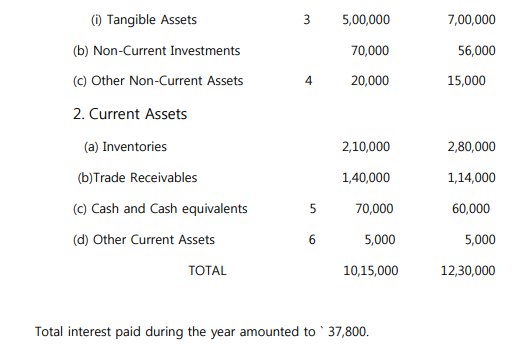
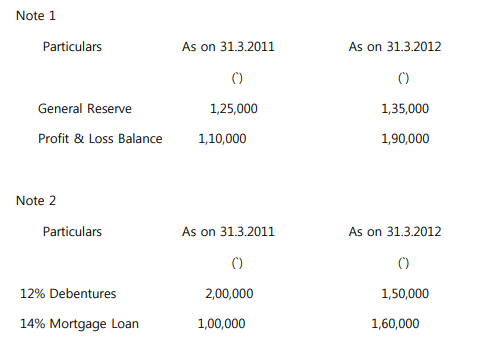
Cash Flow Statement
Basic Concepts
Cash Flow Statement: A Cash Flow Statement shows the flow of cash and cash equivalents during a given period of time. It shows the net increase or net decrease of cash and cash equivalents under each activity, such as Operating, Investing, Financing and collectively.
Objectives of Cash Flow Statement: The basic objective of a Cash Flow Statement is to highlight the changes in the cash position including the sources from which cash was obtained by the enterprise and specific uses to which cash was applied. A Cash Flow Statement has the following objectives:
- To depict inflows and outflows of cash, meaning, sources and uses of cash.
- To facilitate formulation of financial policies such as dividend policy, etc.
- To ascertain the liquidity of the enterprise.
- To ascertain the net change in cash and cash equivalents.
- To study the trend of cash receipts and cash payments.
- To know the deviation of cash from earnings.
- To enable a more realistic assessment of the financial condition of the enterprise and to anticipate the cash position.
Operating Activities: Operating Activities are the main revenue generating activities of a business firm. Operating activities are those transactions and events whose cash flows affect the net profit or loss of a business firm.
Examples of Cash Flows from Operating Activities: AS-3 (Revised) gives the following examples of cash flows from operating activities:
| Operating Activities | |
|---|---|
| Cash Inflows (i) Cash Sales (ii) Cash received from Debtors (iii) Cash received as Commission (iv) Cash received as Fees (v) Cash received as Royalty | Cash Outflows (i) Cash Purchases (ii) Payment to Trade Payables (iii) Cash Operating Expenses (iv) Income Tax Paid (Net of Refund) |
The major inflows and outflows in case of financial companies:
| Operating Activities | |
|---|---|
| Cash Inflows (i) Cash received for Interest (ii) Cash received for Dividends (iii) Proceeds from Sale of Securities | Cash Outflows (i) Cash paid for Interest (ii) Payment for Purchase of Securities |
Investing Activities: Investing Activities are those activities which are related to the acquisition and disposal of long-term assets and other investments not included in the cash equivalents.
Examples: AS-3 (Revised) gives the following examples of cash flows from Investing Activities:
| Investing Activities | |
|---|---|
| Cash Inflows (i) Sale of Fixed Assets (Tangible and Intangible) (ii) Sale of Investments (Non-current other than marketable securities) (iii) Interest received (iv) Dividend received (v) Rent received | Cash Outflows (i) Purchase of Fixed Assets (ii) Purchase of Investments (Non-current other than marketable securities) (iii) Payment of Tax (related to Investing activities) |
Financing Activities: Financing Activities are those activities that result in the changes in size and composition of the owners' capital (including Preference Share Capital in the case of a company) and borrowings of the business firm.
Examples of Cash Flows from Financing Activities: AS-3 (Revised) gives the following examples of cash flows from Financing Activities:
| Financing Activities | |
|---|---|
| Cash Inflows (i) Issue of Shares in cash (ii) Issue of Debentures in Cash (iii) Proceeds from Long-term Loans (iv) Proceeds from Bank overdraft or Cash Credit | Cash Outflows (i) Payment of Loans (ii) Payment of Interest (iii) Payment of Dividend (iv) Buy-back of Equity Shares (v) Redemption of Preference Shares (vi) Repayment of Long-term Loans (vii) Repayment of Bank Overdraft or Cash Credit (viii) Payment of Tax (related to Financing activities) |
Format of Cash Flow Statement:
Cash Flow Statement of ..............
for the year ended ....................
[As per Accounting Standard (AS-3) (Revised) (Indirect Method)]
| Particulars | (Rs) | (Rs) |
| 1. Cash Flows from Operating Activities: | ||
| (A) Net Profit before Taxation and Extraordinary items (WN 1) | --- |
Adjustment for Non-Cash and Non-operating Items
(B) Items to be added back:
- Depreciation
- Interest on Borrowings and Debentures
- Preliminary Expenses/Discount on Issue of Debentures written off
- Goodwill/Patents/Trade Marks/Copyrights Amortised
- Loss on Sale of fixed assets
- Increase in provision for Doubtful Debts
- Premium on Redemption of Debentures
(C) Items to be Deducted:
- Interest Income
- Dividend Income
- Rental Income
- Profit on Sale of Fixed Assets
- Liability/Provisions written back (Decrease in Provision for Doubtful Debts)
(D) Operating profit before working capital changes (A + B - C)
(E) Add: Decrease in Current Assets
- Increase in Current Liabilities
(F) Less: Increase in Current Assets
- Decrease in Current Liabilities
(G) Cash generated from Operations (D + E - F)
(H) Less: Income tax paid (Net of Refund of Tax)
(I) Net Cash from (or used in) Operating Activities (X)
2. Cash Flow from Investing Activities:
- Proceeds from Sale of Tangible Fixed Assets
- Proceeds from Sale of Intangible Fixed Assets
- Proceeds from Sale of Non-current Investments
- Interest and Dividend received (for Non-financial Companies only)
- Rental Income
- Purchase of Tangible Fixed Assets
- Purchase of Intangible Assets like Goodwill, Patents, etc.
- Purchase of Non-current Investments
- Extraordinary Items (e.g. Insurance claim on machinery against fire)
- Net Cash from (or used in) Investing Activities (Y)
3. Cash Flow from Financing Activities:
- Proceeds from Issue of Share Capital and Debentures
- Proceeds from Long-term Borrowings
- Increase/Decrease in Bank Overdraft and Cash Credit
- Payment of Shares Issue Expenses
- Final Dividend Paid
- Interim Dividend Paid
- Interest on Long-term Borrowings Paid
- Redemption of Debentures/Preference Shares
- Extraordinary Items (eg. Buy-back of shares)
- Net Cash from (or used in) Financing Activities (Z)
4. Net Increase/Decrease in Cash and Cash Equivalents (X + Y + Z)
5. Add: Cash and Cash Equivalents in the beginning of the year (WN 2)
6. Cash and Cash Equivalents at the end of the year (WN 3)
Note: Figures in brackets represent negative items.
Working Note:
1. Calculation of Net Profit before Tax and Extraordinary Items
| Particulars | (Rs) |
| Net Profit of the current year or Difference between Closing Balance and Opening Balance of Surplus, i.e., Balance in Statement of Profit and Loss | --- |
| Add: - Transfer to reserves (all transfers to reserves from Surplus, i.e., balances in Statement of Profit and Loss) - Dividend Paid (Proposed dividend for Previous Year) - Interim dividend paid during the year - Provisions for tax made during the current year - Extraordinary items, if any debited to Statement of Profit and Loss | --- |
| Less: - Refund of tax credited to Statement of Profit and Loss - Extraordinary items, if any credited to Statement of Profit and Loss | (---) |
| Net profit before tax and extraordinary items | === |
2. Calculation of Cash and Cash Equivalents in the beginning
| Particulars | (Rs) |
| - Cash in Hand - Cash at Bank - Short-term Deposits - Marketable Securities - Cheques and drafts in hand | --- |
3. Calculation of Cash and Cash Equivalents at the end
| Particulars | (Rs) |
| - Cash in Hand - Cash at Bank - Short-term Deposits - Marketable Securities - Cheques and drafts in hand | --- |
Please click the link below to download pdf file for CBSE Class 12 Partnership - Cash-Flow Statement Notes.
Free study material for Accountancy
Study Material and Revision Notes for Class 12 Accountancy Part 2 Chapter 06 Cash Flow Statement
Download Chapter Summary: Class 12 Accountancy Part 2 Chapter 06 Cash Flow Statement
Access structured revision notes for Part 2 Chapter 06 Cash Flow Statement designed in alignment with the latest CBSE curriculum for Class 12 Accountancy. These summaries help clarify core themes and support effective daily study.
Concept Clarification for Part 2 Chapter 06 Cash Flow Statement
Each chapter summary is structured around standard CBSE textbooks, allowing students to check their understanding and clarify complex ideas early in their revision.
Additional Study Resources for Class 12 Accountancy
Follow up your revision by attempting the interactive online Accountancy MCQ test and practice worksheets for this chapter to verify your mastery. All platform resources are free to access.
FAQs
You can download the teacher prepared revision notes for CBSE Class 12 Accountancy Partnership Cash Flow Statement Notes from StudiesToday.com. These notes are designed as per 2026-27 academic session to help Class 12 students get the best study material for Accountancy.
Yes, our CBSE Class 12 Accountancy Partnership Cash Flow Statement Notes include 50% competency-based questions with focus on core logic, keyword definitions, and the practical application of Accountancy principles which is important for getting more marks in 2026 CBSE exams.
Yes, our CBSE Class 12 Accountancy Partnership Cash Flow Statement Notes provide a detailed, topic wise breakdown of the chapter. Fundamental definitions, complex numerical formulas and all topics of CBSE syllabus in Class 12 is covered.
These notes for Accountancy are organized into bullet points and easy-to-read charts. By using CBSE Class 12 Accountancy Partnership Cash Flow Statement Notes, Class 12 students fast revise formulas, key definitions before the exams.
No, all study resources on StudiesToday, including CBSE Class 12 Accountancy Partnership Cash Flow Statement Notes, are available for immediate free download. Class 12 Accountancy study material is available in PDF and can be downloaded on mobile.