

Class 7 Science Practice Assignments: CBSE Class 7 Science Respiration in Organisms Assignment
Access comprehensive school assignments for Chapter 10 Respiration In Organisms using the CBSE Class 7 Science Respiration in Organisms Assignment. Designed to align with the 2026-27 CBSE academic guidelines, these practice sets help Class 7 Science students reinforce core concepts and improve their problem-solving accuracy.
Download Chapter 10 Respiration In Organisms Assignment PDF with Solutions
View or download the dedicated CBSE Class 7 Science Respiration in Organisms Assignment resource below. Engaging with these assignments under focused study conditions ensures continuous academic progress and mastery of the 2026-27 curriculum.
Question. In the arrangement shown, which of the following substances will make lime water turn milky when kept in the round-bottomed flask for a few days?
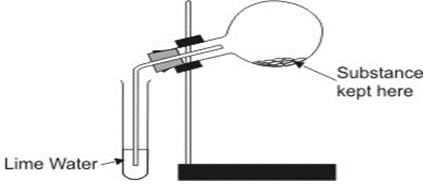
a) damp boiled rice
b) dry wood pieces
c) roasted peanuts
d) charcoal
Answer : A
Question. Study the model shown here. It is made from a cut plastic bottle, 2 balloons, a tube, a stopper and a cut balloon. This model corresponds to the human lung model as shown. What will happen when the stretched band is pulled downwards?
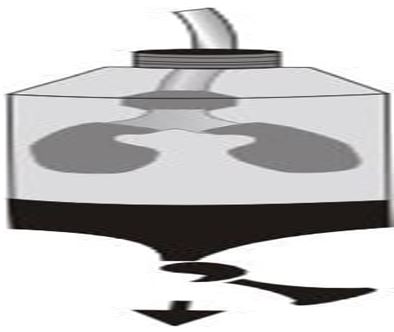
a) the balloons will expand
b) the balloons will contract
c) the balloons will be unchanged
d) the bottle will contract
Answer : A
Question. Which among the following is not an organ system in the human body?
a) Digestive system
b) Respiratory system
c) Brain system
d) Circulatory system
Answer : C
Question. The organ shown here is a part of which of these organ systems?
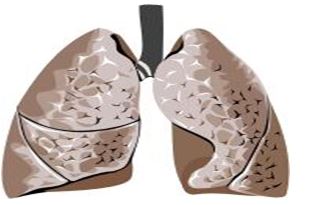
a) Nervous System
b) Respiratory System
c) Digestive System
d) None of these
Answer : B
Question. In the figure given of the human lungs, which arrow points to the bronchioles?
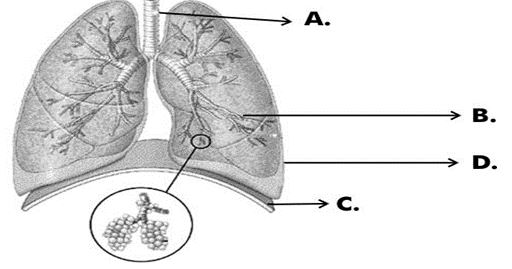
a) A
b) B
c) C
d) D
Answer : B
Question. Presence of carbon dioxide turns limewater milky. Applying this fact and observing the following chart, identify the correct statement below.
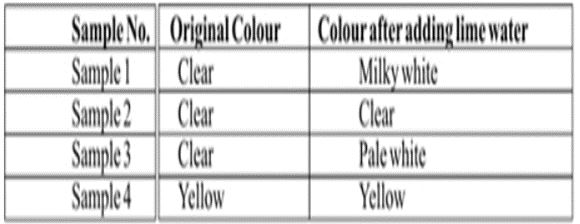
a) Sample 2 contains more carbon dioxide than sample 3.
b) Sample 3 contains more carbon dioxide than sample 1.
c) Sample 1 and 2 both contain carbon dioxide.
d) Sample 4 does not contain carbon dioxide.
Answer : D
Question. Blood glucose levels are expressed in terms of mass per unit volume. Which of the following would be the MOST appropriate unit to measure blood glucose level?
a) gram/decimetre
b) micron/degrees C
c) litre/gram
d) milligram/decilitre
Answer : D
Question. The blood pressure in various arteries and veins in the body is not the same. The pressure is higher in arteries closer to the heart and lower in veins which are far away from the heart. This is shown in the graph here. Which of these statements is likely to be correct about these types of blood vessels?
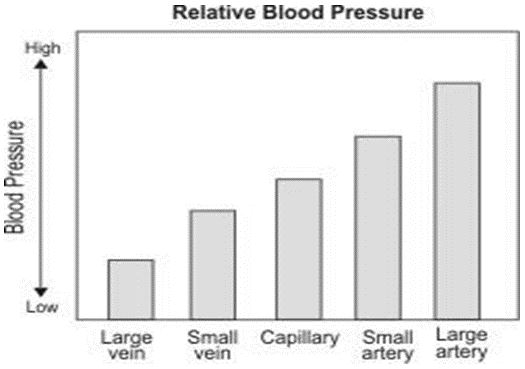
a) Blood will flow out fastest if a LARGE VEIN is accidentally cut.
b) LARGE ARTERIES will have the thickest and most muscular walls.
c) When the blood leaves the heart, it first enters CAPILLARIES.
d) A SMALL ARTERY is likely to get divided into many LARGE ARTERIES.
Answer : B
Question. Which of these does NOT affect the amount we sweat?
a) Surrounding temperature
b) Surrounding humidity
c) Individual characteristics
d) Amount of water we drink
Answer : D
Question. The chamber of the heart that has the thickest muscles is one that_______.
a) pumps oxygenated blood to all parts of the body..
b) pumps deoxygenated blood to the lungs
c) receives oxygenated blood from the lungs.
d) receives deoxygenated blood from all parts of the body
Answer : A
Question. Given below is a diagrammatic representation of a process taking place in a specific region of the human body. Which region/organ is this?
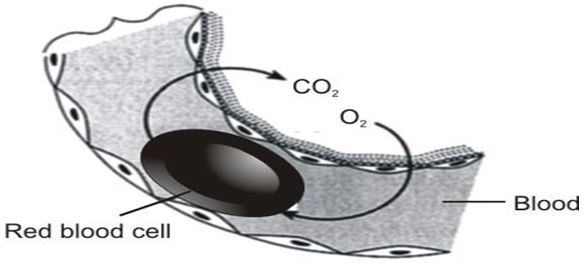
a) The heart
b) The lungs
c) The liver
d) Bones
Answer : B
Question. Which of these units could blood flow be expressed in?
The question is related to this table showing the amount of blood flowing through the various organs at different times in the human body (in appropriate units.)
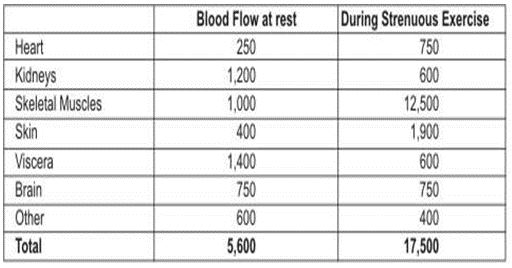
a) litres per kilogram
b) millilitres per minute
c) metres per second
d) seconds per cubic centimetre
Answer : B
Question. What can be concluded from the given data?
The question is related to this table showing the amount of blood flowing through the various organs at different times in the human body (in appropriate units.)
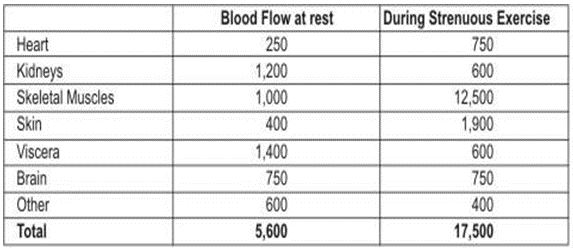
a) The total volume of blood in the human body increases during strenuous exercise.
b) The blood flow in different organs changes in response to the changing needs of the body.
c) The kidneys and some other organs stop functioning during strenuous exercise.
d) Anything which increases blood flow to various parts of the body is harmful.
Answer : B
Question. Shown here is the set up for an experiment in which plants were planted in 2 pots, watered regularly and observed after 2 days. What can you answer from the above experimental results?

a) Can plants grow in bottles?
b) Can we grow plants in water alone?
c) What is the function of the roots of a plant?
d) Can we grow a plant without roots?
Answer : D
Question. In the representation of the circulatory system below, identify the artery that carries deoxygenated blood.
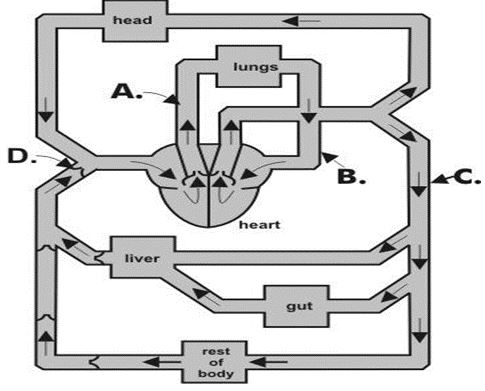
a) A
b) B
c) C
d) D
Answer : A
Q.1 Fill in the blanks :
1. The process of breaking down of food in the cell with the release of energy is called _______________ respiration. (Cellular / Anaerobic)
2. The taking in of air rich in exygen into the body is called ________________. (Inhalation / Exhalation).
3. The openings in a cockroach’s body through which it takes in air in its body for respiration are called ________________. (Nostrils / Spiracles)
4. The large muscular sheet which forms the floor of the chest cavity is called ____________. (Diaphragm / Lungs).
5. The number of times a person breathes in a minute is termed as the _______________ rate. (Breathing / Running)
Q.2 Correct the following statements by replacing the highlighted word :
1. Lungs are located in the buccal cavity : (Chest / Nasal)
Ans. ______________________________________________________________
2. The type of respiration in which food is broken down without the use of oxygen is called aerobic respiration. (Cellular / Anaerobic)
Ans. ______________________________________________________________
3. Humans are anaerobes. (Yeast / Dogs)
Ans. ______________________________________________________________
4. Yeast respires anaerobically and yields water. (Fruit Juice / Alcohol)
Ans. ______________________________________________________________
5. When we feel drowsy, our breathing rate increases. (Remains same / Slows Down)
Ans. ______________________________________________________________
Q.3. Match the following :
Column I Column II
1. Glucose (with oxygen) a. 21% Oxygen, 0.04% Carbon Dioxide
2. Glucose (Without Oxygen) b. 16.4% Oxygen, 4.4% Carbon Dioxide
3. Glucose in muscles (In the c. Carbon Dioxide + water + energy absence of oxygen)
4. Inhaled air d. Carbon Dioxide + Alcohol + Energy
5. Exhaled air e. Lactic acid + Energy
Free study material for Science
CBSE Class 7 Science Assignments for Chapter 10 Respiration In Organisms
Revision Assignment: Chapter 10 Respiration In Organisms (CBSE)
Access structured practice assignments for Chapter 10 Respiration In Organisms designed in alignment with the latest CBSE curriculum for Class 7 Science. These printable sets cover objective and descriptive problem types to support thorough revision.
Why Practice Class 7 Science Assignments?
- Curriculum Standards: Assignments match modern CBSE sample formats to ensure relevant preparation.
- Thorough Revision: Detailed problem sets reinforce core concepts and eliminate conceptual weak spots.
- Execution Speed: Timed practice with assignment sets sharpens overall response timing.
Effective Strategy for Class 7 Science Assignments
- Textbook Review: Always study the core NCERT book for Class 7 Science prior to beginning the assignment.
- Independent Attempt: Solve Chapter 10 Respiration In Organisms questions on your own initially before cross-checking with expert solutions.
- Error Tracking: Record challenging concepts in a dedicated notebook and practice online MCQ tests for revision.
FAQs
You can download free PDF assignments for Class 7 Science Chapter 10 Respiration In Organisms from StudiesToday.com. These practice sheets have been updated for the 2026-27 session covering all concepts from latest NCERT textbook.
Yes, our teachers have given solutions for all questions in the Class 7 Science Chapter 10 Respiration In Organisms assignments. This will help you to understand step-by-step methodology to get full marks in school tests and exams.
Yes. These assignments are designed as per the latest CBSE syllabus for 2026. We have included huge variety of question formats such as MCQs, Case-study based questions and important diagram-based problems found in Chapter 10 Respiration In Organisms.
Practicing topicw wise assignments will help Class 7 students understand every sub-topic of Chapter 10 Respiration In Organisms. Daily practice will improve speed, accuracy and answering competency-based questions.
Yes, all printable assignments for Class 7 Science Chapter 10 Respiration In Organisms are available for free download in mobile-friendly PDF format.