

Class 6 Science Solved Model Papers: CBSE Class 6 Science Sample Paper Set 13
Explore authentic exam practice materials through the CBSE Class 6 Science Sample Paper Set 13. Tailored for Class 6 learners, utilizing these Science sample papers ensures thorough preparation and strengthens time management skills before final CBSE evaluations.
Download Class 6 Science Sample Paper PDF
Navigate directly to the solved Science model papers using the digital viewer below. Each practice set includes detailed solutions, allowing students to instantly cross-check their work and identify areas requiring further revision.
CBSE Class 6 Science Sample Paper Set M. It’s always recommended to practice as many sample papers as possible before the examinations. Students can download the sample papers and also question papers of previous years to practice and score better marks in examinations. Refer to other links too for more sample papers.
Q.1 Fill in the blanks.
a) The melting of ice is a ________ change.
b) The backbone consists of small, ringlike ________.
c) The length of the elbow to the tip of the middle finger is a ________.
d) The bouncing off of light at a surface is called ________.
e) A ________ is a device for opening and closing an electric circuit.
f) Nitrogen is neither combustible nor a ________ of combustion.
Q.2 Choose the correct option in each of the following.
a) Which of the following grows best in a black soil and warm climate ?
i) cotton ii) flax iii) jute iv) coconut
b) In which of the following changes are new substances formed ?
i) melting ii) sublimation iii) dissolving iv) burning
c) Fixed joints are found in the -
i) wrist ii) elbow iii) skull iv) ankle
d) The insulating material on electric wires can be
i) aluminium ii) copper iii) silver iv) plastic
e) Which of the following is not a form of precipitation ?
i) hail ii) snow iii) rain iv) river
f) Which gas is released in respiration ?
i) nitric acid ii) carbon monoxide
iii) carbon dioxideiv) sulphur dioxide
Q.3 Match the following.
a) stars i) chemical change
b) rib-cage ii) conductor
c) warp iii) repulsion
d) curdling of milk iv) luminous object
e) silver v) lengthwise yarn in the loom
f) like poles vi) protect the heart and lungs
Q.4 Answer the following questions in one word.
a) A group of connected cells b) An opaque object
c) An alloy of aluminium nickel and cobalt used to make powerful magnets d) A synthetic fibre
e) A change during which heat is absorbed f) Animal without backbone are called
Q.5 Draw a neat and labelled diagram of the following.
a) Lunar eclipse b) A bulb
c) Pinhole camera d) Torch
Q.6 Define the following terms.
a) Chemical change b) reflection
c) joint d) poles of magnet
e) non-luminous objects f) rain-water harvesting
Q.7 Answer the following questions in not more than 20 words.
a) Why is it advisable to take 3 readings while making scientific measurements?
b) Which gas is formed when carbon is burnt in air?
c) Name any 2 purposes for which water is used in industry?
d) Name one conductor and one insulator.
e) Something strange happens when a mirror forms an image. What is it?
f) Mention 2 uses of cotton?
g) What are the SI units of mass and length ?
Q.8 a) Answer the following questions in not more than 40 words.
i) How are fibres classified? Give two examples of each type.
ii) What is cartilage? What is its function?
iii) What three points must be kept in mind while measuring a length with a ruler?
iv) Write three uses of magnetism.
v) In what ways is evaporation affected by heat, humidity and drought?
vi) Mention two changes that can be brought about by applying pressure.
b) Value Based Question. (compulsory)
Due to overuse, less rainfall or loss of water there is a shortage of water in many states of India. We have a very old tradition of tapping ground water for domestic and agricultural needs. Wells and step wells provide water for this purpose.Delhi gets its water supply from five rivers yet there is a shortage of water in many parts of Delhi every summer. Only 15% of piped water is used for drinking and cooking, while the rest goes down the drain.
i) List two ways by which you can conserve water.
ii) What are the two major causes of scarcity of water?
iii) What value can you find from the above passage?
Q.9 Answer the following questions in not more than 100 words.
a) (i) Describe a cell from outside?(ii) What is inside the cell? What is its significance?
b) What are the functions of the skeletal system?
c) What is solar eclipse ? Explain with a diagram.
d) (i) Name one element and one compound which are present in air.(ii) Mention three important uses of air.
e) Discuss why water is required in agriculture?f) Explain the importance of insulators.
g) What is the rib-cage? Explain its structure and function.
Q.10 Carefully observe the diagram given below and answer the following questions.
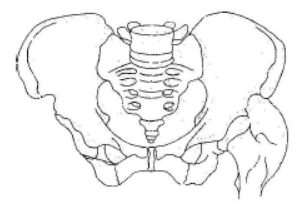
i) Name the diagram.
ii) Which bones form this girdle?
iii) Write any two types of joints.
Please click the link below to download CBSE Class 6 Science Sample Paper Set M.
Free study material for Science
CBSE Class 6 Science Sample Paper Set 13 & Sample Question Papers for Class 6 Science
Access Sample Papers for Class 6 Science
Explore downloadable sample sets for Class 6 Science. Utilizing the CBSE Class 6 Science Sample Paper Set 13 allows learners to gauge exam readiness and master official CBSE assessment structures.
Why Practice Class 6 Science Sample Papers?
- Exam Blueprint: Understand mark allocations and structural guidelines relevant to Class 6 evaluations.
- Targeted Improvement: Identify weak areas in Class 6 Science requiring focused revision.
- Pacing & Precision: Practice mixed question formats to build execution speed and ensure timely paper completion.
How to Analyze Your Performance in CBSE Class 6 Science Sample Paper Set 13
- Review Solutions: Evaluate your completed papers using expert-verified guidance inside our solution sets.
- Target Weaknesses: Class 6 students should analyze missed questions to rectify conceptual misunderstandings.
- Deep Revision: Re-read sections in the NCERT book for Class 6 Science to clear doubts before solving items again.
FAQs
You can download the complete PDF for CBSE Class 6 Science Sample Paper Set 13 for free from StudiesToday.com. Our resources for Class 6 Science are updated for the latest academic session and follow the official exam pattern.
Yes, CBSE Class 6 Science Sample Paper Set 13 comes with detailed, teacher-verified solutions. We have provided step-by-step answers for Science to help students of Class 6 understand correct methodology and marking scheme.
Practicing this Science paper helps in time management and identifying important topics. For Class 6, solving mock papers is the best way to gain confidence and reduce exam-day anxiety.
Yes, all our study materials for Class 6 Science are provided in a mobile-friendly PDF format. You can easily download CBSE Class 6 Science Sample Paper Set 13 on your mobile device.