

Official Class 12 Hindi Worksheets: All Chapters
Access comprehensive chapter-wise worksheets for All Chapters using the CBSE Class 12 Hindi Revision Worksheet Set 07. Designed to align with the 2026-27 academic syllabus for Class 12 Hindi, these printable practice sets help students reinforce key concepts and improve their overall exam readiness.
Solved Practice Worksheets for Hindi
View or download the dedicated CBSE Class 12 Hindi Revision Worksheet Set 07 resource below. Engaging with these practice papers under focused study conditions ensures continuous academic progress and mastery of the 2026-27 curriculum for All Chapters.
CBSE Class 12 Hindi Worksheet (7). CBSE issues sample papers every year for students for class 12 board exams. Students should solve the CBSE issued sample papers to understand the pattern of the question paper which will come in class 12 board exams this year. The sample papers have been provided with marking scheme. It’s always recommended to practice as many CBSE sample papers as possible before the board examinations. Sample papers should be always practiced in examination condition at home or school and the student should show the answers to teachers for checking or compare with the answers provided. Students can download the sample papers in pdf format free and score better marks in examinations. Refer to other links too for latest sample papers.
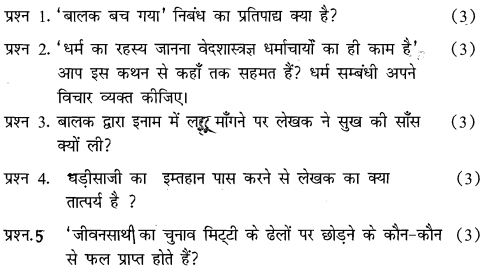
अंतरा (बालक बच गया, घड़ी के पुर्जे)
Question 1. 'बालक बच गया' निबंध का प्रतिपाद्य क्या है?
Answer: 'बालक बच गया' चंद्रधर शर्मा गुलेरी द्वारा रचित एक अत्यंत विचारोत्तेजक निबंध है, जिसका मुख्य प्रतिपाद्य आधुनिक शिक्षा प्रणाली के उस क्रूर रूप को उजागर करना है जो बच्चों का बचपन छीन लेती है। इस निबंध के जरिए लेखक यह समझाना चाहते हैं कि बच्चों पर उनकी उम्र और मानसिक क्षमता से अधिक ज्ञान लादना उनके स्वाभाविक मानसिक विकास को अवरुद्ध कर देता है। शिक्षा का उद्देश्य बालक का चौमुखी विकास होना चाहिए, न कि उसे रटंत विद्या का रोबोट बनाना। लेखक का मानना है कि पहले बच्चे का सहज बचपन सुरक्षित रहना चाहिए, क्योंकि यदि बालक जीवित और स्वस्थ रहेगा, तो शिक्षा उसे बाद में भी दी जा सकती है।
In simple words: इस निबंध का मुख्य संदेश यह है कि बच्चों को उनकी उम्र से बड़ा बनाने की कोशिश नहीं करनी चाहिए। पढ़ाई ऐसी हो जो उनके बचपन को न छीने, क्योंकि पहले बच्चे का बचपन बचाना जरूरी है।
Exam Tip: State the primary theme of "child-centric education vs. forced rote learning" and use the key takeaway "बालक बचेगा तो शिक्षा भी दी जा सकती है" in your own words to score maximum marks.
Question 2. 'धर्म का रहस्य जानना वेदशास्त्रज्ञ धर्माचार्यों का ही काम है'- आप इस कथन से कहाँ तक सहमत हैं? धर्म सम्बंधी अपने विचार व्यक्त कीजिए।
Answer: हम इस विचार से पूरी तरह असहमत हैं कि धर्म के गूढ़ तत्वों को केवल वेद-शास्त्रों के ज्ञाता धर्माचार्य ही समझ सकते हैं। धर्म कोई ऐसी जटिल वस्तु नहीं है जिसे केवल विद्वानों की अनुमति से ही जाना जाए। वास्तव में, धर्म का सच्चा अर्थ दया, सदाचार, परोपकार और मानवता की सेवा में निहित है, जिसे कोई भी साधारण मनुष्य आसानी से समझ और आचरण में ला सकता है। धर्म को कुछ गिने-चुने पंडितों या पुरोहितों के नियंत्रण में रखना समाज में अंधविश्वास और शोषण को बढ़ावा देता है। प्रत्येक व्यक्ति को स्वतंत्र रूप से धर्म के वास्तविक स्वरूप को जानने और उसका आचरण करने का पूरा अधिकार होना चाहिए।
In simple words: हम इस बात से सहमत नहीं हैं कि धर्म केवल पंडितों के समझने की चीज है। धर्म का मतलब अच्छे काम और मानवता की सेवा है, जिसे हर इंसान समझ सकता है।
Exam Tip: Clearly express your disagreement with the statement in the very first sentence. Focus on "humanity" (मानवता) and "universal accessibility" of religion as core arguments.
Question 3. बालक द्वारा इनाम में लड्डू माँगने पर लेखक ने सुख की साँस क्यों ली?
Answer: जब आठ वर्ष के बालक से उसकी इच्छा पूछी गई, तो उसने अपनी रटी-रटाई बड़ी-बड़ी बातों को छोड़कर एक बच्चे की तरह मासूमियत से इनाम में लड्डू माँग लिया। इससे पहले वह बालक बड़ों की तरह गंभीर और कठिन प्रश्नों के उत्तर यंत्रवत दे रहा था, जिसे देखकर लेखक को लग रहा था कि उसका बचपन पूरी तरह समाप्त हो चुका है। परंतु जैसे ही उसने लड्डू की माँग की, लेखक को यह विश्वास हो गया कि इस कृत्रिम दबाव के नीचे अभी भी उस बालक का स्वाभाविक बचपन जीवित है। इसी बात से आश्वस्त होकर लेखक ने राहत और संतोष की गहरी साँस ली।
In simple words: बालक बड़ी-बड़ी बातें रटकर बोल रहा था, पर इनाम में उसने मासूमियत से लड्डू माँग लिया। इससे लेखक को लगा कि बच्चे का बचपन अभी मरा नहीं है, इसलिए उन्होंने चैन की साँस ली।
Exam Tip: Highlight the contrast between the child's robotic academic answers and his natural childish desire (the laddu) to explain the writer's sense of relief.
Question 4. घड़ीसाजी का इम्तहान पास करने से लेखक का क्या तात्पर्य है?
Answer: 'घड़ीसाजी का इम्तहान पास करने' से लेखक का आशय किसी विषय के केवल बाहरी रूप को देखने के बजाय उसके आंतरिक रहस्यों और कार्यप्रणाली का संपूर्ण व्यावहारिक ज्ञान प्राप्त करने से है। जिस तरह कोई व्यक्ति केवल घड़ी देखकर समय बताना जानता है पर उसे खोलकर ठीक नहीं कर सकता, वैसे ही धर्म के मामले में लोग धर्माचार्यों पर निर्भर रहते हैं। लेखक का मानना है कि केवल दूसरों के बताए नियमों पर चलने के बजाय मनुष्य को स्वयं धर्म के गूढ़ तत्वों का गंभीर अध्ययन करना चाहिए और खुद को इस योग्य बनाना चाहिए कि वह धर्म की वास्तविक व्याख्या कर सके।
In simple words: इसका मतलब है कि सिर्फ बाहर से समय देखने (दूसरों की बातें मानने) के बजाय, हमें खुद घड़ी बनाना और उसे सुधारना सीखना चाहिए (धर्म के सच्चे ज्ञान को खुद समझना चाहिए)।
Exam Tip: Explain the metaphor clearly: "showing time" equals blindly following rituals, while "clockmaking" (घड़ीसाजी) represents gaining direct, deep knowledge of religion.
Question 5. 'जीवनसाथी का चुनाव मिट्टी के ढेलों पर छोड़ने के कौन-कौन से फल प्राप्त होते हैं?
Answer: पुराने समय में मिट्टी के ढेलों के माध्यम से जीवनसाथी का चुनाव करने की एक अजीब प्रथा प्रचलित थी, जिसके विभिन्न परिणाम भाग्य और अंधविश्वास पर निर्भर करते थे:
1. यदि कन्या वेदी की मिट्टी का ढेला चुनती, तो माना जाता था कि उसकी संतान अत्यंत धार्मिक और वेदों का ज्ञाता बनेगी।
2. यदि वह उपजाऊ खेत की मिट्टी उठाती, तो उसे समृद्धि और उत्तम कृषि संपदा का प्रतीक माना जाता था।
3. इसके विपरीत, यदि उसका हाथ मसान (श्मशान) की मिट्टी के ढेले पर पड़ता, तो उसे बेहद अमंगलकारी माना जाता था और ऐसा विवाह बर्बादी तथा दुख लेकर आता था।
इस प्रकार, इस मूर्खतापूर्ण प्रथा के कारण योग्य जीवनसाथी का मिलना पूरी तरह केवल संयोग और अंधविश्वास के अधीन हो जाता था, जिससे जीवन भर पछताना पड़ता था।
In simple words: पुराने समय में मिट्टी के ढेले उठाकर शादी का फैसला होता था। अच्छा ढेला मिलने पर सुखी जीवन और श्मशान की मिट्टी मिलने पर बर्बादी तथा अपशकुन का फल मिलता था।
Exam Tip: Separately list the different outcomes of choosing different types of clay clods (fields, altars, and cremation grounds) to make your answer comprehensive and structured.
Free CBSE Practice Worksheets: Class 12 Hindi All Chapters
Practice Exercises for Class 12 Hindi All Chapters
Explore reliable practice questions for All Chapters tailored for Class 12 Hindi learners. Use these structured worksheets to evaluate exam preparedness and strengthen problem-solving skills throughout the 2026 academic session.
Step-by-Step Solutions and Practice Guidelines
Designed around the official curriculum for Class 12 Hindi, these practice sheets guarantee standard compliance. Reviewing step-by-step solutions after completion sharpens your accuracy and clarifies complex sub-topics within All Chapters.
Enhance Speed with Online Practice
Follow up your worksheet practice by attempting the interactive online MCQ tests for All Chapters to evaluate your execution speed. All printable assignments and revision sheets on our platform are updated for the 2026 session and available free of charge.
FAQs
You can download the latest chapter-wise printable worksheets for Class 12 Hindi All Chapters for free from StudiesToday.com. These have been made as per the latest CBSE curriculum for this academic year.
Yes, Class 12 Hindi worksheets for All Chapters focus on activity-based learning and also competency-style questions. This helps students to apply theoretical knowledge to practical scenarios.
Yes, we have provided solved worksheets for Class 12 Hindi All Chapters to help students verify their answers instantly.
Yes, our Class 12 Hindi test sheets are mobile-friendly PDFs and can be printed by teachers for classroom.
For All Chapters, regular practice with our worksheets will improve question-handling speed and help students understand all technical terms and diagrams.