

Official Class 3 Science Worksheets: All Chapters
Access printable practice worksheets for All Chapters designed to align with the 2026-27 academic syllabus for Class 3 Science. These structured exercises help students evaluate their conceptual understanding and improve exam readiness.
Chapter-wise Practice Material: All Chapters
Navigate directly to the printable exercises for All Chapters using the digital viewer below. Each practice set allows students to isolate specific topics for thorough review and uninterrupted practice alongside standard textbooks.
Q.1 Choose the correct answer:-
a. Animal that swallows its food.
Answer: Snake
b. Animals that has long and sticky tongue.
Answer: frog
c. Animals that gnaw its food.
Answer: both of these
d. Animal that chew cud.
Answer: Cow
e. Animal that lap milk and water.
Answer: both of these
f. Animal that eats or drinks by its trunk.
Answer: Elephant
g. An insect that has long sucking tube to suck nectar.
Answer: butterfly
h. An insect that suck blood from the bodies of other animals.
Answer: both of these
i. Animal that swallow soil.
Answer: Earthworm
j. Animal that swallow grass.
Answer: Cow
Q.1 Look at the pictures and answer the following.
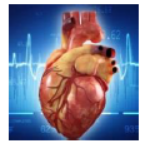
a.
1. Name the given organ.______________
2. It’s belongs to which organ system?.______________
3. What is the function of this organ?.______________
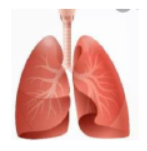
b.
1. Name the given organ._____________
2. It’s belongs to which organ system?_____________
3. What is the function of this system?____________
Q.2 Match the following.
1. Urine. Skeletal system
2. Nerves. Blood
3. Reproduction. Kidney
4. Heart. Brain
5. Bones. Babies
Q.3 Tick the odd one out.
1. Eye Ear. Nose. Tounge. Blood. Skin
2. Mouth. Liver. Bones. Stomach. Intestine. Anus.
3. Tounge. Nose. Wind pipe. Lungs. Oxygen
4. Skin. Urine. Kidney. Sweat. Carbon dioxide. Brain
Fill in the blanks.
1. The human body is made up of ________.
2. All the sense organs are connected to brain through_______.
3. The ______ is a better machine than any other machine
4. ________ help us to know the world.
5. The respiratory system provides ______ to all parts of our body.
6. Breathing purifies our ______.
7. The food we eat mixes with ______ in mouth and become soft.
8. In ___________ the digested blood is taken in by the blood and carried to other parts of the body.
9. The ______, the ______ and the blood vessel make up circulatory system.
10. The nervous system consist of the _______, the spinal cord and the _____.
11. Our body is made up of _____ bones.
12. The kidney removes ______
13. The cells join together to form _______.
14. The ______ join together to form organs.
15. The skin removes ______.
Name the following:
1. The system helps to produce babies.
2. This system helps to remove waste from our body.
3. This system helps our body to move.
4. This system gives shape and support to our body.
5. This system controls all the actions performed by the body.
6. This system pumps the blood to different parts of the body.
7. This system helps in changing food in to its simpler form that can be used by the body.
8. This system helps in breathing oxygen which provides energy to the body.
9. This system is formed when many different organs join together to perform a function.
Unscramble the words given below
1. O _ R G_ N _ Y S _ _ M
2. _ A R _ _ IN_ _ S _ I N _
3. S P _ N_ _ C _ _ D
4. A _ _ S
5. C _ _ B _ N _ _ OX_ D_
Please click on below link to download CBSE Class 3 Science Worksheet F
Practice Worksheet and Study Resources for Class 3 Science All Chapters
Chapter Practice Questions for Class 3 Science
Review targeted practice exercises for Class 3 Science All Chapters. Curated to match official CBSE guidelines, these downloadable PDF sheets support daily revision and core concept reinforcement.
Expert Practice Material for Class 3 Science
Each worksheet is structured around standard CBSE textbooks, allowing students to check their working steps and correct mistakes early in their revision.
Complete Your Chapter Revision
Explore our broader library of printable assignments, chapter notes, and mock tests designed to support continuous revision and secure higher marks in CBSE assessments.
FAQs
You can download the teacher-verified PDF for CBSE Class 3 Science Worksheet Set 06 from StudiesToday.com. These practice sheets for Class 3 Science are designed as per the latest CBSE academic session.
Yes, our CBSE Class 3 Science Worksheet Set 06 includes a variety of questions like Case-based studies, Assertion-Reasoning, and MCQs as per the 50% competency-based weightage in the latest curriculum for Class 3.
Yes, we have provided detailed solutions for CBSE Class 3 Science Worksheet Set 06 to help Class 3 and follow the official CBSE marking scheme.
Daily practice with these Science worksheets helps in identifying understanding gaps. It also improves question solving speed and ensures that Class 3 students get more marks in CBSE exams.
All our Class 3 Science practice test papers and worksheets are available for free download in mobile-friendly PDF format. You can access CBSE Class 3 Science Worksheet Set 06 without any registration.