CBSE Class 3 Science Worksheet E

Access the latest CBSE Class 3 Science Worksheet E. We have provided free printable Class 3 Science worksheets in PDF format, specifically designed for All Chapters. These practice sets are prepared by expert teachers following the 2025-26 syllabus and exam patterns issued by CBSE, NCERT, and KVS.

All Chapters Science Practice Worksheet for Class 3

Students should use these Class 3 Science chapter-wise worksheets for daily practice to improve their conceptual understanding. This detailed test papers include important questions and solutions for All Chapters, to help you prepare for school tests and final examination. Regular practice of these Class 3 Science questions will help improve your problem-solving speed and exam accuracy for the 2026 session.

Download Class 3 Science All Chapters Worksheet PDF

MOVEMENT OF AIR (AIR CURRENT)
 
The atmospheric air that covers the Earth is not stable. It makes different kinds of movements. We can’t see air but we can sense/feel/ its presence from the movements it makes. Wind, a moving air, makes motion in different objects.
The movement of air from place to place is due to the heat energy from the sun.Hot air rises up because it is lighter in weight than cold air. Cold air goes down and takes the place of hot air because it is heavier than hot air. Therefore, air moves due to difference in weight. It is a continuous process.
 
Types of air Current
 
Atmospheric air makes two types of movements due to heat energy from the sun. These are
1. Convection current and
2. Wind current
 
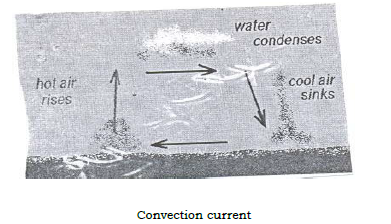
1. Convectional Current
 
When hot air rises up, cold air goes down and takes the place of hot air. This continuous and cyclic movement between hot and cold air up and down is called convection current.
 
Grade 3 G.S General Science 6
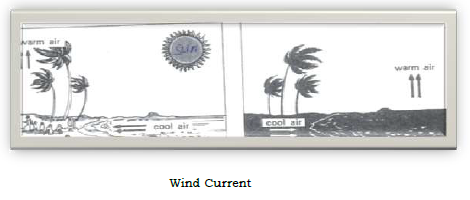
2. Wind Current
 
This type of air current occurs between hot and cold regions. The movement of air from colder region to hotter region in one direction is called wind current or simply wind. Wind blows from colder region to hotter region.


Grade 3 G.S General Science 7
 
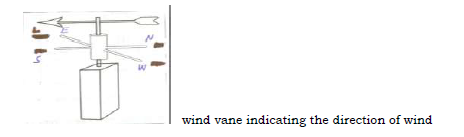
Indicating the Direction of wind
The direction of wind is indicated using an instrument called wind vane.
 
Humidity
Humidity (water vapor) is the amount of invisible atmospheric moisture.
 
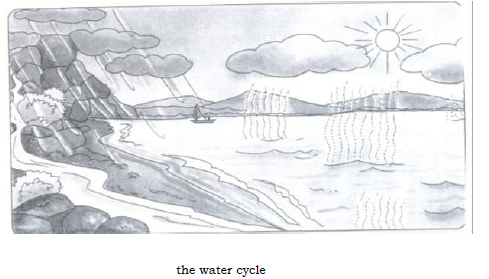
The water cycle
Water from lakes, rivers and seas keeps on changing into water vapor. This is called evaporation. When the sun shines brightly, evaporation is rapid. This means a higher temperature favors evaporation. On cooling, the water vapor in
the atmosphere changes into water by a process called condensation. On further, cooling the droplets of water combine to form big and heavy drops of water, which finally fall down as rain.
Grade 3 G.S General Science 9
Formation of Rain /precipitation/
 
Precipitation is any form of water that falls to the Earth’s surface. The different forms of precipitations include rain, snow sleet and freezing rain. Precipitation is important because it helps to maintain the atmospheric balance. Without precipitation, all of the lands on our Earth would be desert. It helps farmers to grow crops and provides a fresh water supply for us to drink. Precipitation can also be dangerous. Too much rain and snow can cause severe flooding and traffic accidents.
 
Types of precipitation
 
There are three types of precipitation. These are
1. convection rain
2. cyclonic/ frontal rain 3. Orographic
 
1. convection Rain
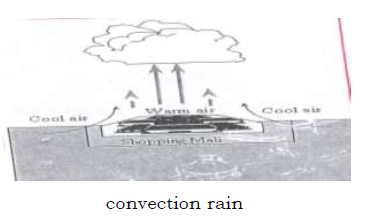
This type of rain is common near the equator. Unequal heating of the Earth’s surface creates a local hot spot. The air in contact with the hot spot expands and rises. Rising air rises adiabatically to dew point temperature. Rapid updraft and downdraft generates electricity which discharges as thunder and lighting.Therefore, convection rain is usually associated with lighting and thunder
Grade 3 G.S General Science 10
2. cyclonic/ frontal/ rain
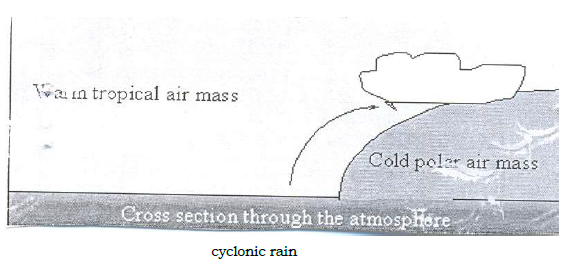
This type of rain is formed when warm air rises in contact with a cold air mass.This means warm air in contact with cold air rises as it rises, it cools adiabatically. The moist air condenses and forms clouds. On further cooling the clouds combine to form big and heavy drops of water that finally fall as rain.
Grade 3 G.S General Science 11
 
3. Orographic rain
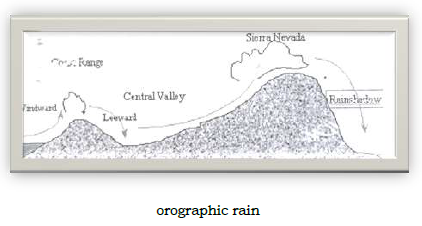
Orographic rain is formed when moist air is lifted over mountain barriers. Then the air expands and cools adiabatically. At dew point temperature, it condenses and forms clouds. The clouds continued condensation and produce rain or snow.

Grade 3 G.S General Science 12


A. Tick the correct answer.
 
1. Our car gets energy from
 
a. petrol           b. food                 c. metal              d. none of these
 
2. Bouncing of light from any object
 
a. energy         b. reflection          c. friction            d. all of these
 
3. We get linen from
 
a. flax plant     b. cotton plant       c. jute plant       d. none of these
 
4. The imaginary line which divides the earth into two equal halves
 
a. axis             b. orbit                 c. equator         d. none of these
 
B. Give one word for the following. 
 
1. The back and forth movement of an object. ______
 
2. The push or pull that causes objects to move. _____
 
3. Soil used to make pots. ____
 
4. The movement of earth which causes day and night. ____
 
5. The material that is made by using sand. ____
 
C. Choose the correct answer. 
 
1. The layer of the earth with melted metals is called
 
a) the core.
 
b) the crust.
 
c) the mantle.
 
2. Gold is used for making jewellery because it is
 
a) very expensive.
 
b) strong and shiny.
 
c) yellow in colour.
 
3. The light passes through a
 
a) glass window pane.
 
b) wooden door.
 
c) brick wall.
 
D. Answer the following questions. 
 
1. Why are shadows formed?
 
2. Name the products that we get from petroleum.
 
3. How is plastic harmful to us?
 
E. Give reason. 
 
1. We see a ‘No Horn’ Zone outside the hospitals.
 
2. We can’t make clothes with paper.
 
3. The earth looks like a blue ball from space.
 
F. Look at the picture and answer the following questions. 
CBSE Class 3 Science Worksheet E
 
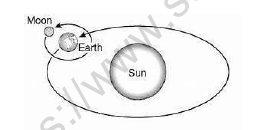
a. The movement of Earth around the Sun is called _____.
 
b. It causes ___.
 
G. Differentiate the following terms. 
 
a. Axis and Orbit.


Q.1 Name the following:

1. Plants cannot make food with out this ___________

2. This animal breathes through gills ___________.

3. It grows from a seed_________.

4. Most plant breathe through tiny pores called_______.

5. Some plants grow from a part of plant like _______ and _________.

6.___________ plant eat insect.


Q.2 Differentiate between Plants and Animals.

PLANTS ANIMALS
1.  
2.  
3.  


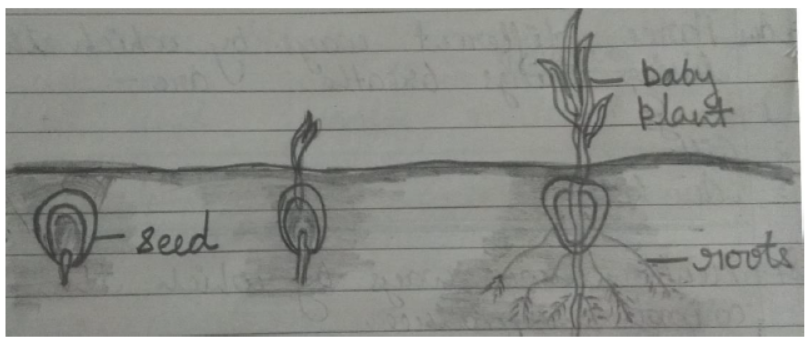
Q.3 Draw a diagram to show that plants grow from seeds.
cbse-class-3-science-worksheet-e

New Words ( copy New words twice in notebook)

1. grazing.     2. Chasing    3. Greedily
4. health        5. Grow         6. Herbivore
7. food chain 8. Carnivore  9. Omnivore
10. Chewing  11. Sucking  12. Oil-seed cake
13. grinding   14. Leeches.

Define the following terms:
1. Herbivore: Plants eating animal is known as herbivore.
2. Carnivore: Flesh eating animal is known as carnivore.
3. Omnivore: Animal that eat booth plants and animals is known as omnivore.

Answers
1. Some animals eat plants, some plant eating animals, while some eat both plants and plant eating animals. Thus , we can say all animalos depend on plants for their food.
2. Omnivores get meat, eggs, fish and milk from animals as their food.
3. Cows and goats gives us milk. They should be fed on grass and oil-seed cake as these are milk producing food.
4. Earth worm eat soil which contain parts of dead plants animals.
5. Domestic animals serves us well if we take good care of them.

Please click on below link to download CBSE Class 3 Science Worksheet E

All Chapters CBSE Class 3 Science Worksheet

Students can use the All Chapters practice sheet provided above to prepare for their upcoming school tests. This solved questions and answers follow the latest CBSE syllabus for Class 3 Science. You can easily download the PDF format and solve these questions every day to improve your marks. Our expert teachers have made these from the most important topics that are always asked in your exams to help you get more marks in exams.

NCERT Based Questions and Solutions for All Chapters

Our expert team has used the official NCERT book for Class 3 Science to create this practice material for students. After solving the questions our teachers have also suggested to study the NCERT solutions  which will help you to understand the best way to solve problems in Science. You can get all this study material for free on studiestoday.com.

Extra Practice for Science

To get the best results in Class 3, students should try the Science MCQ Test for this chapter. We have also provided printable assignments for Class 3 Science on our website. Regular practice will help you feel more confident and get higher marks in CBSE examinations.

Where can I download latest CBSE Practice worksheets for Class 3 Science All Chapters

You can download the CBSE Practice worksheets for Class 3 Science All Chapters for the latest session from StudiesToday.com

Are the Class 3 Science All Chapters Practice worksheets available for the latest session

Yes, the Practice worksheets issued for All Chapters Class 3 Science have been made available here for the latest academic session

Is there any charge for the Practice worksheets for Class 3 Science All Chapters

There is no charge for the Practice worksheets for Class 3 CBSE Science All Chapters you can download everything free

How can I improve my scores by solving questions given in Practice worksheets in All Chapters Class 3 Science

Regular revision of practice worksheets given on studiestoday for Class 3 subject Science All Chapters can help you to score better marks in exams

Are there any websites that offer free Practice test papers for Class 3 Science All Chapters

Yes, studiestoday.com provides all the latest Class 3 Science All Chapters test practice sheets with answers based on the latest books for the current academic session