

Multiple Choice Questions (MCQs) for BITSAT Mathematics: Complex Numbers and Quadratic Equations
Explore reliable objective questions for Complex Numbers and Quadratic Equations tailored for BITSAT learners. Utilizing these Mathematics multiple-choice formats ensures thorough preparation and strengthens problem-solving speed for upcoming school assessments.
Practice Complex Numbers and Quadratic Equations MCQs for BITSAT Mathematics
Access the complete set of multiple-choice questions for Complex Numbers and Quadratic Equations below. This focused format allows students to isolate specific topics for thorough review and uninterrupted practice alongside official BITSAT textbooks.
Question: If α and β are roots of the equation 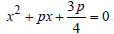 such that | α -β |= √10, then p belongs to the set :
- a) {2, – 5}
- b) {– 3, 2}
- c) {– 2, 5}
- d) {3, – 5}
Answer: {– 2, 5}
Question: If f(z) =  where z = 1 + 2i, then |f(z)| is equal to :
- a)

- b) | z |
- c) 2 | z |
- d) None of these
Answer:
Question: If z1 = √3 + i √3 and z2 = √3 + i , then the complex number

lies in the :
- a) First quadrant
- b) Second quadrant
- c) Third quadrant
- d) Fourth quadrant
Answer: First quadrant
Question: If α, β are the roots of the equations x2 – 2x– 1 = 0, then what is the value of α2 β–2+ α –2 β2
- a) –2
- b) 0
- c) 30
- d) 34
Answer: 34
Question: If a, b and c are real numbers then the roots of the equation (x – a) (x – b) + (x – b) (x – c)+ (x – c) (x – a) = 0 are always
- a) Real
- b) Imaginary
- c) Positive
- d) Negative
Answer: Real
Question: The root of the equation 2(1+ i)x 2 - 4(2 - i)x - 5 - 3i = 0 which has greater modulus is
- a)

- b)

- c)

- d) None
Answer:
Question: If complex number z1, z2 and 0 are vertices of equilateral triangle, then  is equal to
- a) 0
- b) z1 – z2
- c) z1 + z2
- d) 1
Answer: 0
Question: Universal set
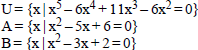
What is (A ∩ B)' equal to ?
- a) {1, 3}
- b) {1, 2, 3}
- c) {0, 1, 3}
- d) {0, 1, 2, 3}
Answer: {0, 1, 3}
Question: If z = x + iy, z1/ 3 = a – ib, then
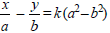
where k is equal to
- a) 1
- b) 2
- c) 3
- d) 4
Answer: 4
Question:

when simplified has the value
- a) 0
- b) 2i
- c) – 2i
- d) 2
Answer: 0
Question: If the roots of x2 + x + a = 0 exceed a then
- a) 2 < a < 3
- b) a > 3
- c) – 3 < a < 3
- d) a < – 2
Answer: a < – 2
Question: If the real part of

is 4, z ≠ 1, then the locus of the point representing z in the complex plane is
- a) A straight line parallel to x-axis
- b) A straight line equally inclined to axes
- c) A circle with radius 2
- d) a circle with radius
-

Answer: a circle with radius
Question: If α and β are the roots of x2 – x + 1 = 0, then the equation whose roots are α100 and β100 are
- a) x2 – x + 1 = 0
- b) x2 + x – 1 = 0
- c) x2 – x – 1 = 0
- d) x2 + x + 1 = 0
Answer: x2 + x + 1 = 0
Question: The amplitude of sin 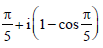
- a) π/5
- b) 2π/5
- c) π/10
- d) π/15
Answer: π/10
Question: If x = ω – ω2 –2, then the value of x4 + 3x3 + 2x2– 11x – 6 is
- a) 1
- b) -1
- c) 2
- d) None of these
Answer: 1
Question: If 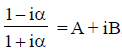 then A2 + B2 equals to
- a) 1
- b) α2
- c) –1
- d) – α2
Answer: 1
Question: If the expression x2 – 11x + a and x2 – 14x + 2a must have a common factor and a ≠0, then, the common factor is
- a) (x – 3)
- b) (x – 6)
- c) (x – 8)
- d) None of these
Answer: (x – 8)
Question: If α, β are the roots of the equation ax2 + bx + c = 0, then the roots of the equation ax2 + bx (x + 1)+ c (x + 1)2 = 0 are
- a) α – 1, β– 1
- b) α + 1, β + 1
- c)

- d)

Answer:
Question: If a > 0, aεR, z = a + 2i and z | z | – az + 1 = 0 then
- a) Z is always a positive real number
- b) Z is always a negative real number
- c) Z is purely imaginary number
- d) Such a complex z does not exist
Answer: Such a complex z does not exist
Question: The roots of the equation x2 – 2 √2 x + 1 = 0 are
- a) Real and different
- b) Imaginary and different
- c) Real and equal
- d) Rational and different
Answer: Real and different
Question: For the equation 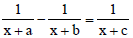 if the product of roots is zero, then the sum of roots is
- a) 0
- b)

- c)

- d)

Answer:
Question: If arg
= arg(z2 ) , then
- a) z2 = kz1–1 (k > 0)
- b) z2 = kz1(k > 0)
- c)

- d) None of these
Answer: z2 = kz1–1 (k > 0)
Question: If

and arg(z1 z2) = 0, then
- a) z1 = z2
- b) |z2|2 = z1z2
- c) z1z2 = 1
- d) None of these
Answer: |z2|2 = z1z2
Question: Let a, b, c € R and ax² + bx + c = 0 has two negative roots, then –
- a) a, b, c are of same sign
- b) a, –b, c are of same sign
- c) a, b, –c are of same sign
- d) a, – c are of same sign
Answer: a, b, c are of same sign
Question: If z  then value of arg (zi) is
- a) 0
- b)

- c)

- d)

Answer:
Question: Value of 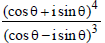 is
is
- a) cos 5θ + i sin 5θ
- b) cos 7θ + i sin 7θ
- c) cos 4θ + i sin 4θ
- d) cosθ + i sinθ
Answer: cos 7θ + i sin 7θ
Question: If the roots of the equation x2 + 2ax + b = 0 are real and differ by at most 2m, m ≠ 0 then b lies in the interval
- a) (a2 -m2 , a 2 )
- b) [a2 -m2 , a2 )
- c) (a 2 , a2 + m2 )
- d) None of these
Answer: [a2 -m2 , a2 )
Question: If the equation x2 + 2 (k + 1) x + 9k – 5 = 0 has only negative roots, then –
- a) k≤0
- b) k≥0
- c) k≥6
- d) k≤6
Answer: k≥6
Question: The value of the expression x4 – 8x3 – 8x + 2 when x = 2 + √3 is –
- a) 0
- b) 1
- c) 2
- d) 3
Answer: 1
Question: If α,β are the roots of x2 + px + q = 0, and w is an imaginary cube root of unity, then value of (wα +w2β) (w2α+ wβ) is
- a) p2
- b) 3q
- c) p2 – 2q
- d) p2 – 3q
Answer: p2 – 3q
Free study material for Mathematics
Practice MCQs for BITSAT Mathematics Complex Numbers and Quadratic Equations
Download Multiple Choice Questions: Complex Numbers and Quadratic Equations (BITSAT Mathematics)
Test your conceptual understanding of Complex Numbers and Quadratic Equations with these targeted multiple-choice questions. Designed in alignment with the latest BITSAT curriculum for BITSAT Mathematics, these problem sets build accuracy and prepare students for objective exams.
Concept Clarification for Complex Numbers and Quadratic Equations
Cross-reference your completed choices with comprehensive NCERT solutions for BITSAT Mathematics to ensure absolute clarity across all sub-topics in this chapter.
Additional Study Resources for BITSAT Mathematics
Follow up your worksheet practice by attempting the interactive online Mathematics MCQ test for this chapter to evaluate your execution speed. All platform resources are free to access.
FAQs
You can get most exhaustive BITSAT Mathematics Complex Numbers and Quadratic Equations MCQs for free on StudiesToday.com. These MCQs for BITSAT Mathematics are updated for the 2026-27 academic session as per BITSAT examination standards.
Yes, our BITSAT Mathematics Complex Numbers and Quadratic Equations MCQs include the latest type of questions, such as Assertion-Reasoning and Case-based MCQs. 50% of the BITSAT paper is now competency-based.
By solving our BITSAT Mathematics Complex Numbers and Quadratic Equations MCQs, BITSAT students can improve their accuracy and speed which is important as objective questions provide a chance to secure 100% marks in the Mathematics.
Yes, Mathematics MCQs for BITSAT have answer key and brief explanations to help students understand logic behind the correct option as its important for 2026 competency-focused BITSAT exams.
Yes, you can also access online interactive tests for BITSAT Mathematics Complex Numbers and Quadratic Equations MCQs on StudiesToday.com as they provide instant answers and score to help you track your progress in Mathematics.