

Official CBSE Assignments for Class 11 Business Studies
Review targeted academic assignments with the CBSE Class 11 Business Studies Public Private And Global Enterprises Assignment. Built according to official CBSE standards for the 2026-27 term, these downloadable Class 11 Business Studies worksheets support effective daily practice for Chapter 03 Private Public And Global Enterprises.
Solved Practice Assignments for Business Studies
Navigate directly to the solved Business Studies assignments using the digital viewer below. Each practice set includes detailed step-by-step solutions, allowing students to instantly cross-check their work and identify areas requiring further revision.
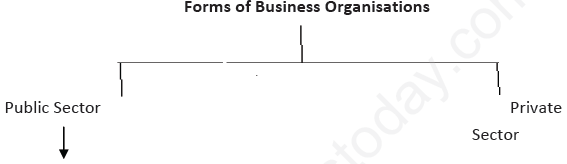
Merits
• Effective control
• Public Accountability
• Suitable for national security
Demerits
• Lack of flexibility
• Delay in decision making
• Red tapism
• Political interference
• Unable to take advantage of opportunities
b. Statutory Corporations
They are created by Special Acts of the Parliament which contains their powers and functions, rules and regulations regarding their employees and its relationship with government
departments.
• Statutory Corporation is fully owned by the Government.
• It is having a separate legal entity.
• Its employees are not government employees.
• Board of Directors are appointed by the government
• It prepares its own budget and can retain its earnings which can be used for its business.
• Profit is not the main motive.
• It has public accountability.
• Usually it is free from all types of interference.
Merits
• Free from undesirable government
• The government does not interfere in their financial matters.
• It is relatively free from red tapes and can take quick decisions.
• Its policies are subject to parliamentary control which ensures protection of public interest.
Limitations
• A statutory corporation’s actions are subject to many rules and regulations.
• Government and political interference have always been there where huge funds are involved or in major decisions.
• Where there is dealing with public, corruption exists at a larger level.
• The Board of Directors may misuse their powers and indulge in undesirable practices.
c. Government Company
Meaning: ‐ According to The Indian Companies Act, 1956, a government company is a company in which not less than 51% of the paid up capital is held by the central or state
government or both.
Subsidiary of a government company is also considered as a government company.
Eg: 1) Hindustan Machine Tools Ltd. (HMT)
2) Bharat Heavy Electricals Ltd (BHEL)
3) Steel Authority of India Ltd.
Features
• It is created by the Indian Companies Act, 1956.
• It is having a separate legal identity.
• Its employees are are appointed according to the rules contained in the Memorandum and Articles of Association of the company.
• It is exempted from the accounting and audit rules and procedures.
• It obtains funds from government shareholdings, private shareholders and capital market.
Merits
• It can be easily established.
• It has a separate legal entity.
• There is no undue departmental interference in the working of the company.
• It can curb unhealthy business practices by providing goods and services at reasonable prices.
• Changing Role of Public Sector
Public Sector was started to achieve the following objectives:
• To speed up the economic growth of the country
• To achieve a more equitable distribution of income
• To create infrastructure facilities
• To develop all parts the country equally
Performance of the Public Sector was poor due to unorganized plants, out dated technology, underutilization of capacity, over staffing, trade unionism, political interference etc., So the government, in the Industrial Policy 1991, introduced the following reforms in the public sector.
• The number of industries reserved for the public sector was reduced from 17 to 3 industries namely atomic energy, arms and rail transport.
• The Memorandum of Understanding signed between a public sector and its administrative ministry defines its autonomy and the targets to be achieved.
• Equity shares of public sector units are sold to private sector and the public which is known as Disinvestment.
• Loss making public sectors which are potentially viable will be restructured and revived through the Board of Industrial and Financial Reconstruction (BIFR). Public sector units which cannot be revived will be closed down.
• A National Renewal Fund was created to retrain and redeploy retrenched labor and to compensate employees seeking voluntary retirement.
• Global Enterprises/Multinational Companies
Meaning:‐ A global enterprise is one which owns and manages business in two or more countries.
Eg:‐ Unilever Ltd, Coca cola, LG, Samsung, Hyundai Motors, Proctor and Gamble, etc.
Features
• A global enterprise has huge capital resources.
• It operates through a network of subsidiaries, branches and affiliates in host countries
• It has its headquarters in the home country which controls all branches and subsidiaries.
• It uses advanced technology to provide world class products and services.
• It employs professionally trained managers.
• It has vast access to international markets.
• It has advanced research and development departments which are engaged in developing new products and superior designs of existing products.
• It uses aggressive marketing strategies.
• It usually enters into agreements with local firms in the host countries.
• Joint Ventures
Meaning: A joint venture is a business partnership between two or more companies for a specified purpose.
Eg : Hero Honda, Maruti Udyog, Birla Yamaha Ltd, etc.
Benefits
• A joint venture has greater resources and capacity.
• It has access to advanced technology
• It has access to new markets.
• It can produce products at a lower cost.
• It has ideas and technologies to develop innovative products and services.
• When one party in a joint venture has well established brands and goodwill, the other party gets its benefits.
• Public Private Partnership (PPP)
Public Private Partnership means an enterprise in which a project or service is financed and operated through a partnership between Government and private sectors.
Features
• It facilitates partnership between public and private sector.
• It is related to high priority projects.
• It is suitable for big projects whose gestation period is long.
• Revenue is shared between government and private enterprise in the agreed ratio.
• It is used in the government projects targeted at public welfare.
Very Short Answer type Questions :
Question. Name the types of public sector enterprises?
Answer: i) Departmental undertakings ii) statutory corporations
iii) Government company
Question. Name the organization which is considered as a part of Government Company only?
Answer: Departmental undertakings
Question. Where national security is concerned, which form of public enterprises is most suitable?
Answer: Departmental undertakings, because they are under the direct control and supervision of the ministry.
Question. Mention any two examples of departmental undertakings?
Answer: i) Post and Telegraphs
ii) Indian railways
Question. Name the organization formed by passing a special act of the parliament?
Answer: Statutory Corporation
Question. Mention any two examples of statutory corporation?
Answer: i) Food Corporation of India
ii) Life Insurance Corporation
Question. Name the company in which at least 51% shares are kept by the government?
Answer: Government Company
Question. In whose name the shares of a government Company are purchased?
Answer: The President of India
Question. Why is the ‘Government company’ form of public enterprise preferred to other types of organizations?
Answer: Because it enjoys maximum autonomy in all management decisions and actions.
There is no undue departmental interference in the working of a government company.
Question. Mention any two examples of a government company?
Answer: i) Bharat Heavy Electricals Limited
ii) Hindustan Machine Tools Limited
Long Answer type Questions
Question. What is public, private partnership? Explain its features.
Answer: The following points should be explained
• Helps partnership public sector and private sector
• Related to high priority projects
• Suitable for big projects
• Public welfare
• Sharing revenue
Question. “Multinational companies are a blessing to the developing countries.”
Answer: The following points should be explained
• Huge capital resources
• Centralized capital
• Expansion of market territory
• Advanced technology
• Product innovation
Question. What are the benefits of entering into joint ventures?
Answer: The following points should be explained
1. Increased resources and capacity
2. Access to new market and distribution networks
3. Access to technology
4. Innovation
5. Low cost of production
6. Established brand name
Question. Name the form of public sector enterprises that is constituted as an autonomous unit by an Act of Parliament? Explain any five features of such an organizations?
Answer: Statutory Corporation.
The following points should be explained
• Statutory Corporation is fully owned by the Government.
• It is having a separate legal entity.
• Its employees are not government employees.
• Board of Directors are appointed by the government
• It prepares its own budget and can retain its earnings which can be used for its business.
• Profit is not the main motive.
Question. (a) Mention six causes responsible for inefficiency of government enterprises?
(b) Give any three distinctions between a statutory corporation and a government company?
Answer: a) The following causes should explained
Performance of the Public Sector was poor due to
• unorganized plants,
• out dated technology,
• underutilization of capacity,
• over staffing,
• trade unionism,
• political interference
• inefficient management
b) The differences between Statutory Corporation and Government Company
| Basis | Statutory Corporation | Government Company |
| Formation | By an Act of Parliament | Under the Companies Act |
| Management Control | Nominated board of directors | board of directors may contain private individuals |
| Ownership | Wholly owned by Government | Only 51% of shares owned by Government |
Question. What was the role of public sector before 1991?
Answer: Public Sector was started to achieve the following objectives:
• To speed up the economic growth of the country
• To achieve a more equitable distribution of income
• To create infrastructure facilities
• To develop all parts the country equally
• Generation of employment
• Defence Requirements
• Check over concentration of economic power
Question. What are the benefits available to the government company?
Answer:
1. Easily established
2. Separate legal entity
3. Enjoys autonomy
4. Curbs unhealthy business practices
HOTS (Higher Order Thinking Skills)
Question. Can the public sector companies compete with the private sector in terms of profit & loss efficiency? Give reasons for your answer.
Answer: No, public sector companies cannot compete with the private sector in terms of profit & efficiency. Following are the reasons for this:
1. Public sector enterprises (PSEs) are owned by the government which has social services as the main motive. They do not operate fully on commercial basis. They are launched to achieve social objective like development of backward region, creation of employment opportunities, etc.
2. Working of public sector enterprise is subject to interference of the government.
Autonomy &flexible enjoyed by PSEs are only in name.
3. Due to the bureaucratic control, the management is very poor inefficient. They are managed by bureaucrats & not by professional.
Question. Public sector enterprises have played vital role in the economic development of india.however; government of India vigorously pursues the policy of disinvestment of such units. What is the rationale of disinvestment at this time?
Answer: Public sector enterprises played a significant role in the economic development of India by filling gaps in the industrial sector, generating employment opportunities, balance regional development, check over concentration of economic power & so on. despite their impressive role, public sector undertaking (PSUs) in India suffered several problems shortcoming such as excessive overhead, under‐ utalisation of production capacity, inefficient management, low return on investment or even losses, etc.therefore, government of India pursued the policy of disinvestment of sick PSUs.disinvestment involves the sale of the equity shares to the private sector& the public, i.e., reducing equity of the government.
Question. State any three situations wherein Government Company is the most suitable form of organizing public enterprises?
Answer: Government Company is the most suitable form of organizing public enterprises in the following situations:
1. When the government wants to control a company in the private sector without nationalization because of financial or employment crises, e.g., Indian iron steel co.
2. When the government feels necessary to promet & develops a field of economic acidity, e.g., STC.
3. When the government wishes to launch an enterprises in association of certain private interests, domestic or foreign, e.g., Hindustan Machine Tools.
Question. What motivates a company to go global?
Answer: desire to expand its business motivates a company to go global. If a company wants to enjoy the fruits of larges‐cable production (i.e., increased profit reduces costs), it needs a bigger market spread over to many countries.
• Gist of the Lesson
Private sector vs. public sector enterprises
• Private sector enterprises are owned, managed and controlled by individuals or a group of individuals. Their main objective is to earn profit.
• Public sector enterprises are owned, managed and controlled by the government. The forms organization which a public enterprises may take are departmental undertakings, statutory corporations and government companies.
Departmental undertakings
This is the oldest and most traditional forms of organizing public enterprises. The government functions through this department. Examples: ‐ Post and Telegraphs, Indian Railways, etc.
Statutory Corporation
Statutory corporations are public enterprises brought into existence by a special act of the parliament. Egs: ‐ Indian Airlines, LIC, RBI, etc.
Government Company
A government company means any company in which not less than 51% of the paidup capital is held by the central government or state government or bother:‐
HMT,maruti dog ltd.,BHEL,etc.
Global enterprises
A multi‐national company (MNC) may be defined as a company that operates in several companies that operates in several countries. Egs:‐ Pepsi, Samsung, Honda, etc
Joint ventures
When two businesses agree to join together for a common purpose and mutual benefits it is known as joint venture
Public Private Partnership
It means a busied in which a project or service is financed and operated through a partnership of government and private enterprises
Free study material for Business Studies
Download Practice Assignments: Class 11 Business Studies Chapter 03 Private Public And Global Enterprises
Revision Assignment: Chapter 03 Private Public And Global Enterprises (CBSE)
Access structured practice assignments for Chapter 03 Private Public And Global Enterprises designed in alignment with the latest CBSE curriculum for Class 11 Business Studies. These printable sets cover objective and descriptive problem types to support thorough revision.
Why Practice Class 11 Business Studies Assignments?
- Syllabus Compliance: Sets reflect current CBSE evaluation criteria and official marking frameworks.
- Multi-Format Practice: Includes varied problem types designed to deepen comprehension across all sub-topics.
- Time Management: Routine practice optimizes pacing to finish school examinations comfortably within schedule.
Steps to Complete Chapter 03 Private Public And Global Enterprises Assignments Successfully
- Initial Reading: Begin by reading the NCERT book for Class 11 Business Studies to build a baseline understanding.
- Independent Testing: Attempt assignment questions unassisted, then verify work using provided answer keys.
- Supplementary Aids: Leverage revision notes and worksheets whenever you encounter difficult topics.
FAQs
You can download free PDF assignments for Class 11 Business Studies Chapter 03 Private Public And Global Enterprises from StudiesToday.com. These practice sheets have been updated for the 2026-27 session covering all concepts from latest NCERT textbook.
Yes, our teachers have given solutions for all questions in the Class 11 Business Studies Chapter 03 Private Public And Global Enterprises assignments. This will help you to understand step-by-step methodology to get full marks in school tests and exams.
Yes. These assignments are designed as per the latest CBSE syllabus for 2026. We have included huge variety of question formats such as MCQs, Case-study based questions and important diagram-based problems found in Chapter 03 Private Public And Global Enterprises.
Practicing topicw wise assignments will help Class 11 students understand every sub-topic of Chapter 03 Private Public And Global Enterprises. Daily practice will improve speed, accuracy and answering competency-based questions.
Yes, all printable assignments for Class 11 Business Studies Chapter 03 Private Public And Global Enterprises are available for free download in mobile-friendly PDF format.