

Check out CBSE Class 6 Maths Algebra HOTs right here. Get complete High Order Thinking Skills (HOTS) questions and answers for Class 6 Mathematics Chapter 11 Algebra. Created for the 2026-27 exam session, these analytical practice problems help learners master core ideas while following guidelines from CBSE, NCERT, and KVS.
High Order Thinking Skills: Class 6 Mathematics Chapter 11 Algebra
Practicing Class 6 Mathematics HOTS Questions is important for scoring high in Mathematics. Use the detailed answers provided below to improve your problem-solving speed and Class 6 exam readiness.
HOTS Questions and Answers for Class 6 Mathematics Chapter 11 Algebra
Introduction
Addition of large numbers
The method of addition remains the same whether the numbers to be added are small or large. Let us recall the
steps :
Step 1 : Write the numbers in the place value chart one below the other. Make sure the digits at the same place are in the same columns.
Step 2 : Addition is done column-wise, from right to left. So, always start adding from the lowest (ones) place and move to the highest place.
Step 3 : Regroup (carry over) whenever the sum in a column exceeds nine.
Example 1. Solve 12,64,750 + 4,12,673 + 36,82,145
Solution : 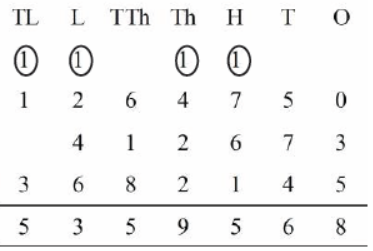
Properties of Addition
1. We can add numbers in any order. If we change the order of addends the sum does not change.
25,70,381 + 5,09,650 = 30,80,031
5,09,650 + 25,70,381 = 30,80,031
2. We use grouping while adding more than two numbers. There is no change in the sum if the grouping is changed.
1,05,24,720 + (3,12,050+55,20,840) = 1,63,57,610
(1,05,24,720 + 3,12,050) + 55,20,840 = 1,63,57,610
(1,05,24,720 + 55,20,840) + 3,12,050 = 1,63,57,610
3. If we add zero to a number, the sum will be the number itself.
3,57,890 + 0 = 3,57,890
4. If we add one to a number, the sum will be the next number.
6,10,345+1 = 6,10,346
Subtraction of large numbers
The method of subtraction remains the same whether the numbers to be subtracted are small or large.
Step 1 : Write the numbers in the place value chart one below the other. The greater number will come above the smaller number.
Step 2 : Subtraction is done columnwise, from right to left. So, always start subtracting from the lowest (ones) place and move to a higher place.
Step 3 : Regroup (borrow) if the digit of minuend of a place is smaller than the digit of subtrahend.
Example 2. Subtract 94,13,205 from 1,78,40,926
Solution :
Properties of Subtraction
1. We cannot change the order of numbers in subtraction.
2. When 0 is subtracted from a number, the difference is the number itself.
32,50,628 – 0 = 32,50,628
3. When a number is subtracted from itself, the difference is 0.
54,21,840 – 54,21,840 = 0
Words used for addition and subtraction in real life
For addition – total, in all, altogether, more, together, sum, combined, overall and so on.
For subtraction – subtract, difference, left, remaining, balance, how much (many), more (less), few and so on.
Multiplication of large numbers
Multiplication, as we know, is repeated addition. It is a quicker way of finding the sum when a number is added to itself many times.
• When we multiply two numbers, the first number is called themultiplicand.
• The second number by which the multiplicand is multiplied is called themultiplier.
• The result of the multiplication is called theproduct.
Let us recall the steps involved –
Step 1 : Write the numbers in the place value chart one below the other. The multiplicand is placed above the multiplier .
Step 2 : Multiplication is done columnwise, from right to left.
Step 3 : If the multiplier has more than one digit, then multiply the multiplicand by each digit separately.
Start with the multiplier digit at the smallest place. When multiplication by one digit is complete, then move to the next digit.
Step 4 : If there is a carry over, add it to the product of the new column.
Example 3. Multiply 134259 and 23
Solution : 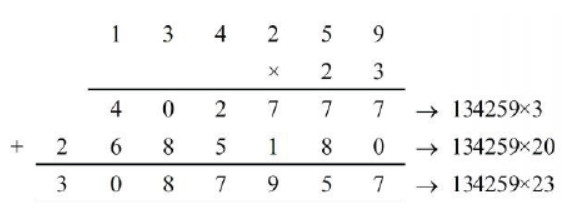
Multiplication by 10, 100, 1000
When the multiplier is 10, 100, 1000 and so on, add as many zeros to the product as there are in the multiplier. 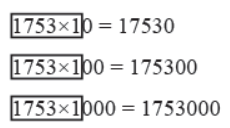
Multiplication by 5, 25, 50
• To multiply a number by 5, first multiply by 10 and then divide by 2.
• To multiply a number by 25, first multiply by 100 and then divide by 4.
• To multiply a number by 50, first multiply by 100 and then divide by 2.
Example 4. Multiply :
a. 6352 ×5 b. 9536 ×25 c. 9999 ×50
Solution : a. 6352 ×5
6352×10 = 63520
63520 ÷ 2 = 31,760
∴ 6352×5 = 31,760
b. 9536 ×25
9536×100 = 953600
953600 ÷4= 2,38,400
∴ 9536×25 =2,38,400
c. 9999 ×50
9999×100 = 999900
999900 ÷ 2 = 499950
∴ 9999×50 = 499950
Properties of Multiplication
1. When two numbers are multiplied, the product is the same, regardless of the order of the multiplicand and multiplier.
42745×294 = 294×42745 = 12567030
2. When three or more numbers are multiplied, the product is the same regardless of the grouping of the numbers.
7256×4×5 = (7256×4)×5 = (7256×5)×4 = 7256×(4×5) = 1,45,120
3. The product of any number and 1 is the number itself.
2315 × 1 = 2315
4. Any number multiplied by 0 gives zero as the product.
3462 × 0 = 0×3462 = 0
Division of large numbers
Division is inverse of multiplication.
16×8=128, 128÷16=8, 128÷8=16
The divisor, dividend, quotient and remainder are related to one another by the following relationship –
Dividend = Divisor × Quotient + Remainder
Divisor – The number which divides is called the divisor.
Dividend – The number which is divided is called the dividend.
Quotient – The result of division is called the quotient.
Remainder – The left over number after division is called the remainder.
Division by 2-digit divisor
Division is carried out from left to right
Example 5. Divide 26775 by 25
Solution : 
Division by 3-digit divisor
Example 6. Divide 53978 by 122
Solution : 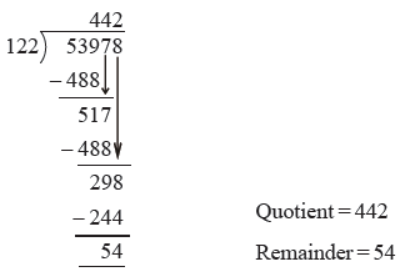
Division by 10,100,1000
Count the number of zeros in the divisor. The same number of digits on the extreme right of the dividend will
form the remainder. The rest of the digits form the quotient of the division :
335÷10 Q=33, R=5
4268÷100 Q=42, R=68
78965÷1000 Q=78, R=965
832456÷10000 Q=83, R=2456
Properties of Division
1. Any number divided by 1 will give the same number as the quotient.
35674÷1 = 35674
2. Any number divided by itself will give 1 as the quotient.
35674÷35674 = 1
3. When we divide 0 by any number, the quotient is always 0.
0÷4298=0
4. Division by zero is not possible.
Example 7. The total population of a city is 17206350. There are 7201256 men and 7001350 women and remaining are children. How many children are there in the city?
Solution : Total population of the city = 1,72,06,350
Number of men = 72,01,256
Number of women = 70,01,350
Number of children
= 1,72,06,350 – (72,01,256+70,01,350)
= 1,72,06,350 – 1,42,02,606
= 30,03,744 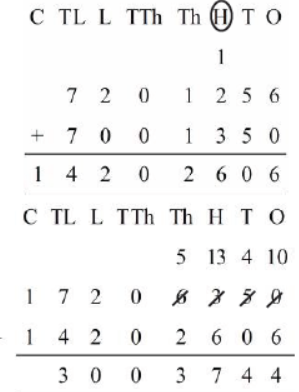
Example 8. The cost of a microwave oven is ₹ 5999. What is the cost of 298 such ovens?
Solution : Cost of one microwave oven = ₹ 5999
Cost of 298 ovens = ₹ (5999×298)
= ₹ 17,87,702 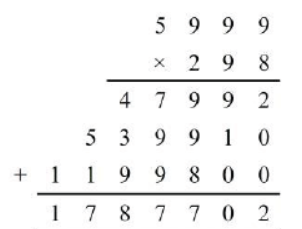
Example 9. The cost of 425 washing machines is ₹ 75,68,825. What is the cost of one washing machine?
Solution : Total cost of washing machines = ₹ 75,68,825
Number of washing machines = ₹ 425
Cost of each washing machine = ₹ 75,68,825 ÷ 425
= ₹ 17,809 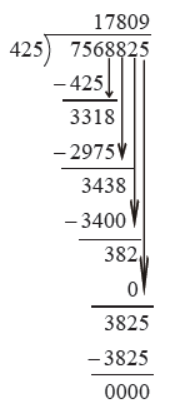

Free study material for Mathematics
Higher Order Thinking Skills (HOTS) for Class 6 Mathematics Chapter 11 Algebra
Preparing with Chapter 11 Algebra HOTS Exercises
Strengthen your preparation for Class 6 Mathematics examinations with specialized Chapter 11 Algebra HOTS worksheets. These structured problems are curated to match official CBSE guidelines and help tackle difficult board-level questions.
How to Use These Class 6 Mathematics HOTS
All analytical exercises for Chapter 11 Algebra are structured around standard CBSE textbooks. Cross-reference your answers with our professional step-by-step guides to ensure complete conceptual accuracy.
More Study Resources for Class 6 Mathematics
Wrap up your chapter revision by testing your speed with our interactive Mathematics quizzes. Access all curriculum-aligned study resources online without any restrictions.
FAQs
You can download the teacher-verified PDF for CBSE Class 6 Maths Algebra HOTs from StudiesToday.com. These questions have been prepared for Class 6 Mathematics to help students learn high-level application and analytical skills required for the 2026-27 exams.
In the 2026 pattern, 50% of the marks are for competency-based questions. Our CBSE Class 6 Maths Algebra HOTs are to apply basic theory to real-world to help Class 6 students to solve case studies and assertion-reasoning questions in Mathematics.
Unlike direct questions that test memory, CBSE Class 6 Maths Algebra HOTs require out-of-the-box thinking as Class 6 Mathematics HOTS questions focus on understanding data and identifying logical errors.
After reading all conceots in Mathematics, practice CBSE Class 6 Maths Algebra HOTs by breaking down the problem into smaller logical steps.
Yes, we provide detailed, step-by-step solutions for CBSE Class 6 Maths Algebra HOTs. These solutions highlight the analytical reasoning and logical steps to help students prepare as per CBSE marking scheme.