

Class 12 Biology Study Guide: CBSE Class 12 Biology Reproduction in Flowering Plants Cross Word
Explore structured advanced study materials through the CBSE Class 12 Biology Reproduction in Flowering Plants Cross Word. Tailored for Class 12 learners, utilizing these Biology resources ensures thorough preparation and strengthens foundational knowledge before final CBSE evaluations.
Download Chapter 01 Sexual Reproduction In Flowering Plants Study Material PDF
Navigate directly to the advanced Biology study materials using the digital viewer below. Each resource pack includes detailed conceptual summaries and solved practice questions, allowing students to instantly reinforce their learning.
CBSE Class 12 Biology Reproduction in Flowering Plants Cross Word. Please refer to the examination notes which you can use for preparing and revising for exams. These notes will help you to revise the concepts quickly and get good marks.
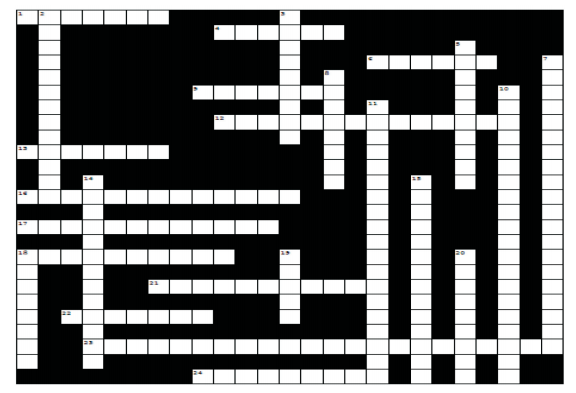
CHAPTER 1 : REPRODUCTION IN ORGANISMS (CROSS WORD)
Across
1. ASEXUAL REPRODUCTIVE STRUCTURE OF PENICILLIUM [1 Mark]
Answer:
1. Conidia
Teacher's Note:
a) Conidia are non-motile asexual spores produced exogenously.
b) They are characteristic structures found in fungi like Penicillium.
4. SEXUAL REPRODUCING ORGANISM BEGINS ITS LIFE [1 Mark]
Answer:
1. Zygote
Teacher's Note:
a) The zygote is the vital link that ensures continuity of species between organisms of one generation and the next.
b) It is always a single-celled diploid structure formed by syngamy.
6. VEGETATIVE PROPAGULE OF AGAVE [1 Mark]
Answer:
1. Bulbils
Teacher's Note:
a) Bulbils are fleshy, modified floral buds that develop into new plants.
b) They detach and fall on the ground to grow.
9. VEGETATIVE PROPAGULE OF AGAVE [1 Mark]
Answer:
1. Bulbil
Teacher's Note:
a) This is the singular form referring to the same vegetative propagule of Agave.
b) It serves as an alternative mode of reproduction when floral parts are modified.
12. STAGE OF GROWTH AND MATURITY IN ANIMALS [1 Mark]
Answer:
1. Juvenile
Teacher's Note:
a) The juvenile phase is also known as the vegetative phase in plants.
b) It represents the period before an organism attains reproductive maturity.
13. FUSION OF GAMETES [1 Mark]
Answer:
1. Syngamy
Teacher's Note:
a) Syngamy results in the formation of a diploid zygote.
b) It is synonymous with fertilization in most sexual reproduction contexts.
16. BISEXUAL ANIMALS [1 Mark]
Answer:
1. Hermaphrodite
Teacher's Note:
a) Hermaphrodites possess both male and female reproductive organs.
b) Examples include earthworms, sponges, and tapeworms.
17. BIOLOGICAL PROCESS GIVING RISE TO YOUNG ONES [1 Mark]
Answer:
1. Reproduction
Teacher's Note:
a) Reproduction is a fundamental biological process enabling species to live generation after generation.
b) It can be broadly categorized into asexual and sexual types.
18. DENOTE BISEXUAL CONDITION [1 Mark]
Answer:
1. Homothallic
Teacher's Note:
a) The term homothallic is often used for fungi and plants to describe bisexual conditions.
b) Heterothallic refers to the unisexual condition.
21. MALE GAMETE [1 Mark]
Answer:
1. Antherozoid
Teacher's Note:
a) Antherozoids are motile male gametes produced in antheridia.
b) They require a medium like water to reach the female gamete in lower plants.
22. ASEXUAL REPRODUCTIVE STRUCTURE OF SPONGE [1 Mark]
Answer:
1. Gemmule
Teacher's Note:
a) Gemmules are internal buds formed by freshwater sponges during unfavorable conditions.
b) They are capable of withstanding harsh environmental conditions.
23. FUSION OF GAMETES OCCURE INSIDE THE BODY [1 Mark]
Answer:
1. Internal fertilization
Teacher's Note:
a) Internal fertilization protects the zygote from external environmental hazards.
b) It is observed in many terrestrial organisms including reptiles, birds, and mammals.
24. PERIOD FROM BIRTH TO NATURAL DEATH [1 Mark]
Answer:
1. Lifespan
Teacher's Note:
a) Lifespan is not necessarily correlated with the size of organisms.
b) Every organism has a specific pre-determined lifespan from birth to natural death.
Down
2. CYCLICAL CHANGES IN FEMALES OF NON-PRIMATE MAMMALS [1 Mark]
Answer:
1. Oestrus cycle
Teacher's Note:
a) Oestrus cycle occurs in non-primate mammals like cows, sheep, and dogs.
b) Primate mammals exhibit the menstrual cycle instead.
3. MICROSCOPIC MOTILE STRUCTURES [1 Mark]
Answer:
1. Zoospores
Teacher's Note:
a) Zoospores are flagellated, motile asexual reproductive structures.
b) They are commonly found in algae like Chlamydomonas.
5. GIVE BIRTH TO YOUNG ONES [1 Mark]
Answer:
1. Viviparous
Teacher's Note:
a) Viviparous animals give birth to live young after internal development.
b) The chances of survival of young ones are greater due to proper embryonic care.
7. CELLS UNDERGO MODIFICATION TO FORM SPECIALISED TISSUES [1 Mark]
Answer:
1. Differentiation
Teacher's Note:
a) Cell differentiation leads to the formation of specialized tissues and organs.
b) It occurs during embryogenesis and development.
8. PROTECTIVE THICK WALL OF THE FRUIT [1 Mark]
Answer:
1. Pericarp
Teacher's Note:
a) The pericarp develops from the wall of the ovary after fertilization.
b) It can be differentiated into epicarp, mesocarp, and endocarp.
10. OFFSPRINGS PRODUCED WITHOUT GAMETE FORMATION [1 Mark]
Answer:
1. Asexual
Teacher's Note:
a) Asexual reproduction does not involve fusion of gametes.
b) Resulting offspring are genetically identical to the parent.
11. PROCESS WHICH INVOLVES FUSION OF MALE AND FEMALE GAMETES [1 Mark]
Answer:
1. Sexual reproduction
Teacher's Note:
a) Sexual reproduction introduces genetic variation in the population.
b) It involves meiosis and syngamy.
14. PROCESS OF DEVELOPMENT OF EMBRYO [1 Mark]
Answer:
1. Embryogenesis
Teacher's Note:
a) Embryogenesis involves cell division and cell differentiation.
b) It transforms the zygote into a multicellular embryo.
15. CELL DIVIDES INTO TWO HALVES [1 Mark]
Answer:
1. Fission
Teacher's Note:
a) Binary fission is a common mode of asexual reproduction in single-celled organisms.
b) The parent cell divides into two equal halves, each forming a new individual.
18. GAMETE MOTHER CELL MALE GAMETE [1 Mark]
Answer:
1. Meiocyte
Teacher's Note:
a) A meiocyte is a diploid cell that undergoes meiosis to produce haploid gametes.
b) It has twice the number of chromosomes present in the gametes.
19. IDENTICAL INDIVIDUALS [1 Mark]
Answer:
1. Clone
Teacher's Note:
a) Clones are morphologically and genetically similar individuals.
b) They are formed through asexual reproduction without genetic recombination.
20. UNISEXUAL MALE FLOWER [1 Mark]
Answer:
1. Staminate
Teacher's Note:
a) A staminate flower bears only stamens, which are the male reproductive organs.
b) Conversely, pistillate flowers bear only female reproductive structures.
Free study material for Biology
Useful Resources and Notes for Class 12 Biology Chapter 01 Sexual Reproduction In Flowering Plants
Core Study Kit: Class 12 Biology Chapter 01 Sexual Reproduction In Flowering Plants
Access comprehensive study material for Chapter 01 Sexual Reproduction In Flowering Plants, including revision notes, concept maps, and high-probability questions. These resources are designed in alignment with the latest 2026 CBSE syllabus for Class 12 Biology to support effective exam preparation.
NCERT-Aligned Solutions for Chapter 01 Sexual Reproduction In Flowering Plants
Each resource draws directly from authorized textbooks to maintain academic accuracy. Evaluating solved examples allows Class 12 students to master the formal presentation and answer-writing standards expected in upcoming school exams.
Next Steps in Your Exam Preparation
Wrap up your chapter revision by testing your knowledge against standard objective question formats. Explore our full library of free, up-to-date sample papers and online assessments to secure top grades in your CBSE examinations.
FAQs
Our advanced study package for Chapter 01 Sexual Reproduction In Flowering Plants includes detailed concepts, diagrams, Mind Maps, and explanation of complex topics to ensure Class 12 students learn as per syllabus for 2026 exams.
The Mind Maps provided for Chapter 01 Sexual Reproduction In Flowering Plants act as visual anchors which will help faster recall during high-pressure exams.
Yes, teachers use our Class 12 Biology resources for lesson planning as they are in simple language and have lot of solved examples.
Yes, You can download the complete, mobile-friendly PDF of the Biology Chapter 01 Sexual Reproduction In Flowering Plants advanced resources for free.
Yes, our subject matter experts have updated the Chapter 01 Sexual Reproduction In Flowering Plants material to align with the rationalized NCERT textbooks and have removed deleted topics and added new competency-based questions.