

Class 5 Environmental Studies Solved Model Papers: CBSE Class 5 EVS Sample Paper Set 20
Review targeted exam resources with the CBSE Class 5 EVS Sample Paper Set 20. Built according to official CBSE standards for the 2026-27 academic year, these downloadable Class 5 Environmental Studies sample papers support effective revision and performance tracking.
Download Class 5 Environmental Studies Sample Paper PDF
Access the complete sample paper PDF for Class 5 Environmental Studies below. Regular practice with these targeted mock exams builds familiarity with expected question patterns and chapter weightage to help secure higher marks.
CBSE Class 5 EVS Sample Paper
Section A
I. Fill in the blanks.
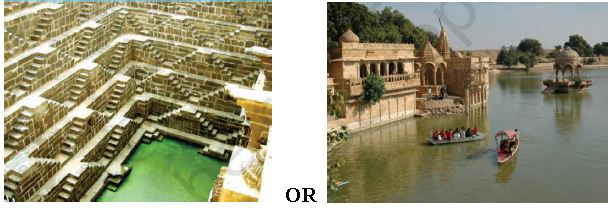
Q1 Water that contains salt in it is called ________________water.
OR
_____________________ is responsible for all the rain we get.
Q2 Delhi Jal Board is regulated by the government of _______________.
Q3 Different ____________ have different sizes, shapes, colours and textures.
Q4 Wheat roti tastes _____________ when we chew it for a while.
Q5 ___________________ is situated on the lower part of the globe.
II. State if the sentences given below are True or False.
Q6 Sunita came to India to fulfil her friend’s dream. ____________
Q7 In earlier times, people used to collect water in copper and brass pots. ___________
Q8 Sunita Williams went 630 km away from the earth. _________
OR
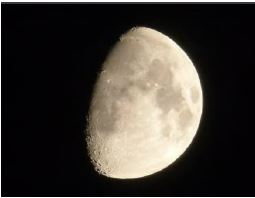
The moon changes its phase every night. _______________
Q9 Tomatoes and green chillies came from South America. ____________
Q10 The temperature of our stomach is 40 degrees. __________
III. Answer the following in one word or one line.
Q11 First Indian to go to space. __________
Q12 The Scientist who carried out many experiments on food and revealed many secrets about digestion. _______________
OR
What term is used for the food items like burger and pizza that makes a person unhealthy? ___________________
Q13 The level below which the ground is saturated with water is called the. _______________
Q14 The process of germinating a seed to increase its nutritional value and eat raw is__________
Q15
Q16
Section B
V. Write, in short, the answers to the following questions.
Q17 What is a Manmade Satellite? Give 2 examples of the same.
Q18 Why do wells get dry?
OR
How does water get contaminated?
Q19 When three fourth of the earth is covered in water, why is there any need to save water?
Q20. If we were to say that “digestion begins in the mouth”, how would you explain this?
Q21 Define the function of the stomach in the process of digestion.
OR
What is digestion?
Q22 Write about two plants that can grow without a seed. Give examples of each.
Q23 Give reasonsa)
a) Seeds kept in an air-tight container do not sprout.
b) Seeds kept in the refrigerator do not sprout.
OR
Give reasonsi)
i) Why do we tie chana seeds in a damp cloth?
ii) Why do farmers leave space while sowing seeds?
Section C
VI. Write long answers to the following questions.
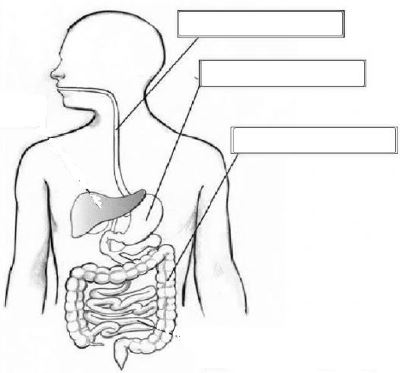
Q24 Label the digestive parts in the picture given below
Q25 Give reasons for the following
a) Why should we eat food slowly and chew properly?
b) Why do we feel weak when we suffer from loose motions?
c) Why do people sometimes close their noses before taking medicine?
OR
Give reasons for the following
a) Why do we need to cook some food items before we eat them?
b) Why do you think that the food eaten by Rashmi and Kailash was not proper food?
c) Why can’t the entire tongue identify all the different tastes?
Q26 Why should we take a healthy and balanced diet?
Q27. What were the challenges faced by the astronauts in Sunita’s shuttle due to the absence of gravity?
Q28 List three uses of seeds with examples of each.
Or
Name any three methods of dispersal of seeds with examples.
Q29 Name the followinga)
a) NASA stands for_________
b) The first man to walk on the moon _____________
c) India’s first spacecraft to be sent to the Moon from India itself ___________
Section D
VII. Circle the correct answer to all the questions given below.
Q30.
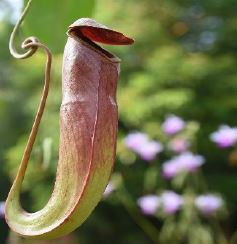
Observe the picture given above and circle the correct answers
a) What is the name of the plant given in the picture?
i) Venus Fly Trap
ii) Cape Sundew
iii) Pitcher Plant
iv) Snap traps
b) Where is it found in India?
i) Meghalaya
ii) Assam
iii) Australia
iv) Indonesia
c) How does the plant attract its prey?
i) By its shape
ii) By its colour
iii) By its scent
iv) By its sound
d) These types of plants are calledi)
i) Omnivorous
ii) Monocotyledon
iii) Herbivorous
iv) Carnivorous
Q31. Jhumpa ran into the kitchen and caught hold of her mother, saying, “Ma, I am not going to eat this bitter karela (bitter gourd). Give me Gur (jaggery) and roti.” Ma smiled and said, “You ate roti and sugar in the morning.” Jhoolan teased Jhumpa, “Don’t you get bored of only one kind of taste?” Jhumpa replied quickly, “Do you get bored with licking imli (tamarind)? I bet your mouth is watering just by hearing the word imli.” “Sure, I love the sour imli. But I eat sweet and salty things too. I even eat karela,” said Jhoolan and looked at her mother. They both laughed heartily.
Read the extract given above and circle the correct answers
i) Which part of the tongue can taste the bitter gourd?
a) The tip of the tongue
b) The front sides of the tongue
c) The back of the tongue
d) The centre of the tongue
ii) Which part of the tongue can taste the gur?
a) The tip of the tongue
b) The front sides of the tongue
c) The back of the tongue
d) The centre of the tongue
iii) “I bet your mouth is watering just by hearing the word imli.” What does the water refer to?
a) Gastric juice
b) Saliva
c) Bile juice
d) Digestive juice
iv) Why does Jhumpa’s mouth water when she hears of imli and not karela?
a) Because she is sick
b) Because she loves karela
c) Because she loves imli
d) Because she hates imli
Q32. He wrote especially about those things that he found very different from his own country.
Here is a part of what he wrote about the ponds of that time.
The people here are very skilled at making ponds. My countrymen would be surprised to see them. They pile up huge rocks and join them with iron rods to build chabutaras (raised platforms) all around the lake. Between these, there are rows of long staircases going up and down. The steps for going up and coming down are separate. So, there is less crowding.
Read the extract given above and circle the correct answers
a) Name the foreign traveller who came to India and wrote about it.
i) Rajender Singh
ii) Ghadsi
iii) Ghadsisar
iv) Al-Biruni
b) Which foreign country did he travel from?
i) Afghanistan
ii) Pakistan
iii) Uzbekistan
iv) Kazakhstan
c) What impressed him the most about the people of the city he visited?
i) They were very skilled in building water bodies
ii) They were very skilled in building long staircases
iii) They were very different from his countrymen
iv) They were very skilled in pilling huge rocks
d) “My countrymen would be surprised to see them”-What would the travellers’ countrymen be surprised to see?
i) The water
ii) The ponds and lakes
iii) The staircases
iv) The chabutaras
Free study material for Environmental Studies
Model Practice Papers & Solutions for Class 5 Environmental Studies
Class 5 Environmental Studies CBSE Class 5 EVS Sample Paper Set 20 PDF Download Guide
Review model practice papers for Class 5 Environmental Studies. Working through the CBSE Class 5 EVS Sample Paper Set 20 under simulated test conditions at home ensures complete familiarity with upcoming school evaluations.
Key Advantages of Solving CBSE Class 5 EVS Sample Paper Set 20
- Exam Blueprint: Understand mark allocations and structural guidelines relevant to Class 5 evaluations.
- Targeted Improvement: Identify weak areas in Class 5 Environmental Studies requiring focused revision.
- Pacing & Precision: Practice mixed question formats to build execution speed and ensure timely paper completion.
Post-Practice Strategy for Class 5 Environmental Studies
- Verify Answers: Compare your responses against professional teacher solutions provided in the sample paper keys.
- Error Analysis: Class 5 learners must review incorrect answers carefully to understand underlying mistakes.
- Concept Reinforcement: Consult the official NCERT book for Class 5 Environmental Studies when stuck before re-attempting problems.
FAQs
You can download the complete PDF for CBSE Class 5 EVS Sample Paper Set 20 for free from StudiesToday.com. Our resources for Class 5 Environmental Studies are updated for the latest academic session and follow the official exam pattern.
Yes, CBSE Class 5 EVS Sample Paper Set 20 comes with detailed, teacher-verified solutions. We have provided step-by-step answers for Environmental Studies to help students of Class 5 understand correct methodology and marking scheme.
Practicing this Environmental Studies paper helps in time management and identifying important topics. For Class 5, solving mock papers is the best way to gain confidence and reduce exam-day anxiety.
Yes, all our study materials for Class 5 Environmental Studies are provided in a mobile-friendly PDF format. You can easily download CBSE Class 5 EVS Sample Paper Set 20 on your mobile device.