

School Assignments for Class 9 Mathematics: Chapter 15 Probability
Access comprehensive school assignments for Chapter 15 Probability using the CBSE Class 9 Mathematics Probability Set 04. Designed to align with the 2026-27 CBSE academic guidelines, these practice sets help Class 9 Mathematics students reinforce core concepts and improve their problem-solving accuracy.
Practice Class 9 Mathematics Assignments: Chapter 15 Probability
Access the complete assignment PDF for Class 9 Mathematics below. Regular practice with these targeted academic tasks builds familiarity with standard question patterns and helps secure higher marks in final school evaluations.

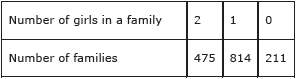

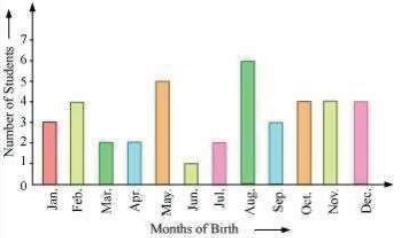

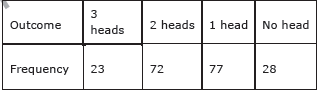

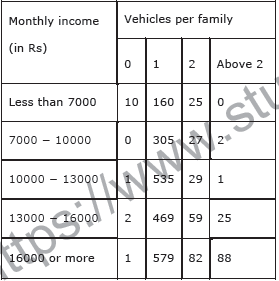

Fill the Gap
Q1. The probability of an event can never be greater than one.
Answer: Greater
In simple words: The value of probability always lies between 0 and 1 inclusive, so it cannot exceed 1.
Exam Tip: Remember that \(0 \le P(E) \le 1\) for any event \(E\).
Q2. If the probability of happening of an event is \(\frac{3}{5}\) then the probability of not happening is \(\frac{2}{5}\).
Answer: \(\frac{2}{5}\)
Let \(E\) be the event and \(E'\) be the event of not happening.
\(P(E) + P(E') = 1\)
\(\frac{3}{5} + P(E') = 1\)
\(P(E') = 1 - \frac{3}{5} = \frac{2}{5}\)
In simple words: Subtract the given probability from 1 to find the probability of the event not occurring.
Exam Tip: Use the complementary probability formula \(P(\text{not } E) = 1 - P(E)\).
Q3. A dice is tossed once. The probability of prime number is \(\frac{1}{2}\).
Answer: \(\frac{1}{2}\)
Total possible outcomes when a die is tossed = 6 (i.e., {1, 2, 3, 4, 5, 6})
Prime numbers on a die = 3 (i.e., {2, 3, 5})
Probability = \(\frac{\text{Number of favorable outcomes}}{\text{Total number of outcomes}} = \frac{3}{6} = \frac{1}{2}\)
In simple words: Count the prime numbers on a die (2, 3, 5) and divide by the total numbers (6).
Exam Tip: Note that 1 is neither prime nor composite.
Q4. In a pack of cards, the probability of red queen is \(\frac{1}{26}\).
Answer: \(\frac{1}{26}\)
Total cards in a standard deck = 52
Number of red queens = 2 (Queen of Hearts and Queen of Diamonds)
Probability = \(\frac{2}{52} = \frac{1}{26}\)
In simple words: There are 2 red queens in a deck of 52 cards, which simplifies to 1 out of 26.
Exam Tip: Total red cards are 26, divided equally into hearts and diamonds.
Q5. A box contains 25 bulbs out of which 10 are defective. The probability of non defective bulb is \(\frac{3}{5}\).
Answer: \(\frac{3}{5}\)
Total bulbs = 25
Defective bulbs = 10
Non-defective bulbs = 25 - 10 = 15
Probability of non-defective bulb = \(\frac{15}{25} = \frac{3}{5}\)
In simple words: Find the number of good bulbs (15) and divide by the total number of bulbs (25).
Exam Tip: Always subtract defective items from the total to find working or non-defective items.
Q6. A pair of dice is tossed. The probability of non doublet is \(\frac{5}{6}\).
Answer: \(\frac{5}{6}\)
Total outcomes when two dice are tossed = \(6 \times 6 = 36\)
Doublets are (1,1), (2,2), (3,3), (4,4), (5,5), (6,6) - Total 6 doublets
Number of non-doublet outcomes = 36 - 6 = 30
Probability of non-doublet = \(\frac{30}{36} = \frac{5}{6}\)
In simple words: Subtract the 6 doublets from the 36 total outcomes to get 30 non-doublet outcomes.
Q7. If a coin is tossed 100 times then the no. of outcomes in sample space is 2.
Answer: 2
The sample space of a coin toss consists of the possible individual outcomes for a single trial, which are Head and Tail.
In simple words: A coin always has 2 possible outcomes (Head or Tail) for a single toss, regardless of how many times it is flipped.
Exam Tip: Do not confuse total outcomes in sample space (2) with total possible outcomes of 100 tosses (\(2^{100}\)).
Q8. The sum of the probabilities of all the elementary events of an experiment is 1.
Answer: 1
By definition of probability, the sum of probabilities of all possible elementary outcomes of a random experiment is always equal to 1.
In simple words: All possible outcomes combined cover 100% certainty, so their probabilities add up to 1.
Exam Tip: This is a fundamental axiom in probability theory.
Q9. The probability of an event is greater than or equal to 0 and less than or equal to 1.
Answer: 0, 1
The probability value ranges from 0 (impossible event) to 1 (sure event).
In simple words: Probabilities are always numbers between 0 and 1 inclusive.
Exam Tip: Negative probabilities or probabilities greater than 1 are mathematically impossible.
Q10. Probability of an event A + Probability of the event 'not A' is 1.
Answer: 1
\(P(A) + P(\text{not } A) = 1\)
In simple words: The chance of something happening plus the chance of it not happening always equals 1.
Exam Tip: This rule is very useful for finding complementary probabilities quickly.
Q11. A coin is tossed once, its sample space is/are {H, T}.
Answer: {H, T}
When a single coin is tossed, the possible outcomes are Head (H) and Tail (T).
In simple words: The set of all possible results is Head and Tail, written as {H, T}.
Exam Tip: Always enclose sample spaces in curly braces.
Q12. A dice is tossed once. The probability of 7 is 0.
Answer: 0
A standard die has faces numbered 1 through 6. Getting a 7 is impossible.
In simple words: Since 7 is not on a die, the probability of rolling a 7 is zero (impossible event).
Exam Tip: The probability of any impossible event is always 0.
Free study material for Mathematics
Chapter Assignment & Practice Material for Class 9 Mathematics Chapter 15 Probability
Revision Assignment: Chapter 15 Probability (CBSE)
Explore reliable practice questions for Chapter 15 Probability tailored for Class 9 learners. Use these structured worksheets to evaluate preparedness and strengthen core problem-solving skills.
Maximize Exam Scores with Chapter Practice Sets
- Syllabus Compliance: Sets reflect current CBSE evaluation criteria and official marking frameworks.
- Multi-Format Practice: Includes varied problem types designed to deepen comprehension across all sub-topics.
- Time Management: Routine practice optimizes pacing to finish school examinations comfortably within schedule.
Effective Strategy for Class 9 Mathematics Assignments
- Textbook Review: Always study the core NCERT book for Class 9 Mathematics prior to beginning the assignment.
- Independent Attempt: Solve Chapter 15 Probability questions on your own initially before cross-checking with expert solutions.
- Error Tracking: Record challenging concepts in a dedicated notebook and practice online MCQ tests for revision.
FAQs
You can download free PDF assignments for Class 9 Mathematics Chapter 15 Probability from StudiesToday.com. These practice sheets have been updated for the 2026-27 session covering all concepts from latest NCERT textbook.
Yes, our teachers have given solutions for all questions in the Class 9 Mathematics Chapter 15 Probability assignments. This will help you to understand step-by-step methodology to get full marks in school tests and exams.
Yes. These assignments are designed as per the latest CBSE syllabus for 2026. We have included huge variety of question formats such as MCQs, Case-study based questions and important diagram-based problems found in Chapter 15 Probability.
Practicing topicw wise assignments will help Class 9 students understand every sub-topic of Chapter 15 Probability. Daily practice will improve speed, accuracy and answering competency-based questions.
Yes, all printable assignments for Class 9 Mathematics Chapter 15 Probability are available for free download in mobile-friendly PDF format.