

Download Class 9 Mathematics Practice Worksheets
Access comprehensive chapter-wise worksheets for Chapter 08 Quadrilaterals using the CBSE Class 9 Mathematics Quadrilaterals Worksheet Set 01. Designed to align with the 2026-27 academic syllabus for Class 9 Mathematics, these printable practice sets help students reinforce key concepts and improve their overall exam readiness.
Access Chapter 08 Quadrilaterals Practice Papers and Solutions
Navigate directly to the solved Mathematics worksheets using the digital viewer below. Each practice set includes detailed step-by-step solutions, allowing students to instantly cross-check their work and identify areas requiring further revision.
Case Based MCQs
Case I. Read the following passage and answer the questions from 1 to .
Laveena’s class teacher gave students some colourful papers in the shape of quadrilaterals.
She asked students to make a parallelogram from it using paper folding. Laveena made the following parallelogram.

1. How can a parallelogram be formed by using paper folding?
(a) Joining the sides of quadrilateral
(b) Joining the mid-points of sides of quadrilateral
(c) Joining the various quadrilaterals
(d) None of these
Answer : B
2. Which of the following is true?
(a) PQ = BD
(b) PQ = (1/2)BD
(c) 3PQ = BD
(d) PQ = 2BD
Answer : B
3. Which of the following is correct combination?
(a) 2RS = BD
(b) RS = (1/3)BD
(c) RS = BD
(d) RS = 2BD
Answer : A
4. Which of the following is correct?
(a) SR = 2PQ
(b) PQ = SR
(c) SR = 3PQ
(d) SR = 4PQ
Answer : B
5. Write the formula used to find the perimeter of quadrilateral PQRS.
(a) PQ + QR + RS + SP
(b) PQ – QR + RS – SP
(c) PQ + QR+ RS + SP/2
(d) PQ + QR+ RS + SP/3
Answer : A
Case II. Read the following passage and answer the questions from 6 to 10.
After summervacation, Manit’s class teacher organised a small MCQ quiz, based on the properties of quadrilaterals. During quiz, she asks different questions to students.
Some of the questions are listed below.
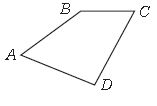
6. Which of the following is/are the condition(s) for ABCD to be a quadrilateral?
(a) The four points A, B, C and D must be distinct and co-planar.
(b) No three of points A, B, C and D are collinear.
(c) Line segments i.e., AB, BC, CD, DA intersect at their end points only.
(d) All of these
Answer : D
7. Which of the following is wrong condition for a quadrilateral said to be a parallelogram?
(a) Opposite sides are equal
(b) Opposite angles are equal
(c) Diagonal can’t bisect each other
(d) None of these
Answer : C
8. If AX and CY are the bisectors of the angles A and C of a parallelogram ABCD, then

(a) AX || CY B A
(b) AX || CD
(c) AX || AB
(d) None of these
Answer : A
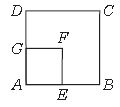
9. ABCD and AEFG are two parallelograms.
If ∠C = 63°, then determine ∠G.
(a) 63°
(b) 117°
(c) 90°
(d) 120°
Answer : B
10. If angles of a quadrilateral are in ratio 3 : 5 : 5 : 7, then find all the angles.
(a) 54°, 80°, 80°, 146°
(b) 34°, 100°, 100°, 126°
(c) 54°, 90°, 90°, 126°
(d) None of these
Answer : C
Assertion & Reasoning Based MCQs
Directions (Q.1 to 5) : In these questions, a statement of Assertion is followed by a statement of Reason is given.
Choose the correct answer out of the following choices :
(a) Assertion and Reason both are correct statements and Reason is the correct explanation of Assertion.
(b) Assertion and Reason both are correct statements but Reason is not the correct explanation of Assertion.
(c) Assertion is correct statement but Reason is wrong statement.
(d) Assertion is wrong statement but Reason is correct statement.
1. Assertion : In DABC, median AD is produced to X such that AD = DX. Then ABXC is a parallelogram.
Reason : Diagonals of a parallelogram are perpendicular to each other.
Answer : C
2. Assertion : ABCD and D PQRC are rectangles and Q is the mid-point of AC. Then DP = PC.
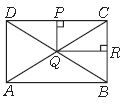
Reason : The line segment joining the midpoints of any two sides of a triangle is parallel to the third side and equal to half of it.
Answer : A
3. Assertion : Two opposite angles of a parallelogram are (3x – 2)° and (50 – x)°. The measure of one of the angle is 37°.
Reason : Opposite angles of a parallelogram are equal.
Answer : A
4. Assertion : ABCD is a square. AC and BD intersect at O. The measure of ∠AOB = 90°.
Reason : Diagonals of a square bisect each other at right angles.
Answer : A
5. Assertion : In DABC, E and F are the midpoints of AC and AB respectively. The altitude AP at BC intersects FE at Q. Then, AQ = QP.
Reason : If Q is the midpoint of AP, then AQ = QP.
Answer : B
Question. The angles of a quadrilateral are in the ratio 3 : 5 : 9 : 13. Find all the angles of the quadrilateral.
Answer : Let the measure of the angles be 3x°, 5x°, 9x° and 13x°, Then,
3x° + 5x° + 9x° + 13x° = 360° [Angle sum property of quadrilateral]
or, 30x° = 360°
x = 12°
∴ Angles are : 36°, 60°, 108°, 156°.
Question. The angles of a quadrilateral are 4x°, 7x°, 15x° and 10x°. Find the smallest and largest angles of the quadrilateral.
Answer : Sum of the angles of a quadrilateral is 360°.
∴ 4x° + 7x° + 15x° + 10x° = 360°
or, 36x° = 360°
or, x° = 10°
∴ Smallest angle = 4x° = 4 × 10° = 40°
Largest angle = 15x° = 15 × 10° = 150°
Question. The angles of a quadrilateral are in the ratio 2 : 3 : 6 : 7. Find the largest angle of the quadrilateral.
Answer : Let the angles of the quadrilateral be 2x°, 3x°, 6x°,7x°.
∴ 2x° + 3x° + 6x° + 7x° = 360° [Angle sum property of quadrilateral]
or, 18x° = 360°
or, x° = 20°
∴ Largest angle = 7x° = 7 × 20° = 140°
Question. If angles of a quadrilateral are in ratio 1 : 2 : 3 : 4. Find the measure of all the angles of a quadrilateral.
Answer : Let the measure of the angles be x°, 2x°, 3x° and 4x° then,
x° + 2x° + 3x° + 4x° = 360°
or, x = 36°
∴ Angles of quadrilateral are 36°, 72°, 108° and 144°
Question. Two consecutive angles of a parallelogram are in the ratio 1 : 3, then what will be the smaller angles ?
Answer : Let the consecutive angles be x° and 3x°.
∴ x° + 3x° = 180°
or, 4x° = 180°
or, x° = 45°
∴ Smaller angle = x°
= 45°
Students must free download and practice these worksheets to gain more marks in exams. CBSE Class 9 Mathematics Worksheet - Quadrilaterals
Free study material for Mathematics
CBSE Class 9 Mathematics Worksheets for Chapter 08 Quadrilaterals
Daily Practice Questions for Class 9 Mathematics
Access structured practice worksheets for Chapter 08 Quadrilaterals aligned with the 2026 CBSE curriculum. These downloadable exercises for Class 9 Mathematics help students build accuracy and reinforce core concepts for upcoming school tests.
Detailed Answers for Class 9 Mathematics Chapter 08 Quadrilaterals
Designed around the official curriculum for Class 9 Mathematics, these practice sheets guarantee standard compliance. Reviewing step-by-step solutions after completion sharpens your accuracy and clarifies complex sub-topics within Chapter 08 Quadrilaterals.
Complete Your Chapter Revision
Wrap up your chapter revision by testing your knowledge against standard objective question formats. Explore our full library of free, up-to-date printable assignments to maximize your academic results in upcoming CBSE evaluations.
FAQs
You can download the latest chapter-wise printable worksheets for Class 9 Mathematics Chapter 08 Quadrilaterals for free from StudiesToday.com. These have been made as per the latest CBSE curriculum for this academic year.
Yes, Class 9 Mathematics worksheets for Chapter 08 Quadrilaterals focus on activity-based learning and also competency-style questions. This helps students to apply theoretical knowledge to practical scenarios.
Yes, we have provided solved worksheets for Class 9 Mathematics Chapter 08 Quadrilaterals to help students verify their answers instantly.
Yes, our Class 9 Mathematics test sheets are mobile-friendly PDFs and can be printed by teachers for classroom.
For Chapter 08 Quadrilaterals, regular practice with our worksheets will improve question-handling speed and help students understand all technical terms and diagrams.