

Download CBSE Class 11 Biology VBQs: Chapter 04 Animal Kingdom
Review targeted competency-based resources with the CBSE Class 11 Biology VBQs Animal Kingdom. Built according to official CBSE standards for the 2026-27 academic year, these downloadable Class 11 Biology VBQs support holistic learning and critical reasoning for Chapter 04 Animal Kingdom.
Access CBSE Value Based Questions and Answers
View or download the dedicated CBSE Class 11 Biology VBQs Animal Kingdom resource below. Engaging with these value-based scenarios ensures continuous academic progress and mastery of the 2026-27 exam format.
Question. Consider following features.
(A) Organ system level of organisation
(B) Bilateral symmetry
(C) True coelomates with segmentation of body Select the correct option of animal groups which possess all the above characteristics.
(a) Annelida, Mollusca and Chordata
(b) Annelida, Arthropoda and Chordata
(c) Annelida, Arthropoda and Mollusca
(d) Arthropoda, Mollusca and Chordata
Answer. B
Question. Which of the following animals are true coelomates with bilateral symmetry?
(a) Adult Echinoderms
(b) Aschelminthes
(c) Platyhelminthes
(d) Annelids
Answer. D
Question. Which one of the following kinds of animals are triploblastic?
(a) Flatworms
(b) Sponges
(c) Ctenophores
(d) Corals
Answer. A
Question. Which one of the following statements about certain given animals is correct?
(a) Roundworms (Aschelminthes) are pseudocoelomates.
(b) Molluscs are acoelomates.
(c) Insects are pseudocoelomates.
(d) Flatworms (Platyhelminthes) are coelomates.
Answer. A
Question. Which one of the following groups of animals is bilaterally symmetrical and triploblastic?
(a) Aschelminthes (roundworms)
(b) Ctenophores
(c) Sponges
(d) Coelenterates (cnidarians)
Answer. A
Question. Metameric segmentation is the characteristic of
(a) mollusca and chordata
(b) platyhelminthes and arthropoda
(c) echinodermata and annelida
(d) annelida and arthropoda.
Answer. D
Question. The animals with bilateral symmetry in young stage and radial pentamerous symmetry in the adult stage, belong to the Phylum
(a) Annelida
(b) Mollusca
(c) Cnidaria
(d) Echinodermata.
Answer. D
Question. Which of the following animals have scattered cells with cell - tissue grade organisation?
(a) Sponge
(b) Hydra
(c) Liver fluke
(d) Ascaris
Answer. B
Question. Coelom is found between
(a) body wall and ectoderm
(b) ectoderm and endoderm
(c) mesoderm and body wall (endoderm)
(d) mesoderm and ectoderm.
Answer. C
Question. Besides annelida and arthropoda, the metamerism is exhibited by
(a) mollusca
(b) acanthocephala
(c) cestoda
(d) chordata.
Answer. D
Question. Bilaterally symmetrical and acoelomate animals are exemplified by
(a) ctenophora
(b) platyhelminthes
(c) aschelminthes
(d) annelida.
Answer. B
Question. Match the following columns and select the correct option.
Column-I Column-II
(A) 6-15 pairs of gill slits (i) Trygon
(B) Heterocercal caudal fin (ii) Cyclostomes
(C) Air bladder (iii) Chondrichthyes
(D) Poison sting (iv) Osteichthyes
(A) (B) (C) (D)
(a) (ii) (iii) (iv) (i)
(b) (iii) (iv) (i) (ii)
(c) (iv) (ii) (iii) (i)
(d) (i) (iv) (iii) (ii)
Answer. A
Question. Which of the following statements are true for the Phylum Chordata?
(A) In Urochordata, notochord extends from head to tail and it is present throughout their life.
(B) In Vertebrata, notochord is present during the embryonic period only.
(C) Central nervous system is dorsal and hollow.
(D) Chordata is divided into 3 subphyla :
Hemichordata, Tunicata and Cephalochordata.
(a) (D) and (C)
(b) (C) and (A)
(c) (A) and (B)
(d) (B) and (C)
Answer. D
Question. Match the following columns and select the correct option.
Column-I Column-II
(A) Gregarious,polyphagous pest (i) Asterias
(B) Adult with radial symmetry and (ii) Scorpion
larva with bilateral symmetry
(C) Book lungs (iii) Ctenoplana
(D) Bioluminescence (iv) Locusta
(A) (B) (C) (D)
(a) (i) (iii) (ii) (iv)
(b) (iv) (i) (ii) (iii)
(c) (iii) (ii) (i) (iv)
(d) (ii) (i) (iii) (iv)
Answer. B
Question. Match the following organisms with respective characteristics.
(A) Pila (i) Flame cells
(B) Bombyx (ii) Comb plates
(C) Pleurobrachia (iii) Radula
(D) Taenia (iv) Malpighian tubules
Select the correct option from the following.
(A) (B) (C) (D)
(a) (iii) (ii) (iv) (i)
(b) (iii) (ii) (i) (iv)
(c) (iii) (iv) (ii) (i)
(d) (ii) (iv) (iii) (i)
Answer. C
Question. Match the following genera with their respective phylum.
(1) Ophiura (i) Mollusca
(2) Physalia (ii) Platyhelminthes
(3) Pinctada (iii) Echinodermata
(4) Planaria (iv) Coelenterata
Select the correct option.
(a) (1)-(iv), (2)-(i), (3)-(iii), (4)-(ii)
(b) (1)-(iii), (2)-(iv), (3)-(i), (4)-(ii)
(c) (1)-(i), (2)-(iii), (3)-(iv), (4)-(ii)
(d) (1)-(iii), (2)-(iv), (3)-(ii), (4)-(i)
Answer. B
Question. Which of the following animals does not undergo metamorphosis?
(a) Earthworm
(b) Tunicate
(c) Moth
(d) Starfish
Answer. A
Question. Identify the vertebrate group of animals characterised by crop and gizzard in its digestive system.
(a) Amphibia
(b) Reptilia
(c) Aves
(d) Osteichthyes
Answer. C
Question. Which one of these animals is not a homeotherm?
(a) Macropus
(b) Chelone
(c) Camelus
(d) Psittacula
Answer. B
Question. Important characteristic that hemichordates share with chordates is
(a) ventral tubular nerve cord
(b) pharynx with gill slits
(c) pharynx without gill slits
(d) absence of notochord.
Answer. B
Question. Which among these is the correct combination of aquatic mammals?
(a) Dolphins, Seals, Trygon
(b) Whales, Dolphins, Seals
(c) Trygon, Whales, Seals
(d) Seals, Dolphins, Sharks
Answer. B
Question. Which of the following represents order of ‘Horse’?
(a) Perissodactyla
(b) Caballus
(c) Ferus
(d) Equidae
Answer. A
Question. In case of poriferans, the spongocoel is lined with flagellated cells called
(a) oscula
(b) choanocytes
(c) mesenchymal cells
(d) ostia.
Answer. B
Question. Choose the correct statement.
(a) All mammals are viviparous.
(b) All cyclostomes do not possess jaws and paired fins.
(c) All reptiles have a three-chambered heart.
(d) All pisces have gills covered by an operculum.
Answer. B
Question. Which one of the following characteristics is not shared by birds and mammals?
(a) Viviparity
(b) Warm blooded nature
(c) Ossified endoskeleton
(d) Breathing using lungs
Answer. A
Question. Which of the following characteristic features always holds true for the corresponding group of animals?
(a) Possess a mouth with an Chordata upper and a lower jaw
(b) 3–chambered heart with Reptilia one incompletely divided ventricle
(c) Cartilaginous endoskeleton Chondrichthyes
(d) Viviparous Mammalia
Answer. C
Question. Which of the following features is not present in the Phylum Arthropoda?
(a) Parapodia
(b) Jointed appendages
(c) Chitinous exoskeleton
(d) Metameric segmentation
Answer. A
Question. Body having meshwork of cells, internal cavities lined with food filtering flagellated cells and indirect development are the characteristics of Phylum
(a) Mollusca
(b) Protozoa
(c) Coelenterata
(d) Porifera.
Answer. D
Question. Match the following columns.
Column I Column II
(Phylum) (Characteristic features)
A. Aschelminthes 1. Water vascular system
B. Annelida 2. Muscular pharynx
C. Arthropoda 3. Jointed appendages
D. Echinodermata 4. Metameres
Codes
A B C D
(a) 3 4 2 1
(b) 4 2 3 1
(c) 2 4 3 1
(d) 4 2 1 3
Answer. C
Question. Scientific name of starfish is
(a) Echinus
(b) Limulus
(c) Echidna
(d) Asterias
Answer. D
Question. The notochord-like structure of hemichordates is called
(a) proboscis
(b) pyloric
(c) protochord
(d) stomochord
Answer. D
Question. Select the feature(s) which is/are present in hemichordates.
(a) Stomochord
(b) Worm-like body
(c) Gills
(d) All of the above
Answer. D
Question. The body of Balanoglossus is divided into
(a) head and trunk
(b) head, neck and abdomen
(c) proboscis, collar and trunk
(d) prosoma, mesasoma and metasoma
Answer. C
Question. The correct classification of given animal is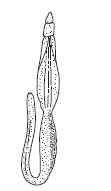
(a) Chordata – Vertebrata – Craniata
(b) Chordata – Craniata
(c) Chordata – Acraniata
(d) Non-chordata – Hemichordata
Answer. D
Question. All chordates have the following characteristics.
(a) Bilaterally symmetrical, presence of coelom, triploblastic, open circulatory system
(b) Bilaterally symmetrical, presence of coelom, diploblastic or triploblastic
(c) Open circulatory system, diploblastic or triploblastic, coelom and bilaterally symmetrical
(d) Bilaterally symmetrical, coelom present, triploblastic with closed circulatory system
Answer. D
Question. Animals belonging to phylum–Chordata are fundamentally characterised by the presence of structure noted as A, B, C and D.
Identify A, B, C and D.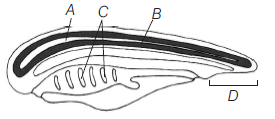
(a) A–Notochord, B–Nerve cord, C–Gill slits,D–Post-anal part
(b) A–Nerve cord, B–Notochord, C–Gill slits,D–Post-anal part
(c) A–Nerve cord, B–Notochord, C–Post-anal part, D–Gill slits
(d) A–Nerve cord, B–Gill slits, C–Notochord,D–Post-anal part
Answer. B
Question. Phylum–Chordata is divided into subphyla namely
(a) Vertebrata, Protochordata and Urochordata
(b) Urochordata, Gnathochordata, Vertebrata and Cephalochordata
(c) Urochordata, Tunicata and Vertebrata
(d) Tunicata, Cephalochordata and Vertebrata
Answer. D
Question. The members of which of the following are often referred as protochordates?
(a) Urochordata
(b) Cephalochordata
(c) Both (a) and (b)
(d) None of these
Answer. C
Question. A set of features observed in chordates
(a) dorsal heart, pharynx perforated by gill slits and dorsal ventral system
(b) ventral heart, presence of post-anal tail and presence of gill slits
(c) ventral heart, absence of notochord, but presence of post-anal part of the tail
(d) dorsal heart, presence of post-anal tail and central nervous system in dorsal
Answer. B
Question. The following is the flow chart depicting the divisions of the subphylum– Vertebrata. Fill in the parts A, B and C and choose the correct option.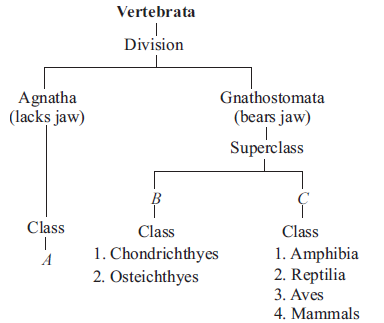
A B C
(a) Ostracodermi Pisces Tetrapoda
(b) Cyclostomata Pisces Tetrapoda
(c) Ostracodermi Cyclostomata Pisces
(d) Pisces Tetrapoda Cyclostomata
Answer. B
Question. Which of the following options about the class–Cyclostomata is incorrect?
(a) Cranium and vertebral column are cartilaginous
(b) Elongated body bearing scales and paired fins
(c) Gill slits for respiration
(d) Sucking and circular mouth
Answer. B
Question. Chondrichthyes is characterised by tooth shaped
(a) placoid scale with dorsal mouth
(b) ctenoid scale with dorsal mouth
(c) ctenoid scale with ventral mouth
(d) placoid scale with ventral mouth
Answer. D
Question. Which statement is incorrect about class–Chondrichthyes?
(a) Presence of placoid scales
(b) Absence of air bladder
(c) Presence of cartilaginous endoskeleton
(d) Notochord is persistent only at larval stage, after that it disappears
Answer. D
Question. Bony fishes
(a) have external fertilisation
(b) are mostly oviparous
(c) show direct development
(d) All of the above
Answer. D
Question. The number of gills present in Osteichthyes is
(a) 2 pairs
(b) 6 pairs
(c) 5 pairs
(d) 4 pairs
Answer. D
Question. Buoyancy in a bony fish is maintained with the help of
(a) stream-lined body
(b) paired fins
(c) swim bladder
(d) All of these
Answer. C
Question. Choose the incorrect option for the given figure.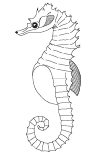
(a) Operculum present
(b) Bony fish
(c) Poisonous sting at tail
(d) Sexes separate
Answer. C
Question. A characteristic observed in amphibians
(a) cold-blooded animals
(b) absence of scales
(c) three-chambered heart
(d) All of the above
Answer. D
Question. Choose the incorrect option for the following animal.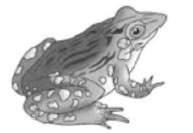
(a) Cloaca present
(b) Dioecious, external fertilisation, oviparous, indirect development
(c) Body divisible into head and trunk
(d) Eyes are without eyelids
Answer. D
Question. The class name–Reptilia refers to
(a) presence of scales or scutes on their body
(b) presence of dry and cornified skin
(c) their creeping or crawlingmode of locomotion
(d) None of the above
Answer. C
Question. Dry skin with scales or scutes without gland is a characteristic of
(a) Fishes
(b) Reptilia
(c) Amphibia
(d) Aves
Answer. B
Question. Crocodile is a reptile with fourchambered heart.
(a) True
(b) False
(c) Cannot say
(d) Partially true or false
Answer. A
Question. Features common to the animals belonging to class–Amphibia and class–Reptilia are
(a) presence of scales with internal fertilisation and usually four-chambered heart
(b) presence of tympanum, poikilotherms and usually possess three-chambered heart
(c) presence of cloaca, oviparous and external fertilisation
(d) skin is moist
Answer. B
Question. Which one of the following is incorrect for Aves?
(a) Heart is four-chambered and animals are oviparous
(b) The presence of air cavities in bones and the presence of feathers on the body
(c) Digestive tract has additional chambers and animals are homeothermous
(d) The forelimbs are not modified into wings
Answer. D
Question. Fill in the blanks with respect to A, B, C,D, E and F with the appropriate option (i) or (ii) for animals belonging to class–Aves.
I. Crop and gizzard are ..... A ..... .
II. Forelimbs are modified into wings ..... B .... .
III. Scales are ..... C...... .
IV. A three-chambered heart is .....D..... .
V. Air cavities in bones are ..... E.
VI. Lungs are .... F..... .
(i)-Absent (ii)-Present
A B C D E F
(a) (i) (ii) (i) (ii) (i) (ii)
(b) (ii) (i) (ii) (ii) (ii) (ii)
(c) (i) (i) (i) (ii) (ii) (i)
(d) (ii) (ii) (ii) (i) (ii) (ii)
Answer. D
Question. The unique character of animals belonging to class–Mammalia is
(a) bipedal locomotion
(b) completely four-chambered heart
(c) the presence of mammary glands
(d) fertilisation is internal
Answer. C
Question. Which one of the following is not a mammalian character without exception?
(a) The presence of milk producing gland
(b) They have two pairs of limbs
(c) Skin is unique in possessing hairs
(d) Heterodont type of dentition
Answer. C
Question. Which one of the following characteristics is not shared by birds and mammals?
(a) Breathing using lungs
(b) Viviparity
(c) Warm-blooded nature
(d) Ossified endoskeleton
Answer. B
Question. In order to eradicate mosquitoes Housing colony members were asked to keep the surroundings dry, not to let water standing any where and cover the drainage. It was found that the strategy worked and there was decline in the number of mosquitoes. What according to you is the reason for the decline in the number of mosquitoes.?
Answer. Mosquito belongs to class Insect, phylum Arthropoda . Its development is indirect with distinct stages like egg, larva, pupa and adult. It breeds in water and so if water is not provided it cannot complete its life cycle . This leads to the decline in the number of mosquitoes.
Question. Ravi’s younger brother of class III stated that bats are like birds as they are able to fly. How will you contradict him and make him understand that bats are mammals and not birds.
Answer. Bats have external ears, body covered with hairs and mammary glands. They have skin instead of feathers and mouth with teeth instead of beak. They do not lay eggs but give birth to young ones.
Free study material for Biology
VBQs with Answers for Class 11 Biology Chapter 04 Animal Kingdom
Download VBQs for Class 11 Biology Chapter 04 Animal Kingdom
Access targeted moral and value-driven questions for Class 11 Biology Chapter 04 Animal Kingdom. Designed to align with official CBSE guidelines, these problem sets test deep comprehension beyond standard textbook answers.
Expert Guidance for Chapter 04 Animal Kingdom VBQs
Built using the official NCERT book for Class 11 Biology, these solved problem sets provide reliable guidance. Cross-reference your answers with our expert-verified keys for complete conceptual clarity.
Enhance Analytical Depth for Class 11 Biology
Practicing value-based problems regularly connects abstract concepts to everyday experiences, ensuring stronger performance across school examinations and board assessments.
FAQs
The latest collection of Value Based Questions for Class 11 Biology Chapter 04 Animal Kingdom is available for free on StudiesToday.com. These questions are as per 2026 academic session to help students develop analytical and ethical reasoning skills.
Yes, all our Biology VBQs for Chapter 04 Animal Kingdom come with detailed model answers which help students to integrate factual knowledge with value-based insights to get high marks.
VBQs are important as they test student's ability to relate Biology concepts to real-life situations. For Chapter 04 Animal Kingdom these questions are as per the latest competency-based education goals.
In the current CBSE pattern for Class 11 Biology, Chapter 04 Animal Kingdom Value Based or Case-Based questions typically carry 3 to 5 marks.
Yes, you can download Class 11 Biology Chapter 04 Animal Kingdom VBQs in a mobile-friendly PDF format for free.