

Class 11 Informatics Practices Practice Sheet: CBSE Class 11 Information Practices Data Handling Worksheet
Explore structured practice materials through the CBSE Class 11 Information Practices Data Handling Worksheet. Tailored for Class 11 learners, utilizing these Informatics Practices worksheets ensures thorough preparation and strengthens problem-solving accuracy before final school evaluations.
Download Data Handling Worksheet PDF with Answers
View or download the dedicated CBSE Class 11 Information Practices Data Handling Worksheet resource below. Engaging with these practice papers under focused study conditions ensures continuous academic progress and mastery of the 2026-27 curriculum for Data Handling.
Question: Identify the data types of the following values given bellow –
3, 3j, 13.0, „12‟, ”14”, 2+0j, 19, [1,2,3], (3,4,5)
Answer: 3 – int 3j – complex 13.0 – float ’12’– string “14” – string
2+0j – complex 19– int [1,2,3]– list (3,4,5) – tuple
Question: What will be the output of the following
(a)12/4 (b)14//14 (c)14%4 (d) 14.0/4 (e) 14.0//4 (f)14.0%4
Answer: (a) 3.0 (b) 1 (c) 2 (d) 3.5 (e) 3.0 (f) 2.0
Question: What will be the output of the following ?
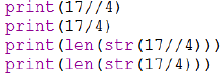
Answer: 4
4.25
1
4
Question: What will be the output of the following ?
(a) bool(0) (b) bool(„0‟) (c) bool(int(„0‟))
(d) bool(str(0.0)) (e) bool(0j) (f) bool(0.0)
Answer: (a) False (b) True (c) False
(d) True (e) False (f) False
Question: What will be the output of the following ?
(a)87//5 (b)(87//5.0) == (87//5) (c) 87//5.0 (d) 17%5.0
Answer: (a) 17 (b) True (c) 17.0 (d) 2.0
Question: int(„a‟) produces error. Why?
Answer: This is because „a‟ is an invalid literal for int() with base 10.
Question: Write following expressions in Python.

Answer: (a) (bbh)/3
(b) d=math.sqrt(pow(x2-x1,2)+pow(y2-y1,2))
(c) x1=((-b) + math.sqrt((bb)-(4ac)))/(2a)
x2=((-b) – math.sqrt((bb)-(4ac)))/(2a)
(d) pow(a,n) * pow(a,m) = pow(a,m+n)
Short Answer Type Questions
Question: What are data types? What are Python’s built-in core data types?
Answer: Every value in Python has a datatype. Since everything is an object in Python programming, data types are actually classes and variables are instance (object) of these classes. There are various data types in Python. Some of the important types are listed below. (i) Numbers (ii) String (iii) List (iv) Tuple (v) Dictionary
Question: Which data types of Python handle Numbers?
Answer: It is cleared by name that Number data types are used to store numeric value in Python. The Numbers in Python have following core data types:
(i) Integers
a. Integers (signed)
b. Booleans
(ii) Floating-Point Numbers
(iii) Complex Numbers
Question: Why is Boolean considered a subtype of Integers?
Answer: Because Boolean Values False and True behave like the values 0 and 1, respectively. So Boolean type is a subtype of plain integers.
Question: What do you understand by term „immutable‟?
Answer: Immutable types are those data types that can never change their value in place. In Python the following types are immutable:
(i) integers
(ii) floating-point numbers
(iii) Booleans
(iv) Strings
(v) Tuples
Question: What will be the output of the following code? Why?
(a) 13 or len(13) (b) len(13) or 13
Answer: (a) 13 (b) TypeError: object of type ‘int’ has no len().
Question: What are mutable and immutable types in Python? List both of them.
Answer: Mutable types means those data types whose values can be changed at the time of execution.
They are as follows:
- Lists
- Dictionaries
- Sets
Immutable types are those data types that can never change their value in place. In Python the following types are immutable:
- integers
- floating-point numbers
- Booleans
- Strings
- Tuples
Question: What are augmented assignment operators? How are they useful?
Answer: An augmented assignment is generally used to replace a statement where an operator takes a variable as one of its arguments and then assigns the result back to the same variable. A simple example is x += 1 which is expanded to x = x + (1). Similar constructions are often available for various binary operators. They are helpful in making the source code small.
Skill Based Questions
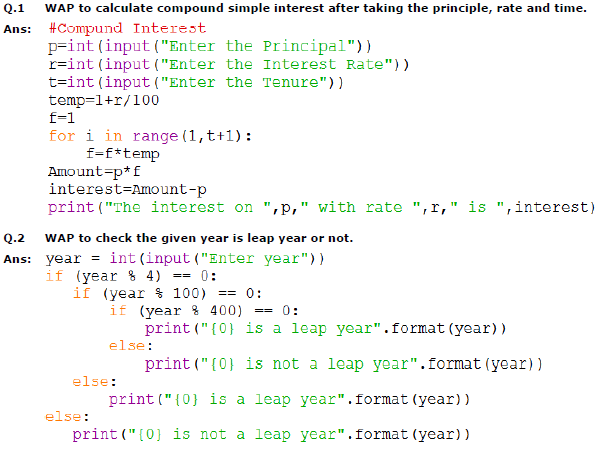
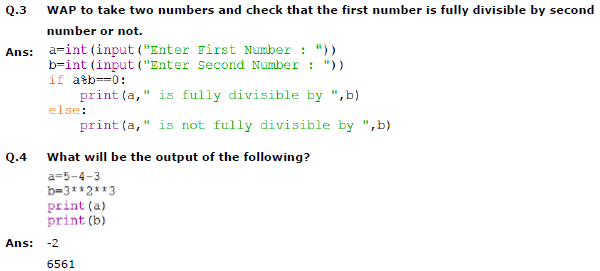
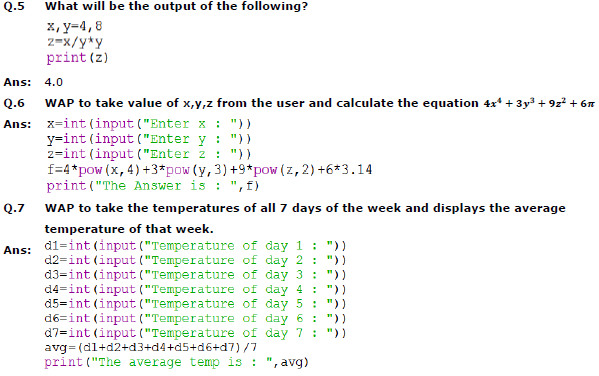
CBSE Class 11 Informatics Practices Worksheets for Data Handling
Mastering Data Handling with Printable Worksheets
Access structured practice worksheets for Data Handling aligned with the 2026 CBSE curriculum. These downloadable exercises for Class 11 Informatics Practices help students build accuracy and reinforce core concepts for upcoming school tests.
Verified Solutions and NCERT Alignment
Each worksheet draws directly from authorized standard textbooks to maintain academic accuracy. Evaluating your finished exercises against expert-verified solutions helps master the formal presentation standards expected in school evaluations.
Additional Study Resources for Class 11 Informatics Practices
Consistent engagement with these exercises builds familiarity with recurring exam themes. If specific areas within Data Handling cause trouble, utilize our dedicated NCERT solutions for Class 11 Informatics Practices to clear up doubts immediately.
FAQs
You can download the latest chapter-wise printable worksheets for Class 11 Informatics Practices Data Handling for free from StudiesToday.com. These have been made as per the latest CBSE curriculum for this academic year.
Yes, Class 11 Informatics Practices worksheets for Data Handling focus on activity-based learning and also competency-style questions. This helps students to apply theoretical knowledge to practical scenarios.
Yes, we have provided solved worksheets for Class 11 Informatics Practices Data Handling to help students verify their answers instantly.
Yes, our Class 11 Informatics Practices test sheets are mobile-friendly PDFs and can be printed by teachers for classroom.
For Data Handling, regular practice with our worksheets will improve question-handling speed and help students understand all technical terms and diagrams.