

Official Class 9 Social Science Worksheets: Economics Chapter 01 The Story of Village Palampur
Review targeted academic worksheets with the CBSE Class 9 Economics The Story Of Village Palampur Worksheet. Built according to official educational standards for the 2026-27 term, these downloadable Class 9 Social Science resources support effective daily practice and detailed self-evaluation for Economics Chapter 01 The Story of Village Palampur.
Solved Practice Worksheets for Social Science
Navigate directly to the solved Social Science worksheets using the digital viewer below. Each practice set includes detailed step-by-step solutions, allowing students to instantly cross-check their work and identify areas requiring further revision.
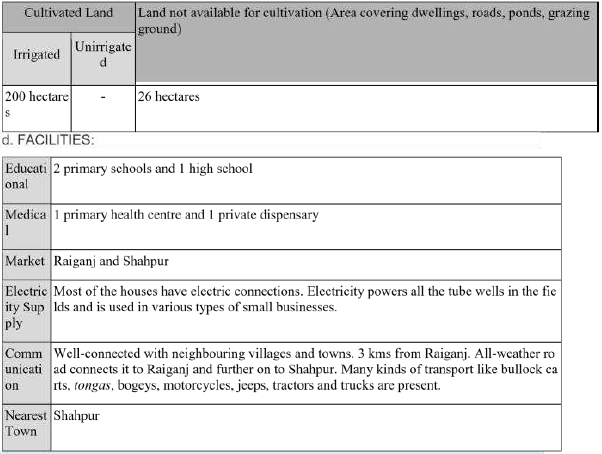
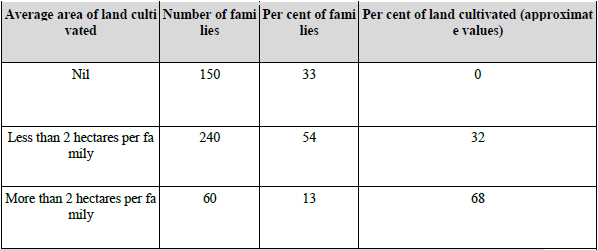
Village Palampur: Palampur is a small village having about 450 families. It is 3 km away from Raiganj — a big village. Shahpur is the nearest town to the village.
Main Production Activities: Farming is the main production activity in the village Palampur. Most of the people are dependent on farming for their livelihood. Non-farming activities such as dairy, small-scale manufacturing (e.g. activities of weavers and potters, etc.), transport, etc., are carried out on a limited scale.
Factors of Production (Or Requirements for Production of Goods and Services): Land, labour and capital are the basic requirements for production of goods and services which are popularly known as factors of production. Wthout them production is not possible.
Land includes all free gifts of nature, e.g., soil, water, forests, minerals, etc. Labour means human effort which of course includes physical as well as mental labour for ex. A labourer does physical work but a teacher does mental work. Physical capital is the third requirement for production. Physical capital includes fixed capital (e.g. tools, machines, building, etc.) which is long time investment working capital as money in hand to pay wages and raw materials such as seeds for the farmer, yarn for the weaver.
Important Changes in Farm Activities: Land area under cultivation is virtually fixed. However, some wastelands in India had been converted into cultivable land after 1960. Over the years, there have been important changes in the way of farming, which have allowed the farmers to produce more crops from the same amount of land.
These changes include: (a) Multiple cropping farming (b) Use of modern farming methods. Due to these changes (in the late 1960s) productivity of land has increased substantially which is known as Green Revolution. Farmers of Punjab, Haryana and western Uttar Pradesh were the first to try out the modern farming methods in India as they had irrigation facility after construction of dams.
Labour: After land, labour is the next basic factor of production. Small farmers provide their own labour, whereas medium and large farmers make use of hired labour to work on their fields.
Capital: After land and labour, capital is another basic factor of production. All categories of farmers (e.g. small, medium and large) require capital. Small farmers borrow from large farmers or the village moneylenders or the traders who supply them various inputs for cultivation. Modern farming requires a great deal of capital.
Sale of Surplus Farm Products: Farmers produce crops on their lands by using the three factors of production, viz. land, labour and capital. They retain a part of produce for self consumption and sell the surplus in the nearby market. That part of farm produce which is sold in the market is called marketable surplus. Small farmers have little surplus output. It is the medium and large farmers only who have substantial surplus produce for selling in the market.
Non-farm activities: Out of every 100 workers in the rural areas in India, only 24 are engaged in non-farm activities. There is a variety of non-farm activities in the villages. Dairy, small scale manufacturing, transport, etc., fall Under this category.
LEARN AND WRITE THE GIVEN QUESTION ANSWERS IN YOUR COPY/PAGES.
Question. What is the aim of production?
Answer : Aim of production is to produce goods and services.
Question. What are the four requirements of production?
Answer : There are four requirements of production:
1. Land: contains natural resources, water, forests and minerals.
2. Labour: People do the work and manufacture goods and services. Labourers may be skilled, unskilled, educated and uneducated depending upon the production work and requirement.
3. Physical capital: Can be of fixed capital and working capital. a. fixed capital: Tools, machines, buildings etc.. they may range from very simple tools such as farmers plough to sophisticated machines to generators, computers etc.. b. working capital: Raw materials and money in hand come under this category. Ex. Yarn used by weaver and clay used by potter. Some money is always required during production to make payments and buy other necessary items.
4. Human capital: The fourth important requirement is human capital. Without human labour production cannot be done.
Question. How is land fixed in the village palampur?
Answer : 75 % of people depend on farming.
Land area in the village under cultivation is fixed. Since 1960 there has been no expansion in land area under cultivation. No further scope to increase farm production. Land is fixed for agriculture in the village.
Question. Which Indian village resemble palampur?
Answer : Village of western U.P.
Question. What are the different crops grown in the Indian villages during different seasons?
Answer : Kharif crops like jowar, Bajra are grown in rainy seasons. These plants are grown as cattle feed. It is followed by cultivation of potato between October and December. In the winter season, rabi crops like wheat, sugar cane are grown.
Question. Where do the villagers of palampur sell jaggery?
Answer : Sugar cane is grown in the village on one part of the land and jaggery is produced and sold in Raiganj.
Question. How are the villagers able to grow more than one crop in palampur?
Answer : The villagers can grow more crops because they are having the facilities of electricity, well developed system of irrigation etc.. Initially the tube wells were installed by the government later many private tube wells were also installed. All the farmers in the village grow more than one crop. Many grow potato as the third crop in their field.
Question. What do you mean by multi cropping and dual cropping?
Answer : Multicropping: To grow more than one crop in the same field is known as multiple cropping. This system gives high yield. Dual cropping: To grow two crops in the same piece of land.
Question. What is Green revolution?
Answer : Excessive production in agriculture due to modern scientific methods are called green revolution.
Question. What is HYV seed?
Answer : In late 1960s HYVs are introduced, which were a great boon to agriculture. These are High Yielding Varieties of seeds which guarantees greater qualitative and quantitative production. HYV seeds need plenty of water and also chemical fertilizers and pesticides to produce best results.
Question. Which states of were the first to use modern methods of agriculture? ,
Answer : Haryana and Western Uttar Pradesh were the first states to use modern methods of agriculture and made use of HYV seeds, pesticides, chemical fertilizers etc..
Question.What is the difference between multiple cropping and modern farming method?
Answer : Multiple cropping: In this method more than one crop is grown on a single piece of land. For example: Wheat – bajra – potato. Modern farming methods: In this method modern HYV seeds, chemical fertilizers, modern tools and machineries are used. This provides high yields.
Question. What is surplus? What do the farmers do with the surplus?
Answer : Surplus are the excessive amount of production produced by the farmers. Example: Farmers produce wheat and store a part of it for their consumption and the remaining they sell in the market and gain profit. This profit is called surplus.The farmers use the surplus as capital for the next harvest. Farmers like Govind or Savita are poor and have little surplus. Big farmers like Tejpal Singh purchase farm machines, lend money or save in the bank.
Question. Write short note on
a. Dairy farming
b. small scale manufacturing
c. shopkeeping
d. transport
Answer : a. Dairy farming : Dairy farming is a common activity in Palampur . People feed their buffalos on various kinds of grass and the jowar and bajra that grows during rainy season. Milk is sold in Raiganj. Traders of Shahpur have set up collectrion cum chilling centres at Raiganj b. small scale manufacturing: Very simple production is done in the village. People produce baskets, gur etc.. in small scale. Mishrilal of Palampur produce Jaggery and sell in Shahpur. He makes a small profit. He owns a crushing machine as capital.
c. shopkeeping: Some villagers sell rice, wheat, sugar, tea, oil, biscuits, soap, toothpaste, batteries, candles etc.. People whose houses are close to the bus stand use a part of the space to open small shops. Some sell eatables like pakoras, samosas etc.. In Palampur Kareem had opened a computer centre. Students from shahpur town had joined it. He had appointed two women of his village to work in his centre. In this way he is self employed and have given employment to others.
d. transport: Transport is another major activity of villages. Rickshwas, , jeeps, tractors, trucks are some of the vehicles found here. Some people are engaged in this line too. Kishora of Palampur village own a buffalo. The buffalo gives milk and also draws cart for him. Every he goes to ganga river to fetch clay for the potters of the village. Kishora is engaged in multi economic activity.
Questions :
Question : Every village in India is surveyed once in ten years during the Census and some of the details are presented in the following format. Fill up the following based on information on Palampur.
a. LOCATION:
b. TOTAL AREA OF THE VILLAGE:
Answer :
Question. Which of the following is grown in the rainy season?
(a) Jowar and bajra
(b) Wheat
(c)Soyabean
(d)Rice
Answer.a
Question. Which of the following is a Rabi crop?
(a) Wheat
(b) Rice
(c) Cotton
(d) Jowar and bajra
Answer.a
Question. Which of the following is fixed capital?
(a) Tools and machines
(b) Fertilisers and pesticides
(c) Soil
(d) Seeds
Answer.a
Question. Which of the following is a standard unit of measurement of land?
(a) Bigha
(b) Hectare
(c) Acre
(d) Guintha
Answer.b
Question. The minimum wages for a farm labourer set by the government is
(a) Rs. 50
(b) Rs. 60
(c) Rs. 70
(d) Rs. 80
Answer.b
Question. Money in hand is an example of
(a) Human capital
(b) Fixed capital
(c) Working capital
(d) Physical capital
Answer.c
Question. HYV seeds stands for
(a) Heavy yielding variety seeds
(b) High yielding variety seeds
(c) Half yielding variety seeds
(d) None
Answer.b
Question. What is the main production activity in Palampur village?
(a) Farming
(b) Animal husbandry
(c) Transport
(d) Small-scale manufacturing
Answer.a
Question. Multiple cropping means growing
(a) only two crops
(b) only three crops
(c) upto four crops
(d) more than one crop
Answer.d
Question. Land under cultivation (in million hectares) in India in the year 2000 was
(a) 120
(b) 130
(c) 140
(d) 150
Answer.c
Question. Which area in India has a low level of irrigation?
(a) Deccan plateau
(b) Coastal regions
(c) Riverine plains
(d) Both (a) and (b)
Answer.a
Question. Modern farming methods were tried in India for the first time in
(a) Punjab
(b) Western U.P.
(c) Haryana
(d) All the above
Answer.d
Question. Which of the following is a modern farming method?
(a) Multiple cropping
(b) Use of HYV seeds
(c) Use of chemical fertilisers
(d) Both (b) and (c)
Answer.d
Question. Production of pulses (in million tonnes) in India during 2000-01 was
(a) 10
(b) 11
(c) 14
(d) 12
Answer.b
Question. Which one is a natural resource?
(a) Labour
(b) Raw materials
(c) Mineral
(d) None of the above
Answer.c
Question. High yielding variety seeds (HYV) were introduced to Indian farmers as a result of
(a) White Revolution
(b) Green Revolution
(c) IT Revolution
(d) None of the above
Answer.b
Question. Which Kharif crop is used for cattle feed?
(a) Sugarcane
(b) Potato
(c) Jowar and bajra
(d) Wheat
Answer.c
Question. The activities such as small manufacturing, transport, shopkeeping are referred to as
(a) Non-economic activities
(b) Non-farming activities
(c) Non-traditional activities
(d) Non-market activities
Answer.b
Question. High Yielding Variety (HYV) seeds are developed in
(a) Research institutes
(b) Factories
(c) Krishak Bharati Cooperatives
(d) None of the above
Answer.a
Question. The concept of White Revolution is associated with
(a) food crops
(b) milk
(c) cotton
(d) pesticides
Answer.b
Question. Who is a person who puts together land, labour and capital?
(a) Moneylender
(b) Entrepreneur
(c) Zamindar
(d) Manager
Answer.b
Question. A farmer who works on a piece of 1 hectare of land is treated as
(a) Medium farmer
(b) small farmer
(c) large farmer
(d) none of the above
Answer.b
Question. Scope of farming activity is limited in Palampur due to
(a) Fixed amount of land
(b) lack of irrigation
(c) lack of labour
(d) none of the above
Answer.a
Question. What is done to surplus wheat in Palampur?
(a) Sold in the market
(b) Destroyed
(c) Stocked by self
(d) Given in charity
Answer.a
Question. Consumption of chemical fertilisers is highest in which state of India?
(a) Punjab
(b) Haryana
(c) Rajasthan
(d) Himachal Pardesh
Answer.a
Question. People of Palampur sell milk in the near by large village named:
(a) Pitampura
(b) Siliguri
(c) Shahpur
(d) Raiganj
Answer.d
Question. Out of the total cultivated areas in the country, how much area is irrigated today :
(a) less than 40%
(b) less than 30%
(c) less than 60%
(d) less than 70%
Answer.a
Question. 'Operation Flood' is related to :
(a) control flood
(b) produce fish
(c) milk production
(d) grain production
Answer.c
Question. Green Revolution is related to :
(a) Milk Production
(b) Grain production
(c) Fish production
(d) none of these
Answer.d
Question. Where do most of the small farmers borrow money to arrange for the capital in Palampur?
(a) Banks
(b) Co-operative Societies
(c) Village money lenders
(d) Friends and relatives
Answer.c
Question. Which one among the following is not fixed capital?
(a) Machines
(b) Buildings
(c) Tools
(d) Raw materials
Answer.d
Question. Why do the farmers of Palampur follow multiple cropping? Choose the correct answer.
(a) Because the water consumption is less in this method
(b) Because this method consumes less chemical fertilisers
(c) Because this method doesn't require fertile soils
(d) Because this method is the most common way of increasing production
Answer.d
Question. Which of the following transformed the system of irrigation in Palampur?
(a) Tubewells
(b) Persian wheel
(c) Rainwater harvesting
(d) None of these
Answer.a
Question. How many families lives in Village Palampur?
(a) 150
(b) 250
(c) 350
(d) 45
Answer.C
Short answers questions :-
Question. What was the major impact of electricity on the farmers of Palampur? Explain.
Answer. 1. Electricity reaching in Palampur transformed irrigation system as electric-run tubewells could be used to irrigate much larger areas of land more effectively.
2. Electric tubewell would draw water from well electrically and no manual handling required.
3. Electricity has also facilitated the harvesting of crops with electric harvesters.
Question. What is the basic aim of production. What are the essential four requirements for production?
Answer. Basic aim of production was to produce goods and services that we want. Four requirements for production of goods and services were:
2.Land and other natural resources like water, forests, minerals Labour, i.e. people who would do the work.
3. Each worker is providing the labour necessary for production.
4. Third requirement is physical capital, i.e. variety of inputs required at every stage during production.
5. Fourth requirement is knowledge and enterprise to be able to put together land, labour and physical capital and produce an output.
Question. What do you mean by working capital? How does it affect the day-to-day activities in farming?
Answer. Raw materials and money in hand is known as working capital. Some money is always required during production to make payments and buy other necessary items. Working capital is related with day-to-day activities in farming like use of seeds, pesticides, insecticides, manure, wages of labour etc. So production in farming is high for more working capital. Higher working capital would facilitate more purchase of seeds, fertilisers and wages, so higher yield would be there.
Question. What do you mean by Rabi crops and Kharif crops? When are they sown and harvested? Give examples also.
Answer. Rabi crops are grown in winter season (between October to December) and harvested in spring season (between mid-late April to mid-late June). Potato, wheat, barley, mustard are Rabi crops.Kharif crops are sown in rainy season (from July to September) and harvested in autumn season. Examples of Kharif crops are jowar and bajra, sugarcane, cotton, red chillies etc.
Free study material for Social Science
Economics Chapter 01 The Story of Village Palampur Printable Worksheets and Exercises for Class 9 Social Science
Practice Exercises for Class 9 Social Science Economics Chapter 01 The Story of Village Palampur
Explore reliable practice questions for Economics Chapter 01 The Story of Village Palampur tailored for Class 9 Social Science learners. Use these structured worksheets to evaluate exam preparedness and strengthen problem-solving skills throughout the 2026 academic session.
Step-by-Step Solutions and Practice Guidelines
Built using official NCERT guidelines for Class 9 Social Science, these practice sheets provide reliable academic support. Cross-reference your completed work with our detailed solutions to learn standard answer-writing formats for CBSE exams.
Enhance Speed with Online Practice
Wrap up your chapter revision by testing your knowledge against standard objective question formats. Explore our full library of free, up-to-date printable assignments to maximize your academic results in upcoming CBSE evaluations.
FAQs
You can download the latest chapter-wise printable worksheets for Class 9 Social Science Economics Chapter 01 The Story of Village Palampur for free from StudiesToday.com. These have been made as per the latest CBSE curriculum for this academic year.
Yes, Class 9 Social Science worksheets for Economics Chapter 01 The Story of Village Palampur focus on activity-based learning and also competency-style questions. This helps students to apply theoretical knowledge to practical scenarios.
Yes, we have provided solved worksheets for Class 9 Social Science Economics Chapter 01 The Story of Village Palampur to help students verify their answers instantly.
Yes, our Class 9 Social Science test sheets are mobile-friendly PDFs and can be printed by teachers for classroom.
For Economics Chapter 01 The Story of Village Palampur, regular practice with our worksheets will improve question-handling speed and help students understand all technical terms and diagrams.