

Chapter-wise Worksheets for Class 3 Social Science: All Chapters
Access comprehensive chapter-wise worksheets for All Chapters using the CBSE Class 3 Social Science Worksheet Set 09. Designed to align with the 2026-27 academic syllabus for Class 3 Social Science, these printable practice sets help students reinforce key concepts and improve their overall exam readiness.
Practice Class 3 Social Science Worksheets: All Chapters
Access the complete worksheet PDF for Class 3 Social Science below. Regular practice with these targeted academic tasks builds familiarity with standard question patterns and helps secure higher marks in final school examinations.

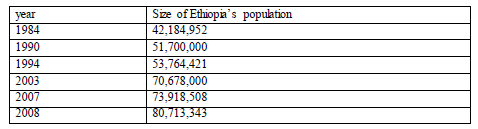
Table 4.2 Ethiopia population
Question. The part of the earth which faces the sun has
(a) day
(b) night
(c) day and night
(d) none of the above
Answer: A
Question. The part of the earth which does not face the sun has
(a) day
(b) night
(c) day and night
(d) none of the above
Answer: B
Question. The earth gets its light from the
(a) moon
(b) sun
(c) satellite
(d) other planets.
Answer: B
Question. Time taken by the earth to complete one revolution is
(a) 24 hours
(b) 7 days
(c) 365 ¼ days
(d) 2 years
Answer: C
Question. What helps to burn the sugar in our body ?
(a) carbon dioxide
(b) protein
(c) blood
(d) oxygen
Answer: D
Question. Total number of bones present in a human body?
(a) 206
(b) 204
(c) 202
(d) 203
Answer: A
Question. What is the skeletal system?
(a) All bones in the body
(b) All the muscles
(c) All the body’s organs
(d) All bones and tissues
Answer: A
Question. The hollow space in the middle of bones is filled with_______________________
(a) air
(b) blood
(c) bone cells
(d) bone marrow
Answer: D
Question. Where does food pass through between the mouth and the stomach?
(a) rectum
(b) small intestine
(c) large intestine
(d) oesophagus
Answer: D
Question. The blood vessels taking blood away from the heart are called
(a) veins
(b) arteries
(c) fibers
(d) nerves
Answer: B
Question. Which describe the spinal cord exactly.
(a) bone
(b) nerve
(c) muscle
(d) cells
Answer: B
Question. Skull protects the __________________________
(a) internal organs
(b) brain
(c) bones
(d) blood
Answer: B
Question. Which is not a function of sense organ
(a) seeing
(b) touching
(c) moving
(d) Hearing
Answer: C
Question. Waste removed by the circulatory system are disposed through
(a) lungs
(b) bowels
(c) kidneys
(d) liver
Answer: C
Question. Which of the following does not manufacture digestive juices?
(a) liver
(b) kidneys
(c) stomach
(d) pancreas
Answer: B
Question. ________ produce insulin, a substance that helps to regulate the level of sugar in the blood.
(a) pancreas
(b) liver
(c) kidney
(d) stomach
Answer: A
Question. Nerve impulses are carried from the eye to the brain through ______
(a) veins
(b) nerves
(c) tissues
(d) arteries
Answer: B
Question. Our taste buds taste _______________________
(a) sweet, salty, sour, and bitter foods.
(b) nothing
(c) juicy foods.
(d) dry foods
Answer: A
Question. Our _______________________gets messages from our senses to tell us what we see, smell, hear or feel
(a) stomach
(b) brain
(c) heart
(d) hair
Answer: B
Question. What happens when you breathe in
(a) diaphragm expands and ribcage contract
(b) diaphragm contract and ribcage expands
(c) no change
(d) diaphragm and ribcage relaxes
Answer: B
Question. Air enters your lungs through _____________________
(a) wind pipe
(b) esophagus
(c) alveoli
(d) mouth
Answer: A
Question. Are there muscles in your eyes?
(a) no
(b) yes
(c) only when asleep
(d) only when awake
Answer: B
Question. What makes bones so strong?
(a) silica
(b) cartilage
(c) calcium
(d) blood marrow
Answer: C
Question. When you breath out , what gas does your body get rid of?
(a) nitrogen
(b) oxygen
(c) carbon dioxide
(d) both and carbon dioxide
Answer: C
A. New words:- ( Write these words twice)
1. Continents
2. Populated
3. Bay of Bengal
4. Arabian Sea
5. Central Government
6. Election
7. Union Territories
8. President
9. Rashtrapati Bhavan
10. Governor
B. Define these terms:-
Governor- a public official with the power to govern the executive branch
Territories- an area of land under the jurisdiction of a ruler or state.
B. Answer the following questions:-
Q1. Write the names of any five neighbouring countries of India.
Ans- Five neighbouring countries of India are- Afghanistan, Pakistan, Nepal, Bangladesh and China.
Q2. Which are the two types of government in our country?
Ans- There are two types of government of in India Central government and State government.
Q3. Why is our country divided into states?
Ans- India is a big country so that it is not possible for a single government and solve the problems of all the people. Therefore , after independence our country divided into states.
Q4. How are Union different from states?
Ans- Union territories are governed by the central government , where as states are governed by the state government.
Learn to know
| Traffic Sign Meaning (Hindi) | Traffic Sign Meaning (English) |
|---|---|
| बैलगाड़ी व हाथठेला निषेध | Bullock Carts and Hand Carts Prohibited |
| ताँगा निषेध | Tonga Prohibited |
| गति सीमा (50 कि.मी.) | Speed Limit (50 km/h) |
| भार सीमा (5 टन) | Load Limit (5 Tonnes) |
| ऊँचाई सीमा (3.5 मी.) | Height Limit (3.5 Metres) |
| चौड़ाई सीमा (2 मी.) | Width Limit (2 Metres) |
| धुरी भार सीमा (4 टन) | Axle Load Limit (4 Tonnes) |
| प्रतिबन्ध समाप्त का चिन्ह | Restriction Ends Sign |
| बायें मुड़ना निषेध | No Left Turn |
| यू-टर्न निषेध | No U-Turn |
| आगे निकलना निषेध | No Overtaking |
| हॉर्न बजाना निषेध | Horn Prohibited |
| बायें मुड़ना जरूरी | Compulsory Turn Left |
| दायें मुड़ना जरूरी | Compulsory Turn Right |
| आगे बायें मुड़ना जरूरी | Compulsory Ahead or Turn Left |
| आगे दायें मुड़ना जरूरी | Compulsory Ahead or Turn Right |
| सीधा या बायाँ जरूरी | Compulsory Keep Left |
| सीधा या दायाँ जरूरी | Compulsory Keep Right |
| साइकिल पथ जरूरी | Compulsory Cycle Track |
| हॉर्न बजाना जरूरी | Compulsory Sound Horn |
Question 2. What does it indicate?
(i)
(ii)
(iii)
(iv)
(v)
(vi)
(vii)
(viii)
Answer:
(i) Right-hand curve
(ii) Left-hand curve
(iii) Right reverse bend / Right zig-zag curve
(iv) Compulsory keep ahead / Go straight
(v) Speed limit restriction ends
(vi) Overtaking restriction ends / Overtaking prohibited ends
(vii) No U-turn / U-turn prohibited
(viii) No pedestrians / Pedestrians prohibited
In simple words: These signs tell drivers what they can and cannot do on the road. Following these signs keeps everyone safe from accidents.
Exam Tip: Memorize the difference between cautionary (triangular) and mandatory (circular) traffic signs to score full marks.
Question 3. Name them.
(i) The largest continent
(ii) A fort built by red stones
(iii) The smallest continent
(iv) A temple shapes like a lotus
(v) Any two planet in the solar system
Answer:
(i) Asia
(ii) Red Fort
(iii) Australia
(iv) Lotus Temple
(v) Earth and Mars
In simple words: These are the names of famous places, continents, and planets in our world and solar system.
Exam Tip: Remember to write the proper nouns with capital letters, like Asia, Red Fort, and Lotus Temple, to avoid losing spelling marks.
Question 4. Which festivals are associated with the followings:-
(i) Crackers
(ii) Santa clus
(iii) Red fort
(iv) Namaz
(v) Water balloons
(vi) Earthen lamp
(vii) Guru Nanak
(viii) Nehruji
Answer:
(i) Diwali
(ii) Christmas
(iii) Independence Day / Republic Day
(iv) Eid-ul-Fitr / Eid
(v) Holi
(vi) Diwali
(vii) Gurpurab
(viii) Children's Day
In simple words: This list links different festive symbols and famous leaders to the special holidays we celebrate in India.
Exam Tip: Associate each celebration with its main icon or symbol to remember them easily during tests.
Question 5(a). Pluck different herbal leaves from your garden. Dry them. Paste it in your scrap book. Write their names and mention whether they are compound or simple leaf.
Answer: Here is a list of five common herbal leaves that you can find in a garden and collect for your scrapbook activity:
1. Tulsi (Basil) Leaf: It is a simple leaf because the leaf blade is not divided into smaller leaflets.
2. Neem Leaf: It is a compound leaf because many small leaflets grow along a single stem.
3. Mint (Pudina) Leaf: It is a simple leaf with serrated edges and a single undivided blade.
4. Curry Leaf: It is a compound leaf containing multiple tiny leaflets on a central stalk.
5. Coriander Leaf: It is a compound leaf with deeply lobed, small leaflets.
In simple words: Simple leaves have only one single leaf on a stem. Compound leaves have many tiny leaflets sharing one stem.
Exam Tip: When doing this project, press the leaves inside a heavy book for a few days to dry them completely before pasting them.
Question 5(b). Write 5 ways to save water at home.
Answer:
1. Shut off the tap while you are brushing your teeth.
2. Repair leaky pipes and dripping faucets as soon as possible.
3. Opt for brief showers rather than long bucket baths.
4. Wash cars using a bucket of water instead of a running hose.
5. Re-use the water used for rinsing fruits and vegetables to water your houseplants.
In simple words: We can save water by turning off taps when not in use and reusing water whenever we can.
Exam Tip: Writing your points in a clear numbered list makes it easier for the teacher to read and grade your work.
Free study material for Social Science
Free CBSE Practice Worksheets: Class 3 Social Science All Chapters
Daily Practice Questions for Class 3 Social Science
Access structured practice worksheets for All Chapters aligned with the 2026 CBSE curriculum. These downloadable exercises for Class 3 Social Science help students build accuracy and reinforce core concepts for upcoming school tests.
Detailed Answers for Class 3 Social Science All Chapters
Designed around the official curriculum for Class 3 Social Science, these practice sheets guarantee standard compliance. Reviewing step-by-step solutions after completion sharpens your accuracy and clarifies complex sub-topics within All Chapters.
Complete Your Chapter Revision
Wrap up your chapter revision by testing your knowledge against standard objective question formats. Explore our full library of free, up-to-date printable assignments to maximize your academic results in upcoming CBSE evaluations.
FAQs
You can download the latest chapter-wise printable worksheets for Class 3 Social Science All Chapters for free from StudiesToday.com. These have been made as per the latest CBSE curriculum for this academic year.
Yes, Class 3 Social Science worksheets for All Chapters focus on activity-based learning and also competency-style questions. This helps students to apply theoretical knowledge to practical scenarios.
Yes, we have provided solved worksheets for Class 3 Social Science All Chapters to help students verify their answers instantly.
Yes, our Class 3 Social Science test sheets are mobile-friendly PDFs and can be printed by teachers for classroom.
For All Chapters, regular practice with our worksheets will improve question-handling speed and help students understand all technical terms and diagrams.