

Download NCERT Solutions for Class 8 Social Science Chapter 04 Agriculture
Explore reliable textbook solutions for Chapter 04 Agriculture tailored for Class 8 learners. Utilizing these Social Science answers ensures thorough preparation and strengthens foundational knowledge before final NCERT evaluations.
Access NCERT Solutions and Answers
Navigate directly to the solved Social Science textbook exercises using the digital viewer below. Each solution includes detailed step-by-step explanations, allowing students to instantly cross-check their work and identify areas requiring further revision.
NCERT Solutions for Class 8 Social Science Geography for Chapter 4 Agriculture
1. Answer the following questions.
(i) What is agriculture?
Ans. Agriculture is a primary activity that includes growing crops, fruits, vegetables, flowers and rearing of livestock. It is also called farming.
(ii) Name the factors influencing agriculture?
Ans. The factors influencing agriculture are availability of arable land, favourable topography of soil and climate.
(iii) What is shifting cultivation? What are its disadvantages?
Ans. Shifting agriculture or slash or burn agriculture is a type of primitive subsistence agriculture. In this type of agriculture, a plot of land is cleared by felling the trees and burning them. The ashes are then mixed with the soil and crops are grown. After the soil loses its fertility, the land is abandoned and the cultivator moves to a new plot.
Disadvantages of shifting agriculture are:
1. Deforestation
2. Soil erosion
3. It is subsistence farming, which is insufficient for feeding a large population.
(iv) What is plantation agriculture?
Ans. Plantation agriculture is a type of commercial farming where single crop of tea, coffee, sugarcane, cashew, rubber, banana or cotton are grown. Large amount of labour and capital are required in this type of farming.
(v) Name the fibre crops and name the climatic conditions required for their growth.
Ans.
|
Fibre Crop |
Climatic conditions required |
|
Cotton |
Requires high temperature (30°C-40°C), light rainfall, two hundred and ten frost- free days and bright sunshine for its growth. |
(i) In India agriculture is a primary activity :
4. Distinguish between the followings.
(i) Primary activities and tertiary activities
|
Primary activities |
Tertiary activities |
|
Primary activities include all those connected with extraction and production of natural resources. |
Tertiary activities provide support to the primary and secondary sectors through services. |
|
Example: Agriculture, fishing, gathering, etc. |
Example: Transport, trade, banking, insurance, etc. |
(ii) Subsistence farming and intensive farming.
|
Subsistence farming |
Intensive farming |
|
This farming is practiced on small and scattered land holdings to meet the needs of farmer’s family. |
In this type of farming, small farms are cultivated intensively |
|
Use of traditional methods of agriculture, primitive tools, low quality of fertilisers and seeds. |
In this type of farming, quality seeds, rich manure, fertilisers and modern irrigation methods are used. |
|
Food production is consumed within the family. There is no surplus for market. |
More than one crop is cultivated. There is a high production from limited land and intensive labour. |
|
Crops Grown in subsistence farming are sugarcane, oilseeds, cotton, jute, etc. |
Main crops grown are wheat and rice. |
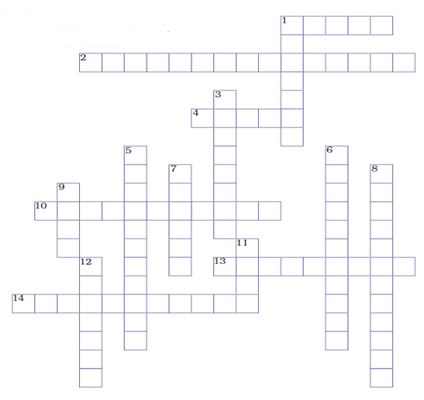
6. Solve the crossword puzzle with the help of given clues.
|
Across |
Down |
|
1. Crop that needs well drained fertile soils, moderate temperatures and lots of sunshine (5) 2. Increasing production through use of HYV seeds, chemical fertilisers and pesticides (5,10) 4. USA, Canada, Russia, Australia are major producers of this crop (5) 10. Type of farming to meet family needs (11) 13. Rearing of animals for sale (9) 14. Growing grapes for wines (11) |
1. Coarse grains are also called (7) 3. Cultivation involving slash and burn (8) 5. Growing of crops, fruits and vegetables (11) 6. Tea, coffee, sugarcane and rubber are grown in (11) 7. Requires 210 frost-free days for growth (6) 8. Growing of flowers (12) 9. Also called ‘Golden Fibre’ (4) 11. Also known as paddy (4) 12. Activity concerned with extraction of natural resources (7) |
Answer :-
|
Across |
Down |
|
1. Maize 2. Green Revolution 4. Wheat 10. Subsistence 13. Livestock 14. Viticulture |
1. Millets 3. Shifting 5. Agriculture 6. Plantations 7. Cotton 8. Horticulture 9. Jute 11. Rice 12. Primary |
Free study material for Social Science
Social Science Class 8 Curriculum Solutions: Chapter 04 Agriculture
Accessing Chapter 04 Agriculture Solutions
Access structured NCERT textbook solutions for Chapter 04 Agriculture. Designed in alignment with the latest academic curriculum for Class 8 Social Science, these answers cover all end-of-chapter exercises to support daily learning and homework completion.
Concept-Driven Answers for Class 8 Social Science
Each solution includes detailed reasoning to foster genuine comprehension of Chapter 04 Agriculture concepts. Reviewing these step-by-step breakdowns allows learners to master both analytical and descriptive questions expected in school evaluations.
Maximizing Study Efficiency
Frequent review of these structured answers builds strong analytical capabilities and response efficiency. Maximize your academic readiness by combining these textbook solutions with our curated study materials and mock evaluations for Class 8 Social Science.
FAQs
The complete and updated NCERT Solutions Class 8 Social Science Chapter 4 Agriculture is available for free on StudiesToday.com. These solutions for Class 8 Social Science are as per latest NCERT curriculum.
Yes, our experts have revised the NCERT Solutions Class 8 Social Science Chapter 4 Agriculture as per 2026 exam pattern. All textbook exercises have been solved and have added explanation about how the Social Science concepts are applied in case-study and assertion-reasoning questions.
Toppers recommend using NCERT language because NCERT marking schemes are strictly based on textbook definitions. Our NCERT Solutions Class 8 Social Science Chapter 4 Agriculture will help students to get full marks in the theory paper.
Yes, we provide bilingual support for Class 8 Social Science. You can access NCERT Solutions Class 8 Social Science Chapter 4 Agriculture in both English and Hindi medium.
Yes, you can download the entire NCERT Solutions Class 8 Social Science Chapter 4 Agriculture in printable PDF format for offline study on any device.