

Class 10 Science Practice Sheet: CBSE Class 10 Biology Heredity Worksheet Set 05
Explore structured practice materials through the CBSE Class 10 Biology Heredity Worksheet Set 05. Tailored for Class 10 learners, utilizing these Science worksheets ensures thorough preparation and strengthens problem-solving accuracy before final school evaluations.
Download Chapter 08 Heredity Worksheet PDF with Answers
Access the complete worksheet PDF for Class 10 Science below. Regular practice with these targeted academic tasks builds familiarity with standard question patterns and helps secure higher marks in final school examinations.
Very Short Answer Questions
Question : All the variations in a species do not have equal chances of survival. Why?
Answer : Some variations are caused by environmental changes and they do not bring out any change in DNA.Therefore, all the variations do not have equal chances of survival.
Question : What are fossils?
Answer : Preserved traces of living organisms.
Question : How can the chromosomes be identified?
Answer : In human beings, the individual chromosomes are identified by their lengths, position of centromere and banding pattern on staining.
Question : What are analogous organs?
Answer : The organs which have similar functions but different structures are called analogous organs.
Question : How is the age of fossil determined?
Answer : The age of fossil fuels is determined through carbondating or time dating method.
Question : A Mendelian experiment consisted of breeding pea plants bearing violet flowers with pea plants bearing white flowers. What will be the result in Fj progeny?
Answer : All will bear violet flowers.
Question : What is evolution?
Answer : Gradual unfolding of organisms from pre-existing organisms through change is called evolution
Question : Name the plant on which Mendel performed his experiments.
Answer : Garden pea (Pisum sativum).
Question : Give an example where sex determination is regulated by environmental factors.
Answer : In snail, sex is determined by environmental factors (temperature).
Question : When does the process of gene flow take place?
Answer : Gene flow or gene migration takes place in between the populations that are partly but not completely separated.
Question : What is speciation?
Answer : Speciation is the process of formation of a new species from the already existing species by accumulation of variations, natural selection, gene flow, genetic drift, etc.
Question : What is artificial selection?
Answer : It is the process of modification of a species by selective breeding. Animals and plants with desirable characters are selected and propagated. Artificial selection by farmers has resulted in the formation of cauliflowers, cabbage, broccoli and kohlrabi from the wild cabbage.
Question : What is a gene?
Answer : Gene is the unit of inheritance. It is a part of the chromosome which controls the appearance of a set of hereditary characteristics.
Question : Name two human traits that show variations.
Answer : Colours of eyes and shape of external ears.
Question : What is evolution?
Answer : Evolution is the sequence of gradual changes which take place in living organisms over millions of years to give rise to new species.
Question : What are fossils?
Answer : Fossils are preserved traces or remains of living organisms of geological past.
Question : Who is known as the ‘‘father of Genetics’’?
Answer : G.J. Mendel is called the ‘‘father of Genetics’’.
Question : Name the scientist who put forth the theory of natural selection.
Answer : Charles Darwin.
Short Answer Questions
Question : The chromosome number of the sexually reproducing parents and their
offspring is same."" Justify the statement.
Answer : In sexually reproducing organisms, male and female gametes /reproductive cells with only half the number of chromosomes (as in the parent cell) are produced. during fertilization, when male and female gametes fuse to give to a zygote, original number of chromosomes are restored.
Question : Genes controls traits ' . Explain this statement with an example.
Answer : Genes controls traits by synthesizing the specific enzyme. Plant height depends on the amount of a particular plant hormone. The amount of plant hormone made will depends on enzyme. If enzyme work efficiently the plant will be tall. if the gene for that enzyme has an alteration that makes enzyme less efficient, the amount of hormone will be less and plant will be short.
Question : What is DNA copying? State its importance.
Answer : DNA copying is the process of producing two identical replicas from one original DNA molecule during cell division.
DNA is necessary to make all the RNA and proteins needed for cells to carry out necessary reactions and cellular processes in order to survive.
Question : Differentiate between phenotype and genotype?
Answer : Genotype – It is the complete heritable genetic identity of an organism. It is the set of alleles that are carried by the organism. It also includes non- expressed alleles.
Phenotype – It is the description of the actual physical characteristics of an organism or the expressed form of the genotype.
Question : A study found that children with light-coloured eyes are likely to have parents with light-coloured eyes. On this basis, can we say anything about whether the light eye colour
trait is dominant or recessive? Why or why not?
Answer : No, we cannot say that the traits is recessive or dominant unless we know the nature of the two variants of a trait.
Question : Explain the terms analogous and homologous organs with examples.
Answer : Analogous organs—Organs with different structure and same function e.g., wings of bird, insects.
Homologous organs—Organs which have same structure but different functions are called homologous organ e.g., forearm of lizard, bird and human.
Question : Explain the importance of fossils in deciding evolutionary relationships.
Answer : Fossils help us to know the following:
(a) Fossils help to trace the racial history of organisms.
(b) They help to measure the geological time.
(c) Older fossils lie at the depth and young fossils are at the upper surface of the earth. Complex organisms are present at top and simple organisms are present at the bottom.
(d) Fossil like—Archaeopteryx-show the link between two different types of species.
Question : Explain how sexual reproduction gives rise to more viable variations than asexual reproduction. How does this affect the evolution of those organisms that reproduce sexually?
Answer : Variations are seen more in sexual reproduction than asexual reproduction because variations occur due to change in DNA coding and due to sexual reproduction in which two genes from two different sexes i.e., male and female genes crossing over takes place and hence cause the variation.
Question : Only variations that confer an advantage to an individual organism will survive in a population. Do you agree with this statement? Why or why not?
Answer : No, depending on the nature of variations different individuals have different kinds of advantages. However, when a drastic change occurs in environment only those organism in the population will survive which have an advantageous variation in that population to survive in changed environment.
Question : Give the respective scientific terms used for studying:
a. the mechanism by which variations are created and inherited, and
b. the development of new type of organisms from the existing ones.
Answer :
a. Heredity
b. Species
Question : The human hand, cat paw and the horse foot, when studied in detail show the same structure of bones and point towards a common origin.
a. What do you conclude from this?
b. What is the term given to such structures?
Answer :
a. They have common origin/ancestory.
b. Homologous organs.
Answer : Mendel observed seven contrasting characters is pea plant. For Ex- flower positionaxial and terminal. seed shape- round and wrinkled.
Long Answer Questions
Question : What are fossils? What is their significance in the study of evolution?
Answer : Fossils are impressions of the body/ body parts or the remains of organisms living in the past, which got preserved in sediments of earth.
a. Study of fossils helps in working out evolutionary relationships.
b. Fossils provide one of the most acceptable evidences in support of evolution, because we can study the evolutionary past of individuals in the form of their fossils.
c. Age of fossils can also be found by time dating using isotopes of carbon! carbon dating.
d. By studying fossils occurring in different strata of rocks, geologists are able to reconstruct the time course of evolutionary events.
Question : When a tall and dwarf pea plant were crossed, Fx showed only tall plants but in F2 generation, some plants were dwarf. What does it mean?
Answer : It means reappearance of the dwarf character, a recessive trait in B’2 generation shows that the dwarf trait/ character was present in individuals of F* but it did not express (due to the present of tallness, a dominant trait / character)
Question : (a) On what rules inheritance is based?
(b) Is each trait influenced by both paternal and maternal DNA?
Answer :
a. The rules of inheritance is based on the fact that the traits in the progeny are carried out by DNA’s of both the parents (mother and father). These rules are known s ‘Mendel’s Laws of Inheritance’.
The rules are:
(i) Law of dominance,
(ii) Law of segregation, and
(iii) Law of independent assortment.
b. Yes, it is true that each trait is influenced by both paternal and maternal DNA.
Answer :
Answer : The idea of tracing the evolutionary relationships is presently known as molecular phylogeny, which focus on identifying the changes occuring in DNA during reproduction. Evolution does not occur because of a single change in DNA or mutation. Organs are complex both structurally and functionally; and are genetically regulated by many genes working together. Evolution occurs in many stages by slow changes in DNA or mutation that accumalate over time. The stages occurring during evolution can thus be identified by different structures formed from common ancestors.
More Question
Q1)Who is known as father of genetics?
Q2)Write the scientific name of the plant on which Mendel carried out his experiment.
Q3)How many chromosomes are present inhuman beings?
Q4)What is the genetic material?what is its importance?
Q5)What are recessive genes?
Q6)What are dominant genes?
Q7)Name the cells which possess half the number of chromosomes in human beings? (hint-germ or reproductive cells)
Q8)State the advantages of sexual reproduction?
Q9)Name any two contrasting characters noticed by Mendel in the garden pea plants.
Q10)State the ratio of plants produced in the monohybrid cross in the F1 and F2 generation?
Q11)Where are genes located? What is the chemicals nature of genes?
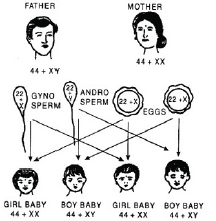
Q12)How is the sex of a newborn child determined inhumans?
Q13)Why did Mendel choose pea plant for his experiment?
14) Give reasons why acquired characters are not inherited.
Q15) What are the functions played by DNA?
Q16) What observations did Mendel make during his experiments?
Free study material for Science
Free CBSE Practice Worksheets: Class 10 Science Chapter 08 Heredity
Practice Exercises for Class 10 Science Chapter 08 Heredity
Explore reliable practice questions for Chapter 08 Heredity tailored for Class 10 Science learners. Use these structured worksheets to evaluate exam preparedness and strengthen problem-solving skills throughout the 2026 academic session.
Step-by-Step Solutions and Practice Guidelines
Built using official NCERT guidelines for Class 10 Science, these practice sheets provide reliable academic support. Cross-reference your completed work with our detailed solutions to learn standard answer-writing formats for CBSE exams.
Enhance Speed with Online Practice
Consistent engagement with these exercises builds familiarity with recurring exam themes. If specific areas within Chapter 08 Heredity cause trouble, utilize our dedicated NCERT solutions for Class 10 Science to clear up doubts immediately.
FAQs
You can download the latest chapter-wise printable worksheets for Class 10 Science Chapter 08 Heredity for free from StudiesToday.com. These have been made as per the latest CBSE curriculum for this academic year.
Yes, Class 10 Science worksheets for Chapter 08 Heredity focus on activity-based learning and also competency-style questions. This helps students to apply theoretical knowledge to practical scenarios.
Yes, we have provided solved worksheets for Class 10 Science Chapter 08 Heredity to help students verify their answers instantly.
Yes, our Class 10 Science test sheets are mobile-friendly PDFs and can be printed by teachers for classroom.
For Chapter 08 Heredity, regular practice with our worksheets will improve question-handling speed and help students understand all technical terms and diagrams.