
CBSE Class 11 Laws of Motion Worksheet B

Access the latest CBSE Class 11 Laws of Motion Worksheet B. We have provided free printable Class 11 Physics worksheets in PDF format, specifically designed for Chapter 4 Laws of Motion. These practice sets are prepared by expert teachers following the 2025-26 syllabus and exam patterns issued by CBSE, NCERT, and KVS.

Chapter 4 Laws of Motion Physics Practice Worksheet for Class 11

Students should use these Class 11 Physics chapter-wise worksheets for daily practice to improve their conceptual understanding. This detailed test papers include important questions and solutions for Chapter 4 Laws of Motion, to help you prepare for school tests and final examination. Regular practice of these Class 11 Physics questions will help improve your problem-solving speed and exam accuracy for the 2026 session.

Download Class 11 Physics Chapter 4 Laws of Motion Worksheet PDF


Law of Motion MCQ Questions with Answers Class 11 Physics Chapter 5
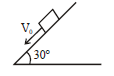
 
Question. A wooden box of mass 8 kg slides down an inclined plane of inclination 30° to the horizontal with a constant acceleration of 0.4 ms–2. What is the force of friction between the box and inclined plane ? (g = 10 m/s2)
(a) 36.8 N
(b) 76.8 N
(c) 65.6 N
(d) None of these
 
Ans-(a)
 
Question. A body is projected along a rough horizontal surface with a velocity 6 m/s. If the body comes to rest after travelling 9 m, then coefficient of sliding friction, is : (g = 10 m/s2)
(a) 0.5
(b) 0.4
(c) 0.6
(d) 0.2
 
Ans-(d)
 
Question.  A block of mass 5 kg is kept on a horizontal floor having coefficient of friction 0.09. Two mutually perpendicular horizontal forces of 3 N and 4 N act on this block. The acceleration of the block is : (g = 10 m/s2)
(a) zero
(b) 0.1 m/s2
(c) 0.2 m/s2
(d) 0.3 m/s2
 
Ans-(b)
 
Question.  A minimum force F is applied to a block of mass 102 kg to prevent it from sliding on a plane with an inclination angle 30° with the horizontal. If the coefficients of static and kinetic friction between the block and the plane are 0.4 and 0.3 respectively, then the force F is :
(a) 157 N
(b) 224 N
(c) 315 N
(d) zero
 
Ans-(a)
 
Question. A block is gently placed on a conveyor belt moving horizontally with constant speed. After t = 4 s, the velocity of the block becomes equal to velocity of the belt. If the coefficient of friction between the block and the belt is µ = 0.2, then the velocity of the conveyor belt is
(a) 8 m/s 
(b) 6 m/s
(c) 4 m/s
(d) 2 m/s
 
Ans-(a)
 
Question.A car having a mass of 1000 kg is moving at a speed of 30 m/s. Brakes are applied to bring the car to rest. If the frictional force between the tyres and the road surface is 5000 N, the car will come to rest in
(a) 5 s
(b) 8 s
(c) 12 s
(d) 6 s
 
Ans-(d)
 
Question.If a block moving up at θ = 30o with a velocity 5 m/s, stops after 0.5 sec, then µ is
(a) 0.5
(b) 1.25
(c) 0.6
(d) none of the above.
 
Ans-(c)
 
Question. A block of mass 4 kg is placed on a rough horizontal plane. A time dependent force F = kt2 acts on the block, where k = 2N/s2. Coefficient of friction µ = 0.8. Force of friction between block and the plane at t = 2 s is :
(a) 8 N
(b) 4 N
(c) 2 N
(d) 32 N
 
Ans-(a)
 
Question. Which of the following statements is true in a tug of war.
(a) The team which applies a greater force on the rope than the other wins.
(b) The team which applies a smaller force on the other wins.
(c) The team which pushes harder against the ground wins.
(d) none of these
 
Ans-(c)
 
Question.The coefficient of friction between the tyres and road is 0.4. The minimum distance covered before attaining a speed of 8 m/s starting from rest is nearly : (g = 10 m/s2)
(a) 8.0 m
(b) 4.0 m
(c) 10.0 m
(d) 16.0 m
 
Ans-(a)


Question. A block of mass m is given an initial downward velocity v0 and left on an inclined plane (coefficient of friction = 0.6).The block will :
CH 2. Law of Motion (Phy +1) 1
(a) continue to move move down the plane with constant velocity v0
(b) accelerate downward
(c) decelerate and come to rest
(d) first accelerated then decelerate
 
Ans-(c)
 
Question.A block of mass 0.1 kg is held against a wall applying horizontal force of 5 N on the block. If coeff. of friction between the block and the wall is 0.5, the magnitude of frictional force acting on the block is
(a) 2.5 N
(b) 0.49 N
(c) 0.98 N
(d) 4.9 N
 
Ans-(c)
 
Question. The coefficient of friction of a surface is 1/√3 . What should be the angle of inclination so that a body placed on the surface just begins to slide down ?
(a) 30o
(b) 45o
(c) 60o
(d) 90o
 
Ans-(a)
 
Question. A box of mass 8 kg is placed on a rough inclined plane of inclination θ. Its downward motion can be prevented by applying an upward pull F and it can be made to slide upwards by applying a force 2 F. The coefficient of friction between the box and the inclined plane is :
(a) 1/3 tanθ
(b) 3 tan θ
(c)1/2 tanθ
(d) 2 tan θ
 
Ans-(a)
 
Question. A block A kept on an inclined surface just begins to slide if the inclination is 30°. The block is replaced by another block B and it is found that it just begins to slide if the inclination is 40°.
(a) mass of A > mass of B
(b) mass of A < mass of B
(c) mass of A = means of B
(d) all the three are possible
 
Ans-(d)
 
Question.A boy of mass M is applying a horizontal force to slide a box of mass M’ on a rough horizontal surface. The coefficient of friction between the shoes of the boy and the floor is μ and that between the box and the floor is μ’. In which of the following cases it is certainly not possible to slide the box ?
(a) μ < μ’, M < M’
(b) μ > μ’, M < M’
(c) μ < μ’, M > M’
(d) μ > μ’, M > M’
 
Ans-(a)
 
Question. Two cars of unequal masses use similar tyres. If they are moving at the same initial speed, the minimum stopping distance
(a) is smaller for the heavier car
(b) is smaller for the lighter car
(c) is same for both car
(d) depends on the volume of the car
 
Ans-(c)
 
Question. A body of mass M is kept on a rough horizontal surface (friction coefficient = μ). A person is trying to pull the body by applying a horizontal force but the body is not moving. The force by the surface on A is F where
(a) F = Mg
(b) F = μ Mg
(c) Mg ≤ F ≤ Mg √1+ μ2
(d) Mg ≥ F ≥ Mg √1= μ2
 
Ans-(c)
 
Question. In a situation the contact force by a rough horizontal surface on a body placed on it has constant magnitude. If the angle between this force and the vertical is decreased,the frictional force between the surface and the body will
(a) increase
(b) decrease
(c) remain the same
(d) may increase or decrease
 
Ans-(b)
 
Question. While walking on ice, one should take small steps to avoid slipping. This is because smaller steps ensure
(a) larger friction
(b) smaller friction
(c) larger normal force
(d) smaller normal force
 
Ans-(b)
 
Question.The upper half of an inclined plane of inclination θ is perfectly smooth while the lower half rough. A block starting from rest at the top of the plane will again come to rest at the bottom, if the coefficient of friction between the block and the lower half of the plane is given by :
(a) μ = 2 tan θ
(b) μ = tan θ
(c) μ = 2/tan θ
(d) μ = 1/tan θ
 
Ans-(a)
 

More question-


1. A thief jumps from the roof of a house with a box of weight W on his head. What will be the weight of the box as experienced by the thief during jump?

2. Which of the following is scalar quantity? Inertia, force and linear momentum.

3. Action and reaction forces do not balance each other. Why?

4. A bird is sitting on the floor of a wire cage and the cage is in the hand of a boy. The bird starts flying in the cage. Will the boy experience any change in the weight of the cage?

5. Why does a cyclist lean to one side, while going along curve? In what direction does he lean?

6. How does banking of roads reduce wear and tear of the tyres?

7. A monkey of mass 40 kg climbs on a rope which can stand a maximum tension 600 N. In which of the following cases will the rope break? The monkey (a) climbs up with an acceleration of 6m/s2 (b) climbs down with an acceleration of 4m/s2 (c) climbs up with a uniform seed of 5m/s (d) falls down the rope freely under gravity.

Take g = 10m/s2 and ignore the mass of the rope.

8. What is meant by coefficient of friction and angel of friction? Establish the relation between the two?

OR

A block of mass 10kg is sliding on a surface inclined at a angle of 30o with the horizontal. Calculate the acceleration of the block. The coefficient of kinetic friction between the block and the surface is 0.5

9. State and prove the principle of law of conservation of linear momentum?

10. A particle of mass 0.40 kg moving initially with constant speed of 10m/s to the north is subject to a constant force of 8.0 N directed towards south for 30s. Take at that instant, the force is applied to be t = 0, and the position of the particle at that time to be x = 0, predict its position at t = -5s, 25s, 30s?


Click on link below to download CBSE Class 11 Laws of Motion Worksheet B.

Chapter 4 Laws of Motion CBSE Class 11 Physics Worksheet

Students can use the Chapter 4 Laws of Motion practice sheet provided above to prepare for their upcoming school tests. This solved questions and answers follow the latest CBSE syllabus for Class 11 Physics. You can easily download the PDF format and solve these questions every day to improve your marks. Our expert teachers have made these from the most important topics that are always asked in your exams to help you get more marks in exams.

NCERT Based Questions and Solutions for Chapter 4 Laws of Motion

Our expert team has used the official NCERT book for Class 11 Physics to create this practice material for students. After solving the questions our teachers have also suggested to study the NCERT solutions  which will help you to understand the best way to solve problems in Physics. You can get all this study material for free on studiestoday.com.

Extra Practice for Physics

To get the best results in Class 11, students should try the Physics MCQ Test for this chapter. We have also provided printable assignments for Class 11 Physics on our website. Regular practice will help you feel more confident and get higher marks in CBSE examinations.

Where can I download the latest PDF for CBSE Class 11 Laws of Motion Worksheet B?

You can download the teacher-verified PDF for CBSE Class 11 Laws of Motion Worksheet B from StudiesToday.com. These practice sheets for Class 11 Physics are designed as per the latest CBSE academic session.

Are these Physics Class 11 worksheets based on the 2026 competency-based pattern?

Yes, our CBSE Class 11 Laws of Motion Worksheet B includes a variety of questions like Case-based studies, Assertion-Reasoning, and MCQs as per the 50% competency-based weightage in the latest curriculum for Class 11.

Do you provide solved answers for CBSE Class 11 Laws of Motion Worksheet B?

Yes, we have provided detailed solutions for CBSE Class 11 Laws of Motion Worksheet B to help Class 11 and follow the official CBSE marking scheme.

How does solving CBSE Class 11 Laws of Motion Worksheet B help in exam preparation?

Daily practice with these Physics worksheets helps in identifying understanding gaps. It also improves question solving speed and ensures that Class 11 students get more marks in CBSE exams.

Is there any charge for the Class 11 Physics practice test papers?

All our Class 11 Physics practice test papers and worksheets are available for free download in mobile-friendly PDF format. You can access CBSE Class 11 Laws of Motion Worksheet B without any registration.