

NCERT Solutions for Class 4 Environmental Studies: Chapter 02 Ear To Ear
Access comprehensive textbook solutions for Chapter 02 Ear To Ear using the official curriculum guides for Class 4 Environmental Studies. Designed to align with the 2026-27 NCERT standards, these detailed answers help students reinforce core academic concepts.
Practice Class 4 Environmental Studies Solutions: Chapter 02 Ear To Ear
Navigate directly to the solved Environmental Studies textbook exercises using the digital viewer below. Each solution includes detailed step-by-step explanations, allowing students to instantly cross-check their work and identify areas requiring further revision.
NCERT Solutions for Class 4 EVS Looking Around for Chapter 2 Ear To Ear
Who has got my ears (Page 11)
Q.1. The artist has mixed up the ears of the animals. Join the correct ears with the animals. Match them correctly in the table.
Ans.
Head | Ear | Head | Ear |
Elephant | Mouse | Dog | Rabbit |
Rabbit | Giraffe | Buffalo | Deer |
Mouse | Dog | Deer | Buffalo |
Giraffe | Elephant |
Page 12
Q.1. Different animals have different kinds of ears. Among the animals given below, which ones have ears that you can see? In which animal you can not see the ears? Write in the table.
Deer | Frog | Fish | Ant | Crow |
Tiger | Sparrow | Buffalo | Snake | Lizard |
Pig | Duck | Giraffe | Elephant | cat |
Ans.Animals with ears that we can see:
Deer, Tiger, Buffalo, Pig, giraffe, Elephant, Cat
Animals with ears that we cannot see:
Frog, Fish, Ant, Crow, Sparrow, Snake, Lizard, Duck.
Q.2. Do you think that the animals whose ears we cannot see, really do not have ears?
Ans. They have ears.
Let us observe this picture (Page 12)
Q.1. Name the animals in the picture.
Ans. Hen, sparrow, duck, parrot, crow, frog.
Q.2. Can you see their ears?
Ans. They all have ears, even though we cannot see them.
Q.3. Find out some other animals which have ears that we cannot see. Write their names.
Ans. All birds, mosquitoes, fly etc.
Read and Write (Page 13)
(1) An animals with ears like fans: Elephant
(2) An animals with ears leaves: Rabbit
(3) An animals with ears on the top of its head : Rabbit
(4) An animals with ears on both side of its head : Dog
Whose Skin (Page 13)
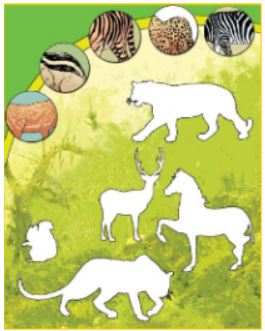
Q.1. Now you know how to recognize animals by their ears. Let us see if we can recognize animals by their skin. Match the animals shown here with the pictures of their skin. Make the correct pattern of the skin on the picture of each animal.
Ans.
Page 15
Q.1. You might have seen some of the animals given below.
Fox | Elephant | Sparrow | Pigeon |
Frog | Crow | Peacock | Pig |
Mouse | Cat | Buffalo | Duck |
Hen | Camel | Lizard | Cow |
Put the names of the animals in the table below:
Ans.
Can see | Has hair | Cannot see | Has feathers |
Ears | On skin | Ears | On skin |
Elephant | Fox | Sparrow | Sparrow |
Fox | Elephant | Pigeon | Pigeon |
Pig | Pig | Frog | Crow |
Mouse | Mouse | Crow | Peacock |
Cat | Cat | Peacock | Duck |
Buffalo | Buffalo | Duck | Hen |
Camel | Camel | Hen | |
Cow | Cow | Lizard |
Q.2. In which list did you put the cow and buffalos?
Ans. Animals whose ear can be seen and have hair on skin?
Q.3. From a distance, can you see the hair on their skin?
Ans. No.
Q.4. Try to go near one of them. Could you see hair?
Ans. Yes.
Q.5. Can you tell which of the animals mentioned in the above list lay eggs? Find out and write the names of these animals in the green box. Which of the animals in the list give birth to babies? Write their names in the red box.
Ans.
Give birth to babies | Lay eggs | ||
Deer | Buffalo | Frog | Ant |
Giraffe | Elephant | Crow | Parrot |
Cat | Cow | Sparrow | Fish |
Pig | Lizard | Duck |
Q.6. What did you note?
Ans. Those animals whose ears you can see have hair on their body. These animals give birth to the young ones. Those animals that do not have ears on the outside, and have no hair on their body, lay eggs.
Page 17
Q.1. Have you seen animals, around your house or school, that have got small babies? Write their names in your notebook.
Ans. Cat, dog, etc.
Q.2. Have you ever had a pet animal? Does anyone around have a pet?
Ans. I have a pet dog.
Q.3. Find out about a pet animal:
(1) What animals is it?
Ans. It is a Dog.
(2) Does it have a pet name? What is it?
Ans. Yes, Its name is Harry.
(3) Who gave it this name?
Ans. Its owner.
(4) What does it like to eat?
Ans. Milk and Bread.
(5) How many times a day does it get fed?
Ans. Three times.
(6) When does it sleep? For how long does it sleep?
Ans. It sleep in the afternoon for an hour. It also sleeps at night.
(7) Is these any special way to look after this animal? How?
Ans. It is bathed with dog soap.
(8) Does it get angry? When? How do you know it is angry?
Ans. Yes. It gets angry if any unknown person enters its house. It barks at the unknown person.
Page 18
Q.1. Does it have hair on its skin, or feathers?
Ans. It has hair.
Q.2. Can you see its ears?
Ans. Yes.
Q.3. Is it a baby or a young animal or a big one?
Ans. Young animal.
Q.4. Will this animal lay eggs or give birth to babies?
Ans. Give birth to young ones.
Q.5. Does it have young ones?
Ans. No.
Q.6. Draw a picture of this animal and colour it. Give it a name of your own choice.
Ans. Dog.

Page 19
Q.1. Look at the picture. Colour the parts which have even numbers (2, 4, 6, 8, …). What do you see? Find out the name of the animal.
Ans. Dinosaurs.
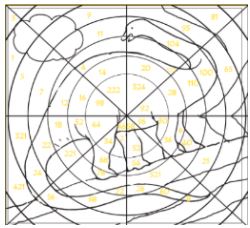
Q.2. Have you seen any animal that loo9ks like a little dinosaur? Do you know its name?
Ans. Lizard.
Page 20
Q.1. Look at this animal. Write its name. Do you know that this is our National Animal?
Ans. Tiger.
Q.2. Where do they live?
Ans. In the jungle.
Q.3. The number of the animal are going down in India. Discuss why this could be happening?
Ans. People hunt tiger for many reasons.
(i) To show bravery.
(ii) For bones
(iii) For skin
Unlimited hunting is responsible for the fall in number of tigers. Alos people are cutting down forests which reducing the living area for tigers.
Question. What is the missing number in the table below?
| Type of Teeth in Human | Number of Teeth in Human |
| Milk Teeth | 20 |
| Permanent Teeth | ? |
(a) 30
(b) 32
(c) 28
(d) 34
Answer : B
Question. The picture given aforesaid is a tile that is used to cover walls. If 4 such tiles are joined together to form a square (without turning any tile), how many full squares and circles will be seen?
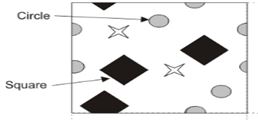
(a) 10 squares and 14 circles
(b) 8 squares and 8 circles
(c) 10 squares and 12 circles
(d) 12 squares and 20 circles
Answer : A
Question. Arrange the following animals in the order of the number of legs they have - starting from the MOST to LEAST number of legs.
(a) Millipede - Earthworm - Spider - Grasshopper
(b) Millipede - Spider- Grasshopper - Earthworm
(c) Spider - Grasshopper - Millipede - Earthworm
(d) Spider - Millipede – Earthworm- Grasshopper
Answer : B
Question. Deepak loves to visit the zoo. Which of these animals will Deepak NOT find in the zoo?

Answer : D
Question. All young birds develop inside eggshells. What purpose does the eggshell serve for the developing bird?
(a) It provides protection to the developing bird.
(b) It provides protein to develop the bird's muscles.
(c) It provides food for the developing bird.
(d) It does not serve any purpose at all.
Answer : A
Question. A student wrote the following in her notebook:
Which animal could she probably be writing about?
1. It has a long tangue
2. It catches insects with it
3. It also has powerful hind legs that allow it to jump
(a) Snake
(b) Rabbit
(c) Frog
(d) Cow
Answer : C
Question. Some of the organs in our body exist in pairs. Which of the following organs exists in a pair?
(a) Heart
(b) Lung
(c) Stomach
(d) Nose
Answer : B
Question. Which of the sets of headings would be BEST suited for the above?
| Group 1 | Group 2 |
| Mosquitoes | Rats |
| Fles | Fish |
| Earthworms | Snakes |
| Spiders | Sparrows |
| Ants | Crocodiles |
(a) Group 1 - Can fly; Group 2 - Cannot fly
(b) Group 1 - Has six legs; Group 2 - Has two legs
(c) Group 1 - Does not have bones; Group 2 - Have bones
(d) Group 1 - Lives inside the house; Group 2 - Lives in the jungle
Answer : C
Question. Which of these lists contains ONLY animals that have bones in their bodies?
(a) horses, sheep, crows
(b) houseflies, camels, ants
(c) spiders, snails, donkeys
(d) buffaloes, cockroaches, goats
Answer : A
Question. Which of these animals lays eggs?
(a) Monkeys
(b) Ducks
(c) Dogs
(d) Rats
Answer : B
Question. In which organ of the human body does the exchange of gases take place?
(a) Stomach
(b) Heart
(c) Lungs
(d) Large intestine
Answer : C
Question. What is true for all the animals shown above?
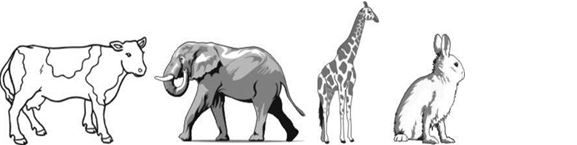
(a) None of them eat meat.
(b) All of them are found in the forest only.
(c) All are larger in size than man.
(d) All of them give us milk.
Answer : A
Question. If Razia were blindfolded, which sense organ would be necessary to find out whether a substance is warm or cool?
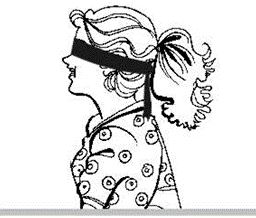
(a) Skin
(b) Ears
(c) Nose
(d) Eyes
Answer : A
Question. The table below shows the properties of four things which we will call 1, 2, 3 and 4. Study the table. Which of them could be LIVING THINGS?
| 1 | 2 | 3 | 4 | |
| Can move? | No | Yes | Yes | No |
| Grows? | Yes | No | Yes | No |
| Need energy to function? | Yes | Yes | Yes | No |
| Gives birth young ones? | Yes | No | Yes | No |
(a) 3 and 4
(b) 1 and 3
(c) 2 and 3
(d) 1 and 2
Answer : B
Question. All living things can be grouped as PLANTS or ANIMALS. Which of these in the list below are ANIMALS?

(a) All are animals.
(b) Lion and crocodile are animals.
(c) Lion, man and crocodile are animals
(d) Lion, man, crocodile, fly and fish are animals
Answer : D
Question. Sharmila has put some animals into two groups as shown below. What was the question that she would have asked to separate the animals into these two categories?
| Group 1 | Group 2 |
| Earthworm | Grasshopper |
| Sparrow | |
| Cat | |
| Butterfly | |
| Mosquito |
(a) Does the animal fly?
(b) Does the animal have bones?
(c) Does the animal have legs?
(d) Does the animal eat leaves?
Answer : C
Question. From my hair you make clothes. By wearing those clothes you protect yourself from cold winds. Who I am?
(a) PLANT
(b) NYLON
(c) COW
(d) SHEEP
Answer : A
Question. Arrange the following from the smallest to the biggest:
Rot, Donkey, Dog, Elephant, Mosquito, Camel
(a) mosquito, rat, dog, donkey, camel, elephant
(b) mosquito, camel, elephant, rat, dog, donkey
(c) elephant, camel, donkey, dog, rat, mosquito
(d) camel, elephant, mosquito, dog, rat, donkey
Answer : A
Question. Among the following, which one is NOT a mammal?
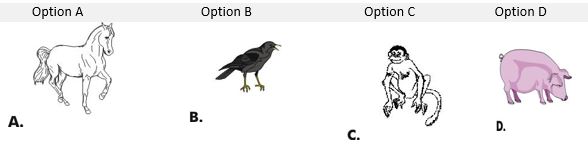
Answer : B
Question. The table below shows the properties of four things which we will call 1, 2, 3 and 4. Study the table. Which of them could be LIVING THINGS?
| 1 | 2 | 3 | 4 | |
| Can move? | No | Yes | Yes | No |
| Grows? | Yes | No | Yes | No |
| Need energy to function? | Yes | Yes | Yes | No |
| Gives birth young ones? | Yes | No | Yes | No |
(a) 3 AND 4
(b) 1 AND 3
(c) 2 AND 3
(d) 1 AND 2
Answer : B
Step-by-Step Textbook Answers: Class 4 Environmental Studies Chapter 02 Ear To Ear
Chapter Exercise Answers for Class 4 Environmental Studies
Access structured NCERT textbook solutions for Chapter 02 Ear To Ear. Designed in alignment with the latest academic curriculum for Class 4 Environmental Studies, these answers cover all end-of-chapter exercises to support daily learning and homework completion.
Detailed Answer Guides for Chapter 02 Ear To Ear
Each solution includes detailed reasoning to foster genuine comprehension of Chapter 02 Ear To Ear concepts. Reviewing these step-by-step breakdowns allows learners to master both analytical and descriptive questions expected in school evaluations.
Complete Preparation Kit for Class 4 Exams
Consistent practice with these solution guides cultivates faster problem-solving habits and clearer logical structuring. For a complete preparation experience, pair these textbook answers with our dedicated revision notes and sample papers for Class 4 Environmental Studies.
FAQs
The complete and updated NCERT Solutions Class 4 Environmental Studies Chapter 2 Ear To Ear is available for free on StudiesToday.com. These solutions for Class 4 Environmental Studies are as per latest NCERT curriculum.
Yes, our experts have revised the NCERT Solutions Class 4 Environmental Studies Chapter 2 Ear To Ear as per 2026 exam pattern. All textbook exercises have been solved and have added explanation about how the Environmental Studies concepts are applied in case-study and assertion-reasoning questions.
Toppers recommend using NCERT language because NCERT marking schemes are strictly based on textbook definitions. Our NCERT Solutions Class 4 Environmental Studies Chapter 2 Ear To Ear will help students to get full marks in the theory paper.
Yes, we provide bilingual support for Class 4 Environmental Studies. You can access NCERT Solutions Class 4 Environmental Studies Chapter 2 Ear To Ear in both English and Hindi medium.
Yes, you can download the entire NCERT Solutions Class 4 Environmental Studies Chapter 2 Ear To Ear in printable PDF format for offline study on any device.