

Download NCERT Solutions for Class 4 Environmental Studies Chapter 19 Abdul In The Garden
Explore reliable textbook solutions for Chapter 19 Abdul In The Garden tailored for Class 4 learners. Utilizing these Environmental Studies answers ensures thorough preparation and strengthens foundational knowledge before final NCERT evaluations.
Access NCERT Solutions and Answers
Access the complete solution PDF for Class 4 Environmental Studies below. Regular practice with these targeted textbook answers builds familiarity with standard question patterns and helps secure higher marks in final school evaluations.
NCERT Solutions for Class 4 EVS Looking Around for Chapter 19 Abdul In The Garden
Abdul in the Garden (Page 158)
Q.1. The stick which was stuck in the ground fell very easily. It was difficult to pull out a small grass. Why?
Ans. Grass has roots which grip it to the soil. There is no root in the stick. So, it is easy to pluck the stick but not grass.
Q.2. Do all plants have roots?
Ans. Yes.
Page 159
Q.1. Look at some plants and trees around you. Imagine how deep and spread out the roots of these are.
Ans
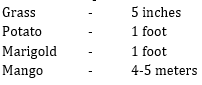
Q.2. After three days. Abdul saw that one broken part of the pea plant had dried. Guess which part would have dried up? Why?
Ans. The leaves dried up. Due to the broken part, water sucked by root could not reach there.
Q.3. Why do you think the neem tree did not fall despite the strong wind?
Ans. There are roots which hold the tree in soil.
Q.4. On putting water in the soil where the plants are growing, the dropin become fresh again. How?
Ans. The roots of the plants suck the water from the soil which reaches the leaves.
Q.5. What do you feel, do all plants need water?
Ans. Yes.
Q.6. What of the plants around you need regular watering?
Ans. The plants that dry up.
Q.7. Abdul relied that he never watered the huge neem tree. Which of the plants you do not need watering? Where do they get water form?
Ans. Neem, Mango, Peepal, etc. Do not need watering. They have roots deep in the soil which suck water.
Q.8. Abdul wondered whether radish was a root. Why did he think so?
Ans. Yes radish is a root. It is a special kind of root which also serves as the storage of food.
Q.9. Find out and write which of these vegetables are the roots of a plant?
Ans. Radish, Beat root, cabbage.
Abdul has more Question (Page 160)
Nowadays abdul keep thinking about all kinds of plants that he sees.
Abdul saw a plant growing out of a wall in school. Abdul wondered:
(i) How deep must the roots of this plant be going?
Ans. The plant’s, roots reach the soil.
(ii) How do the roots get water?
Ans. Roots get water form soil.
(iii) How big will this plant grow?
Ans. These plants don’t grow very much.
(iv) What will happen to the wall?
Ans. Its cracks will be increased.
(v) Have you ever seen a plant growing from a crock in a wall, window or edge? Where was it?
Ans. Yes, it’s the boundary wall of our school.
Page 161
Q.1. Abdul saw a huge tree that had fallen on the roadside. He could see some of its broken roots. Abdul thought:
(i) How deep in the ground would these roots have gone?
Ans. 2 -3 meters.
(ii) How much would they have spread?
Ans. 3 -4 meters.
Q.2. Would someone have uprooted such a big tree, or would it have fallen on its own?
Ans. Yes.
Q.3. Many birds and insects must have lived on this tree. What would have happened to them?
Ans. The birds would lose their nest. Many insects would die.
Q.4. Who all would have played in the shade of the tree?
Ans. All small children living nearby.
Let us talk (Page 161)
Q.1. Which are the oldest trees in your area? Find out how old the trees are.
Ans. In my area, the oldest tree is a banyan tree. People say that it is about 500 years old.
Q.2. Have you seen a big tree that has fallen down? What did you think when you saw it?
Ans. Yes. I have seen a big mango tree uprooted by storm. I was amazed by the strength of the storm.
Unusual Roots (Page 162)
Q.1. Have you swung form a banyan tree?
Ans. Yes.
Let us do this (Page 163)
Q.1. Observe the change that take place for the next 10 to 12 days?
Ans. Seedlings come out of the seed.
Q.2. What difference do you observe in the seeds after soaking? Compare with dry seeds and write.
Ans. The soaked seeds sprout while the dry seeds do not sprout.
Q.3. What do you think would happen if the cotton wool had been left dry?
Ans. The seeds will not sprout.
Q.4. In which direction did the roots grow? And the stem?
Ans. Roots grow in the downward direction. The stem grows in the upward direction.
Q.5. How big did the plant grow in the cotton wool?
Ans. No. Only soaked seeds gave rise to new plants.
Q.6. What is the colour of the roots?
Ans. No. Only soaked seeds gave rise to new plants.
Q.7. What is the colour of the roots?
Ans. Yes.
Page 164
Q.1. Try and pull out one little plant form the cotton wool. Were you able to pull it out? Why?
Ans. It was difficult to pull out. The roots grip the cotton.
Q.2. Did you see how the root grip the cotton wool? Do you think that the roots hold the soil in the same way? Also look at plants grown by your friends.
Ans. Yes. The roots grip the soil in the same way.
Page 165
Q.1. Arif and Roopay had different ideas about which things grow. Arif said these grow: Leaves, Munna, bud, puppy, nails, car. Roopaly said these grow: Moon, tree, myself, hair, watermelon.
What do you think? Which of these grows?
Ans. Leaves, Munna, bud, puppy, nails, tree, Roopaly, hair, watermelon.
Q.2. Why don’t you make youir own list?
Your list can include the names in Arif’s and Roopaly’s list.
Ans. Man, cat, dog, mango, monkey, camel, plants.
Think about yourself. In what ways have you changed? Has your height increased? For example.
Q.1. How much taller have your grown in the last one year?
Ans. Yes. more than ½ feet.
Q.2. What other part of your body keeps growing? Some people cut it regularly. Imagine that you had never cut your nails! Draw a picture to show how you would look.
Ans.

Question. Which process that happens in a tree is shown in this picture?
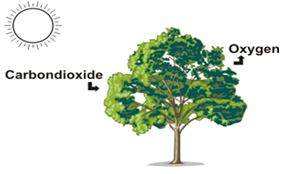
(a) making of food
(b) breathing
(c) resting
(d) losing water
Answer : A
Question. In the table given below, which of the following has been put under the WRONG heading?
| Living | Non Living |
| Grasshoppers | Clouds |
| Monkeys | Rocks |
| Wheat flour | Polished marbie |
| Glowworms | Rivers |
(a) Clouds
(b) Glowworms
(c) Wheat flour
(d) Polished marble
Answer : C
Question. Ravi's father observed the shape of the moon at three different times on one night at about 8 PM, 10 PM and 1 AM.

Answer : A
Question. Which of the following is neither a seed nor a part of a seed?
(a) Peanuts
(b) Rice
(c) Coconut
(d) Potato
Answer : D
Question. Identify this common climber.
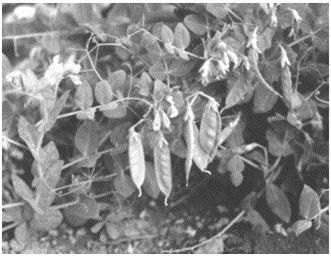
(a) Cauliflower
(b) Grapes
(c) Ginger
(d) Pea
Answer : D
Question. Arrange the following plants from the smallest to the largest: banana, grass, lily, banyan
(a) lily, banyan, banana, grass
(b) grass, lily, banana, banyan
(c) lily, grass, banana, banyan
(d) banana, lily, banyan, grass
Answer : B
Question. Under which of these headings would you put dried leaves?
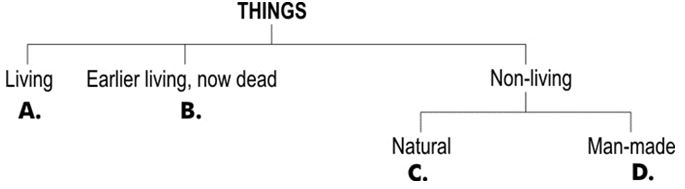
(a) A
(b) B
(c) C
(d) D
Answer : B
Question. Which of the following breathe (respire)?
(a) only man
(b) all animals but not plants
(c) all plants but not animals
(d) all animals and plants
Answer : D
Question. Sushil wants Sita to guess the name of the plants that he has seen by asking questions. But Sushil says he will answer her questions only with a 'Yes' or a 'No'. Sita: Does this plant need a lot of water to grow? Sushil: No Sita: Does this plant give us fruits? Sushil: No Sita: Does this plant have green leaves? Sushil: No Sita: Does this plant have thorn like structures? Question. Sushil: Yes. Which of these plants could Sushil be describing?
(a) Guava
(b) Cactus
(c) Grass
(d) Banana
Answer : B
Question. Which of the following has very deep and strong roots?
(a) Mustard
(b) Wheat
(c) Sugarcane
(d) Banyan
Answer : D
Question. Sharada's mother wants to make dinner with the leaves of a plant. Which of the following can she use?
(a) Cabbage
(b) Beans
(c) Brinjals
(d) Tomatoes
Answer : A
Question. In the table given below one of the items has been listed under the wrong heading. Identify this item.
| Food that can be eaten raw | Food that can be eaten olny cooked |
| Cucumber | Rice |
| Tomato | Dal |
| Potato | Flour (Atta) |
| Apple | Brinjal |
(a) Rice
(b) Potato
(c) Apple
(d) Brinjal
Answer : B
Question. Sushila wanted to know if her marigold plants would grow better in the sun. What would be the best way to find out?
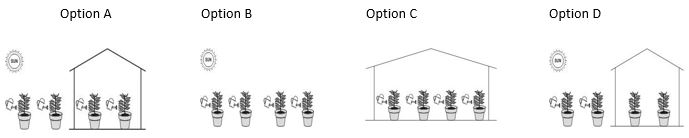
Answer : A
Question. The table gives the number of roses of different colours seen in a garden. Which would be the graph showing the details correctly?
| Colour | No. of flowers |
| Pink | 12 |
| Orange | 4 |
| Red | 12 |
| Yellow | 8 |
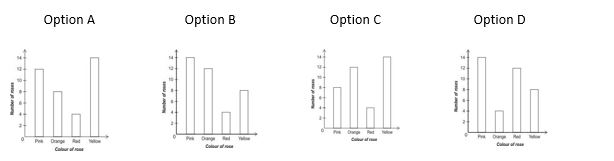
Answer : D
Question. Do trees die?
(a) Yes, all trees die after getting sick or old.
(b) Only some types of trees die, others do not.
(c) Trees die only when they are cut by men.
(d) Trees never die, though they stop growing bigger.
Answer : A
Question. The shadow of a tree will be in which direction early in the morning?
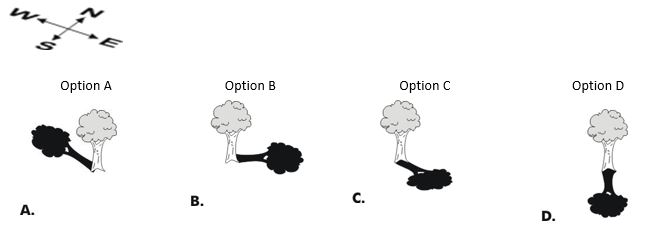
Answer : A
Question. A sunflower seed is planted in the school garden. Its height is measured at the end of each week. How long did it take the sunflower to reach a height of 40 cm?

(a) 2 weeks
(b) 3 weeks
(c) 4 weeks
(d) 5 weeks
Answer : B
Question. Ram measured the height of a plant and recorded it every week as shown below.
What was its height at the end of 4 weeks?
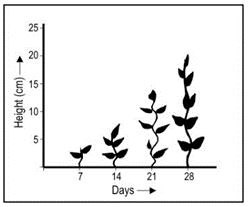
(a) 5 cm
(b) 20 cm
(c) 25 cm
(d) 30 cm
Answer : B
Question. Which of these plants will grow best? The water can show regular watering, and the house means that the plant is kept indoors.
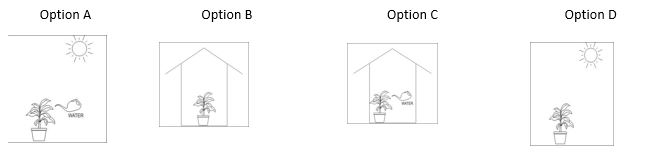
Answer : A
Environmental Studies Class 4 Curriculum Solutions: Chapter 19 Abdul In The Garden
Accessing Chapter 19 Abdul In The Garden Solutions
Review comprehensive exercise answers for Class 4 Environmental Studies Chapter 19 Abdul In The Garden. Fully updated to match current NCERT syllabus guidelines, these textbook solutions help students verify their work and maintain accurate study notes.
Concept-Driven Answers for Class 4 Environmental Studies
Clear, methodical explanations accompany every challenging problem within the Class 4 Environmental Studies text. Engaging with these detailed answers lays a solid foundation for advanced learning and improves foundational clarity for upcoming assessments.
Maximizing Study Efficiency
These resources act as an effective roadmap for daily homework tasks and independent study. Supplement your review of Chapter 19 Abdul In The Garden with official sample papers and interactive practice tests available on our platform free of charge.
FAQs
The complete and updated NCERT Solutions Class 4 Environmental Studies Chapter 19 Abdul In The Garden is available for free on StudiesToday.com. These solutions for Class 4 Environmental Studies are as per latest NCERT curriculum.
Yes, our experts have revised the NCERT Solutions Class 4 Environmental Studies Chapter 19 Abdul In The Garden as per 2026 exam pattern. All textbook exercises have been solved and have added explanation about how the Environmental Studies concepts are applied in case-study and assertion-reasoning questions.
Toppers recommend using NCERT language because NCERT marking schemes are strictly based on textbook definitions. Our NCERT Solutions Class 4 Environmental Studies Chapter 19 Abdul In The Garden will help students to get full marks in the theory paper.
Yes, we provide bilingual support for Class 4 Environmental Studies. You can access NCERT Solutions Class 4 Environmental Studies Chapter 19 Abdul In The Garden in both English and Hindi medium.
Yes, you can download the entire NCERT Solutions Class 4 Environmental Studies Chapter 19 Abdul In The Garden in printable PDF format for offline study on any device.