

Download NTSE MCQs for NTSE SAT Physics: Motion Speed Velocity and Acceleration
Access targeted multiple-choice questions for Motion Speed Velocity and Acceleration designed to align with the latest NTSE academic syllabus for NTSE SAT Physics. These objective practice sets help students evaluate their conceptual understanding and improve exam readiness.
Chapter-wise Objective Questions: Motion Speed Velocity and Acceleration
View or download the dedicated Motion Speed Velocity and Acceleration MCQ resource below. Practicing these 50 objective questions regularly builds familiarity with standard exam patterns and helps secure higher marks in final Physics evaluations.
Question: A body goes from A to B with a velocity of 20 m/s and comes back from B to A with a velocity of 30 m/s. The average velocity of the body during the whole journey is :
- a) Zero
- b) 24 m/s
- c) 25 m/s
- d) None of these
Answer: Zero
Question: The velocity - time graph of a body falling from rest under gravity and rebounding from a solid surface is represented by which of the graphs shown in figure ?
- a)
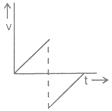
- b)

- c)
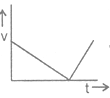
- d)
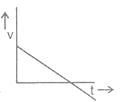
Answer:
Question: Which of the given distance-time graph (Figure) represents the accelerated motion of a body ?
- a)
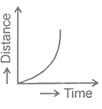
- b)
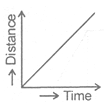
- c)
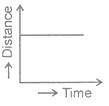
- d)
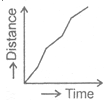
Answer:
Question: An aircraft has a take off velocity of 180 km/h. What length of runway is needed ? The acceleration of aircraft along the runway is 2.5 m/s2:
- a) 100 m
- b) 150 m
- c) 320 m
- d) 500 m
Answer: 500 m
Question: A balloon of mass 1000 kg is floating at some height. If 100 kg mass is released from the balloon. Then the acceleration of the balloon is : [g = 10 ms-2]
- a) 1.1 ms-2 upward
- b) 1.1 ms-2 downward
- c) 10 ms-2 upward
- d) 10 ms-2 downward
Answer: 1.1 ms-2 upward
Question: A person travels along straight road for the first half time with a velocity v1 and the second half time with a velocity v2. The mean velocity v is given by :
- a)

- b)

- c)

- d)

Answer:
Question: A truck traveling due north at 50 km h-1 turns west and travels at the same speed. What is the change in velocity ?
- a) 50 km h-1 north-west
- b) 50√2km h-1 north-west
- c) 50 km h-1 south-west
- d) 50√2 km h-1 south-west
Answer: 50√2 km h-1 south-west
Question: A driver accelerates his car first at the rate of 2.4 m/s2 and then at the rate of 1.6 m/s2. The ratio of the two forces exerted by the engine in the two cases will be:
- a) 1 : 2
- b) 2 : 1
- c) 2 : 3
- d) 3 : 2
Answer: 3 : 2
Question: A graph between the square of the velocity of particle and the distance s moved by the particle is shown in the figure. The acceleration of the particle in km/h2 is :
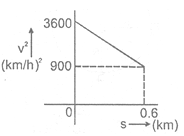
- a) 2250
- b) 225
- c) -2250
- d) -225
Answer: -2250
Question: The speed of a body is 1 ms-1. The angle between distance time graph of the body and the time axis is :
- a) 00
- b) 300
- c) 450
- d) 600
Answer: 450
Question: A Car accelerates from rest at a constant rate α for some time after which it decelerates at a constant rate β to come to rest. If the total time elapsed is t second, the maximum velocity reached is :
- a)

- b)

- c)

- d)

Answer:
Question: A man is standing 40 m behind the bus. Bus starts with 1 m/s2 constant acceleration and also at the same instant the man starts moving with constant speed 9 m/s. The time taken by man to catch the bus will be :
- a) 10 s
- b) 8 s
- c) 5 s
- d) Both (A) and (B) are correct
Answer: Both (A) and (B) are correct
Question: A particle is dropped from a tower. It is found that it travels 55 m in the last second of its journey. They height of tower is : (g = 10 m/s 2)
- a) 125 m
- b) 180 m
- c) 100 m
- d) 55 m
Answer: 180 m
Question: A 150 m long train accelerates uniformly from rest. If the front of the train passes a railway worker 50 m away from the station at a speed of 25 m/s, what will be the speed of the back part of the train as it passes the worker ?
- a) 100 m/s
- b) 20 m/s
- c) 50 m/s
- d) 12.5 m/s
Answer: 50 m/s
Question: A body goes from A to B with a velocity of 20 m/s and comes back from B to A with a velocity of 30 m/s. The average velocity of the body during the whole journey is :
- a) Zero
- b) 24 m/s
- c) 25 m/s
- d) None of these
Answer: Zero
Free study material for Physics
Practice MCQs for NTSE SAT Physics Motion Speed Velocity and Acceleration
Download Multiple Choice Questions: Motion Speed Velocity and Acceleration (NTSE SAT Physics)
Test your conceptual understanding of Motion Speed Velocity and Acceleration with these targeted multiple-choice questions. Designed in alignment with the latest NTSE curriculum for NTSE SAT Physics, these problem sets build accuracy and prepare students for objective exams.
Concept Clarification for Motion Speed Velocity and Acceleration
Each question includes structured solution keys mapped directly to standard NTSE textbooks, helping students evaluate their reasoning and correct mistakes early in their revision.
Additional Study Resources for NTSE SAT Physics
Wrap up your chapter revision by testing your knowledge against standard question formats. Everything on our platform is provided free of charge.
FAQs
You can get most exhaustive NTSE SAT Physics Motion Speed Velocity and Acceleration MCQs for free on StudiesToday.com. These MCQs for NTSE SAT Physics are updated for the 2026-27 academic session as per NTSE examination standards.
Yes, our NTSE SAT Physics Motion Speed Velocity and Acceleration MCQs include the latest type of questions, such as Assertion-Reasoning and Case-based MCQs. 50% of the NTSE paper is now competency-based.
By solving our NTSE SAT Physics Motion Speed Velocity and Acceleration MCQs, NTSE SAT students can improve their accuracy and speed which is important as objective questions provide a chance to secure 100% marks in the Physics.
Yes, Physics MCQs for NTSE SAT have answer key and brief explanations to help students understand logic behind the correct option as its important for 2026 competency-focused NTSE exams.
Yes, you can also access online interactive tests for NTSE SAT Physics Motion Speed Velocity and Acceleration MCQs on StudiesToday.com as they provide instant answers and score to help you track your progress in Physics.