

Official Class 10 Mathematics Worksheets: Chapter 01 Real Numbers
Explore reliable practice materials for Chapter 01 Real Numbers tailored for Class 10 learners. Utilizing these Mathematics worksheets ensures thorough preparation and strengthens problem-solving speed for upcoming school assessments.
Chapter-wise Practice Material: Chapter 01 Real Numbers
View or download the dedicated Chapter 01 Real Numbers practice resource below. Engaging with these objective and subjective questions daily ensures continuous academic progress and mastery of the 2026-27 curriculum.
DIRECTIONS : Study the given Case/Passage and answer the following questions.
Case/Passage-I
To enhance the reading skills of grade X students, the school nominates you and two of your friends to set up a class library. There are two sections-section A and section B of grade X. There are 32 students in section A and 36 students in section B.
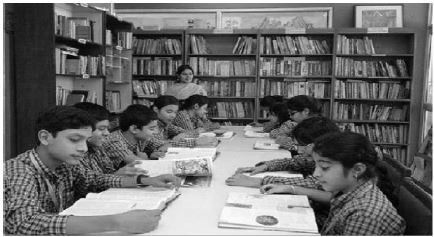
Question. What is the minimum number of books you will acquire for the class library, so that they can be distributed equally among students of Section A or Section B?
(a) 144
(b) 128
(c) 288
(d) 272
Answer: C
Question. If the product of two positive integers is equal to the product of their HCF and LCM is true then, the HCF (32, 36) is
(a) 2
(b) 4
(c) 6
(d) 8
Answer: B
Question. 36 can be expressed as a product of its primes as
(a) 22 × 32
(b) 21 × 33
(c) 23 × 31
(d) 20 × 30
Answer: A
Question. 7 × 11 × 13 × 15 + 15 is a
(a) Prime number
(b) Composite number
(c) Neither prime nor composite
(d) None of the above
Answer: B
Question. If p and q are positive integers such that p = ab2 and q = a2b, where a, b are prime numbers, then the LCM (p, q) is
(a) ab
(b) a2b2
(c) a3b2
(d) a3b3
Answer: B
Case/Passage-II
A seminar is being conducted by an Educational Organisation, where the participants will be educators of different subjects.
The number of participants in Hindi, English and Mathematics are 60, 84 and 108 respectively.
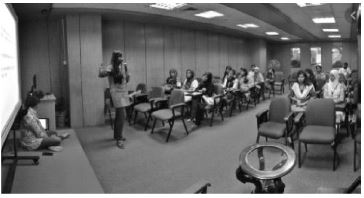
Question. In each room the same number of participants are to be seated and all of them being in the same subject, hence maximum number participants that can accommodated in each room are
(a) 14
(b) 12
(c) 16
(d) 18
Answer: B
Question. What is the minimum number of rooms required during the event?
(a) 11
(b) 31
(c) 41
(d) 21
Answer: D
Question. The LCM of 60, 84 and 108 is
(a) 3780
(b) 3680
(c) 4780
(d) 4680
Answer: A
Question. The product of HCF and LCM of 60,84 and 108 is
(a) 55360
(b) 35360
(c) 45500
(d) 45360
Answer: D
Question. 108 can be expressed as a product of its primes as
(a) 23 × 32
(b) 23 × 33
(c) 22 × 32
(d) 22 × 33
Answer: D
Case/Passage-III
A Mathematics exhibition is being conducted in your school and one of your friends is making a model of a factor tree. He has some difficulty and asks for your help in completing a quiz for the audience.
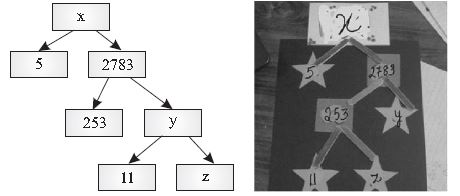
Observe the following factor tree and answer the following:
Question. What will be the value of x?
(a) 15005
(b) 13915
(c) 56920
(d) 17429
Answer: B
Question. What will be the value of y?
(a) 23
(b) 22
(c) 11
(d) 19
Answer: C
Question. What will be the value of z?
(a) 22
(b) 23
(c) 17
(d) 19
Answer: B
Question. According to Fundamental Theorem of Arithmetic 13915 is a
(a) Composite number
(b) Prime number
(c) Neither prime nor composite
(d) Even number
Answer: A
Question. The prime factorisation of 13915 is
(a) 5 × 113 × 132
(b) 5 × 113 × 232
(c) 5 × 112 × 23
(d) 5 × 112 × 132
Answer: C
MATCHING QUESTIONS
Question. DIRECTION : Each question contains statements given in two columns which have to be matched. Statements (A, B, C, D) in column I have to be matched with statements (p, q, r, s) in column II.
Column-I
(A) Irrational number is always
(B) Rational number is always
(C) \( \sqrt[3]{6} \) is not a
(D) \( 2 + \sqrt{2} \) is an
Column-II
(p) rational number
(q) irrational number
(r) non-terminating non-repeating
(s) terminating decimal
Answer: (A) - r, (B) - s, (C) - p, (D) - q
(A) - (r) [12 = 3 \times 4; it is a composite number]
(B) - (s) [Greatest common divisor (G.C.D.) between 2 and 7 is 1]
(C) - (p) [2 is a prime number]
(D) - (q) [\( \sqrt{2} \) is not a rational number]
Question. Match the H.C.F values:
Column-I
(A) H.C.F. of the smallest composite number and the smallest prime number
(B) H.C.F. of 336 and 54
(C) H.C.F. of 475 and 495
Column-II
(p) 6
(q) 5
(r) 2
Answer: (A) - r, (B) - p, (C) - q
Question. Match the number properties:
Column-I
(A) \( \frac{551}{2^3 \times 5^6 \times 7^9} \)
(B) Product of \( (\sqrt{5} - \sqrt{3}) \) and \( (\sqrt{5} + \sqrt{3}) \) is
(C) \( \sqrt{5} - 4 \)
(D) \( \frac{422}{2^3 \times 5^4} \)
Column-II
(p) a prime number
(q) is an irrational number
(r) is a terminating decimal representation
(s) a rational number
(t) is a non-terminating but repeating decimal representation
(u) is a non-terminating and non-recurring decimal representation
Answer: (A) - (t, s), (B) - (p, s), (C) - (q, u), (D) - (r, s)
Question. Match the values:
Column I
(A) \( 3 - \sqrt{2} \) is
(B) \( \frac{\sqrt{50}}{\sqrt{80}} \) is
(C) 3 and 11 are
(D) 2
(E) 1
Column II
(p) a rational number between 1 and 2
(q) an irrational number
(r) co-prime numbers
(s) neither composite nor prime
(t) the only even prime number
Answer: (A) - q, (B) - p, (C) - r, (D) - t, (E) - s
ASSERTION AND REASON
Question. DIRECTION : In the following questions, a statement of assertion (A) is followed by a statement of reason (R). Mark the correct choice as:
(a) Both assertion (A) and reason (R) are true and reason (R) is the correct explanation of assertion (A).
(b) Both assertion (A) and reason (R) are true but reason (R) is not the correct explanation of assertion (A).
(c) Assertion (A) is true but reason (R) is false.
(d) Assertion (A) is false but reason (R) is true.
Question. Assertion : \( \frac{13}{3125} \) is a terminating decimal fraction.
Reason : If \( q = 2^n \cdot 5^m \) where \( n, m \) are non-negative integers, then \( \frac{p}{q} \) is a terminating decimal fraction.
Answer: (a) Both assertion (A) and reason (R) are true and reason (R) is the correct explanation of assertion (A).
Since the factors of the denominator 3125 is of the form \( 2^0 \times 5^5 \). \( \frac{13}{3125} \) is a terminating decimal. Since, assertion follows from reason.
Question. Assertion : A number N when divided by 15 gives the reminder 2. Then the remainder is same when N is divided by 5.
Reason : \( \sqrt{3} \) is an irrational number.
Answer: (a) Both assertion (A) and reason (R) are true and reason (R) is the correct explanation of assertion (A).
Clearly, both A and R are correct but R does not explain A.
Question. Assertion : Denominator of 34.12345. When expressed in the form \( p/q, q \neq 0 \), is of the form \( 2^m \times 5^n \), where \( m, n \) are non-negative integers.
Reason : 34.12345 is a terminating decimal fraction.
Answer: (a) Both assertion (A) and reason (R) are true and reason (R) is the correct explanation of assertion (A).
Reason is clearly true. Again \( 34.12345 = \frac{3412345}{100000} = \frac{682469}{20000} = \frac{682469}{2^5 \times 5^4} \). Its denominator is of the form \( 2^m \times 5^n \) [\( m = 5, n = 4 \) are non negative integers]. Hence, assertion is true. Since reason gives assertion (a) holds.
Question. Assertion : When a positive integer \( a \) is divided by 3, the values of remainder can be 0, 1 or 2.
Reason : According to Euclid’s Division Lemma \( a = bq + r \), where \( 0 \leq r < b \) and \( r \) is an integer.
Answer: (a) Both assertion (A) and reason (R) are true and reason (R) is the correct explanation of assertion (A).
Given positive integers A and B, there exists unique integers Q and R satisfying \( a = bq + r \), where \( 0 \leq r < b \). This is known as Euclid’s Division Lemma. So, both A and R are correct and R explains A.
Question. Assertion : The H.C.F. of two numbers is 16 and their product is 3072. Then their L.C.M. = 162.
Reason : If \( a, b \) are two positive integers, then \( HCF \times LCM = a \times b \).
Answer: (d) Assertion (A) is false but reason (R) is true.
Here reason is true [standard result]. Assertion is false. \( \frac{3072}{16} = 192 \neq 162 \).
Question. Assertion : \( 6^n \) ends with the digit zero, where \( n \) is natural number.
Reason : Any number ends with digit zero, if its prime factor is of the form \( 2^m \times 5^n \), where \( m, n \) are natural numbers.
Answer: (d) Assertion (A) is false but reason (R) is true.
\( 6^n = (2 \times 3)^n = 2^n \times 3^n \), Its prime factors do not contain \( 5^n \) i.e., of the form \( 2^m \times 5^n \), where \( m, n \) are natural numbers. Here assertion is incorrect but reason is correct.
Question. Assertion : 2 is a rational number.
Reason : The square roots of all positive integers are irrationals.
Answer: (c) Assertion (A) is true but reason (R) is false.
Here reason is not true. \( \sqrt{4} = \pm 2 \), which is not an irrational number.
Question. Assertion : \( \sqrt{a} \) is an irrational number, where \( a \) is a prime number.
Reason : Square root of any prime number is an irrational number.
Answer: (a) Both assertion (A) and reason (R) are true and reason (R) is the correct explanation of assertion (A).
As we know that square root of every prime number is an irrational number. So, both A and R are correct and R explains A.
Question. Assertion : If L.C.M. \( \{p, q\} = 30 \) and H.C.F. \( \{p, q\} = 5 \), then \( p \cdot q = 150 \).
Reason : L.C.M. of \( (a, b) \times HCF \) of \( (a, b) = a \cdot b \).
Answer: (a) Assertion (A) is true but reason (R) is false.
Question. Assertion : For any two positive integers \( a \) and \( b \), \( HCF(a, b) \times LCM(a, b) = a \times b \)
Reason : The HCF of two numbers is 5 and their product is 150. Then their LCM is 40.
Answer: (c) Assertion (A) is true but reason (R) is false.
We have, \( LCM(a, b) \times HCF(a, b) = a \times b \)
\( LCM \times 5 = 150 \Rightarrow LCM = \frac{150}{5} = 30 \)
\( LCM = 30 \).
Question. Assertion : \( n^2 - n \) is divisible by 2 for every positive integer.
Reason : \( \sqrt{2} \) is not a rational number.
Answer: (b) Both assertion (A) and reason (R) are true but reason (R) is not the correct explanation of assertion (A).
Question. Assertion : \( n^2 + n \) is divisible by 2 for every positive integer \( n \).
Reason : If \( x \) and \( y \) are odd positive integers, from \( x^2 + y^2 \) is divisible by 4.
Answer: (a) Both assertion (A) and reason (R) are true and reason (R) is the correct explanation of assertion (A).
NOTES
For session 2021-2022 free pdf will be available on Telegram @cbsestudentsgroup
1. Previous 15 Years Exams Chapter-wise Question Bank
2. Previous Ten Years Exam Paper (Paper-wise).
3. 20 Model Paper (All Solved).
4. NCERT Solutions
LEARN VIBRANT 9795820474
All material will be solved and free pdf.
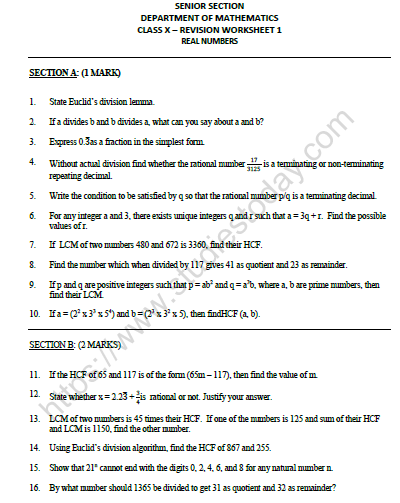
Please click on below link to download CBSE Class 10 Mathematics Real Numbers Worksheet Set A
Free study material for Mathematics
Chapter 01 Real Numbers Practice Sheet and Solutions for Class 10 Mathematics
Download Practice Sheet: Chapter 01 Real Numbers (Class 10 Mathematics)
Review targeted practice exercises for Class 10 Mathematics Chapter 01 Real Numbers. Curated to match official CBSE guidelines, these downloadable PDF sheets support daily revision and core concept reinforcement.
Concept Clarification for Chapter 01 Real Numbers
Each worksheet is structured around standard CBSE textbooks, allowing students to check their working steps and correct mistakes early in their revision.
Additional Study Resources for Class 10 Mathematics
Explore our broader library of printable assignments, chapter notes, and mock tests designed to support continuous revision and secure higher marks in CBSE assessments.
FAQs
You can download the teacher-verified PDF for CBSE Class 10 Mathematics Real Numbers Worksheet Set 01 from StudiesToday.com. These practice sheets for Class 10 Mathematics are designed as per the latest CBSE academic session.
Yes, our CBSE Class 10 Mathematics Real Numbers Worksheet Set 01 includes a variety of questions like Case-based studies, Assertion-Reasoning, and MCQs as per the 50% competency-based weightage in the latest curriculum for Class 10.
Yes, we have provided detailed solutions for CBSE Class 10 Mathematics Real Numbers Worksheet Set 01 to help Class 10 and follow the official CBSE marking scheme.
Daily practice with these Mathematics worksheets helps in identifying understanding gaps. It also improves question solving speed and ensures that Class 10 students get more marks in CBSE exams.
All our Class 10 Mathematics practice test papers and worksheets are available for free download in mobile-friendly PDF format. You can access CBSE Class 10 Mathematics Real Numbers Worksheet Set 01 without any registration.