

NCERT Solutions for Class 7 Social Science: Chapter 08 Human Environment Interactions The Tropical And The Subtropical Region
Access comprehensive textbook solutions for Chapter 08 Human Environment Interactions The Tropical And The Subtropical Region using the official curriculum guides for Class 7 Social Science. Designed to align with the 2026-27 NCERT standards, these detailed answers help students reinforce core academic concepts.
Practice Class 7 Social Science Solutions: Chapter 08 Human Environment Interactions The Tropical And The Subtropical Region
Access the complete solution PDF for Class 7 Social Science below. Regular practice with these targeted textbook answers builds familiarity with standard question patterns and helps secure higher marks in final school evaluations.
NCERT Solutions for Class 7 Social Science Geography Chapter 8 Human Environment Interactions The Tropical And The Subtropical Region
1. Answer the following questions:
(i) Name the continent in which the Amazon Basin is located.
Ans. Amazon Basin is located in South America. It lies in the tropical region.
(ii) What are the crops grown by the people of the Amazon Basin?
Ans. The crops grown by the people of the Amazon Basin are tapioca, pineapple, and sweet potato. Manioc, also known as cassava is the staple food of the people of the Amazon Basin.
(iii) Name the birds that you are likely to find in the rainforests of the Amazon.
Ans. Birds found in the rainforests of the Amazon are toucans, humming birds, birds of paradise, etc.
(iv) What are the major cities located on the River Ganga?
Ans. Major cities located on the banks of River Ganga are Allahabad, Kanpur, Varanasi, Lucknow, Patna, and Kolkata.
(v) Where is one-horned rhinoceros found?
Ans. The one-horned rhinoceros is found in the Brahmaputra plain. Ninety percent of them are found in the Kaziranga National Park in Assam.
2. Tick the correct answer.
(i) Toucans are a type of:
(a) birds (b) animals (c) crops
(ii) Manioc is the staple food of:
(a) Ganga Basin (b) Africa (c) Amazon
(iii) Kolkata is located on the river:
(a) Orange (b) Hooghly (c) Bhagirathi
(iv) Deodars and firs are a type of:
(a) Coniferous trees (b) Deciduous trees (c) shrubs
(v) Bengal tiger is found in:
(a) mountains (b) delta area (c) Amazon
3. Match the following.
(i) Cotton textile (a) Assam
(ii) Maloca (b) Terrace farming
(iii) Piranha (c) Sericulture
(iv) Silk worm (d) Slanting roof
(v) Kaziranga (e) Ganga plain
(f) Varanasi
(g) Fish
Ans.
(i) Cotton textile (f) Varanasi
(ii) Maloca (d) Slanting roof
(iii) Piranha (g) Fish
(iv) Silk worm (c) Sericulture
(v) Kaziranga (a) Assam
4. Give reasons:
(i) The rainforests are depleting.
Ans. The rainforests are depleting because of indiscriminate deforestation taking place to provide wood for various developmental activities that have started in the Amazon Basin. Forests are being cleared to the set up industries and building roads. Top soil is washed away due to heavy rains converting the forests into barren lands.
(ii) Paddy is grown in the Ganga-Brahmaputra plains.
Ans. The soil of the Ganga-Brahmaputra plain is very fertile. These plains also receive adequate rainfall, which is necessary for the cultivation of paddy. Canals from river supply enough water to irrigate paddy fields during the dry season. All these factors contribute to the cultivation of paddy in these plains.
5. Map skills.
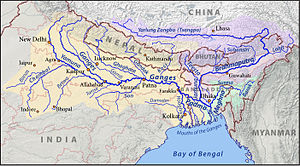
(i) On an outline map of the Indian subcontinent, draw the rivers Ganga and Brahmaputra from the source to the mouth. Also, show important tributaries to both the rivers.
Ans.
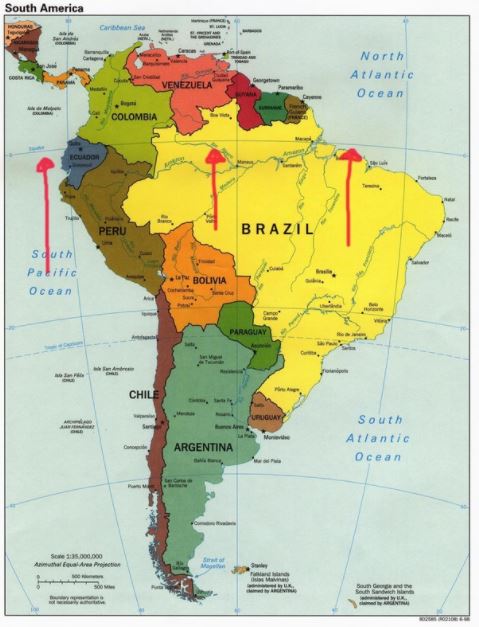
(ii) On the political map of South America, draw the equator. Mark the countries through which the equator passes.
Ans.
Free study material for Social Science
Step-by-Step Textbook Answers: Class 7 Social Science Chapter 08 Human Environment Interactions The Tropical And The Subtropical Region
Accessing Chapter 08 Human Environment Interactions The Tropical And The Subtropical Region Solutions
Explore reliable textbook solutions for Chapter 08 Human Environment Interactions The Tropical And The Subtropical Region tailored for Class 7 learners. Utilizing these complete exercise answers ensures your preparation aligns exactly with official NCERT standards for Social Science.
Concept-Driven Answers for Class 7 Social Science
Beyond providing final answers, these guides offer step-by-step breakdowns for complex queries in the Class 7 Social Science module. This approach helps students balance theoretical depth with practical problem-solving skills required for NCERT exams.
Maximizing Study Efficiency
Frequent review of these structured answers builds strong analytical capabilities and response efficiency. Maximize your academic readiness by combining these textbook solutions with our curated study materials and mock evaluations for Class 7 Social Science.
FAQs
The complete and updated NCERT Solutions Class 7 Social Science Chapter 8 Human Environment Interactions The Tropical And The Subtropical Region is available for free on StudiesToday.com. These solutions for Class 7 Social Science are as per latest NCERT curriculum.
Yes, our experts have revised the NCERT Solutions Class 7 Social Science Chapter 8 Human Environment Interactions The Tropical And The Subtropical Region as per 2026 exam pattern. All textbook exercises have been solved and have added explanation about how the Social Science concepts are applied in case-study and assertion-reasoning questions.
Toppers recommend using NCERT language because NCERT marking schemes are strictly based on textbook definitions. Our NCERT Solutions Class 7 Social Science Chapter 8 Human Environment Interactions The Tropical And The Subtropical Region will help students to get full marks in the theory paper.
Yes, we provide bilingual support for Class 7 Social Science. You can access NCERT Solutions Class 7 Social Science Chapter 8 Human Environment Interactions The Tropical And The Subtropical Region in both English and Hindi medium.
Yes, you can download the entire NCERT Solutions Class 7 Social Science Chapter 8 Human Environment Interactions The Tropical And The Subtropical Region in printable PDF format for offline study on any device.