

Download CBSE MCQs for Class 10 Mathematics: Chapter 14 Probability
Access targeted multiple-choice questions for Chapter 14 Probability designed to align with the latest CBSE academic syllabus for Class 10 Mathematics. These objective practice sets help students evaluate their conceptual understanding and improve exam readiness.
Chapter-wise Objective Questions: Chapter 14 Probability
Access the complete set of multiple-choice questions for Chapter 14 Probability below. This focused format allows students to isolate specific topics for thorough review and uninterrupted practice alongside official CBSE textbooks.
Question. Find the probability that the month of April has exactly 5 Monday is
(a) 4/7
(b) 5/7
(c) 3/7
(d) 2/7
Answer : D
Question. A bag contains three green marbles, four blue marbles & two orange marbles. One marble is picked at random, then the probability that it is not an orange marble is
(a) 1/4
(b) 1/3
(c) 4/9
(d) 7/9
Answer : D
Question. A die is thrown once. What is the probability of getting a number greater than 4?
(a) 1/2
(b) 1/3
(c) 1/4
(d) 1/5
Answer : B
Question. A ticket is drawn at random from a bag containing tickets numbered from 1 to 40. The probability that the selected ticket has a number which is a multiple of 5 is
(a) 1/5
(b) 3/5
(c) 4/5
(d) 1
Answer : A
Question. If P (E) = 0.05 , then the probability of P (not E) is
(a) 0.85
(b) 0.75
(c) 0.25
(d) 0.95
Answer : D
Question. A letter of English alphabet is chosen at random. The probability that the chosen letter is a consonant is
(a) 21/26
(b) 5/26
(c) 2/25
(d) None of these
Answer : A
Question. A number is chosen at random from the numbers −3, −2, −1, 0, 1, 2, 3. What will be the probability that square of this number is less than or equal to 1?
(a) 3/7
(b) 4/7
(c) 5/7
(d) 6/7
Answer : A
Question. Someone is asked to take a number from 1 to 100. The probability that it is a prime is
(a) 1/5
(b) 6/25
(c) 1/4
(d) 13/15
Answer : C
Question. In a single throw of a die , the probability of getting a multiple of 3 is
(a) 1/2
(b) 1/3
(c) 1/6
(d) 2/3
Answer : B
Question. A card is drawn from a deck of 52 cards. The event E is that card is not an ace of hearts. The number of outcomes favourable to E is
(a) 4
(b) 13
(c) 48
(d) 51
Answer : D
Question. A coin is tossed two times. Find the probability of getting at least one head is
(a) 1/4
(b) 3/4
(c) 1/8
(d) 3/8
Answer : B
Question. The probability that a non – leap year has 53 Sundays is
(a) 2/7
(b) 5/7
(c) 6/7
(d) 1/7
Answer : D
Question. Which of the following cannot be the probability of an event?
(a) 1.5
(b) 3/5
(c) 25%
(d) 0.3
Answer : A
Question. A card is drawn from a well shuffled deck of 52 cards. Find the probability of getting an ace.
(a) 1/13
(b) 4/13
(c) 1/52
(d) 4/13
Answer : A
Question. When a die is thrown, the probability of getting an odd number less than 3 is
(a) 1/6
(b) 1/3
(c) 1/2
(d) 0
Answer : A
Question. The probability of guessing the correct answer to a certain test is p/12 . If the probability of not guessing the correct answer to this question is 3/1 , then the value of p is
(a) 2
(b) 4
(c) 6
(d) 8
Answer : D
Question. There are 6 marbles in a box with number 1 to6 marked on each of them.
What is the probability of drawing a marble with number 2 ?
(a) 1/6
(b) 1/5
(c) 1/3
(d) 1
Answer : A
Question. A bag has 4 red balls and 2 yellow balls. A ball is drawn from the bag without looking into the bag. What is probability of getting a red ball?
(a) 1/6
(b) 2/3
(c) 1/3
(d) 1
Answer : B
Question. If the probability of an event E happening is 0.023, then P(E) =
(a) 0.245
(b) 0.977
(c) 0.678
(d) 0.5
Answer : B
Question. The probability that a number selected from the numbers { 1,2,3,4,….20 }is a multiple of 5 is
(a) /520
(b) 1/5
(c) 4/5
(d) 2/5
Answer : B
Question. The probability of getting a bad egg in a lot of 400 eggs is 0.035. The number of bad eggs in the lot is
(a) 7
(b) 14
(c) 21
(d) 28
Answer : B
Question. A card is drawn at random from a well shuffled pack of 52 playing cards. The probability of getting a red face card is
(a) 3/26
(b) 5/26
(c) 2/13
(d) 1/26
Answer : A
Question. The probability of getting a doublet in a throw of a pair of dice is
(a) 1/2
(b) 1/4
(c) 1/5
(d) 1/6
Answer : D
Question. If P(A) denotes the probability of an event A, then
(a) P(A) < 0
(b) P(A) > 1
(c) 0 ≤ P(A) ≤ 1
(d) –1 ≤ P(A) ≤ 1
Answer : C
Question. If the probability of an event is p, the probability of its complementary event will be
(a) p – 1
(b) p
(c) 1 – p
(d) 1 − 1/p
Answer : C
(a) 1/26
(b) 3/26
(c) 8/13
(d) 1
Answer : A
Question. One card is drawn from a well shuffled deck of 52 cards. The probability that it is black queen is
(a) 1/26
(b) 1/13
(c) 1/52
(d) 2/13
Answer : A
Question. A card is drawn at random from a well shuffled pack of 52 cards. The probability that the drawn card is not an ace is
(a) 1/13
(b) 12/13
(c) 9/13
(d) 4/13
Answer : B
Question. Two coins are tossed simultaneously, then the probability of getting exactly one head is
(a) 1/3
(b) 2/6
(c) 1/2
(d) 1/8
Answer : C
Question. The probability of an impossible event is
(a) 1
(b) 1/2
(c) not defined
(d) 0
Answer : D
Question. Two different dice are tossed together. The probability that the product of the two numbers on the top of the dice is 6 is
(a) 4/9
(b) 5/9
(c) 8/9
(d) 1/9
Answer : D
Question. A number is chosen at random from the numbers –5, –4, –3, –2, –1, 0, 1, 2, 3, 4, 5. Then the probability that square of this number is less than or equal to 1 is
(a) 1/11
(b) 2/11
(c) 3/11
(d) 3/26
Answer : C
Question. A letter is selected at random from the set of English alphabets. What is the probability that it is a vowel?
(a) 1/26
(b) 3/26
(c) 5/26
(d) 7/26
Answer : C
Question. A die is thrown once. What is the probability of getting a number less than 3?
(a) 1/2
(b) 1/3
(c) 1/5
(d) 1/9
Answer : B
Question. The probability of a sure event is -------
(a) 1/2
(b) 2/3
(c) 1
(d) 0
Answer : C
Question. A girl calculates that the probability of her winning the first prize in a lottery is 0.08. If 6000 tickets are sold, how many tickets has she bought?
(a) 40
(b) 240
(C) 480
(D) 750
Answer : C
Question. If the probability of winning a game is 0.07, what is the probability of losing it?
(a) 0.33
(b) 0.63
(c) 0.93
(d) 0.57
Answer : C
Question. A game consists of tossing a coin 3 times and noting the outcomes each time. If getting the same result in all the tosses is a success, the probability of losing the game is
(a) 3/4
(b) 1/4
(c) 3/8
(d) 1
Answer : A
Question. A letter of English alphabet is chosen at random. The probability that the chosen letter is a consonant is
(a) 7/26
(b) 5/26
(c) 11/26
(d) 21/26
Answer : D
Question. If a number x is chosen at random from the numbers –3, –2, –1, 0, 1, 2, 3. What is probability that x2 ≤ 4?
(a) 5/7
(b) 3/7
(c) 4/7
(d) 6/7
Answer : A
Question. The king, queen and jack of clubs are removed from a deck of 52 playing cards and the remaining cards are shuffled. A card is drawn from the remaining cards. The probability of getting a card of queen is
(a) 1/49
(b) 2/49
(c) 3/49
(d) 5/49
Answer : C
Assertion-Reason Type Questions
In the following questions, a statement of assertion (A) is followed by a statement of reason (R).
Choose the correct choice as:
(a) Both assertion (A) and reason (R) are true and reason (R) is the correct explanation of assertion (A).
(b) Both assertion (A) and reason (R) are true but reason (R) is not the correct explanation of assertion (A).
(c) Assertion (A) is true but reason (R) is false.
(d) Assertion (A) is false but reason (R) is true.
Question. Assertion (A): If a pair of dice is thrown once, then the probability of getting a sum of 8 is 5/36.
Reason (R): In a simultaneous toss of two coins, the probability of getting exactly one head is 1/2
Answer : B
Question. Assertion (A): The probability of a sure event is 1.
Reason (R): Let E be an event. Then 0 ≤ P (E) ≤ 1
Answer : C
Case Study 1:
TERM INSURANCE PLAN
A particular term insurance company has two options in the application form before issuing the policy – Smoker or Non-smoker. As a smoker has more chance of getting lung disease and death chance is comparatively higher. So premium payment is more for a smoking person. Company gives a rider plan (i.e. for some critical diseases) along with normal term plan by paying some extra premium money. In a certain time period, company issues 100 policies of which 30% are for smokers and rest for non-smoker customers. Also, half the smokers and 2/5 th of non – smoking customers have purchased a rider plan along with a normal plan.'

On the basis of above information give the answers of the following questions:
Q1) Find the probability that company issues policy for a smoker with rider plan.
Answer : 15/100)
Q2) Find the probability that company issues policy for a non- smoker without a rider plan.
Answer : 21/50)
Q3) Find the probability that company issues policy for a smoker without a rider plan.
Answer : 15/100)
Q4) Find the probability that company issues policy for a non-smoker with rider plan.
Answer : 7/25)
Case Study 2:
Piggy bank or Money box( a coin container) is normally used by children. Piggy bank serves as a pedagogical device to teach about saving money to children. Generally, piggy banks have openings besides the slot for inserting coins but some do not have openings. We have to smash the piggy bank with a hammer or by other means, to get the money inside it.
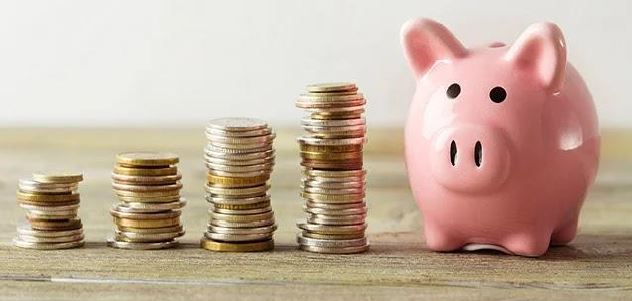
A child Shreya has a Piggybank. She saves her money in her Piggybank. One day she found that her Piggybank contains hundred 50 paisa coins, fifty 1 rupees coin, twenty 2 rupees coin, and ten 5 rupees coins. If it is equally likely that one of the coins will fall out when the bank is turned upside down.
Based on the above information, answer the following questions.
(a) The probability that the fallen coin will be 50 paisa coin, is -------
Answer : 5/9)
(b) The probability that the fallen coin will be 5 rupees coin, is---------
Answer : 1/18)
(c) The probability that the fallen coin will be 2 rupees coin, is---------
Answer : 1/9)
(d) The probability that the fallen coin will be 2 rupees coin or 5 rupees coin, is--------
Answer : 1/6)
Question : There are 6 marbles in a box with number 1 to6 marked on each of them . What is the probability of drawing a marble with number 2 ?
(a) 1/ 6
(b) 1 /5
(c) 1/ 3
(d) 1
Question : A coin is flipped to decide which team starts the game . What is the probability of your team will start ?
(a) 1/ 4
(b) 1 /2
(c) 1
(d) 0
Question : A die is thrown once . What will be the probability of getting a prime number ?
(a) 1 /6
(b) 1 /2
(c) 1
(d) 0
Cards are marked with numbers 1 to 25 are placed in the box and mixed thoroughly. One card is drawn at random from the box. Answer the following questions (Q4-Q13)
Question : What is the probability of getting a number 5?
(a) 1
(b) 0
(c) 1/ 25
(d) 1 /5
Question : What is the probability of getting a number less than 11?
(a) 1
(b) 0
(c) 1 /5
(d) 2/ 5
Question : What is the probability of getting a number greater than 25?
(a) 1
(b) 0
(c) 1 /5
(d) 2 /5
Question : What is the probability of getting a multiple of 5?
(a) 1
(b) 0
(c) 1/ 25
(d) 1 /5
Question : What is the probability of getting an even number?
(a) 1
(b) 0
(c) 12/ 25
(d) 13 /25
Question : What is the probability of getting an odd number?
(a) 1
(b) 0
(c) 12/ 25
(d) 13 /25
Question : What is the probability of getting a prime number?
(a) 8/ 25
(b) 9/ 25
(c) 12/ 25
(d) 13/ 25
♦ A box contains 3 blue, 2 white, and 5 red marbles. If a marble is drawn at random from the box, then answer the questions from 1 to 5.
Question : What is the probability that the marble will be white?
(a) 1/ 6
(b) 1 /5
(c) 1 /3
(d) 1
Question : What is the probability that the marble will be red?
(a) 1 /6
(b) 1 /2
(c) 1
(d) 0
Question : What is the probability that the marble will be blue?
(a) 3/ 10
(b) 1 2
(c/) 1
(d) 0
Question : What is the probability that the marble will be any one colour?
(a) 1 /6
(b) 1/ 2
(c) 1
(d) 0
Question : What is the probability that the marble will be red or blue?
(a) 1
(b) 4 /5
(c) 1 /5
(d) 2 /5
♦ A die is thrown once, then answer the questions from 6 to 10.
Question : Find the probability of getting a prime number
(a) 1/ 6
(b) 1 /2
(c) 1
(d) 0
Question : Find the probability of getting a number lying between 2 and 6
(a) 1/ 6
(b) 1 /2
(c) 1
(d) 0
Question : Find the probability of getting an odd number.
(a) 1 /6
(b) 1/ 2
(c) 1
(d) 0
Question : Find the probability of getting an even number.
(a) 1/ 6
(b) 1 /2
(c) 1
(d) 0
Question : Find the probability of getting a number greater than 4.
(a) 1/ 6
(b) 2 /3
(c) 1 /3
(d) 1
Question : What is the probability that the marble will be white?
(a) 1/ 6
(b) 2 /3
(c) 1 /3
(d) 1
Question : What is the probability that the marble will be red?
(a) 1 /6
(b) 2/ 3
(c) 1/ 3
(d) 1
Question : What is the probability that the marble will be green?
(a) 0.3
(b) 1 /2
(c) 1
(d) none of these
Question : What is the probability that the marble will be any one colour?
(a) 1/ 6
(b) 1 /2
(c) 1
(d) 0
Question : What is the probability that the marble will be red or green?
(a) 2 /5
(b) 3 /25
(c) 1/ 5
(d) none of these
Question : What is the probability that the marble will be blue?
(a) 1 /6
(b) 1/ 2
(c) 1
(d) 0
♦ Cards are marked with numbers 1 to 50 are placed in the box and mixed thoroughly. One card is drawn at random from the box. Answer the following questions from 7 to 15.
Question : What is the probability of getting a number 5?
(a) 1
(b) 0
(c) 1 /25
(d) 1/ 5
Question : What is the probability of getting a number less than 11?
(a) 1
(b) 0
(c) 1 /5
(d) 2/ 5
Question : What is the probability of getting a number greater than 50?
(a) 1
(b) 0
(c) 1/ 5
(d) 2/ 5
Question : What is the probability of getting a multiple of 5?
(a) 1
(b) 0
(c) 1 /25
(d) 1/ 5
Question : Find the probability of getting a king of red colour
(a) 1 /26
(b) 2/ 13
(c) 1 /13
(d) 3/ 26
Question : Find the probability of getting a face card.
(a) 1/ 26
(b) 2/ 13
(c) 1/13
(d) 3 /13
Question : Find the probability of getting a black face card
(a) 1 /26
(b) 2/ 13
(c) 1 /13
(d) 3/ 26
Question : Find the probability of getting an ace.
(a) 1/26
(b) 2/ 13
(c) 1/ 13
(d) 3 /26
Question : Find the probability of getting a black card.
(a) 1/ 2
(b) 2 /13
(c) 1 /13
(d) 3/ 26
Question : Find the probability of getting a face card or an ace.
(a) 4 /13
(b) 2 /13
(c) 1 /13
(d) 3/ 13
Question : Find the probability of getting face card or black card.
(a) 4 /13
(b) 8/ 13
(c) 7/ 13
(d) 3/ 13
Question : Find the probability of getting a king or red card.
(a) 4 /13
(b) 8 /13
(c) 7 /13
(d) 3/ 13
Question : Find the probability of getting a king and red card.
(a) 1 /26
(b) 2 /13
(c) 1/ 13
(d) 3 /26
Question : Find the probability of getting a king or queen card.
(a) 1 /26
(b) 2 /13
(c) 1 /13
(d) 3/ 26

Attempt Mock Tests on this topic
Free study material for Mathematics
Multiple Choice Questions (MCQs) for Class 10 Mathematics Chapter 14 Probability
Class 10 Mathematics Chapter 14 Probability Objective Test Questions
Test your conceptual understanding of Chapter 14 Probability with these targeted multiple-choice questions. Designed in alignment with the latest CBSE curriculum for Class 10 Mathematics, these problem sets build accuracy and prepare students for objective exams.
NCERT-Aligned Objective Questions and Solutions
Each question includes structured solution keys mapped directly to standard CBSE textbooks, helping students evaluate their reasoning and correct mistakes early in their revision.
Next Steps in Your Exam Preparation
Explore our broader library of printable assignments, chapter notes, and mock tests designed to support continuous revision and secure higher marks in CBSE assessments.
FAQs
You can get most exhaustive CBSE Class 10 Mathematics Probability MCQs Set 01 for free on StudiesToday.com. These MCQs for Class 10 Mathematics are updated for the 2026-27 academic session as per CBSE examination standards.
Yes, our CBSE Class 10 Mathematics Probability MCQs Set 01 include the latest type of questions, such as Assertion-Reasoning and Case-based MCQs. 50% of the CBSE paper is now competency-based.
By solving our CBSE Class 10 Mathematics Probability MCQs Set 01, Class 10 students can improve their accuracy and speed which is important as objective questions provide a chance to secure 100% marks in the Mathematics.
Yes, Mathematics MCQs for Class 10 have answer key and brief explanations to help students understand logic behind the correct option as its important for 2026 competency-focused CBSE exams.
Yes, you can also access online interactive tests for CBSE Class 10 Mathematics Probability MCQs Set 01 on StudiesToday.com as they provide instant answers and score to help you track your progress in Mathematics.