

Chemistry Objective Questions and Answers: Carbon Coal and Petroleum
Review structured MCQ sets for NTSE Chemistry Carbon Coal and Petroleum. Built according to official NTSE guidelines, these downloadable questions support daily revision and core concept reinforcement.
Download Carbon Coal and Petroleum MCQs with Answers
View or download the dedicated Carbon Coal and Petroleum MCQ resource below. Practicing these 50 objective questions regularly builds familiarity with standard exam patterns and helps secure higher marks in final Chemistry evaluations.
Question: The IUPAC name for the compound-
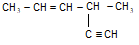
- a) 4 - Ethyl - 2 - pentene
- b) 1 - Ethyl - 3 - methyl - 2 - butane
- c) 3 - Methylhex - 4 - en - 1 yne
- d) 4 - Methyl - 2 - hexen - 5 yne
Answer: 3 - Methylhex - 4 - en - 1 yne
Question: Number of and bonds in benzene will be-
- a) 6, 3
- b) 3, 3
- c) 12, 3
- d) 9, 3
Answer: 12, 3
Question: IUPAC name of the following compound is -
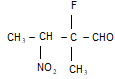
- a) 1 - Fluoro - 1 - methyl - 2 - nitrobutanal
- b) 3 - Nitro - 2 - fluoro - 2 - methylbutanal
- c) 2 - Fluoro - 2 - methyl - 3 – nitrobutanal
- d) None of these
Answer: 2 - Fluoro - 2 - methyl - 3 – nitrobutanal
Question: The IUPAC name of C2H2 is -
- a) Ethylene
- b) Acetylene
- c) Ethane
- d) Ethyne
Answer: Ethyne
Question: Which of the following statements is most true ?
- a) The IUPAC name of alkenes ends with suffix - ene.
- b) The IUPAC name of alkynes ends with suffix - yne.
- c) The substituents get lower number of comparison to double bond
- d) All are true
Answer: All are true
Question: Gammaxene is -
- a) DDT
- b) Benzene hexachloride
- c) Chloral
- d) Hexachloro ethane
Answer: Benzene hexachloride
Question: C2H4O2 is -
- a) Alcohol
- b) Aldehyde
- c) Carboxylic acid
- d) Ketone
Answer: Carboxylic acid
Question: Which of the following pairs is an example of chain isomer ?
- a) CH3 - CH2 - OHand CH3OCH3
- b)
CH3 - CH2 - CHO and CH3 - COCH3
- c)

- d) All of the above
Answer:
Question: Total number of structural isomers of C4H10 are -
- a) 5
- b) 7
- c) 2
- d) 4
Answer: 2
Question: Which of the following is a functional isomer of CH3 - COOH
- a) CH3 - CH2 - OH
- b)

- c)

- d) All of these
Answer:
More Questions..................................
Question: Which of the following statements is incorrect. The members of the homologous series of alkanes -
- a) are all straight chain compounds.
- b) have the general formula CnH2n+2
- c) have similar chemical properties.
- d) show a regular gradation of physical properties.
Answer: are all straight chain compounds.
Question: The molecular formula of an ester is HCOOCH3. What will be the molecular formula of the alcohol and the acid from which it might be prepared ?
- a) CH3COOH + CH3OH
- b) HCOOH + C2H5OH
- c) PCI2
- d) All the these
Answer: PCI2
Question: Alcohols cannot be oxidized to carboxylic acids by -
- a) alkaline KMnO4
- b) acidified K2Cr2O7
- c) PCI5
- d) All of these
Answer: PCI5
Question: When formaldehyde is heated with phenol in the presence of an alkali, the product formed is -
- a) Rubber
- b) Bakelite
- c) Chloroprene
- d) Neoprene
Answer: Bakelite
Question: The compounds A,B and C in the following reaction sequence are -

- a) Starch, sucrose, fructose
- b) Sucrose, maltose, glucose
- c) Starch, maltose, glucose
- d) Starch, sucrose, glucose
Answer: Starch, maltose, glucose
Question: The structure of 4-Methyl - 2 - hexyne is -
- a)
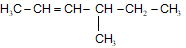
- b)
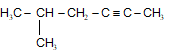
- c)
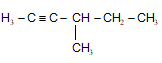
- d) None of these
Answer:
Question: The IUPAC name of is butane is -
- a) 1, 1-Dimethylethane
- b) 1-Methylpropane
- c) 2-Methylethane
- d) 2- Methylpropane
Answer: 2- Methylpropane
Question: Which of following has the highest percentage of carbon ?
- a) Peat
- b) Lignite
- c) Bituminous
- d) Anthracite
Answer: Anthracite
Question: C6H12 hydrocarbon is -
- a) Hexane
- b) Hexene
- c) Hexyne
- d) Heptane
Answer: Hexene
Question: Petroleum products can be separated by -
- a) Crystallization
- b) Boiling
- c) Fractional distillation
- d) Fusion
Answer: Fractional distillation
Question: Out of the different types of fuels the one which is excellent is -
- a) The solid fuel
- b) The liquid fuel
- c) The gaseous fuel
- d) None of these
Answer: The gaseous fuel
Question:
In the reactio CH3COONa + NaOH  product ‘X’ would be-
- a) CH3CHO
- b) CH3COOH
- c) CH4
- d) None of these
Answer: CH4
Question: Windows of aeroplane are made up of -
- a) Polyethylene
- b) Polypropylene
- c) PVC
- d) Polymethylmethacrylate
Answer: Polymethylmethacrylate
Question: Of which synthetic fiber gear of machines are made up of ?
- a) Nylon-66
- b) Terylene
- c) Rayon
- d) Orion
Answer: Nylon-66
Question: Which of the following is an addition polymer ?
- a) Neoprene
- b) Teflon
- c) Polyvinyl chloride
- d) All of these
Answer: All of these
Question: Which of following will give the red ppt. with Feeling solution ?
- a) H-COOH
- b) CH3-COOH
- c) CH3-OH
- d) CH3-CH2-OH
Answer: H-COOH
Question: The enzyme, which is used to convert sucrose into glucose and fructose, is -
- a) Invertase
- b) Zymase
- c) Diastase
- d) Lactase
Answer: Invertase
Question: Denatures alcohol contains ethyl alcohol and -
- a) Methyl alcohol
- b) Pyridene
- c) (A) & (B)
- d) None of these
Answer: (A) & (B)
Question: Which of the following will give the reactions of aldol condensation ?
- a) CH3 - CHO
- b) H - COOH
- c) CH3 - CH2 - OH
- d) H - CHO
Answer: CH3 - CHO
Question:
2HCHO + NaOH → CH3 - OH + H - COONa, the name of given reaction is -
- a) Aldol condensation
- b) Cannizzaro
- c) Haloform
- d) None of these
Answer: Cannizzaro
Question: Ammonical silver nitrate solution is called -
- a) Tollens reagent
- b) Fehling solution
- c) (A) & (B)
- d) None of these
Answer: Tollens reagent
Question: Which of following is used in treatment of urinary infection ?
- a) Formaldehyde
- b) Urotropine
- c) Methyl alcohol
- d) Ammonia
Answer: Urotropine
Question: Chloroform can be obtained from -
- a)
C2H5OH
- b)
CH3 - CO - CH3
- c)
CH3 - CHO
- d) All
Answer: All
Question: Which of the following is an essential ingredient of nail polish ?
- a)
CH3 - OH
- b)
CH3 - CH2 - OH
- c)
CH3 - COOH
- d)
CH3 - CO - CH3
Answer:
CH3 - CO - CH3
Question: Which of the following is used for non-stick coating on kitchen utencils ?
- a) PTFE
- b) PVC
- c) BUNA-S
- d) None of these
Answer: PTFE
Question: The value of temperature coefficient lies between -
- a) 2 and 3
- b) 3 and 4
- c) 4 and 5
- d) 1 and 2
Answer: 2 and 3
Question: Nylon -66 is made up of
- a) Hexamethylene diamine & adipic acid
- b) Hexamethylene diamine & acetic acid
- c) Urea and acetic acid
- d) None of these
Answer: Hexamethylene diamine & adipic acid
Question: Magnetic recording tapes are made up of -
- a) Terylene
- b) PVC
- c) PTFE
- d) None
Answer: Terylene
Question: Bakelite is an example of -
- a) Thermoplastic
- b) Thermosetting plastics
- c) Fibre
- d) All are correct
Answer: Thermosetting plastics
Question: Which of following is used in treatment of urinary infection ?
- a) Formaldehyde
- b) Urotropine
- c) Methyl alcohol
- d) Ammonia
Answer: Urotropine
Free study material for Chemistry
Carbon Coal and Petroleum Objective Questions & Solutions for NTSE Chemistry
NTSE Chemistry Carbon Coal and Petroleum Objective Test Questions
Test your conceptual understanding of Carbon Coal and Petroleum with these targeted multiple-choice questions. Designed in alignment with the latest NTSE curriculum for NTSE Chemistry, these problem sets build accuracy and prepare students for objective exams.
NCERT-Aligned Objective Questions and Solutions
Each question includes structured solution keys mapped directly to standard NTSE textbooks, helping students evaluate their reasoning and correct mistakes early in their revision.
Next Steps in Your Exam Preparation
Explore our broader library of printable assignments, chapter notes, and mock tests designed to support continuous revision and secure higher marks in NTSE assessments.
FAQs
You can get most exhaustive NTSE Chemistry Carbon Coal and Petroleum MCQs for free on StudiesToday.com. These MCQs for NTSE Chemistry are updated for the 2026-27 academic session as per NTSE examination standards.
Yes, our NTSE Chemistry Carbon Coal and Petroleum MCQs include the latest type of questions, such as Assertion-Reasoning and Case-based MCQs. 50% of the NTSE paper is now competency-based.
By solving our NTSE Chemistry Carbon Coal and Petroleum MCQs, NTSE students can improve their accuracy and speed which is important as objective questions provide a chance to secure 100% marks in the Chemistry.
Yes, Chemistry MCQs for NTSE have answer key and brief explanations to help students understand logic behind the correct option as its important for 2026 competency-focused NTSE exams.
Yes, you can also access online interactive tests for NTSE Chemistry Carbon Coal and Petroleum MCQs on StudiesToday.com as they provide instant answers and score to help you track your progress in Chemistry.