CBSE Class 3 Science Plants Parts and Functions Notes

Download the latest CBSE Class 3 Science Plants Parts and Functions Notes in PDF format. These Class 3 Science revision notes are carefully designed by expert teachers to align with the 2025-26 syllabus. These notes are great daily learning and last minute exam preparation and they simplify complex topics and highlight important definitions for Class 3 students.

Chapter-wise Revision Notes for Class 3 Science Plants Parts and Functions

To secure a higher rank, students should use these Class 3 Science Plants Parts and Functions notes for quick learning of important concepts. These exam-oriented summaries focus on difficult topics and high-weightage sections helpful in school tests and final examinations.

Plants Parts and Functions Revision Notes for Class 3 Science

L-3 PLANTS: PARTS AND FUNCTIONS
 
Summary

Here we will study about the parts of a plant. In this session we will also learn about two main parts: the root and stem in detail.
 
PARTS OF A PLANT

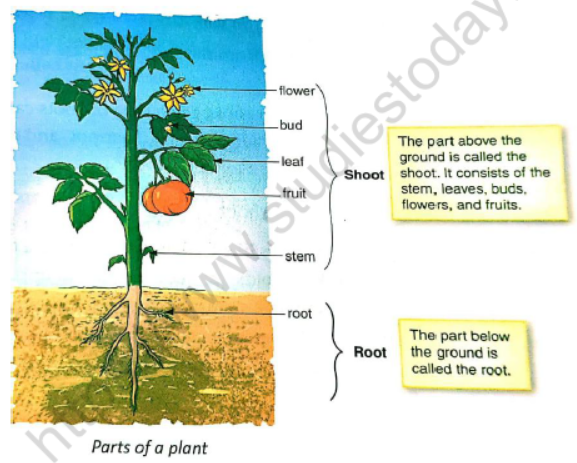
A plant has two main parts : the root and the shoot. Roots grow under the ground while the shoot grows above the ground.
CBSE Class 3 Science Plants Parts and Functions Notes
THE ROOT

Root is the part of the plant that usually grows below the ground.
 
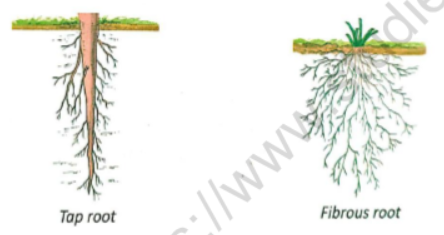
There are two types of roots – Tap root and Fibrous root
 
Tap Root

A tap root has a main root that grows at the end of the stem. Small roots grow from this single thick root. Plants like bean, mustard, carrot and neem have tap roots.
 
Fibrous root

Fibrous roots have many thin and bushy roots. They grow from the end of the stem. There is no main root. Plants like grass, rice, wheat and onion have fibrous roots.
CBSE Class 3 Science Plants Parts and Functions Notes
FUNCTIONS OF THE ROOT

Roots help a plant in many ways.
 
 Roots hold the plant firmly to the soil.
 Roots absorb water and minerals from the soil.
 Roots of some plants store food. Roots such as carrot, radish and turnip have food stored in them. These roots are edible or can be eaten.
 
THE STEM

The stem grows upward from the ground. It is the main part of the shoot. Stem can be strong or weak. Trees like mango and neem have strong woody stem called the trunk. Plants like grapevine and pea plant have a soft and weak stem and need support to stay upright.
 
FUNCTIONS OF THE STEM

The stem is useful to the plant in many ways.
 It holds the plant upright and supports branches.
 Leaves, buds, flowers and fruits grow on the stem.
 The stem spreads out branches and leaves so that they get maximum sunlight.
 It carries water and minerals from the roots to other parts of the plant.
 It carries food prepared by leaves to different parts of the plant. Stems of sugarcane, potato and ginger are thick as they store food in them and are edible.
 The stems of some plants also help in reproduction.
 
So children, I hope the parts of the plant is clear with you. And we also have learned about the root and stem and their functions. Read and try to understand.
The lesson will be continued in the next summary.
 
 
Please click the link below to download CBSE Class 3 Science Plants Parts and Functions Notes.

CBSE Class 3 Science Plants Parts and Functions Notes

Students can use these Revision Notes for Plants Parts and Functions to quickly understand all the main concepts. This study material has been prepared as per the latest CBSE syllabus for Class 3. Our teachers always suggest that Class 3 students read these notes regularly as they are focused on the most important topics that usually appear in school tests and final exams.

NCERT Based Plants Parts and Functions Summary

Our expert team has used the official NCERT book for Class 3 Science to design these notes. These are the notes that definitely you for your current academic year. After reading the chapter summary, you should also refer to our NCERT solutions for Class 3. Always compare your understanding with our teacher prepared answers as they will help you build a very strong base in Science.

Plants Parts and Functions Complete Revision and Practice

To prepare very well for y our exams, students should also solve the MCQ questions and practice worksheets provided on this page. These extra solved questions will help you to check if you have understood all the concepts of Plants Parts and Functions. All study material on studiestoday.com is free and updated according to the latest Science exam patterns. Using these revision notes daily will help you feel more confident and get better marks in your exams.

Where can I download the latest PDF for CBSE Class 3 Science Plants Parts and Functions Notes?

You can download the teacher prepared revision notes for CBSE Class 3 Science Plants Parts and Functions Notes from StudiesToday.com. These notes are designed as per 2025-26 academic session to help Class 3 students get the best study material for Science.

Are these Science notes for Class 3 based on the 2026 board exam pattern?

Yes, our CBSE Class 3 Science Plants Parts and Functions Notes include 50% competency-based questions with focus on core logic, keyword definitions, and the practical application of Science principles which is important for getting more marks in 2026 CBSE exams.

Do these Class 3 notes cover all topic-wise concepts for Science?

Yes, our CBSE Class 3 Science Plants Parts and Functions Notes provide a detailed, topic wise breakdown of the chapter. Fundamental definitions, complex numerical formulas and all topics of CBSE syllabus in Class 3 is covered.

How can I use CBSE Class 3 Science Plants Parts and Functions Notes for quick last-minute revision?

These notes for Science are organized into bullet points and easy-to-read charts. By using CBSE Class 3 Science Plants Parts and Functions Notes, Class 3 students fast revise formulas, key definitions before the exams.

Is there any registration required to download Class 3 Science notes?

No, all study resources on StudiesToday, including CBSE Class 3 Science Plants Parts and Functions Notes, are available for immediate free download. Class 3 Science study material is available in PDF and can be downloaded on mobile.