

Download CBSE Class 6 Social Science Assignments
Access comprehensive school assignments for All topics using the CBSE Class 6 Social Science Collection of Assignments Set 01. Designed to align with the 2026-27 CBSE academic guidelines, these practice sets help Class 6 Social Science students reinforce core concepts and improve their problem-solving accuracy.
Access CBSE School Assignments and Answers
Access the complete assignment PDF for Class 6 Social Science below. Regular practice with these targeted academic tasks builds familiarity with standard question patterns and helps secure higher marks in final school evaluations.
History: Our Pasts - I for Class 6
History: Our Pasts - I for Class 6
1. What, Where, How and When?
Q 1 What is a cartouche?
Answer: A cartouche is an oval frame enclosing a group of hieroglyphics, usually used to represent the names of royal figures in ancient Egypt.
In simple words: It is a royal nameplate written in Egyptian hieroglyphs inside an oval shape.
Exam Tip: Remember that cartouches are strongly associated with ancient Egyptian royal names like Ptolemy and Cleopatra.
Q 2 Which objects from the past usually survive for a long time?
Answer: Objects made of hard materials such as stone, metal, burnt clay (terracotta), and glass usually survive for a long time without decaying.
In simple words: Hard and non-perishable items like stones and metals survive for centuries.
Exam Tip: Contrast hard materials with organic materials like wood, cloth, and paper which decay easily over time.
Q 3 Who were hunter-gatherers?
Answer: Hunter-gatherers were people in ancient times who lived by hunting wild animals, catching fish, and gathering wild fruits, roots, nuts, and seeds for their sustenance.
In simple words: People who hunted animals and collected wild plants for food instead of farming.
Exam Tip: Mention their nomadic lifestyle, as they moved constantly in search of food sources.
Q 4 Name some items that archaeologists have found?
Answer: Archaeologists have found tools, weapons, pots, pans, ornaments, coins made of stone, bone, and metal, as well as remnants of buildings, paintings, and sculptures.
In simple words: They find ancient tools, pots, ornaments, and remains of old buildings.
Exam Tip: Categorize these items into artifacts (tools/pots) and structural remains (buildings) for better marks.
Q 5 How do people living in the Andaman Islands manage their living?
Answer: People living in the Andaman Islands manage their living through fishing, hunting forest animals, and collecting forest produce such as roots, fruits, and honey.
In simple words: They depend on fishing, hunting, and gathering forest resources to survive.
Exam Tip: This serves as a modern living example of how early hunter-gatherers sustained themselves.
Q 6 What are inscriptions?
Answer: Inscriptions are writings engraved on hard surfaces such as stone, metal, rock, or pillars, usually recording royal orders, victories, or important events.
In simple words: Writings carved onto hard surfaces like stone or metal walls.
Exam Tip: Highlight that inscriptions have high durability and provide reliable historical data.
Q 7 What are manuscripts?
Answer: Manuscripts are handwritten ancient books or documents, usually written on palm leaves or specially prepared bark of the birch tree.
In simple words: Old handwritten books made on palm leaves or tree bark.
Exam Tip: Note the etymology: 'manu' means hand in Latin.
Q 8 How did India get its name?
Answer: The name India comes from the Indus, called Sindhu in Sanskrit. Iranians and Greeks who came from the northwest about 2500 years ago called it the Hindos or Indos, and the land to the east of the river came to be called India.
In simple words: The name comes from the River Indus, as named by ancient foreign travelers.
Q 9 What are the different names of our country?
Answer: The different names of our country are India and Bharat. The name 'Bharat' is used in the Rigveda for a group of people living in the northwest, and 'India' is derived from the river Indus.
In simple words: Our country is known by two main names: India and Bharat.
Exam Tip: Mention both classical and modern references to show comprehensive understanding.
Q 10 Where did people live in pre-historic times?
Answer: People in pre-historic times lived near river valleys, in caves, and rock shelters such as those found in the Vindhyas, Deccan plateau, and along the banks of rivers like the Narmada.
In simple words: Early humans lived near rivers and inside natural caves for protection and water.
Exam Tip: Emphasize the importance of water sources in deciding early human settlements.
Q 11 What were the occupations of the people in early days?
Answer: In early days, people were primarily hunter-gatherers, herders, farmers, craftspersons, and traders who collected forest produce and fished.
In simple words: Hunting, gathering, farming, and making simple crafts were their main occupations.
Exam Tip: Show the progression from mere gathering to settled agriculture.
Q 12 State an important difference between a manuscript and an inscription?
Answer: Manuscripts were written by hand on soft perishable materials like palm leaf or birch bark, whereas inscriptions were engraved on hard surfaces like stone or metal.
In simple words: Manuscripts were written on fragile leaves or bark, while inscriptions were carved on hard stone or metal.
Exam Tip: Focus on the medium of writing (soft vs. hard surface) as the key distinguishing factor.
Q 13 How do we know a great deal about the kings and the battles they fought?
Answer: We know about kings and battles through historical records preserved in inscriptions, royal decrees, coins, and texts composed by court poets, as well as archaeological excavations.
In simple words: Through stone inscriptions, old coins, and accounts written by court poets.
Exam Tip: Mention 'Prashastis' or royal eulogies as prime sources for kings and battles.
Q 14 What do AD and BC stand for?
Answer: BC stands for 'Before Christ', referring to the years before the birth of Jesus Christ. AD stands for 'Anno Domini', a Latin phrase meaning 'in the year of the Lord', referring to years after Christ's birth.
In simple words: BC means before Christ's birth, and AD means the years after Christ's birth.
Exam Tip: Mention modern equivalents BCE (Before Common Era) and CE (Common Era) for completeness.
Q 15 What are tributaries? Give example.
Answer: Tributaries are smaller rivers or streams that flow into and join a larger main river. For example, the river Son is a tributary of the Ganga.
In simple words: Smaller rivers that empty into a big main river, like the Son river joining the Ganga.
Exam Tip: Always include a clear geographical example like the Son river.
Q 16 Where did the earliest cities flourish?
Answer: The earliest cities flourished about 4700 years ago along the banks of the river Indus and its tributaries in the northwest of the Indian subcontinent.
In simple words: They developed near the Indus river valley about 4700 years ago.
Exam Tip: Connect the emergence of cities to the surplus production made possible by agriculture near rivers.
Q 17 What language and script is used in the inscriptions found from the Rosetta town?
Answer: The inscriptions found in Rosetta town, Egypt, were written in three different languages and scripts: Greek and two forms of Egyptian (hieroglyphic and demotic).
In simple words: Greek and two forms of Egyptian scripts were used in the Rosetta stone inscriptions.
Exam Tip: Mention that the presence of Greek helped scholars decipher the Egyptian hieroglyphs.
Q 18 Why is South Asia often called a sub-continent?
Answer: South Asia is called a subcontinent because although it is smaller than a continent, it is very large and is separated from the rest of Asia by massive physical barriers such as seas, hills, and mountains.
In simple words: It is a vast region separated from the rest of Asia by natural boundaries like mountains and seas.
Exam Tip: Highlight physical features like the Himalayas that define this distinct geographical unit.
Q 19 What was the advantage of writing on a hard surface?
Answer: Writing on hard surfaces ensured that the records, royal orders, or events lasted for a very long time without decaying or getting easily destroyed by insects or weather.
In simple words: Hard surfaces preserved writings for centuries without getting spoiled.
Exam Tip: Contrast this longevity with palm leaves or paper which easily get damaged.
Q 20 Manuscripts dealt in which subjects and were written in which languages?
Answer: Manuscripts dealt with a wide range of subjects including religious beliefs and practices, lives of kings, medicine, science, epics, plays, and poems. They were written in various languages such as Sanskrit, Prakrit, and Tamil.
In simple words: They covered religion, science, literature, and medicine, and were written in Sanskrit, Prakrit, and Tamil.
Q 21 What are inscriptions and what were they used for?
Answer: Inscriptions are engravings on hard surfaces like stone or metal. They were used by kings to record their victories, royal orders, administrative decisions, religious donations, and to convey messages to the public.
In simple words: Carved writings on stone used by kings to record orders, victories, and public messages.
Exam Tip: Emphasize that inscriptions served as official public announcements.
Q 22 List the skill and knowledge that was required in hunter-gatherer communities?
Answer: Hunter-gatherers needed deep knowledge of plants and trees to know which were edible and which were poisonous, the skills to hunt fast-moving animals, track wildlife, collect honey, and make stone tools and clothing from animal skin.
In simple words: They needed great knowledge of plants, tracking animals, hunting, and making stone tools.
Exam Tip: Mention survival skills based on seasonal changes and environmental awareness.
Q 23 Who are archaeologists? What do they do?
Answer: Archaeologists are scholars who study the human past by examining physical remains such as buildings, artifacts, tools, weapons, coins, pots, bones, and ornaments recovered through excavation.
In simple words: Scientists who study old objects, ruins, and bones to understand past human life.
Exam Tip: Use terms like 'excavation' and 'artifacts' to score better in exams.
Q 24 Why did ancient men & women move to different places?
Answer: Ancient men and women moved in search of food when local resources were exhausted, to follow the movement of animals they hunted, in search of seasonal fruits, water sources, or due to natural calamities and trade.
In simple words: They moved for food, water, following animals, or due to changing seasons and searching for better living conditions.
Q 25 How do the scholars understand what is written in the inscriptions?
Answer: Scholars understand inscriptions through a process known as decipherment, by comparing unknown scripts with known bilingual or multilingual inscriptions, such as the Rosetta Stone.
In simple words: By comparing unknown ancient scripts with known languages through a process called decipherment.
Exam Tip: Mention the crucial role of bilingual inscriptions in unlocking dead scripts.
Q 26 Why is the plural word 'Pasts' used in the title of this book, 'Our Pasts'?
Answer: The plural word 'Pasts' is used to highlight that the experiences of different groups of people—such as hunters, farmers, herders, kings, and queens—were different from one another, and history was not the same for everyone.
In simple words: To show that different groups of people had different experiences and histories.
Exam Tip: Point out how kings' lives differed greatly from ordinary farmers or gatherers.
Q 27 Write a short note on manuscripts?
Answer: Manuscripts are handwritten documents usually prepared on palm leaves or birch bark. Over time, many were eaten by insects or destroyed, but those surviving in temples and monasteries provide invaluable information about ancient history, religion, and science.
In simple words: Old handwritten texts on palm leaves and tree bark that tell us about ancient times.
Exam Tip: Mention the materials used (palm leaf and birch bark) and where they were preserved (temples/monasteries).
Q 28 How did the archeologists find out about the eating habits of the people in the past?
Answer: Archaeologists find out about past eating habits by examining charred remains of plant seeds and animal bones found at excavation sites, which reveal what plants were gathered and which animals were hunted or domesticated.
In simple words: By studying old animal bones and plant seeds found during excavations.
Exam Tip: Highlight that plant remains survive as charred seeds for thousands of years.
Q 29 What is a source? What is its importance to the historians?
Answer: A source refers to the information, archaeological remains, inscriptions, or literary texts from the past used to study history. Sources are vital for historians because they act as clues to reconstruct and understand past events accurately.
In simple words: Clues from the past like old items and writings that help historians rebuild history.
Q 30 Discuss why it is important to study our past?
Answer: Studying our past helps us understand how human civilization evolved, how societies were structured, where our food habits and languages came from, and helps us learn from past mistakes to build a better future.
In simple words: It helps us know how our ancestors lived, how society developed, and helps us understand our present.
Q 31 What was the occupation of the people who lived on the banks of the river Narmada?
Answer: The people who lived on the banks of the river Narmada were skilled hunter-gatherers who collected forest produce, hunted wild animals, and possessed immense knowledge of the surrounding flora and fauna.
In simple words: They were skilled hunter-gatherers who gathered forest food and hunted animals.
Q 32 Why do historians and archaeologists use various sources to study about our past?
Answer: Historians and archaeologists use various sources like coins, inscriptions, pots, and manuscripts because no single source can provide a complete picture of the past. Cross-verifying multiple sources ensures accurate reconstruction of history.
In simple words: Different sources provide different pieces of the historical puzzle, helping create an accurate picture.
Q 33 Why did the people travel from one part of the subcontinent to another?
Answer: People traveled in search of livelihood, to escape natural disasters like floods or droughts, merchants traveled for trade with valuable goods, religious leaders traveled to spread spiritual messages, and armies marched to conquer lands.
In simple words: They traveled for trade, work, escaping natural disasters, religious teachings, or conquests.
Q 34 The following picture is of a page from the palm leaf manuscript. Answer the following questions related to the manuscripts:
1. What are manuscripts?
2. How did the manuscripts get spoilt?
3. Where are these manuscripts preserved? [1+2+1=4]
Answer:
1. Manuscripts are handwritten documents composed on palm leaves or specially prepared birch bark.
2. Over time, many manuscripts were eaten by insects, decayed, or destroyed by natural wear and tear.
3. They are preserved in ancient libraries located in temples and monasteries.
In simple words: Handwritten old books on palm leaves got eaten by insects and are preserved in temples.
Exam Tip: Address each sub-question clearly with distinct bullet points or numbers.
Q 35 This inscription dates to about 2250 years ago and was found in Kandahar. Answer the following questions related to this inscription:
1. What is a script?
2. Which language was used in this inscription?
3. Under whose orders was this inscription written.
4. Kandahar is located in which country?
Answer:
1. A script consists of letters or signs used to write a language.
2. Greek and Aramaic languages were used.
3. It was written under the orders of the Mauryan ruler Emperor Ashoka.
4. Kandahar is located in present-day Afghanistan.
In simple words: Scripts use letters to write; this Afghan inscription was ordered by Ashoka in Greek and Aramaic.
Exam Tip: Remember Ashoka's bilingual inscription in Kandahar as a key historical artifact.
Q 36 The following picture is an inscription from Egypt. Answer the following questions related to this inscription:
1. Where has this inscription been found?
2. In how many languages was this inscription written?
3. What is a cartouche?
4. In the inscription, what did the letter A stand for?
Answer:
1. This inscription was found in Rosetta, Egypt.
2. It was written in three scripts and languages (Greek and Egyptian hieroglyphic and demotic).
3. A cartouche is an oval frame enclosing royal names in hieroglyphs.
4. The letter A stood for the bird symbol in Egyptian hieroglyphs.
In simple words: Found in Egypt with multiple languages and scripts using cartouches for royal names.
Q 37 Why did people choose to travel in the past?
Answer: People chose to travel in search of food, fertile land, and work. Merchants traveled with valuable goods for trade, religious teachers walked to offer guidance, and adventurous people explored new lands, while armies marched to conquer territories.
In simple words: Traveling was essential for trade, finding work, escaping danger, religious preaching, and exploration.
Exam Tip: Group travel motivations into economic, social, religious, and political categories.
1. What, Where, How and When?
Q 1 What is a cartouche?
Q 2 Which objects from the past usually survive for a long time?
Q 3 Who were hunter-gatherers?
Q 4 Name some items that archaeologists have found?
Q 5 How do people living in the Andaman Islands manage their living?
Q 6 What are inscriptions?
Q 7 What are manuscripts?
Q 8 How did India get its name?
Q 9 What are the different names of our country?
Q 10 Where did people live in pre-historic times?
Q 11 What were the occupations of the people in early days?
Q 12 State an important difference between a manuscript and an inscription?
Q 13 How do we know a great deal about the kings and the battles they fought?
Q 14 What do AD and BC stand for?
Q 15 What are tributaries? Give example.
Q 16 Where did the earliest cities flourish?
Q 17 What language and script is used in the inscriptions found from the Rosetta town?
Q 18 Why is South Asia often called a sub-continent?
Q 19 What was the advantage of writing on a hard surface?
Q 20 Manuscripts dealt in which subjects and were written in which languages?
Q 21 What are inscriptions and what were they used for?
Q 22 List the skill and knowledge that was required in hunter- gatherer communities?
Q 23 Who are archaeologists? What do they do?
Q 24 Why did ancient men & women move to different places?
Q 25 How do the scholars understand what is written in the inscriptions?
Q 26 Why is the plural word ‗Pasts‘ used in the title of this book, ‗Our Pasts‘?
Q 27 Write a short note on manuscripts?
Q 28 How did the archeologists find out about the eating habits of the people in the past?
Q 29 What is a source? What is its importance to the historians?
Q 30 Discuss why it is important to study our past?
Q 31 What was the occupation of the people who lived on the banks of the river Narmada?
Q 32 Why do historians and archaeologists use various sources to study about our past?
Q 33 Why did the people travel from one part of the subcontinent to another?
Q 34 The following picture is of a page from the palm leaf manuscript. Answer the following questions related to the manuscripts
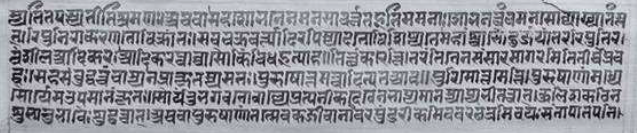
1. What are manuscripts?
2. How did the manuscripts get spoilt?
3. Where are these manuscripts preserved?
Click on link below to download CBSE Class 6 Social Science Collection of Assignments Set A
Free study material for Social Science
Chapter Assignment & Practice Material for Class 6 Social Science All topics
Download Assignment: All topics (Class 6 Social Science)
Review targeted chapter assignments for Class 6 Social Science All topics. Built according to official CBSE guidelines, these downloadable problem sets help students build accuracy and prepare effectively for school tests.
Maximize Exam Scores with Chapter Practice Sets
- Curriculum Standards: Assignments match modern CBSE sample formats to ensure relevant preparation.
- Thorough Revision: Detailed problem sets reinforce core concepts and eliminate conceptual weak spots.
- Execution Speed: Timed practice with assignment sets sharpens overall response timing.
Steps to Complete All topics Assignments Successfully
- Concept Foundation: Review the NCERT book for Class 6 Social Science thoroughly before diving into assignment tasks.
- Self-Evaluation: Solve exercises independently before inspecting professional answer guides.
- Progress Monitoring: Note down complex formulas or concepts, clearing them up using available online practice aids.
FAQs
You can download free PDF assignments for Class 6 Social Science All topics from StudiesToday.com. These practice sheets have been updated for the 2026-27 session covering all concepts from latest NCERT textbook.
Yes, our teachers have given solutions for all questions in the Class 6 Social Science All topics assignments. This will help you to understand step-by-step methodology to get full marks in school tests and exams.
Yes. These assignments are designed as per the latest CBSE syllabus for 2026. We have included huge variety of question formats such as MCQs, Case-study based questions and important diagram-based problems found in All topics.
Practicing topicw wise assignments will help Class 6 students understand every sub-topic of All topics. Daily practice will improve speed, accuracy and answering competency-based questions.
Yes, all printable assignments for Class 6 Social Science All topics are available for free download in mobile-friendly PDF format.