

Selina Concise Solutions for Class 8 History Civics: Chapter 04 India in the Eighteenth Century
Explore the complete Selina Concise textbook solutions for Class 8 History Civics. Tailored for the 2026-27 curriculum, this resource breaks down complex topics to support daily study and targeted revision.
Chapter-wise Solutions: Chapter 04 India in the Eighteenth Century
View or download the dedicated Chapter 04 India in the Eighteenth Century resource below. This chapter-by-chapter structuring ensures easy navigation for daily study routines and immediate access to core academic concepts.
I. Fill in the blanks:
Question 1. _________ became the independent ruler of Bengal and shifted his capital to Murshidabad.
Answer: Murshid Quli Khan
In simple words: Murshid Quli Khan was the ruler who made Bengal independent and moved the capital to Murshidabad.
Exam Tip: Remember Murshid Quli Khan as the first independent Nawab of Bengal who founded the city of Murshidabad as his capital.
Question 2. Chin Qilich Khan founded the Asaf Jahi dynasty in _________.
Answer: AD 1724
In simple words: Chin Qilich Khan started his family's rule, called the Asaf Jahi dynasty, in the year 1724.
Exam Tip: Associate Chin Qilich Khan (also known as Nizam-ul-Mulk) with the year 1724 for the founding of the Hyderabad state.
Question 3. Haider Ali was the ruler of _________.
Answer: Mysore
In simple words: Haider Ali ruled the kingdom of Mysore.
Exam Tip: Haider Ali and his son Tipu Sultan are both key rulers of Mysore who fought against the British.
Question 4. _________ was the leader of the Sikhs after the death of Guru Govind Singh.
Answer: Banda Bahadur
In simple words: After Guru Govind Singh died, Banda Bahadur became the new leader of the Sikh people.
Exam Tip: Remember Banda Bahadur as the prominent Sikh leader who led the rebellion against the Mughals after the tenth Guru.
Question 5. _________ was the first Peshwa.
Answer: Balaji Vishwanath
In simple words: Balaji Vishwanath was the very first person to hold the prime minister post, called Peshwa, in the Maratha empire.
Exam Tip: Knowing the order of the Peshwas is useful, starting with Balaji Vishwanath as the first one.
II. Match the contents of Column A and Column B:
Question 6. Match the contents of Column A and Column B:
| Column A | Column B |
|---|---|
| 1. Nizam-ul-Mulk | (a) Tiger of Mysore. |
| 2. Shivaji | (b) founded the state of Hyderabad. |
| 3. Tipu Sultan | (c) founder of the Maratha power. |
| 4. Gaekwad | (d) united the Sikhs on the west of river Sutlej. |
| 5. Holkar | (e) Nagpur |
| 6. Scindia | (f) Baroda |
| 7. Bhonsle | (g) Indore |
| 8. Peshwa | (h) Gwalior |
| 9. Ranjit Singh | (i) Poona |
Answer:
1. Nizam-ul-Mulk - (b) founded the state of Hyderabad.
2. Shivaji - (c) founder of the Maratha power.
3. Tipu Sultan - (a) Tiger of Mysore.
4. Gaekwad - (f) Baroda
5. Holkar - (g) Indore
6. Scindia - (h) Gwalior
7. Bhonsle - (e) Nagpur
8. Peshwa - (i) Poona
9. Ranjit Singh - (d) united the Sikhs on the west of river Sutlej.
In simple words: This exercise matches important historical figures and regional powers of the 18th century with their kingdoms, titles, or geographic centers.
Exam Tip: Learn the regional Maratha chiefs (Gaekwad, Holkar, Scindia, Bhonsle) and their respective capitals as they are frequently asked in matches or MCQs.
III. State whether the following statements are True or False:
Question 7. State whether the following statement is True or False: The office of the Peshwas was always hereditary.
Answer: False
In simple words: The Peshwa post did not start as a family-inherited title, though it became hereditary later under Balaji Vishwanath's successors.
Exam Tip: Remember that initially, the Peshwas were appointed based on their ability rather than family succession.
Question 8. State whether the following statement is True or False: In the Third Battle of Panipat, the Marathas fought with the Rajputs and the Jats.
Answer: False
In simple words: The Marathas did not get help from the Rajputs or the Jats during this major battle.
Exam Tip: The lack of support from regional allies like the Rajputs and Jats was a major reason for the Maratha defeat in 1761.
Question 9. State whether the following statement is True or False: The later Mughal kings were able rulers.
Answer: False
In simple words: The emperors who came after Aurangzeb were weak and could not govern well.
Exam Tip: The weakness of the later Mughals is a central theme in the decline of the empire during the 18th century.
Question 10. State whether the following statement is True or False: Safdar Jung was the first Nizam of Hyderabad.
Answer: False
In simple words: Safdar Jung was a leader of Awadh, not the ruler of Hyderabad.
Exam Tip: Recall that Nizam-ul-Mulk (Chin Qilich Khan) founded Hyderabad, while Safdar Jung was the Nawab of Awadh.
Question 11. State whether the following statement is True or False: Jai Singh built an observatory (Jantar Mantar) and Pink City (Jaipur).
Answer: True
In simple words: Raja Jai Singh of Amber built the city of Jaipur and astronomical observatories known as Jantar Mantar.
Exam Tip: Sawai Jai Singh is famous both as a politician and as a patron of astronomy and town planning.
IV. Answer the following questions:
Question 1. Write in brief the causes that led to the downfall of the Mughal empire.
Answer: The decline of the Mughal Empire was caused by several key factors:
(a) Incompetent Successors - Following the death of Aurangzeb, the empire began to lose its strength. The rulers who followed him were helpless and easily controlled by powerful court nobles and regional governors. They did not have the leadership and governing talents of earlier emperors.
(b) Inner Conflicts - Court officials and governors came from various rival factions and constantly fought each other for control. These continuous power struggles seriously damaged the stability of the empire.
(c) Failures in Administrative Systems - The Mughals had established the Jagirdari and Mansabdari systems to run their vast territories smoothly. However, over time, these systems broke down and became a primary reason for the empire's collapse.
(d) Foreign Attacks - During the rule of Mohammad Shah, major invasions from outside India devastated the Mughal territory. Forces led by Nadir Shah and Ahmad Shah Abdali attacked the country, leaving the empire extremely weak and broken.
In simple words: The Mughal Empire fell because of weak later kings, fights between nobles, failing government systems, and heavy attacks from foreign invaders like Nadir Shah and Ahmad Shah Abdali.
Exam Tip: Clearly categorize the causes of the decline into administrative, political, and external factors to score full marks.
Question 2. When and between whom was the Third Battle of Panipa fought? What were its results?
Answer: In the year 1761, the Third Battle of Panipat took place. This historical clash was fought between the Afghan ruler Ahmad Shah Abdali and the Maratha forces under Peshwa Balaji Baji Rao. The Marathas faced a devastating loss in this conflict, which severely shattered their dreams of ruling over India.
In simple words: The Third Battle of Panipat happened in 1761. The Afghan king Ahmad Shah Abdali defeated the Marathas, which stopped the Marathas from becoming the main rulers of India.
Exam Tip: Mention the exact year (1761) and both main leaders (Ahmad Shah Abdali and Balaji Baji Rao) along with the major impact on Maratha power.
Question 3. Name the first independent Nawab of Bengal. What were his achievements?
Answer: The first independent ruler to lead Bengal was Murshid Quli Khan. His primary accomplishments included building a highly capable government and restructuring the collection of taxes. He introduced a contract-based method of gathering land taxes, which was called the Ijara system. Additionally, he reshaped the zamindari setup, making him a highly respected figure in Bengal's history.
In simple words: Murshid Quli Khan was the first independent king of Bengal. He fixed the tax system by starting the Ijara contract method and rearranged the landholders to run the state better.
Exam Tip: Remember to name the "Ijara system" as his key contribution to land revenue administration.
Question 4. When was the Battle of Plassey fought? What effect did it have on the position of the English East India Company?
Answer: The historic Battle of Plassey took place in 1757, where British forces fought against the Nawab of Bengal, Siraj-ud-daulah, and defeated his troops. This victory allowed the British East India Company to act as powerful kingmakers in regional politics. Ultimately, by 1765, the British gained complete control over the region when Robert Clive introduced the Dual Government system in Bengal.
In simple words: The Battle of Plassey was fought in 1757. After winning, the British East India Company began controlling who became the king, and by 1765 they had full power over Bengal.
Exam Tip: Highlight the shift of the East India Company from a trading body to "kingmakers" and mention the Dual Government of 1765.
Question 5. Who was Haider All? Discuss his achievements.
Answer: Hyder Ali was the sovereign of Mysore, having begun his journey as a simple soldier within the state's military force. He achieved several notable military triumphs over rival states, including the Maratha Empire and the Hyderabad Nizam. Additionally, he successfully defeated his British opponents during the first two Anglo-Mysore Wars.
In simple words: Hyder Ali was a strong ruler of Mysore who started as a normal soldier. He won many fights against the Marathas, the Nizam, and defeated the British in two major wars.
Exam Tip: Be sure to highlight his humble beginnings as an ordinary soldier and his success in the first two Anglo-Mysore Wars.
Question 6. Which ruler was known as the Tiger of Mysore?
Answer: The ruler who earned the title "Tiger of Mysore" was Tipu Sultan, who succeeded his father Hyder Ali to govern the Mysore state.
In simple words: Tipu Sultan, the son of Hyder Ali, was called the Tiger of Mysore because of his bravery.
Exam Tip: Tipu Sultan is a very popular historical figure; remember his name and his association with Mysore.
V. Tell me why
Question 1. The consequence of the Third Battle of Panipat was n advantageous for the British.
Answer: While Aurangzeb was ruling, the Marathas successfully built a very strong state. As the Mughal influence faded, the Marathas grew so powerful that they could have become the chief rivals to the rising British power in India. However, the Third Battle of Panipat in 1761 completely changed their future. The Afghan ruler Ahmad Shah Abdali dealt a devastating defeat to the army of Peshwa Balaji Baji Rao. This loss broke the Maratha strength and ended their hopes of controlling the country. Consequently, the obstacle was removed, allowing the British East India Company to easily expand its control and establish dominance.
In simple words: The Marathas were strong enough to stop the British from taking over India. But when the Afghans defeated the Marathas at Panipat, it cleared the path for the British to become the main rulers.
Exam Tip: Explain that the Maratha defeat left a power vacuum in India, which made it much easier for the British to establish their empire.
Question 2. Independent states were formed in the 18th century.
Answer: The emperors who ruled later during the Mughal period lacked the strength needed to keep their vast provinces united. The local governors ruling these territories frequently fought wars among themselves. Sensing the weak and chaotic central leadership in Delhi, these governors grabbed the opportunity to break away and declare their own sovereignty. In this manner, regional states like Bengal, Hyderabad, Awadh, and Rohilkhand turned into independent kingdoms one by one.
In simple words: The last Mughal kings were too weak to control their governors. These governors took advantage of the poor central rule and set up their own free kingdoms like Bengal and Hyderabad.
Exam Tip: Mention the name of at least three independent states (like Bengal, Hyderabad, and Awadh) to support your explanation of the 18th-century political division.
VI. Pictury study - This is a picture of a great ruler of Punjab.
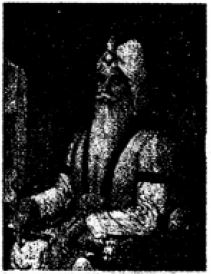
Question 1. Identify him.
Answer: Maharaja Ranjit Singh.
In simple words: The portrait shows Maharaja Ranjit Singh, who was a famous leader of Punjab.
Exam Tip: Be prepared to identify historical figures from your textbook illustrations, especially prominent regional rulers like Ranjit Singh.
Question 2. How did the unite the Sikhs in Punjab?
Answer: By taking control of all territories situated to the west of the Sutlej River, Maharaja Ranjit Singh managed to create a unified Sikh state in Punjab. In 1809, he entered into the Treaty of Amritsar with the British, which recognized his territorial victories and secured his supreme rule over those western lands. The British were unable to take over Punjab until after he passed away in the year 1839.
In simple words: Maharaja Ranjit Singh united the different Sikh groups by taking over lands west of the Sutlej River. He signed a peace treaty with the British in 1809, and they only captured Punjab after his death in 1839.
Exam Tip: Highlight the Treaty of Amritsar (1809) and the geographical boundary (River Sutlej) as key details of his reign.
Additional Questions
A. Fill in the blanks:
Question 1. During the first half of the _________, the great Mughal empire _________ and _________. The Mughal emperors who ruled India after the death of Aurangzeb are known as the _________ Mughals.
Answer: 18th century; decayed; disintegrated; later
In simple words: In the early 1700s, the big Mughal empire fell apart. The kings who came after Aurangzeb are called the later Mughals.
Exam Tip: Be sure to memorize the term "Later Mughals" as it refers to all Mughal rulers from Bahadur Shah I onwards.
Question 2. There were _________ groups of nobles in the Mughal court.
Answer: four
In simple words: The Mughal court had four main groups of powerful lords who competed with each other.
Exam Tip: The four major noble factions were the Iranis, Turanis, Afghans, and Hindustanis.
Question 3. Nadir Shah looted and plundered _________ He carried away immense treasures including the _________ _________ and the _________ _________.
Answer: Delhi; priceless; Kohinoor; Peacock Throne
In simple words: Nadir Shah attacked Delhi, stole a lot of wealth, and took the famous Kohinoor diamond and the golden Peacock Throne.
Exam Tip: Nadir Shah's invasion in 1739 was a massive blow to the wealth and prestige of the Mughals.
Question 4. _________, the ruler of _________, repeatedly attacked the Mughal empire.
Answer: Ahmad Shah Abdali; Afghanistan
In simple words: Ahmad Shah Abdali, who was the king of Afghanistan, invaded the Mughal lands many times.
Exam Tip: Remember Ahmad Shah Abdali as the ruler of Afghanistan who also fought the Marathas in 1761.
Question 5. _________, was defeated in the _________ and exiled to _________ by the British.
Answer: Bahadur Shah Zafar; Revolt of 1857; Rangoon
In simple words: The last Mughal emperor, Bahadur Shah Zafar, was beaten in the 1857 rebellion and sent away to Rangoon by the British.
Exam Tip: Note that the Revolt of 1857 marked the official end of the Mughal dynasty with the exile of Bahadur Shah Zafar.
B. Match the following:
Question 6. Match the following:
| A | B |
|---|---|
| 1. Bahadur Shah | (a) mansabdari system |
| 2. Akbar | (b) financial crisis |
| 3. Shah Jahan | (c) Nadir Shah |
| 4. Kohinoor Diamond | (d) last Mughal emperor |
| 5. Bahadur Shah Zafar | (e) first of the Later Mughals |
Answer:
1. Bahadur Shah - (e) first of the Later Mughals
2. Akbar - (a) mansabdari system
3. Shah Jahan - (b) financial crisis
4. Kohinoor Diamond - (c) Nadir Shah
5. Bahadur Shah Zafar - (d) last Mughal emperor
In simple words: This exercise matches important Mughal rulers and treasures with their historical actions, titles, or events.
Exam Tip: Be careful not to confuse Bahadur Shah I (first of the Later Mughals) with Bahadur Shah Zafar (the last Mughal emperor).
C. Choose the correct answer:
Question 7. Choose the correct option: Aurangzeb/Akbar/Shah Jahan followed a policy of religious intolerance.
Answer: Aurangzeb practiced a policy of religious intolerance.
In simple words: Unlike Akbar, Aurangzeb was not tolerant of other religions and introduced strict religious rules.
Exam Tip: Aurangzeb's religious intolerance alienated many regional leaders, which contributed to the empire's ultimate decline.
Question 8. Choose the correct option: The military campaign in the Deccan led by Shah Jahan/ Aurangzeb/Akbar ruined the Mughal empire financially
Answer: Aurangzeb's extensive military battles in the Deccan completely drained the financial resources of the Mughal state.
In simple words: Aurangzeb spent too much money and time fighting wars in South India, which left the empire broke.
Exam Tip: The Deccan campaign is often called Aurangzeb's "ulcer," similar to Napoleon's Spanish ulcer, as it ruined his empire financially and militarily.
Question 9. Choose the correct option: The invasions of Ahmad Shah Abdali, the ruler of Afghanistan/Persia/Iraq shattered the power and prestige of the Mughal empire.
Answer: The military raids of Ahmad Shah Abdali, the sovereign of Afghanistan, completely broke the strength and authority of the Mughal reign.
In simple words: Attacks by the Afghan ruler Ahmad Shah Abdali destroyed the reputation and strength of the Mughal kings.
Exam Tip: Remember Abdali as the ruler of Afghanistan who led multiple invasions into northern India.
Question 10. Choose the correct option: The Mughal empire lasted for over 3/5/6
Answer: The Mughal dynasty existed for more than three centuries.
In simple words: The Mughal rule in India went on for more than 300 years.
Exam Tip: The Mughal Empire started in 1526 with Babur and officially ended in 1857, which is more than three centuries.
Question 11. Choose the correct option: The British ruled over India for a 100 years/nearly 200 years/ 300 years.
Answer: The British established their rule in India for almost two centuries.
In simple words: British rule in India lasted for around 200 years.
Exam Tip: British political control is generally counted from the Battle of Plassey in 1757 to Independence in 1947 (nearly 190 years).
D. State whether the following are true or false.
Question 12. State whether the following statement is True or False: Bahadur Shah ascended the throne after the death of Aurangzeb.
Answer: True
In simple words: When Aurangzeb died, Bahadur Shah became the next ruler.
Exam Tip: Bahadur Shah I succeeded Aurangzeb in 1707 after winning a war of succession.
Question 13. State whether the following statement is True or False: The Mughal court was united and stable.
Answer: False (The Mughal court was actually highly divided and unstable due to group rivalries.)
In simple words: The lords in the Mughal court were constantly fighting each other instead of working together.
Exam Tip: The division of the court into competing factions (Iranis, Turanis, Hindustanis) greatly weakened the emperor's power.
Question 14. State whether the following statement is True or False: The Mughal officers were given jagirs as payments for their services.
Answer: True
In simple words: Mughal officers received land areas, called jagirs, instead of cash salary.
Exam Tip: This land revenue system was known as the Jagirdari system, which later faced a major crisis due to a shortage of lands.
Question 15. State whether the following statement is True or False: The Mughal rulers did not have a navy.
Answer: True
In simple words: The Mughal kings focused only on land armies and did not build a military force for the sea.
Exam Tip: The absence of a strong naval force left the Mughals vulnerable to European traders on the coasts.
Question 16. State whether the following statement is True or False: The successors of Aurangzeb were very strong and efficient.
Answer: False (The rulers who followed Aurangzeb were highly incompetent and fragile.)
In simple words: The kings after Aurangzeb were weak and could not manage the empire well.
Exam Tip: Always describe the later Mughals as weak and incompetent when discussing the reasons for the empire's downfall.
E. Answer the following questions in one or two words/ sentences:
Question 17. When did the transition from the Medieval to the Modern Period begin in India?
Answer: This shift from medieval times to the modern era started during the initial fifty years of the 18th century, alongside the collapse of Mughal dominance.
In simple words: India started moving from the Medieval period to the Modern period in the early 1700s as the Mughal Empire became weak.
Exam Tip: Note that the 18th century is considered a transition period in Indian history, characterized by both decline and political changes.
Question 18. Name the first and the last emperors in the line of the Later Mughals.
Answer: The sequence of the Later Mughals began with Bahadur Shah I as the initial ruler, and concluded with Bahadur Shah Zafar as the final monarch of the dynasty.
In simple words: Bahadur Shah I was the first of the later Mughal kings, and Bahadur Shah Zafar was the very last one.
Exam Tip: Remember both names clearly and note that they are different individuals with similar-sounding names.
Question 19. Name any two rival groups of nobles in the Mughal court.
Answer: Two major competing factions of court lords were:
1. The Iranis, who originated from Persia.
2. The Turanis, who came from the region of Transoxiana.
In simple words: The two major groups of lords fighting for power in court were the Iranis from Persia and the Turanis from Transoxiana.
Exam Tip: Knowing the origins of these court groups helps explain the divided loyalties within the late Mughal administration.
Question 20. Mention any two reasons for the failure of the mansabdari system.
Answer: Under this setup, administrators were required to keep a specific count of soldiers and were compensated with land assignments. Over time, the rapid rise in the count of officers combined with a lack of available lands produced widespread dishonesty and decay within the administration.
In simple words: The system failed because there were too many officers and not enough land to give them as payment, which caused corruption.
Exam Tip: Focus on the imbalance between the high number of mansabdars and the actual number of available land holdings (jagirs).
Question 21. What was the economic impact of the Mughal wars of succession?
Answer: Whenever a king passed away, massive battles broke out among those who wanted to seize the crown. These internal conflicts required a great deal of money and caused widespread damage, emptying the government's wealth and making the state highly unstable and fragile.
In simple words: Whenever an emperor died, his sons fought expensive and destructive wars for the throne, which wasted the empire's money and weakened it.
Exam Tip: Point out how the absence of a fixed law of succession meant that every new transition of power was a major financial drain on the treasury.
Question 22. How did Aurangzeb’s religious policy affect the relationship between the Mughals and the Rajputs?
Answer: Aurangzeb's strict stance on religious matters damaged the very base of his kingdom, leading to the following issues:
• A very expensive and exhausting series of battles in the Deccan region.
• Frequent military clashes against the Rajput, Maratha, Jat, and Sikh communities.
• The loss of the faithful Rajput leaders, who had once been key defenders of the empire but were now turned into hostile enemies.
In simple words: Aurangzeb's religious intolerance made him fight wars against the Sikhs, Marathas, Jats, and Rajputs. The Rajputs, who were once loyal friends, turned into bitter enemies, weakening the empire.
Exam Tip: The loss of Rajput loyalty is considered a critical political blunder of Aurangzeb that alienated a key group of military allies.
Question 23. What led to the drain on the royal treasury during Shah Jahan’s reign?
Answer: The massive amounts of wealth that Shah Jahan dedicated to building spectacular structures, such as the Taj Mahal, heavily depleted the imperial finances.
In simple words: Shah Jahan spent huge amounts of money on building grand monuments like the Taj Mahal, which emptied the royal treasury.
Exam Tip: Mention the Taj Mahal as a prime example of the architectural expenditure that placed a heavy burden on the state's budget.
Question 24. Which Mughal emperor assumed leadership of the Revolt of 1857? What happened to him after the Revolt?
Answer: The final Mughal monarch, Bahadur Shah Zafar, took charge of the uprising against British rule in 1857. After the rebellion was crushed, he was captured and sent away to Rangoon, where he eventually passed away, bringing a sad and quiet close to the Mughal line.
In simple words: Bahadur Shah Zafar was the last Mughal king who led the 1857 revolt. He lost, and the British sent him to Rangoon, where he died, ending the empire.
Exam Tip: Mention the year (1857), his role as the symbolic leader of the rebels, and his final place of exile (Rangoon).
F. Answer the following questions briefly.
Question 1. Several factors were responsible for the decline of the Mughal empire. In this context answer the following questions: (a).How did court politics undermine the authority and prestige of the Mughal empire? (b).To what extent was the jagirdari crisis responsible for a further decline of the power of the emperor?(c).How did the wars of succession destabilize the Mughal empire?
Answer:
(a) Within the imperial court, there were four distinct factions of nobles: the Iranis, Turanis, Afghans, and Hindustanis. The Iranis came from Persia, the Turanis were from Transoxiana, and the Afghans originated from the hilly areas near the Indus River. The court was deeply divided, leading to a perpetual race for control among these factions. Their intense jealousy and ongoing disputes severely damaged the administrative system and stripped the emperor of his respect and influence.
(b) Mughal administrators received land tracts instead of monetary wages. By the close of the 17th century, the supply of available lands was nearly exhausted. In an effort to appease newly hired officers, the government began transforming state-owned lands into private holdings for the nobles. This transition drastically cut the treasury's income, which in turn weakened the sovereign's control.
(c) Following an emperor's passing, fierce conflicts normally broke out among competitors aiming for the throne. These internal battles were highly expensive and ruinous. They exhausted the wealth of the empire, making the government fragile and unstable.
In simple words: (a) The court lords were divided into four rival groups from different places who fought for power and ruined the government. (b) The state ran out of land to pay officers, so they gave away royal land, which made the king poor. (c) Fights for the crown wasted a lot of wealth and made the empire unstable.
Exam Tip: This is a comprehensive long-answer question. Structure your response into distinct headings for court politics, the jagirdari crisis, and succession wars to ensure maximum marks.
Question 2. With reference to the decline and disintegration of (a) The Mughal empire discuss the following: (b) The breakdown of the mansabdari system The weaknesses (c) of the Mughal army Aurangzeb’s religioius policy
Answer:
(a) In this administrative system, officers were required to support a set number of troops and received land holdings as their payment. Eventually, a rapid rise in the number of officers coupled with a severe shortage of land grants led to widespread corruption and a breakdown of efficiency.
(b) The imperial military force did not update its methods as time went on. The rulers ignored the importance of naval power and never attempted to create a fleet. Their weapons and combat methods were outdated and weak, and no measures were taken to improve, upgrade, or reinforce the army.
(c) Aurangzeb's intolerant religious measures severely damaged the stability of his state, resulting in:
1. An incredibly costly, exhausting, and damaging military struggle in the Deccan region.
2. Multiple continuous wars against the Sikh, Rajput, Jat, and Maratha communities.
In simple words: (a) The officer system failed because there were too many mansabdars and not enough land, causing corruption. (b) The army used outdated weapons, had no navy, and was never modernized. (c) Aurangzeb's harsh religious policies led to costly wars in the Deccan and made enemies of many Indian groups.
Exam Tip: Be sure to match sub-parts (a), (b), and (c) clearly to show how military weakness, system failures, and religious intolerance combined to cause the fall.
Question 3. To what extent were the following factors responsible for the eventual collapse of the Mughal empire? (a) Economic bankruptcy (b) Foreign invasions (c) Weak successors
Answer:
(a) Financial Ruin - A critical driver behind the fall of the Mughal state was its empty treasury. Massive amounts of wealth spent by Shah Jahan on splendid structures like the Taj Mahal severely drained the imperial funds. Later, the military campaigns in the Deccan under Aurangzeb proved to be a financial catastrophe that made the empire's downfall certain.
(b) Outer Incursions - Attacks from external rulers like Persian emperor Nadir Shah and Afghan king Ahmad Shah Abdali completely crushed the strength and status of the Mughals. Nadir Shah raided Delhi, stealing immense wealth along with the unique Kohinoor Diamond and the Peacock Throne. Meanwhile, Ahmad Shah Abdali repeatedly plundered regions of northern India.
(c) Incompetent Successors - While Aurangzeb maintained strict control over a massive territory, the rulers who followed him were lazy, weak, and incapable. These later emperors became mere tools for ambitious, influential lords who ran the state. Seizing upon this fragile central leadership, local governors established their own sovereign states in several provinces, leading directly to the splintering and end of the empire.
In simple words: (a) Monument building and southern wars emptied the state's money. (b) Foreign invaders like Nadir Shah and Ahmad Shah Abdali looted the empire and took treasures like the Kohinoor. (c) The rulers after Aurangzeb were weak puppets, which allowed governors to break away.
Exam Tip: Be sure to analyze each factor independently with details (such as the Deccan campaign, specific invaders, and the actions of the provincial governors) for a complete answer.
G. Picture Study: This is a portrait of the last of the Later Mughals.
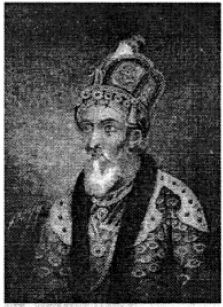
Question 1. Identify the Mughal emperor represented in this picture.
Answer: Bahadur Shah Zafar.
In simple words: The portrait shows Bahadur Shah Zafar, the last Mughal emperor.
Exam Tip: Remember Bahadur Shah Zafar's face or typical portraits from history lessons, as he is the most famous late Mughal figure.
Question 2. What part did he play in the Revolt of 1857?
Answer: During the uprising of 1857, rebel soldiers marched to and occupied Delhi. They needed a symbol who could bring together all Indian people, both Hindus and Muslims. Because of this, the various rebellious kings and native army regiments chose to accept Zafar as the Emperor of India. They believed that regional kingdoms could stand united under his name until the British forces were overthrown. Zafar was seen as an unthreatening and humble ruler, and the historical prestige of the Mughal line made him a highly agreeable symbol of unity for the allied leaders.
In simple words: Rebel soldiers and regional kings chose Bahadur Shah Zafar as the Emperor of India to unite all Hindus and Muslims in the fight against the British.
Exam Tip: Explain his role as a key unifying figure, pointing out how the historical legacy of the Mughal name made him acceptable to both Hindu and Muslim rebels.
Question 3. What happened to the Mughal empire after his death?
Answer: The rule of the Mughal dynasty reached a quiet and tragic conclusion.
In simple words: The Mughal Empire officially came to an end after he died.
Exam Tip: After Zafar's death and exile, the British officially abolished the title of Mughal Emperor, marking the absolute end of the empire.
Question 4. Mention any four reasons for the decline of the Mughal empire Explain any two reasons.
Answer:
Four key factors contributing to the decline of the Mughal Empire were:
(a) Rivalries in the court
(b) Fragile military setup and governance
(c) Financial ruin under Aurangzeb
(d) External attacks
Explanation of two factors:
• Court Rivalries: The royal palace was split into four main factions of lords: the Iranis (from Persia), Turanis (from Transoxiana), Afghans (from the Indus border), and Hindustanis. These groups were continuously competing and plotting against one another to gain power. Their intense internal conflicts and lack of unity severely damaged the central administration and greatly diminished the emperor's authority.
• Financial Ruin: The empire suffered from an empty treasury, which was a leading cause of its downfall. Huge expenses incurred by Shah Jahan on lavish structures like the Taj Mahal severely depleted the state's wealth. Later, the prolonged campaigns led by Aurangzeb in the Deccan became a massive financial drain that made the empire's ultimate collapse unavoidable.
In simple words: The four reasons for the decline are court fights, weak army, empty treasury, and foreign raids. Court lords from different regions kept fighting for power, while huge spending on buildings and southern wars completely drained the treasury.
Exam Tip: First list the four reasons clearly as sub-points, and then explain the requested two reasons under bold sub-headings to help the examiner grade easily.
Free study material for History Civics
ICSE Textbook Solutions for Class 8 History Civics Chapter 04 India in the Eighteenth Century
Detailed Textbook Solutions: Chapter 04 India in the Eighteenth Century (Class 8 History Civics)
Strengthen your preparation with comprehensive answers for Class 8 History Civics Chapter 04 India in the Eighteenth Century. These expert-reviewed solutions make tracking your academic progress straightforward and efficient.
Detailed Problem Solving for ICSE Class 8 History Civics
Verify your answers instantly using the comprehensive breakdowns provided for each problem, ensuring complete syllabus coverage across all sub-topics.
Next Steps in Your Class 8 History Civics Preparation
Explore our broader library of study materials and chapter notes to support your continuous revision and secure higher marks.
FAQs
You can download the verified Selina Concise solutions for Chapter 04 India in the Eighteenth Century on StudiesToday.com. Our teachers have prepared answers for Class 8 History Civics as per 2026-27 ICSE academic session.
Yes, our solutions for Chapter 04 India in the Eighteenth Century are designed as per new 2026 ICSE standards. 40% competency-based questions required for Class 8, are included to help students understand application-based logic behind every History Civics answer.
Yes, every exercise in Chapter 04 India in the Eighteenth Century from the Selina Concise textbook has been solved step-by-step. Class 8 students will learn History Civics conceots before their ICSE exams.
Yes, follow structured format of these Selina Concise solutions for Chapter 04 India in the Eighteenth Century to get full 20% internal assessment marks and use Class 8 History Civics projects and viva preparation as per ICSE 2026 guidelines.