

Class 8 History Civics Chapter 04 The United Nations: Selina Concise Study Material
Explore the complete Selina Concise textbook solutions for Class 8 History Civics. Tailored for the 2026-27 curriculum, this resource breaks down complex topics to support daily study and targeted revision.
Chapter 04 The United Nations Answer Guide
Access the complete PDF for Chapter 04 The United Nations below. This focused excerpt allows students to isolate specific topics for thorough review and uninterrupted reading, complementing standard ICSE textbooks.
I. Fill in the blanks:
Question 1. All ________ can become members of the United Nations.
Answer: peace loving nations
In simple words: Any nation that loves peace is allowed to join the United Nations.
Exam Tip: Remember that being a peace-loving nation is a key requirement for any country wishing to join the UN.
Question 2. The present number of member-countries in the UNO is ________.
Answer: 193
In simple words: Right now, there are 193 countries in the UN.
Exam Tip: Keep this current number of member nations in mind for quick factual questions.
Question 3. One major goal of the UNICEF was ________ against preventable diseases by 1990.
Answer: Universal Child Immunisation
In simple words: UNICEF aimed to ensure all children got vaccines to protect them from preventable sicknesses by the year 1990.
Exam Tip: Use the exact term "Universal Child Immunisation" when referring to this major historical milestone of UNICEF.
Question 4. The International Court of Justice settles disputes between ________ of the United Nations.
Answer: member states
In simple words: This special court works to resolve arguments between countries that are part of the UN.
Exam Tip: Note that the court resolves disputes between nations (member states), not between private individuals.
Question 5. The UNESCO came into existence in ________.
Answer: 1946
In simple words: UNESCO was created in the year 1946.
Exam Tip: Memorizing the foundation years of key UN bodies like UNESCO is very helpful for objective exams.
II. Match the content of Column A with Column B
Question. Match the content of Column A with Column B:
| Column A | Column B |
|---|---|
| 1. UNESCO | (a) promotes health education among the masses. |
| 2. UNICEF | (b) helps in exchange of currencies. |
| 3. WHO | (c) tries to educate millions of people. |
| 4. ILO | (d) provides help to the children in the member-states. |
| 5. IMF | (e) improves the working conditions of the workers. |
Answer:
The correct matched pairs are shown below:
| Column A | Column B |
|---|---|
| 1. UNESCO | (c) tries to educate millions of people. |
| 2. UNICEF | (d) provides help to the children in the member-states. |
| 3. WHO | (a) promotes health education among the masses. |
| 4. ILO | (e) improves the working conditions of the workers. |
| 5. IMF | (b) helps in exchange of currencies. |
In simple words: This list connects different UN groups with their main jobs, like teaching, helping children, or improving health and money systems.
Exam Tip: Try to learn the full form of each abbreviation (e.g., WHO is World Health Organization) to easily remember what work they do.
III. Answer the following questions:
Question 1. Why and when was the UNO formed?
Answer: The UNO was set up on October 24, 1945. It was created to keep world peace. It also aims to end hunger, poverty, and unfairness. People wanted to stop another massive war like the Second World War from happening again.
In simple words: The UN started on October 24, 1945, to stop big wars and help poor people around the world.
Exam Tip: Always write the complete date (24 October 1945) and mention the aim of avoiding another global war to get full marks.
Question 2. What are the objectives and principles of the UNO?
Answer:
Objectives of the United Nations:
1. To protect future generations from the pain of war, which has caused massive suffering twice in our history.
2. To support basic human rights, the value of every person, and equal rights for all men, women, and countries.
3. To keep global peace and safety.
4. To build friendly relationships between countries by respecting the rights of all people.
5. To work together to solve world problems like poverty, illness, and lack of freedom, while promoting respect for everyone.
Principles of the UNO:
The rules that the UN and its members must follow are:
1. Every member country is treated equally.
2. Members must carry out their duties honestly as written in the UN Charter.
3. Countries must settle their disagreements in a peaceful way.
4. No country should use violence or force against others.
5. All members should support the UN with help or troops when needed to protect peace.
6. Members must ensure that even countries outside the UN do not disturb global peace.
In simple words: The UN wants to stop wars and help countries work together. Its main rule is that all member nations are equal and must settle problems peacefully.
Exam Tip: Keep the objectives (the main goals) and the principles (the rules of conduct) clearly separated in your answer.
Question 3. Name the chief organs of the UNO and list down their functions.
Answer: There are six main organs of the United Nations:
1. The General Assembly
- It welcomes new countries into the UN when the Security Council suggests it.
- It chooses the Secretary-General based on the recommendation of the Security Council.
- It elects ten non-permanent members of the Security Council and members for other UN groups.
- It reads and talks about reports from other UN organs to help improve their work.
- It reminds member countries to protect the human rights of their citizens.
- It approves the yearly budget of the UN and decides how much money each country should pay.
- It alerts the Security Council if it sees any threat to peace in any region.
2. The Security Council
- It can advise countries at war to solve their issues through direct talks.
- It can offer to act as a peacemaker or mediator.
- It can recommend trade bans on countries that ignore UN orders.
- It can send military forces against any country that threatens global peace.
- It suggests new countries to be admitted to the UN.
- It proposes a candidate to become the Secretary-General.
- It works with the General Assembly to elect judges for the world court.
- It can suggest removing a country's membership if they violate the UN Charter.
- It can ask the General Assembly to hold emergency meetings.
3. The Economic and Social Council (ECOSOC)
- Its job is to help member countries work together on social and economic issues. Many sub-groups work under this council to focus on population, finance, global trade, women's rights, and crime control.
4. The Trusteeship Council
- This council was set up to protect areas that were not yet independent. It successfully helped ten of them become free, self-governing nations.
5. The Secretariat
- This is the administrative office of the UN. Its staff comes from all over the world. The head of this office is the Secretary-General, who acts as the chief executive.
6. The International Court of Justice
- This court resolves legal disagreements between member countries. Additionally, the Secretary-General plays a major role in running the UN by organizing meetings, writing reports, and planning budgets.
In simple words: The UN has six main branches that handle different jobs, like keeping peace, running daily offices, helping poor countries, and solving legal fights between nations.
Exam Tip: Be sure to write down the names of all six organs clearly. Focus on the General Assembly and Security Council, as their functions are most frequently asked in exams.
Question 4. Name the official languages of the UNO.
Answer: The UN uses six official languages, which are English, French, Chinese, Russian, Arabic, and Spanish.
In simple words: The official languages used in UN meetings and documents are English, French, Chinese, Russian, Arabic, and Spanish.
Exam Tip: Try using an acronym like 'FRESCA' (French, Russian, English, Spanish, Chinese, Arabic) to easily remember all six languages.
Question 5. How does the UNO manage its funds?
Answer: The money to run the UN comes from payments made by its member countries. The General Assembly decides how much each nation pays based on suggestions from its finance committee.
In simple words: Member countries give money to the UN to pay for its work.
Exam Tip: Mention that the General Assembly determines each country's share on the recommendations of its committee on contributions.
Question 6. Describe the UNO Flag. Draw and colour it.
Answer: The UN flag has a light blue background. On it, there are two curved olive branches that are open at the top. These olive branches represent peace.
In simple words: The UN flag is blue and white. It features olive branches which stand for peace.
Exam Tip: Remember that the olive branches are a symbol of peace, which is the primary goal of the United Nations.
Question 7. Name the permanent members of the UNO.
Answer: The five countries with permanent seats in the UN are the United States of America, the United Kingdom, France, China, and Russia.
In simple words: The five permanent members are the USA, UK, France, China, and Russia.
Exam Tip: These five nations are often called the 'P5' and they have the special power of veto in the Security Council.
A. Fill in the blanks:
Question 1. The ________ was formed in 1920 after the end of the First World War.
Answer: League of Nations
In simple words: The League of Nations was created after World War I to keep peace, but it did not last.
Exam Tip: Remember that the League of Nations was the predecessor of the United Nations.
Question 2. Each member state of the UN can send up to ________ representatives to the General Assembly.
Answer: Five
In simple words: Every member country can send as many as five people to represent them in meetings.
Exam Tip: Even though a country can send five representatives, they only get one vote in the General Assembly.
Question 3. The Security council is often referred to as the ________ of the UN.
Answer: ‘Enforcement Wing’
In simple words: The Security Council is called the "Enforcement Wing" because it has the power to make sure rules are followed.
Exam Tip: Use the term "Enforcement Wing" as it highlights the active power of the Security Council to enforce peace.
Question 4. The five permanent members of the Security Council are ________.
Answer: USA, UK, France, People’s Republic of China and the Russian Federation
In simple words: The five main powerful countries in the Security Council are America, Britain, France, China, and Russia.
Exam Tip: Learn these five nations as they carry crucial voting privileges in the Security Council.
Question 5. The objective of the ECOSOC is to free the world from ________.
Answer: want
In simple words: The group ECOSOC works to make sure no one in the world has to go without basic needs.
Exam Tip: In this context, "want" refers to poverty, hunger, and lacking basic necessities of life.
Question 6. The WHO is a ________ agency of the UN.
Answer: specialized
In simple words: The World Health Organization is a special group within the UN that works only on health.
Exam Tip: "Specialized" is the key academic term to describe agencies that handle specific sectors like health, education, or labor.
B. Match the following:
Question. Match the following items in Column A with Column B:
| Column A | Column B |
|---|---|
| 1. San Francisco Conference | (a) organ of the UN |
| 2. UN headquarters | (b) 15 |
| 3. Security Council | (c) five |
| 4. Permanent members of the Security Council | (d) New York City |
| 5. Number of judges at the International Court of Justice | (e) 1945 |
Answer:
The correct matched pairs are shown below:
| Column A | Column B |
|---|---|
| 1. San Francisco Conference | (e) 1945 |
| 2. UN headquarters | (d) New York City |
| 3. Security Council | (a) organ of the UN |
| 4. Permanent members of the Security Council | (c) five |
| 5. Number of judges at the International Court of Justice | (b) 15 |
In simple words: This section connects key events, places, and numbers related to the structure and history of the UN.
Exam Tip: Remember that the San Francisco Conference took place in 1945, which was when the UN Charter was drafted and signed.
C. Choose the correct answer:
Question 1. 24 October / 22 March / 21 June is celebrated as United Nations Day.
(a) 24 October
(b) 22 March
(c) 21 June
Answer: (a) 24 October
In simple words: United Nations Day is celebrated every year on October 24 to remember when the UN was formed.
Exam Tip: This date marks the official creation of the UN in 1945, when its charter came into effect.
Question 2. The olive branches on the UN flag symbolize peace / wealth / truth.
(a) peace
(b) wealth
(c) truth
Answer: (a) peace
In simple words: The green leaves on the UN flag are olive branches, which mean peace.
Exam Tip: Olive branches have been a symbol of peace since ancient times.
Question 3. The Economic and Social Council consists of 54 members elected by the General Assembly for a 3 / 4 / 5-year term.
(a) 3-year term
(b) 4-year term
(c) 5-year term
Answer: (c) 5-year term
In simple words: Members of the Economic and Social Council are chosen to serve for five years.
Exam Tip: Be sure to follow the duration mentioned in your textbook or syllabus.
Question 4. The International Court of Justice is located in New York City in the USA / The Hague in the Netherlands / Paris in France.
(a) New York City in the USA
(b) The Hague in the Netherlands
(c) Paris in France
Answer: (b) The Hague in the Netherlands
In simple words: The world court is located in The Hague, a city in the Netherlands.
Exam Tip: Unlike most other UN organs which are in New York, the ICJ is in Europe.
Question 5. The Secretariat / General Assembly / International Court of Justice is the chief administrative organ of the UN.
(a) Secretariat
(b) General Assembly
(c) International Court of Justice
Answer: (a) Secretariat
In simple words: The Secretariat handles all the daily administrative and paperwork duties of the UN.
Exam Tip: This administrative branch is headed by the Secretary-General.
D. State whether the following are true or false:
Question 1. All the members of the UN are members of the General Assembly.
Answer: True
In simple words: Every single nation that joins the UN also gets a seat in the General Assembly.
Exam Tip: This makes the General Assembly the most representative organ of the UN.
Question 2. French is one of the official languages of the UN.
Answer: True
In simple words: French is indeed one of the six main languages used by the UN.
Exam Tip: Learn all six official languages to easily answer such questions.
Question 3. The Trusteeship Council is the most important organ of the UN.
Answer: False (The Security Council is the most important organ of the UN.)
In simple words: The Security Council, not the Trusteeship Council, is the most powerful and important UN branch today.
Exam Tip: Remember that the Trusteeship Council is currently inactive since most territories became independent.
Question 4. UNESCO and UNICEF are specialized agencies of the UN.
Answer: True
In simple words: Both UNESCO and UNICEF are special branches that focus on education and children's welfare.
Exam Tip: Agencies like these work under the Economic and Social Council.
Question 5. Most of the world’s problems have disappeared with the end of the Cold War.
Answer: False (Most of the world's problems did not disappear with the end of the Cold War.)
In simple words: Even though the Cold War ended, the world still faces many major issues today.
Exam Tip: Many global challenges like poverty and local wars still continue.
E. Answer the following questions in one or two words/ sentences:
Question 1. Mention one important organ of the UN.
Answer: The Security Council is widely considered the most vital organ of the United Nations.
In simple words: The most important part of the UN is the Security Council.
Exam Tip: You can also list the General Assembly as another major organ.
Question 2. Who are the members of the General Assembly?
Answer: Every country that belongs to the United Nations is also a member of the General Assembly.
In simple words: All member nations of the UN belong to the General Assembly.
Exam Tip: This is the only UN body where every member state has equal representation.
Question 3. What is a negative vote by one of the permanent members of the Security Council known as?
Answer: A veto is a negative vote cast by a permanent member of the Security Council, which completely blocks or cancels a proposed resolution.
In simple words: If any of the five main countries votes "no", the decision is rejected. This special "no" vote is called a veto.
Exam Tip: Even if all other countries vote "yes", a single permanent member's veto stops the decision.
Question 4. Why was the Trusteeship Council established?
Answer: At the start of the UN, many regions were not independent and had suffered during the war. The Trusteeship Council was created to supervise these foreign-ruled territories and help them move toward governing themselves.
In simple words: This council was made to help ruled territories become free and rule themselves.
Exam Tip: Focus on the transition of colonies to self-governing states.
Question 5. Why did the UN impose economic sanctions against the South African government?
Answer: The UN put trade restrictions on South Africa to help end its unfair apartheid policy and assist its people in gaining freedom from racial discrimination.
In simple words: The UN stopped trading with South Africa to force them to end their unfair racial separation laws.
Exam Tip: Use the keyword 'apartheid' to explain the racial discrimination policies of South Africa.
Question 6. What is the relevance of the UN in today’s world?
Answer: Today, we need to improve and strengthen the UN so it can successfully resolve modern conflicts, help suffering people, and bring peace and balance to a divided world.
In simple words: The UN is still needed today to solve world arguments and keep different countries living in peace.
Exam Tip: Emphasize the need for reforms to make the UN more effective in solving modern crises.
F. Answer the following questions briefly:
Question 1. The magnitude and scale of destruction during the Second World War created a great revulsion for war and a passionate yearning for peace. In this context, explain:
(a) The signing of the Atlantic Charter
(b) The basic rights or the four freedoms guaranteed by the charter
(c) The San Francisco Conference and the establishment of the United Nations
Answer:
(a) Great Britain's Prime Minister Winston Churchill and US President Franklin D. Roosevelt met on a warship near Newfoundland. There, they signed the Atlantic Charter on August 14, 1941.
(b) The agreement stated that after the war, all people should enjoy four fundamental freedoms:
1. Freedom from want (poverty)
2. Freedom of speech
3. Freedom of worship
4. Freedom from fear
(c) In June 1945, representatives from 50 nations gathered in San Francisco to sign the document. Poland, which could not attend, signed later to become one of the 51 founding members. On October 24, 1945, the United Nations was officially founded to prevent future wars and protect human rights.
In simple words: Leaders met during World War II to plan a peaceful world. They agreed on key human freedoms, and later 51 countries signed a charter in 1945 to create the UN.
Exam Tip: Memorize the exact date of the Atlantic Charter (14 August 1941) and the four core freedoms.
Question 2. With reference to the United Nations discuss:
(a) The UN flag
(b) Any four objectives of the UN outlined in the Preamble of the UN Charter
(c) The obligations of all nations that follow from these objectives
Answer:
(a) The UN flag features a map of the world framed by two curved olive branches. These white symbols rest on a soft blue background, where the olive branches stand for peace.
(b) The preamble lists the UN's main goals, including:
1. Keeping international peace and safety.
2. Building friendly relations among countries based on equal treatment.
3. Working together to solve social, economic, and cultural challenges.
4. Supporting and protecting human rights and freedom for everyone.
(c) These goals mean that:
1. All countries, regardless of size, are equal.
2. Every member nation must follow the rules of the UN Charter.
3. Arguments between countries must be resolved in a peaceful manner.
4. Nations must not use military force against one another.
In simple words: The UN flag represents world peace. The UN aims to stop war, protect rights, and ensure countries treat each other as equals and settle arguments without fighting.
Exam Tip: For part (b), listing any four of the six objectives is enough for full marks, but always state them clearly.
Question 3. With reference to the General Assembly and Security Council of the UN, answer the following questions:
(a) Mention any four functions of the General Assembly.
(b) Explain the veto power of the permanent members of the Security Council. What happens when the Security Council cannot take any action because of the veto?
(c) State three important functions of the Security Council.
Answer:
(a) Key duties of the General Assembly are:
1. Talking about global issues and proposing ways to solve them.
2. Recommending peaceful ways to settle disagreements.
3. Reviewing and passing the yearly UN budget.
4. Choosing temporary members for the Security Council and other UN bodies.
(b) A veto is a negative vote by any of the five permanent members, which blocks a decision from being passed. If a veto stops the Security Council from acting, the General Assembly can step in to handle the emergency and suggest actions to restore global peace.
(c) Key duties of the Security Council are:
1. Examining global arguments and suggesting peaceful solutions.
2. Asking member nations to stop trading with aggressive countries.
3. Ordering military action to stop an aggressor if peaceful steps fail.
In simple words: The General Assembly discusses world issues and manages the budget, while the Security Council keeps peace. If a permanent country uses its "no" vote (veto) to stop the Security Council, the General Assembly can take over to solve the problem.
Exam Tip: Be ready to explain how the "Uniting for Peace Resolution" allows the General Assembly to act when the Security Council is blocked by a veto.
Question 4. With reference to the organs of the UN, discuss:
(a) Any three functions of the Economic and Social Council (ECOSOC)
(b) The composition and functions of the International Court of Justice
(c) Any four significant achievements of the UN
Answer:
(a) Functions of ECOSOC:
1. Working to support economic growth, social progress, and respect for human rights.
2. Helping solve global problems like poor health, lack of education, drug abuse, and inequality for women.
3. Overseeing different special UN agencies like the WHO, UNESCO, and UNICEF.
(b) Structure and duties of the ICJ:
The world court has 15 judges from different nations. They are elected by both the General Assembly and the Security Council for nine-year terms, and no two judges can come from the same country. Its functions are to resolve legal conflicts between countries and offer legal guidance to other UN branches when asked.
(c) Major accomplishments of the UN:
1. It has successfully stopped or ended conflicts in places like Korea, the Suez Canal, and the Persian Gulf.
2. It helped colonies like Indonesia, Algeria, and Morocco gain their independence.
3. It used trade restrictions to help dismantle the racist system of apartheid in South Africa.
4. It has consistently protected human rights and campaigned to stop the nuclear arms race.
In simple words: ECOSOC works on social progress, the world court settles legal arguments with 15 judges, and the UN has helped stop wars, free colonies, and fight racism in South Africa.
Exam Tip: Memorize the term lengths of the ICJ judges (9 years) and be ready to list at least three specific war crises resolved by the UN.
G. Picture Study:
This building is the headquarters of an international organization which was established in October 1945 to maintain international peace and security
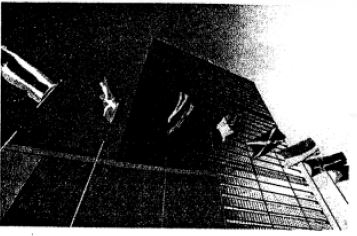
Question 1. Name the organization.
Answer: The organization is the United Nations (UN).
In simple words: It is the United Nations.
Exam Tip: Always write "United Nations" in full rather than just the abbreviation "UN" in your exams.
Question 2. Where are the headquarters of this organization located?
Answer: Its main headquarters are located in New York City.
In simple words: The main office is in New York City.
Exam Tip: New York City is the primary base, though it has other offices in Geneva and Vienna.
Question 3. Mention four important objectives of this organization.
Answer: Four key goals of the UN from its preamble are:
1. To keep global peace and safety.
2. To build friendly ties between countries based on equal rights.
3. To solve global economic, social, and human rights problems.
4. To serve as a meeting place where countries can work together to achieve these goals.
In simple words: The UN's main goals are to stop wars, encourage countries to be friends, work together on world problems, and protect human rights.
Exam Tip: Make sure to list exactly four distinct points clearly.
Question 4. Name three major organs of this organization.
Answer: Three major branches of the UN are the General Assembly, the Security Council, and the Economic and Social Council.
In simple words: Three main parts of the UN are the General Assembly, the Security Council, and the Economic and Social Council.
Exam Tip: Knowing these three major organs is fundamental for any question about the structure of the UN.
Free study material for History Civics
ICSE Study Resources for Class 8 History Civics Chapter 04 The United Nations
Download ICSE Answers for Class 8 History Civics Chapter 04 The United Nations
Review accurate ICSE solutions for Chapter 04 The United Nations tailored for Class 8 History Civics students. Use these step-by-step notes to simplify difficult textbook exercises and improve exam readiness.
Step-by-Step Explanations and Breakdown
Verify your answers instantly using the comprehensive breakdowns provided for each problem, ensuring complete syllabus coverage across all sub-topics.
More Study Resources for Class 8 History Civics
Pair your solution review with additional practice papers to test your execution speed and ensure total preparedness for school exams.
FAQs
You can download the verified Selina Concise solutions for Chapter 04 The United Nations on StudiesToday.com. Our teachers have prepared answers for Class 8 History Civics as per 2026-27 ICSE academic session.
Yes, our solutions for Chapter 04 The United Nations are designed as per new 2026 ICSE standards. 40% competency-based questions required for Class 8, are included to help students understand application-based logic behind every History Civics answer.
Yes, every exercise in Chapter 04 The United Nations from the Selina Concise textbook has been solved step-by-step. Class 8 students will learn History Civics conceots before their ICSE exams.
Yes, follow structured format of these Selina Concise solutions for Chapter 04 The United Nations to get full 20% internal assessment marks and use Class 8 History Civics projects and viva preparation as per ICSE 2026 guidelines.