

Sample Question Papers for Class 6 Social Science
Explore authentic exam practice materials through the CBSE Class 6 Social Science Sample Paper Set 07. Tailored for Class 6 learners, utilizing these Social Science sample papers ensures thorough preparation and strengthens time management skills before final CBSE evaluations.
Practice Class 6 Social Science Exam Papers
View or download the dedicated CBSE Class 6 Social Science Sample Paper Set 07 resource below. Engaging with these sample papers under timed conditions ensures continuous academic progress and mastery of the 2026-27 exam format.
CBSE Class 6 Social Science Sample Paper
SECTION A
Q1. Write the full form of BCE.
Q2. What was the purpose of Fire altars in Harappan Cities?
Q3. Define axis of a globe.
Q4. Christmas in New Zealand is celebrated in__________season.
Q5. How many levels of government exists in our country
OR
What do you mean by monarchy?
Q6.
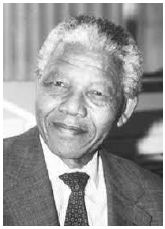
Name the leader of The African National Congress.
Q7. What do you mean by the term ‘tributaries’?
Q8. What was the purpose of 'great bath' in the Harappan civilisation?
Q9 What is the value of Prime meridian?
Q10. What is circle of illumination?
Q11. Fill in the Blanks
The form of government in which the people take decisions through elected representatives: __________
OR
Courts are a part of the __________.
Q12. Assertion(A): Aparthied laws were in prevalence till about 1994.
Reason(R): Aparthied means separation on the basis of race. South African people were divided into white, black, Indian and coloured races.
(a) Both A and R are true and R is the correct explanation of A.
(b) Both A and R are true but R is not the correct explanation of A.
(c) A is true but R is false.
(d) A is false but R is true
Q13.
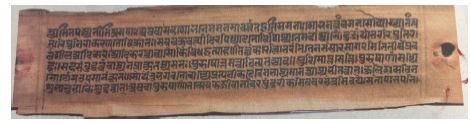
The word Manuscript is derived from a _______________word _______ which means hand.
Q14. State whether the given statement is true or false
The part to the west was _________ and higher and is called as lower town.
OR
Traces of wheat, barley and sheep were found in Mehrgarh.
Q15. Fill in the Blanks
The Frigid Zone lies near the ______________.
OR
The southern half of the earth is known as the __________Hemisphere.
Q16. Assertion(A): The Earth has two types of motions, namely rotation and revolution.
Reason(R): Rotation is the movement of the earth around the sun in a fixed path or orbit. Revolution is the movement of the earth on its axis.
(a) Both A and R are true and R is the correct explanation of A.
(b) Both A and R are true but R is not the correct explanation of A.
(c) A is true but R is false.
(d) A is false but R is true
SECTION B
Short Answer Type Questions
Q17. Name three essential features of a democratic government.
Q18. How do people participate in the formation of the government?
Q19. List three factors which show that Lothal was an important production centre of the Harappan civilisation.
OR
Write about the drains in the Harappan cities.
Q20. What are Time Zones?
Q21. Why do you think ordinary men and women did not generally keep records of what they did?
Q22. Why does the Southern Hemisphere experience winter and Summer Solstice in different times than that of the Northern Hemisphere?
OR
Why February has 29 days every fourth year?
SECTION C
Long Answer Type Questions
Q23. Why do you think ordinary men and women did not generally keep records of what they did?
How are manuscripts different from Inscriptions?
Q24. Why is it 5:30 p.m. in India and 12:00 noon in London? 5
Q25. State the difference between Summer Solstice and Winter Solstice 5
Q26. Explain the functions of the government.
OR
Write features of a democratic country.
Q27. Describe how coloured people in South Africa were discriminated and how did they receive their equal rights?
SECTION D
Source Based Questions
Q28. Read the passage given below and answer the following questions -
What do dates mean?
If somebody asks you the date, you will probably mention the day, month and year, 2000 and something. These years are counted from the date generally assigned to the birth of Jesus Christ, the founder of Christianity. So, 2000 means 2000 years after the birth of Christ. All dates before the birth of Christ are counted backwards and usually have the letters BC (Before Christ) added on. In this book, we will refer to dates going back from the present, using 2000 as our starting point”.
i. Years after the birth of Jesus Christ are counted
(a) Forward (b) Backward
(c) Upward (d) Downward
ii. Jesus was founder of
(a) Hinduism (b) Christianity
(c) Jews (d) Muslims
iii. All dates before the birth of Christ are counted backwards and usually have the letters
(a) AC (b) AD
(c) BCE (d) BD
iv. Who are historians?
(a) Who study past (b) Who study present
(c) Who study future (d) None of these
Q29. Read the passage given below and answer the following questions -
The best means of measuring time is by the movement of the earth, the moon and the planets. When the Prime Meridian of Greenwich has the sun at the highest point in the sky, all the places along this meridian will have mid-day or noon. As the earth rotates from west to east, those places east of Greenwich will be ahead of Greenwich time and those to the west will be behind it.
i. What divides the earth into two equal parts.
(a) Tropic of Capricorn (b) Tropic of Cancer
(c) Equator (d) Arctic Circle
ii. What divides the earth into the eastern and the western hemispheres?
(a) Equator (b) Prime Meridian
(c) Poles (d) None of these
iii. The Prime Meridian passes through
(a) Greenwood (b) Greenfield
(c) Greenwhich (d) Greenwich
iv. IST stands for
(a) Internal Specific Time (b) Internal Standard Temperate
(c) Indian Standard Time (d) Indian Specific Time
Q30. Read the source given below and answer the following questions –
South Africa is a country of several races including African American people who belong to South Africa, the whites who came there to settle, Indians who came as labourers and traders and so on. Earlier, the country was governed by Apartheid laws. Apartheid means separation on the basis of race. African people were divided into white, African American, Indian and other races. According to the law, these races were not allowed to mingle with each other, live near each other or even use common facilities.
The African National Congress, a group of people led the struggle against apartheid and their most well-known leader, Nelson Mandela fought the apartheid system for several years. Finally, they succeeded and in 1994 South Africa became a democratic country in which people of all races were considered equal.
i. What does Apartheid mean?
(a) Allowed (b) Separation
(c) Not allowed (d) All of these
ii. How were people of South Africa divided before independence?
(a) White people (b) Black people
(c) Coloured races (d) All of these
iii. When did South Africa became a Democratic country?
(a) September 1926 (b) April1994
(c) July 1876 (d) June 1997
iv. For how many years is the Indian Government elected?
(a) 5 years (b) 7 years
(c) 10 years (d) 15 years
Q31 Read the source given below and answer the following questions –
The Government makes laws that everyone living in the country has to follow. It cannot only make a decision but can enforce it as well. Given is an example.
Everyone driving a motor vehicle is required to have a licence. Any person caught driving a vehicle without a licence can either be jailed or fined a large sum of money. Same as the decisions that the Government can take, people can also take some steps if they feel that a particular law is not being followed. An example of this is given here. If a person feels that they were not hired for a job because of their religion or caste, he or she may approach the court to claim that the law is not being followed. The court can then give orders about what should be done.
i. If a person is treated unequally he can approach?
(a) Courts (b) Private organisations
(c) Public schools (d) Parliament
ii. What is the important function of Government?
(a) to make law (b) punishment
(c) to impose charges (d) special treatment
iii. The level of Government which deals with issues related to the whole country is
known as______________.
(a) International Government (b) Local Government
(c) State Government (d) National Government
iv. What does the Government make for everyone to follow?
(a) Rules (b) Decisions
(c) Relations (d) None of these
SECTION E
Map Skill Based Questions
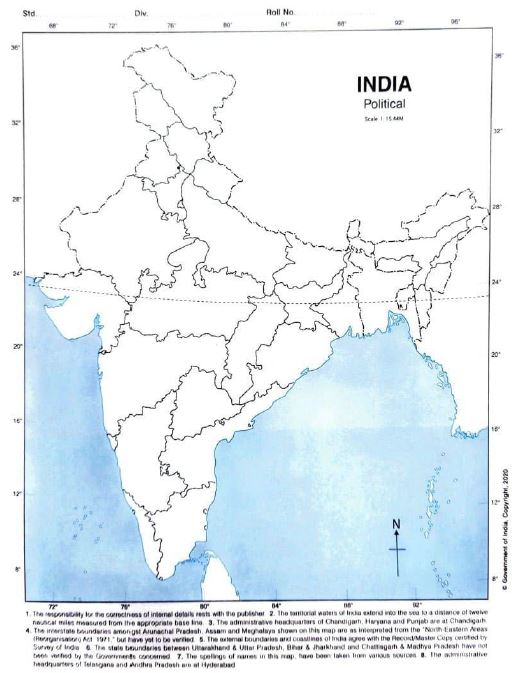
Q32 Mark the following places on a political map of India.
a. The first city to be discovered in the Indus Valley Civilisation.
b. The city where the Great Bath was discovered
c. Fire alters were found in this site
d. First kingdom to develop on the banks of river Ganga
e. Agriculture developed in these north-eastern hills
Free study material for Social Science
Download CBSE Sample Papers: Class 6 Social Science
Class 6 Social Science CBSE Class 6 Social Science Sample Paper Set 07 PDF Download Guide
Access structured sample papers for Class 6 Social Science. Solving the CBSE Class 6 Social Science Sample Paper Set 07 provided above helps students understand official exam blueprints and tackle anticipated question formats with confidence.
Maximize Your Scores with Model Papers
- Exam Blueprint: Understand mark allocations and structural guidelines relevant to Class 6 evaluations.
- Targeted Improvement: Identify weak areas in Class 6 Social Science requiring focused revision.
- Pacing & Precision: Practice mixed question formats to build execution speed and ensure timely paper completion.
Steps to Follow After Completing CBSE Class 6 Social Science Sample Paper Set 07
- Verify Answers: Compare your responses against professional teacher solutions provided in the sample paper keys.
- Error Analysis: Class 6 learners must review incorrect answers carefully to understand underlying mistakes.
- Concept Reinforcement: Consult the official NCERT book for Class 6 Social Science when stuck before re-attempting problems.
FAQs
You can download the complete PDF for CBSE Class 6 Social Science Sample Paper Set 07 for free from StudiesToday.com. Our resources for Class 6 Social Science are updated for the latest academic session and follow the official exam pattern.
Yes, CBSE Class 6 Social Science Sample Paper Set 07 comes with detailed, teacher-verified solutions. We have provided step-by-step answers for Social Science to help students of Class 6 understand correct methodology and marking scheme.
Practicing this Social Science paper helps in time management and identifying important topics. For Class 6, solving mock papers is the best way to gain confidence and reduce exam-day anxiety.
Yes, all our study materials for Class 6 Social Science are provided in a mobile-friendly PDF format. You can easily download CBSE Class 6 Social Science Sample Paper Set 07 on your mobile device.