

Chapter-wise Worksheets for Class 4 Environmental Studies: Chapter 18 Too Much Water, Too Little Water
Explore structured practice materials through the CBSE Class 4 EVS Too Much Water Too Little Water Worksheet. Tailored for Class 4 learners, utilizing these Environmental Studies worksheets ensures thorough preparation and strengthens problem-solving accuracy before final school evaluations.
Practice Class 4 Environmental Studies Worksheets: Chapter 18 Too Much Water, Too Little Water
Access the complete worksheet PDF for Class 4 Environmental Studies below. Regular practice with these targeted academic tasks builds familiarity with standard question patterns and helps secure higher marks in final school examinations.
a. Why Appa refused to serve water to the guest?
i)There is shortage of water.
ii)Water is used for irrigation only.
iii)Water was dirty.
Answer : a (iii) it was dirty
b. Why are people angry outside the water park?
i) They also want to get in.
ii) There is scarcity of water.
iii) They dislike children playing inside.
Answer : (ii) There is scarcity of Water
c. It is important to make up for the water that we loose from our .
i) body
ii) area
iii) neighbour
Answer : (i) body
Question. Match the following:
a. Matka i. Bazaar Gaon
b. Water Park ii. Greenery
c. Water Tank iii. Container
Answer : a – iii
b – i
c – ii
Question. Answer in one word
a. What does mixing of gutter water with the drinking water pipes in the area may make people suffer from?
b. What is the name of children’s panchayat in Holgundi area of Karnataka?
Answer : a. Diarrhoea
b. Bhima Sangh
Question. Write true or false
a. If a baby is suffering from diarrhoea she should continue taking mother’s milk.
b. Though there were many cracks in the tank it was filled with water.
Answer : a. True
b. False
Question 1. Identify and encircle the water borne diseases.
Typhoid, Malaria, Cholera, Chickungunya, Cough and cold, Fever, Head ache, Leg pain, Throat infection, Jaundice (with central bubble text: Due to contaminated water)
Answer: The water-borne diseases caused due to contaminated water from the given list are: Typhoid, Cholera, and Jaundice.
In simple words: Water-borne diseases are illnesses spread by drinking water that contains harmful germs.
Exam Tip: Remember that malaria and chickungunya are vector-borne diseases spread by mosquitoes, whereas typhoid, cholera, and jaundice spread through contaminated water.
Question 2. Observe the pictures and say which is the best method and Why?
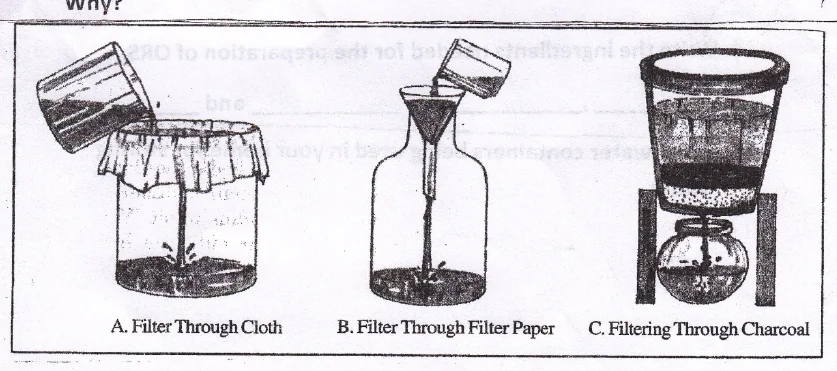
A. Filter Through Cloth
B. Filter Through Filter Paper
C. Filtering Through Charcoal
Answer: Method C (Filtering Through Charcoal) or a combination of filtration and purification is the most effective method among the three. Charcoal acts as an adsorbent that removes fine suspended impurities, unpleasant odors, and some organic pollutants, making the water much cleaner than just filtering through a simple cloth or paper.
In simple words: Charcoal traps very tiny particles and clears bad smell and taste from water.
Exam Tip: Always state that simple cloth only removes large suspended particles, whereas advanced filters remove finer impurities and germs.
Question 3. Name these water sports.
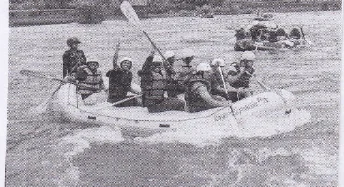
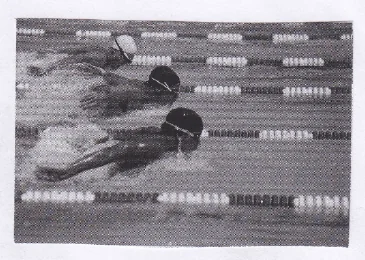
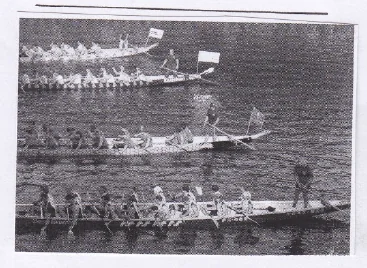
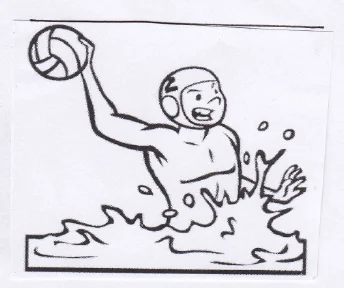
Answer:
1. River Rafting
2. Swimming
3. Boat Racing (Rowing)
4. Water Polo
In simple words: These are different sports and recreational activities played or performed in water.
Exam Tip: Learn to identify common water adventure and sport activities from visual silhouettes or pictures.
Question 4. Write the ingredients needed for the preparation of ORS.
Answer: Water, Salt, Sugar and Glucose (the four blanks may be filled with clean water, salt, sugar and glucose/lemon juice).
In simple words: ORS (Oral Rehydration Solution) is made by mixing clean water, salt, sugar and glucose to recover body fluids during diarrhea.
Exam Tip: ORS stands for Oral Rehydration Solution and it restores the lost salts and water in the body quickly.
Question 5. Draw water containers being used in your home for storing water.
Answer: Common water containers used at home include Buckets, Pots (Matka/Earthen pots), Bottles, Drums, and Overhead Tanks.
In simple words: We store drinking and household water in covered containers like bottles, buckets, and earthen pots.
Exam Tip: When drawing or listing storage containers, always emphasize that drinking water containers must be kept covered to prevent contamination.
1. Fill in the blanks:
a. Newspaper said that _________ water had mixed in the _____________ water-pipes.
b. Many people were sick with __________ and _________because of this.
c. We lose lot of _______________ when we have diarrhea and vomiting.
d. If diarrhea does not stop, it is important to get the advice of a ____________.
2. Write any five uses of water.
3. Draw water containers being used in your home for storing water.
Chapter 18 Too Much Water, Too Little Water Printable Worksheets and Exercises for Class 4 Environmental Studies
Download Chapter Worksheets: Class 4 Environmental Studies
Review targeted practice exercises for Class 4 Environmental Studies Chapter 18 Too Much Water, Too Little Water. Curated to match official CBSE guidelines, these printable problem sets support daily revision and improve overall test readiness.
Concept Clarification for Chapter 18 Too Much Water, Too Little Water
Each worksheet draws directly from authorized standard textbooks to maintain academic accuracy. Evaluating your finished exercises against expert-verified solutions helps master the formal presentation standards expected in school evaluations.
Effective Revision Strategies for School Exams
Consistent engagement with these exercises builds familiarity with recurring exam themes. If specific areas within Chapter 18 Too Much Water, Too Little Water cause trouble, utilize our dedicated NCERT solutions for Class 4 Environmental Studies to clear up doubts immediately.
FAQs
You can download the latest chapter-wise printable worksheets for Class 4 Environmental Studies Chapter 18 Too Much Water, Too Little Water for free from StudiesToday.com. These have been made as per the latest CBSE curriculum for this academic year.
Yes, Class 4 Environmental Studies worksheets for Chapter 18 Too Much Water, Too Little Water focus on activity-based learning and also competency-style questions. This helps students to apply theoretical knowledge to practical scenarios.
Yes, we have provided solved worksheets for Class 4 Environmental Studies Chapter 18 Too Much Water, Too Little Water to help students verify their answers instantly.
Yes, our Class 4 Environmental Studies test sheets are mobile-friendly PDFs and can be printed by teachers for classroom.
For Chapter 18 Too Much Water, Too Little Water, regular practice with our worksheets will improve question-handling speed and help students understand all technical terms and diagrams.