

Practice MCQs for BITSAT Chemistry Polymers
Explore reliable objective questions for Polymers tailored for BITSAT learners. Utilizing these Chemistry multiple-choice formats ensures thorough preparation and strengthens problem-solving speed for upcoming school assessments.
Access Polymers Questions and Solutions
Navigate directly to the 50 objective questions for Polymers using the digital viewer below. Each practice set includes verified answer keys, allowing students to instantly cross-check their work and identify areas requiring further revision.
Question: Which of the following can be repeatedly soften on heating? (i) Polystyrene (ii) Melamine (iii) Polyesters (iv) Polyethylene (v) Neoprene
a) (i) and (iii)
b) (i) and (iv)
c) (iii), (iv) and (v)
d) (ii) and (iv)
Answer: (i) and (iv)
Question: Formation of polyethylene from calcium carbide takes place as follows
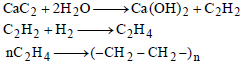
The amount of polyethylene obtained from 64.1 kg of CaC2 is
a) 7 kg
b) 14 kg
c) 21 kg
d) 28 kg
Answer: 28 kg
Question: Polymer used in bullet proof glass is
a) Lexan
b) PMMA
c) Nomex
d) Kevlar
Answer: PMMA
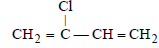
Question: Which one of the following monomers gives the polymer neoprene on polymerization ?
a) CF2 = CF2
b) CH2 = CHCl
c) CCl2 = CCl2
d)
Answer:
Question: Ebonite is
a) Natural rubber
b) Synthetic rubber
c) Highly vulcanized rubber
d) Polypropene
Answer: Highly vulcanized rubber
Question: Biodegradable polymer which can be produced from glycine and aminocaproic acid is :
a) PHBV
b) Buna - N
c) Nylon 6, 6
d) Nylon 2- nylon 6
Answer: Nylon 2- nylon 6
Question: Polymer formation from monomers starts by
a) Condensation reaction between monomers
b) Coordinate reaction between monomers
c) Conversion of monomer to monomer ions by protons
d) Hydrolysis of monomers
Answer: Condensation reaction between monomers
Question: Which of the following can be repeatedly soften on heating? (i) Polystyrene (ii) Melamine (iii) Polyesters (iv) Polyethylene (v) Neoprene
a) (i) and (iii)
b) (i) and (iv)
c) (iii), (iv) and (v)
d) (ii) and (iv)
Answer: (i) and (iv)
Question: Polymer used in bullet proof glass is
a) Lexan
b) PMMA
c) Nomex
d) Kevlar
Answer: PMMA
Question: Ebonite is
a) Natural rubber
b) Synthetic rubber
c) Highly vulcanized rubber
d) Polypropene
Answer: Highly vulcanized rubber
Free study material for Chemistry
Download Chapter MCQs: BITSAT Chemistry Polymers
Chapter MCQs with Answers for BITSAT Chemistry
Review structured objective questions for BITSAT Chemistry Polymers. Built according to official BITSAT guidelines, these MCQ sets support daily revision and core concept reinforcement.
Expert Practice Material for BITSAT Chemistry
Each question includes structured solution keys mapped directly to standard BITSAT textbooks, helping students evaluate their reasoning and correct mistakes early in their revision.
Complete Your Chapter Revision
Follow up your worksheet practice by attempting the interactive online Chemistry MCQ test for this chapter to evaluate your execution speed. All platform resources are free to access.
FAQs
You can get most exhaustive BITSAT Chemistry Polymers for free on StudiesToday.com. These MCQs for BITSAT Chemistry are updated for the 2026-27 academic session as per BITSAT examination standards.
Yes, our BITSAT Chemistry Polymers include the latest type of questions, such as Assertion-Reasoning and Case-based MCQs. 50% of the BITSAT paper is now competency-based.
By solving our BITSAT Chemistry Polymers, BITSAT students can improve their accuracy and speed which is important as objective questions provide a chance to secure 100% marks in the Chemistry.
Yes, Chemistry MCQs for BITSAT have answer key and brief explanations to help students understand logic behind the correct option as its important for 2026 competency-focused BITSAT exams.
Yes, you can also access online interactive tests for BITSAT Chemistry Polymers on StudiesToday.com as they provide instant answers and score to help you track your progress in Chemistry.