

Oxford Solutions for Class 8 History Civics: Chapter 20 Specialized Agencies Of The Un
Explore the complete Oxford textbook solutions for Class 8 History Civics. Tailored for the 2026-27 curriculum, this resource breaks down complex topics to support daily study and targeted revision.
Chapter-wise Solutions: Chapter 20 Specialized Agencies Of The Un
Access the complete PDF for Chapter 20 Specialized Agencies Of The Un below. This focused excerpt allows students to isolate specific topics for thorough review and uninterrupted reading, complementing standard ICSE textbooks.
A. Fill in the blanks:
Question 1. The UNESCO was established in ________ with headquarters at ________.
Answer: 1945, Paris.
In simple words: UNESCO started in 1945, and its central office is in Paris.
Exam Tip: Remember both the establishment year and the headquarters city of UNESCO, as these are frequently asked in fill-in-the-blank questions.
Question 2. UNICEF provides assistance for running ________ centres.
Answer: child care.
In simple words: UNICEF provides support to keep daycare centers running for children.
Exam Tip: Keep in mind that UNICEF's main focus is the well-being and protection of young kids.
Question 3. When the UN was formed the ________ became its first specialized agency.
Answer: ILO.
In simple words: The International Labour Organization was the first specialized body under the UN.
Exam Tip: Don't confuse ILO with other agencies; it is unique because it was the very first specialized agency when the UN was created.
Question 4. The headquarters of FAO are in ________.
Answer: Rome.
In simple words: The central office of the Food and Agriculture Organization is based in Rome.
Exam Tip: Match 'Food' with 'Rome' (Italy is famous for its food!) to easily remember this headquarters location.
Question 5. The WHO believes that ________ is one of the fundamental rights of every human being.
Answer: good health.
In simple words: The WHO states that being in good health is a basic right for everyone.
Exam Tip: Make sure to use the exact phrase "good health" as outlined in standard textbook keys.
B. Match the following:
| Column A | Column B |
|---|---|
| 1. UNESCO | (a) Rome |
| 2. UNICEF | (b) Geneva |
| 3. ILO | (c) Paris |
| 4. FAO | (d) Geneva |
| 5. WHO | (e) New York |
Answer:
1. UNESCO - (c) Paris
2. UNICEF - (e) New York
3. ILO - (b) Geneva
4. FAO - (a) Rome
5. WHO - (d) Geneva
In simple words: This matching couples each international agency with the city where its main offices are located.
Exam Tip: Both WHO and ILO are based in Geneva, Switzerland. Remembering this shared location will save you from getting confused.
C. Choose the correct answer:
Question 1. The functions of UNESCO/UNICEF/ILO are based on the belief that the best way to prevent war is to educate people’s mind in the pursuit of peace.
Answer: UNESCO
The activities of UNESCO are guided by the idea that educating minds to value peace is the most effective way to avoid conflicts.
In simple words: UNESCO aims to prevent war by teaching people the importance of living in peace.
Exam Tip: Associate "education" and "peace in minds" directly with UNESCO, as "E" in UNESCO stands for Educational.
Question 2. The FAO/WHO/ILO was founded in 1945 and helps countries to raise their levels of nutrition.
Answer: FAO
Formed in 1945, the FAO assists nations in improving their food standards and dietary nutrition.
In simple words: The FAO helps countries make sure their people get healthy and nutritious food.
Exam Tip: The keyword "nutrition" is directly linked to food, making FAO (Food and Agriculture Organization) the correct choice.
Question 3. The ILO/WHO/UNESCO was set up at the end of the First World War.
Answer: ILO
The ILO was established immediately after the conclusion of World War I.
In simple words: The International Labour Organization was formed right after the First World War ended.
Exam Tip: Remember that the ILO was created in 1919 (by the Treaty of Versailles), which marked the end of World War I.
Question 4. The objectives of WHO/ILO/FAO is to improve the standard of health all over the world.
Answer: WHO
The primary mission of the WHO is to upgrade healthcare standards for people worldwide.
In simple words: The WHO works to make sure everyone in the world has better health.
Exam Tip: Health standards globally are overseen by the World Health Organization (WHO).
Question 5. The WHO has succeeded in eradicating smallpox/measles/ typhoid from the world.
Answer: smallpox
The WHO has successfully wiped out smallpox globally.
In simple words: Smallpox is the major disease that the WHO completely got rid of around the world.
Exam Tip: The complete global eradication of smallpox in 1980 is considered one of the WHO's greatest achievements.
D. State whether the following are true or false:
Question 1. UNESCO encourages the spread of universal education.
Answer: True
In simple words: This statement is true because UNESCO actively promotes education for everyone across the world.
Exam Tip: Promoting universal education is a core function of UNESCO, so this is a standard true statement.
Question 2. UNICEF helps in solving financial crises and provides loans to nations.
Answer: False. UNICEF's actual role is protecting children from exploitation and stopping child labor, rather than lending money to countries.
In simple words: This is false because UNICEF is for helping kids, not for lending money to governments.
Exam Tip: Don't confuse UNICEF with the IMF or World Bank; UNICEF deals strictly with child development and welfare.
Question 3. The ILO sets guidelines for improving the living and working conditions of workers everywhere.
Answer: True
In simple words: This is true because the ILO creates global standards to ensure workers are safe and treated fairly.
Exam Tip: "Workers' conditions" is the main focus of the International Labour Organization (ILO).
Question 4. The headquarters of ILO are in Rome.
Answer: False. The central offices of the ILO are located in Geneva, Switzerland.
In simple words: This is false because the main base of the ILO is in Geneva.
Exam Tip: Rome is the base for FAO, while Geneva hosts the ILO. Make sure not to mix up these locations.
Question 5. The largest specialized agency of the UN is WHO.
Answer: True
In simple words: This is true because the World Health Organization is indeed the biggest specialized agency under the UN.
Exam Tip: Keep in mind that WHO is the largest specialized agency due to its vast global scope and member involvement.
E. Answer the following questions in one or two words/sentences:
Question 1. Why were the specialized agencies of the UN established?
Answer: These agencies were set up to tackle global economic, social, and cultural issues through international cooperation. A variety of specialized bodies exist to accomplish these distinct missions.
In simple words: These groups were created so countries could work together to solve world problems like health, education, and trade.
Exam Tip: Be sure to highlight "international cooperation" as the key method used to solve global challenges.
Question 2. Name one specialized agency of the UN.
Answer: One example of a specialized agency of the UN is the World Health Organization (WHO).
In simple words: The World Health Organization (WHO) is a well-known special agency of the UN.
Exam Tip: You can write WHO, UNESCO, or UNICEF as they are the easiest and most common examples to remember.
Question 3. What does the acronym UNESCO stand for?
Answer: UNESCO is an acronym for the United Nations Educational, Scientific and Cultural Organization.
In simple words: It stands for the United Nations Educational, Scientific and Cultural Organization.
Exam Tip: Pay close attention to the spelling of "Educational", "Scientific", and "Cultural" to secure full marks.
Question 4. What does the acronym UNICEF stand for at present?
Answer: UNICEF stands for the United Nations International Children's Emergency Fund.
In simple words: UNICEF stands for the United Nations International Children's Emergency Fund.
Exam Tip: Although its official name was shortened to United Nations Children's Fund, standard exams still look for the original full acronym name.
Question 5. Why is it necessary to ensure that workers are content and i happy?
Answer: A country can grow and become prosperous only if its workforce is satisfied and happy.
In simple words: When workers are happy, they do a better job, which helps the whole nation succeed.
Exam Tip: Note the connection between worker satisfaction and a country's overall economic progress.
Question 6. What important programmer did the FAO launch to eliminate hunger?
Answer: To eradicate hunger, the FAO introduced its flagship program called 'Food for All'.
In simple words: The FAO started a major program called 'Food for All' to stop people from going hungry.
Exam Tip: Remember to put the program name 'Food for All' inside single quotation marks for clarity.
Question 7. What does the FAO do in the event of an emergency food situation in any country?
Answer: The FAO runs targeted programs to help countries prepare for crises and supply emergency food aid during severe shortages.
In simple words: When there is a food crisis, the FAO helps countries get food and prepare for the shortage.
Exam Tip: Use the terms "prepare" and "provide relief" to show how the FAO responds to crises.
Question 8. Why is World Health Day observed on 7th April every year?
Answer: April 7 is celebrated as World Health Day annually to mark the establishment of the WHO and raise global wellness standards.
In simple words: We celebrate World Health Day on April 7 because that is the anniversary of when the WHO was founded.
Exam Tip: Always state both points: it marks the founding of the WHO, and it promotes global health awareness.
F. Answer the following questions briefly:
Question 1. A number of specialized agencies of the UN have been set up in the interest of human affairs. In this context answer the following questions:
(a) Mention the functions and activities of the UNESCO.
(b) Why was UNICEF originally established? What are its long-term goals at present?
(c) Mention any four endeavours of UNICEF to achieve its goals.
Answer:
(a) UNESCO carries out its work across five key sectors: Education, Natural Sciences, Social and Human Sciences, Culture, and Communication/Information. Its primary activities include: 1. Guiding global efforts to build learning societies with learning options for everyone, supporting comparative education studies, and helping countries improve their educational systems. 2. Supporting the free sharing of thoughts, words, and pictures by defending freedom of speech, press freedom, and open information networks. 3. Hosting international observances such as International Literacy Day and promoting a global culture of peace. 4. Backing and providing resources for key initiatives like FRESH (Focusing Resources on Effective School Health) and the International Council of Science.
(b) UNICEF was set up in 1946 to give urgent food and health aid to mothers and kids in regions damaged by the Second World War. Today, its enduring mission is to ensure all kids can access their basic human rights and freedom. It actively works to stop child labor and child abuse. Furthermore, the agency supports countries in setting up nurseries, helping new mothers, and supplying vital medicines for babies and their parents. It remains committed to helping kids in developing areas by improving school access, sanitation, clean drinking water, nutrition, and social equality.
(c) Four major actions taken by UNICEF to reach its targets are: 1. Working to end child labor and protect kids from being exploited. 2. Helping countries fund and run childcare facilities. 3. Supporting young mothers with healthcare and giving essential medicine to newborns. 4. Advancing child well-being in poorer nations by improving water supply, schooling, health services, and women's rights.
In simple words: UNESCO works in science, schooling, and culture to help people learn and share ideas. UNICEF was started to help kids after World War II, and now it works worldwide to protect kids, stop child labor, build nurseries, and provide medicine.
Exam Tip: For part (a), listing the five distinct fields of UNESCO will guarantee full marks. For part (b), contrast its original post-war focus with its modern broad goals.
Question 2. With reference to the ILO and the FAO discuss:
(a) The aims and activities of the ILO
(b) The aims of the FAO
(c) The activities of the FAO
Answer:
(a) The ILO was created in 1919 following World War I, with its main offices in Geneva, Switzerland. It later transitioned to become the UN's first dedicated agency. The organization aims to foster global harmony and development by securing fair economic and social rights for employees everywhere. Since a nation's prosperity relies heavily on the happiness of its workforce, the ILO creates standard rules to improve employment environments and living standards globally.
(b) The primary goals of the FAO are: 1. Improving the general quality of life for communities. 2. Elevating nutrition standards globally. 3. Ending world hunger through its signature program, 'Food for All'. 4. Boosting farming output, enhancing food supply networks, and supporting rural growth.
(c) The FAO carries out these key activities: 1. Encouraging funding for farming, enhancing soil and water conservation, and boosting crop and farm animal production. 2. Offering expert advice in food science, farm engineering, modern communication, and reducing food waste. 3. Running emergency projects to help nations prepare for and manage severe food deficits.
In simple words: The ILO protects workers' rights and works to make jobs safer. The FAO works to end hunger, improve nutrition, teach farmers better ways to grow food, and provide food aid during emergencies.
Exam Tip: Be clear on the difference: the ILO focuses on workers and labor rights, while the FAO focuses on food, farming, and nutrition.
Question 3. With reference to the WHO discuss the following:
(a) The establishment of the WHO
(b) The activities of the WHO
(c) The projects supported by the WHO
Answer:
(a) The WHO was set up in 1948 with its headquarters based in Geneva, Switzerland. As the largest specialized branch of the UN, it operates on the principle that having a healthy life is a basic right for every person.
(b) The key activities of the WHO include: 1. Leading global efforts to fight major illnesses such as polio, malaria, cholera, and AIDS. 2. Supporting scientific research, sharing disease data, building healthcare networks, and educating the public about healthy living.
(c) Projects backed by the WHO focus on: 1. Teaching people about common health issues. 2. Securing wholesome food and good nutrition. 3. Ensuring clean drinking water and hygienic living conditions. 4. Caring for mothers and children, including vaccine campaigns and family planning. 5. Stopping and managing local disease outbreaks. 6. Managing basic injuries and illnesses. 7. Making sure critical medicines are available.
In simple words: The WHO was founded in 1948 in Geneva. It fights major diseases and runs programs for clean water, vaccines, healthy food, and mother-and-child care.
Exam Tip: Learn the founding year of the WHO (1948) and at least three project areas (like clean water, vaccines, and nutrition) for short-answer questions.
G. Picture Study
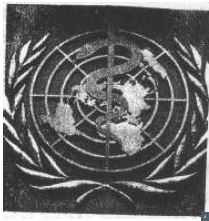
Question G. This is the logo of the headquarters of a specialized agency of the UN which was established in 1948.
1. Name the agency.
2. What is the main purpose of this agency?
3. What does it do to achieves its objectives?
4. Mention one important achievement of this agency.
5. Name any two other specialized agencies of the UN. State one important objective of each agency.
Answer:
1. The agency is the **World Health Organization (WHO)**.
2. Its primary objective is to upgrade health and wellness levels for populations around the globe.
3. It organizes global campaigns to combat infectious diseases, funds medical research, distributes disease statistics, and supports local health infrastructures.
4. A major milestone of the WHO is the global eradication of smallpox.
5. Two other specialized UN agencies are:
* **UNICEF (United Nations Children's Fund):** Dedicated to assisting and safeguarding children's health, education, and basic rights.
* **UNESCO (United Nations Educational, Scientific and Cultural Organization):** Promotes international cooperation through education, sciences, and cultural development to prevent conflicts.
In simple words: This logo belongs to the WHO, which works to improve global health. It achieved the wipeout of smallpox. Other agencies include UNICEF, which protects children, and UNESCO, which helps with education.
Exam Tip: Be ready to identify the WHO logo, which features a world map surrounded by olive branches and a staff wrapped with a serpent (the Rod of Asclepius, a symbol of medicine).
Other Important Questions
Question 1. Name the specialized agencies of What is the purpose?
Answer: The largest specialized agency of the UN is the World Health Organization (WHO). It serves as the primary leading and coordinating body for health matters within the United Nations system. Its responsibilities include setting international health standards, defining health research agendas, assisting governments with expert advice, and tracking global wellness developments.
Its key goals are: 1. Offering leadership on critical health challenges and forming cooperative coalitions. 2. Encouraging scientific study and sharing crucial health findings. 3. Creating and monitoring healthcare rules and guidelines. 4. Designing ethical and evidence-backed health policy options. 5. Helping nations build strong, self-sustaining medical networks. 6. Assessing global health climates and tracking disease outbreaks.
In simple words: The WHO is the UN's main health group. It coordinates global health efforts, sets medical guidelines, and assists countries in tracking and fighting illness.
Exam Tip: Make sure to explain that the WHO acts as a "directing and coordinating authority," as this highlights its administrative role in global health.
Question 2. What is the purpose of WHO? To what extent has it been successful in its mission?
Answer: The main objectives of the WHO include guiding international health actions, encouraging medical research, establishing health guidelines, recommending policy choices, supporting countries in upgrading their health systems, and tracking disease patterns.
In terms of success, the WHO has dramatically improved public health worldwide. It led the international campaign that successfully eradicated smallpox and has made substantial progress in fighting diseases like tuberculosis and malaria. The agency has also helped set up nurseries and supported medical students in pursuing advanced training through scholarship opportunities.
In simple words: The WHO aims to make the world healthier. It succeeded in completely wiping out smallpox and has helped train new doctors through scholarships.
Exam Tip: Highlight both direct medical successes (like eradicating smallpox) and indirect support systems (like scholarships and child care centers) to provide a complete answer.
Question 3. What do the following acronyms stand for? State one important function of each agency.
(1) UNESCO
(2) UNICEF
(3) ILO
(4) FAO
Answer:
1. **UNESCO:** United Nations Educational, Scientific and Cultural Organization
*Function:* It promotes international partnership among artists, scientists, and scholars across all fields.
2. **UNICEF:** United Nations International Children's Emergency Fund
*Function:* It focuses on protecting children from exploitation and ending child labor.
3. **ILO:** International Labour Organization
*Function:* It strives to secure global peace and stability by protecting the social and economic rights of workers.
4. **FAO:** Food and Agriculture Organization
*Function:* It works to end hunger through major initiatives such as 'Food for All'.
In simple words: These groups help in different areas: UNESCO supports education and science, UNICEF protects children, ILO secures workers' rights, and FAO fights hunger.
Exam Tip: Memorize the exact full expansions of these acronyms, as they are high-scoring points in civics and social science papers.
Free study material for History Civics
Verified Textbook Solutions for Class 8 History Civics Chapter 20 Specialized Agencies Of The Un
Detailed Textbook Solutions: Chapter 20 Specialized Agencies Of The Un (Class 8 History Civics)
Strengthen your preparation with comprehensive answers for Class 8 History Civics Chapter 20 Specialized Agencies Of The Un. These expert-reviewed solutions make tracking your academic progress straightforward and efficient.
Concept Clarification for Chapter 20 Specialized Agencies Of The Un
Verify your answers instantly using the comprehensive breakdowns provided for each problem, ensuring complete syllabus coverage across all sub-topics.
Effective Revision Strategies for Chapter 20 Specialized Agencies Of The Un
Explore our broader library of study materials and chapter notes to support your continuous revision and secure higher marks.
FAQs
You can download the verified Oxford solutions for Chapter 20 Specialized Agencies Of The Un on StudiesToday.com. Our teachers have prepared answers for Class 8 History Civics as per 2026-27 ICSE academic session.
Yes, our solutions for Chapter 20 Specialized Agencies Of The Un are designed as per new 2026 ICSE standards. 40% competency-based questions required for Class 8, are included to help students understand application-based logic behind every History Civics answer.
Yes, every exercise in Chapter 20 Specialized Agencies Of The Un from the Oxford textbook has been solved step-by-step. Class 8 students will learn History Civics conceots before their ICSE exams.
Yes, follow structured format of these Oxford solutions for Chapter 20 Specialized Agencies Of The Un to get full 20% internal assessment marks and use Class 8 History Civics projects and viva preparation as per ICSE 2026 guidelines.