

Voyage Solutions for Class 8 Geography: Chapter 04 Urbanization
Access the official Voyage textbook solutions for Class 8 Geography, updated for the 2026-27 academic year. This digital resource is structured to help students build strong conceptual clarity and prepare effectively for school examinations.
Chapter-wise Solutions: Chapter 04 Urbanization
Access the complete PDF for Chapter 04 Urbanization below. This focused excerpt allows students to isolate specific topics for thorough review and uninterrupted reading, complementing standard ICSE textbooks.
A. Fill in the blanks
Question A.1. Cities offer the migrant better ________ prospects for him or his children.
Answer: education
In simple words: Big cities have better schools and colleges for children to get a good learning experience.
Exam Tip: For fill-in-the-blank questions, read the complete sentence first to understand the context before choosing the appropriate noun.
Question A.2. Workers in cities get ________ wages.
Answer: higher
In simple words: People who work in cities usually earn more money than those in villages.
Exam Tip: Remember that economic reasons like better pay are a major reason why people move to cities.
Question A.3. Rural areas act as the ________ factor while urban areas are the ________ factor.
Answer: push, pull
In simple words: Difficulties in villages force people out, while city opportunities attract them.
Exam Tip: Always remember that "push" means what drives you away and "pull" means what attracts you.
Question A.4. ________ towns or cities are socially and economically independent, either completely or partially.
Answer: Satellite
In simple words: These are smaller cities built near big ones that can stand on their own.
Exam Tip: Be clear on the definition of satellite towns as self-sufficient smaller urban areas.
Question A.5. In India, 60 cities have been selected as ________.
Answer: Smart Cities
In simple words: The Indian government chose sixty cities to make them highly advanced with modern technology.
Exam Tip: Make sure to capitalize both words in "Smart Cities" as it is a proper noun.
B. Match the following columns
Question 1. Match the following columns:
| A | B |
|---|---|
| 1. Urbanization | a. bedroom communities |
| 2. Rapid industrial growth | b. Satellite city - Hitech City |
| 3. Slums | c. shift from rural areas to cities |
| 4. Satellite cities | d. plenty of job opportunities |
| 5. Main City - Hyderabad | e. heavily populated, poor living conditions |
Answer:
| A | B |
|---|---|
| 1. Urbanization | c. shift from rural areas to cities |
| 2. Rapid industrial growth | d. plenty of job opportunities |
| 3. Slums | e. heavily populated, poor living conditions |
| 4. Satellite cities | a. bedroom communities |
| 5. Main City - Hyderabad | b. Satellite city - Hitech City |
In simple words: This shows the correct matching of each term on the left with its description on the right.
Exam Tip: To solve match-the-column questions, start with the easiest definitions first to narrow down options.
C. State whether the following are true or false
Question C.1. Rapid industrial growth in and around the city leads to lack of job opportunities.
Answer: False. When factories and industries grow quickly near a city, it creates many new jobs for people.
In simple words: False. Growth of factories means more jobs, not fewer.
Exam Tip: Think about how businesses and factories need workers to operate, which always increases employment.
Question C.2. People in the urban areas have less access to health, educational, cultural and social services than in rural areas.
Answer: False. City residents actually enjoy much better availability of schools, hospitals, and community facilities compared to those living in the countryside.
In simple words: False. Cities offer much better services like doctors and schools.
Exam Tip: Be careful with words like 'less' or 'more' in true or false statements.
Question C.3. Slums are usually located on land not owned by the slum dwellers.
Answer: True. Typically, those living in slums do not hold ownership rights to the land they occupy.
In simple words: True. Slum homes are usually built on land that belongs to others.
Exam Tip: Slum dwellers often face eviction because they do not legally own the land.
Question C.4. Satellite towns/cities are connected to the metropolis by trains and motorways.
Answer: True. Good transport networks like railways and highways link satellite areas directly to the main city.
In simple words: True. Trains and fast roads help people travel easily between satellite cities and main cities.
Exam Tip: High-speed connectivity is a key characteristic that defines a satellite city.
Question C.5. Mumbai is one of the 20 cities selected as Smart Cities.
Answer: False. Mumbai has not been included among the sixty cities chosen for the smart city development project.
In simple words: False. Mumbai is not part of the sixty chosen smart cities.
Exam Tip: Remember the exact number of smart cities selected under the Indian government mission is 60, and Mumbai is not on that list.
D. Answer the following questions in brief
Question D.1. Define urbanization ?
Answer: Urbanization refers to the shift where an increasing number of individuals move to towns and cities to reside and earn a living instead of staying in rural villages.
In simple words: Urbanization is when people leave villages to live and work in cities.
Exam Tip: Include both "living" and "working" in your definition of urbanization to secure full marks.
Question D.2. List any three factors responsible for the urbanization of a place.
Answer: The primary elements that drive city growth are:
1. Fast-growing industries near urban areas create lots of work opportunities.
2. New ways of living and relief from old village customs, like the caste system, attract people.
3. Superior hospitals and better medical care are available.
4. Children of families who move can get a much better education.
5. Jobs in cities pay more money to the workers.
In simple words: People move to cities for better jobs, better schools, good hospitals, and a free lifestyle.
Exam Tip: Even if the question asks for three factors, memorizing all five helps you write the best three in your exam.
Question D.3. Mention three ways in which the environment is affected as a result of increased urbanization.
Answer: As more people move to cities, the environment is harmed in the following ways:
1. Air quality drops quickly because of smoke from factories and many cars on the streets.
2. Growing cities destroy plants and wild animals. Cutting down forests and draining wetlands to build homes forces wildlife away from their homes.
3. Near coastal areas, city expansion causes harm to sea life and the ocean environment.
4. Losing parks and building more concrete structures makes cities much hotter.
5. Dirty air causes breathing problems and allergies for city dwellers.
In simple words: Cities cause pollution, harm nature, heat up the local area, and make people sick.
Exam Tip: Focus on keywords like air pollution, habitat loss, and temperature rise when explaining environmental damage.
Question D.4. What are satellite cities ?
Answer: These are smaller, self-governing cities built close to a major city. Their primary goal is to lower the population burden on the main metropolitan area. For instance:
- Main city: New Delhi - Satellite cities: Noida and Gurugram.
- Main city: Mumbai - Satellite cities: Thane and Navi Mumbai.
In simple words: A satellite city is a smaller town near a big city that helps share its crowd.
Exam Tip: Always include real-world examples like Gurugram or Noida to support your definition of satellite cities.
Question D.5. Briefly mention the aspects of urban life which serve as the basis for the smart cities.
Answer: Smart cities are built on several core areas of city living, including the financial system, natural surroundings, local administration, human resources, global connections, transport systems, public services, community bonding, tech tools, and city design.
In simple words: Smart cities improve everything from transport and technology to nature and how the city is run.
Exam Tip: List at least four key areas like technology, transport, environment, and governance to write a strong answer.
Question D.6. What do you understand by Smart Cities ?
Answer: Smart Cities are modern urban areas with highly developed building networks, eco-friendly housing, strong communication systems, and active business markets. Their main goal is to make people's lives better by utilizing information technology (IT) and boosting business opportunities. For instance, sixty Indian cities have been chosen under this official scheme, such as Pune, Jaipur, Lucknow, Hyderabad, and Bhopal.
In simple words: A smart city uses technology to make life easier, cleaner, and better for its citizens.
Exam Tip: Remember to mention that the integration of Information Technology (IT) is the core feature of any smart city.
Question D.7. Mention any five smart cities of India.
Answer: Five examples of these advanced cities in India are Kochi, Hyderabad, Vadodara, Raipur, and Indore.
In simple words: Some smart cities in India include Hyderabad, Kochi, Pune, and Bhopal.
Exam Tip: Pick the five easiest names to remember for your exam, like Pune, Bhopal, and Hyderabad.
Question D.8. Mention the top ten smart cities in the world.
Answer: The highest-ranked ten smart cities globally as of 2017 are:
| Rank | City | Country |
|---|---|---|
| 1 | New York City | United States |
| 2 | London | United Kingdom |
| 3 | Paris | France |
| 4 | Boston | United States |
| 5 | San Francisco | United States |
| 6 | Washington, DC | United States |
| 7 | Seoul | South Korea |
| 8 | Tokyo | Japan |
| 9 | Berlin | Germany |
| 10 | Amsterdam | Netherlands |
In simple words: Cities like New York, London, and Tokyo are leading the world in smart technology and infrastructure.
Exam Tip: In 2017, the United States had multiple cities in the top ten list, including New York and Boston.
E. Answer the following questions in detail
Question E.1. What are the positive impacts of urbanization ?
Answer: The helpful results of city growth are:
1. Basic amenities such as clean drinking water, electricity, and public transport are expanded and improved.
2. City dwellers enjoy much better access to medical, educational, and social opportunities than rural citizens.
3. An abundance of schools, colleges, and training facilities provides brighter futures for the children of relocated families.
4. It brings people from diverse backgrounds together, encouraging different castes, languages, and religions to bond and break down old social divisions.
5. People learn advanced communication methods and tech skills, like computer and smartphone use, which helps them secure good jobs.
6. It offers valuable work experience in advanced industries, helping people grow their skills and even find work abroad.
In simple words: Cities offer better schools, better jobs, modern technology, and a united community where everyone lives together.
Exam Tip: In long answers, use bullet points or numbered lists to make your answer easy for the examiner to read.
Question E.2. How does urbanization negatively impact the lives of people?
Answer: Some of the harmful consequences of city growth include:
1. People who move from villages often have to work as basic laborers and end up living in crowded slums.
2. Landlords can easily evict these poor families from their temporary shelters.
3. The rise of informal settlements places immense pressure on clean water, toilets, and power grids.
4. Extreme crowding in these poor areas leads to the spread of illnesses like dengue and malaria.
5. Out-of-work rates rise because there are too many job seekers for the available openings.
6. Lack of jobs and deep poverty can drive some individuals toward illegal activities.
7. The natural environment suffers in several ways:
- Thick smoke from vehicles and factories heavily pollutes the air.
- Expanding cities destroy local plants and wildlife habitats, driving animals away.
- Coastal city growth ruins delicate marine life and ocean systems.
- Replacing green parks with concrete blocks makes cities much warmer.
- High pollution levels lead to breathing issues and severe allergies.
In simple words: City growth can lead to poverty, crowded slums, diseases, higher crime, and serious damage to nature.
Exam Tip: Group your negative points into social impacts (like slums and crime) and environmental impacts (like pollution) to show structured thinking.
Question E.3. Briefly explain ways of reducing the negative impact of urbanization.
Answer: The administration can take several key measures to minimize the bad effects of urban expansion:
1. **Green and Sustainable Cities**: Local authorities must design eco-friendly cities using smart planning and pass helpful laws. Living in dirty, unsafe spaces harms public health, so the focus must shift to building clean, secure urban neighborhoods.
2. **Delivering Basic Amenities**: Local governments must guarantee that all urban residents get essential facilities like schooling, medical care, clean drinking water, sanitation, electricity, and food. Offering financial support or subsidies can also lower the cost of public transport, healthcare, and education for everyone.
3. **Creating More Employment**: To combat high unemployment, cities must generate more jobs. Attracting private companies to build tourism or responsibly use resources can open up new careers. The government can also give grants to businesses that work on eco-friendly projects.
4. **Managing Population Growth**: Urban clinics should offer family planning guidance and health checks to keep population levels steady. Spreading awareness about hygiene and reproductive health across the city is vital to stop the spread of sickness.
In simple words: To make cities better, governments must build green spaces, provide cheap basic services, create jobs, and offer health support.
Exam Tip: For long-answer questions, use bold subheadings like 'Green and Sustainable Cities' to make your key points stand out.
Question E.4. Elaborate the features of a satellite city.
Answer: A satellite city is a smaller town located near a major metropolis but self-governing in its own right. The primary characteristics of these cities are:
1. They are smaller than the main metropolitan hub and sit close to it.
2. These towns stand on their own socially and financially, either fully or in part.
3. They are kept apart from the big city by a green area, countryside, or a river, growing their own unique identity over time.
4. Excellent railway and road networks link them directly to the main metropolis.
5. Heavy, high-pollution factories are generally kept out of these towns.
6. They support small businesses like dairy farming, local crafts, and small food workshops.
7. They often serve as housing hubs where residents sleep at night but travel to the big city for their daytime jobs.
8. They are managed by their own local town councils or municipalities.
9. These areas feature their own entertainment options like art spaces, theaters, and cinemas.
In simple words: Satellite cities are smaller towns near big cities. They have their own local government, houses, small businesses, and are connected by trains.
Exam Tip: The term 'bedroom communities' is a vital keyword when explaining satellite cities. Be sure to include and explain it.
Question E.5. What are the essential features of a Smart City ?
Answer: Smart cities are advanced metropolitan regions built on high-tech foundations, using digital tools to deliver public utilities. Apart from digital networks, their key characteristics include:
1. Efficient sewage, hygiene, and trash disposal systems.
2. Uninterrupted power supply throughout the day and night.
3. Constant and plentiful clean water availability.
4. Quick, smooth transit options with well-paved, interconnected roadways.
5. Economical and smartly planned housing suitable for lower-income groups.
6. Digital administration that allows citizens to connect with local services online.
7. A healthy ecosystem featuring plenty of trees and parks.
8. Strong security measures to protect vulnerable residents, including women and senior citizens.
9. Active and rapid responses from police and emergency services.
10. Well-equipped hospitals and neighborhood health centers.
11. Modern schools that feature interactive learning systems and smart boards.
In simple words: A smart city has constant water and power, clean streets, cheap homes, good schools, and uses tech to make life safer.
Exam Tip: While Information Technology is the foundation, do not forget to list basic human needs like waste management and safety as key features.
Question E.6. Why is there a need to build a Smart City ?
Answer: Developing smart cities is essential to boost people's daily lives through modern technology and to encourage business growth. These cities also focus on remodeling older, crowded zones like slums into well-organized communities so people can live in comfort. Additionally, they help map out new zones to comfortably house a growing population in the future.
In simple words: Smart cities help us use technology to live more comfortably, clean up dirty slums, and make space for more people.
Exam Tip: Be sure to state how smart cities plan for future expansion and clean up existing undeveloped areas.
F. Picture study
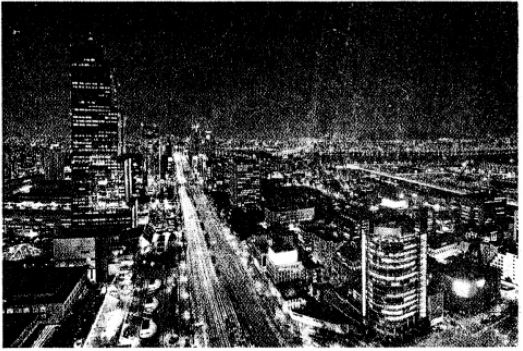
This is the picture of a smart city.
Question F.1. What is a smart city?
Answer: A smart city is a highly developed metropolitan area with exceptional facilities, green buildings, reliable communication channels, and strong business environments.
In simple words: It is a modern city that uses technology and smart ideas to provide great living facilities.
Exam Tip: Keep this definition concise and focus on keywords like infrastructure and communication.
Question F.2. Mention any three essential infrastructure requirement of a smart city.
Answer: Digital technology serves as the main foundation for running a smart city. Other key requirements are:
1. Excellent trash disposal and cleanliness systems.
2. Power supply that remains active 24/7.
3. Continuous, safe drinking water access.
4. Quick transport links and broad, linked roads.
5. Reasonably priced homes that lower-income families can buy.
6. Digital public services where people can access help online.
7. Lots of trees and green parks to protect nature.
In simple words: A smart city needs 24/7 power and water, clean streets, online public services, and affordable housing.
Exam Tip: Highlight at least three of these points, especially focusing on basic needs like sanitation, power, and water.
G Map work
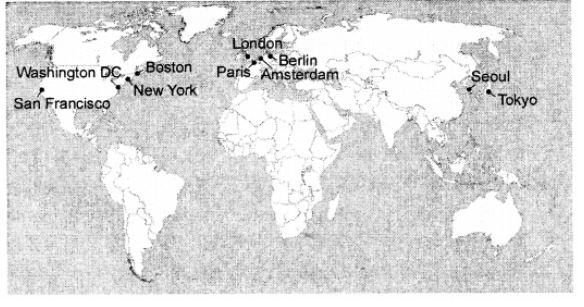
Question G. On an outline map of the world mark any ten smart cities of the world.
Answer: On a world map, we must locate and highlight the following ten smart cities:
1. New York City (United States)
2. London (United Kingdom)
3. Paris (France)
4. Boston (United States)
5. San Francisco (United States)
6. Washington, DC (United States)
7. Seoul (South Korea)
8. Tokyo (Japan)
9. Berlin (Germany)
10. Amsterdam (Netherlands)
In simple words: This task involves pointing out major tech-forward cities like London, Tokyo, and New York on a map of the world.
Exam Tip: Ensure you know the exact geographical locations of North America, Europe, and East Asia to mark these cities correctly.
Extra Questions
Question 1. What are slums ? How do they effect the cities ?
Answer: Slums are highly congested urban sectors marked by low-quality shelters and very poor living environments. They impact cities in the following ways:
1. Because these structures are often built on land that residents do not legally own, families face the constant risk of being forced out by landowners.
2. They place heavy stress on essential services like fresh water, sewage systems, and electricity.
3. High density of people in small spaces easily leads to the spread of dangerous illnesses like malaria and dengue fever.
4. Poverty and lack of jobs can cause crime rates to go up, making it harder to keep the city safe.
In simple words: Slums are crowded areas with poor houses. They cause health problems, strain resources like water, and can increase crime.
Exam Tip: When writing about the effects of slums, remember to discuss health, land rights, and public services.
Question 2. According to 2011 Census, what is the urban population of India ?
Answer: As per the official 2011 Census, India's city-dwelling population stood at 377.1 million, which represented about 31% of the entire nation's population.
In simple words: In 2011, around 377 million people (almost a third of India) lived in cities.
Exam Tip: Always remember the two key figures: 377.1 million and 31%.
Question 3. Give some examples of satellite cities in India.
Answer: Below are key examples of major Indian cities paired with their nearby satellite towns:
- **Main City: New Delhi** - Satellite Cities: Gurugram and Noida
- **Main City: Mumbai** - Satellite Cities: Navi Mumbai and Thane
- **Main City: Kolkata** - Satellite Cities: Rajarhat and Salt Lake City
- **Main City: Hyderabad** - Satellite City: Hi-tech City
- **Main City: Pune** - Satellite City: Pimpri-Chinchwad
In simple words: This shows how big cities like Delhi, Mumbai, and Kolkata have smaller towns like Noida, Thane, and Salt Lake City built right next to them.
Exam Tip: Be sure to pair each satellite city with its correct main metropolitan city.
Question 4. Give the names of few cities which have been selected under Smart Cities Mission in India ?
Answer: Under the Smart Cities Mission, sixty locations across the country have been chosen to become smart cities. This list features urban centers such as Pune, Jaipur, Surat, Bhubaneswar, Lucknow, Vadodara, Indore, Bhopal, and Jabalpur.
In simple words: Sixty cities in India, including Jaipur, Pune, and Bhopal, are being upgraded to smart cities.
Exam Tip: Memorizing three or four famous smart cities from different regions of India will help you write a balanced answer.
5. Fill in the blanks
Question 5.1. In India ________ people live in urban areas.
Answer: 31%
In simple words: 31% of people in India live in cities.
Exam Tip: Make sure to include the percentage symbol (%) in your answer.
Question 5.2. Thousands of youth having good knowledge of the ________ language are hired at call centers across the country.
Answer: English
In simple words: Speaking English helps young people get jobs at call centers.
Exam Tip: Always capitalize proper nouns like 'English'.
Question 5.3. ________ provides people the opportunity to acquire training and work experience in hi-tech industries.
Answer: Urbanization
In simple words: Living in cities gives people a chance to learn tech skills.
Exam Tip: Spelling is important; write 'Urbanization' carefully.
Question 5.4. ________ are urban areas that are heavily populated with poor housing and living conditions.
Answer: Slums
In simple words: Slums are very crowded city areas with broken houses.
Exam Tip: Slums are defined by two things: high crowd density and poor shelter.
Question 5.5. ________ leads to creation of slums.
Answer: Urbanization
In simple words: Rapid city growth without proper planning creates slums.
Exam Tip: Note that while urbanization has benefits, it also causes problems like slums.
Question 5.6. Overcrowding in slums leads to the outbreak of diseases such as ________ and ________.
Answer: malaria, dengue
In simple words: Dirty and crowded slums make it easy to catch malaria and dengue.
Exam Tip: Remember both of these mosquito-borne illnesses.
Question 5.7. A rise in ________ pollution leads to rise in allergies and respiratory diseases.
Answer: air
In simple words: Breathing dirty air makes us sneeze and cough.
Exam Tip: Associate 'respiratory diseases' directly with 'air pollution'.
Question 5.8. ________ cities are mostly ‘bedroom communities’ or residential areas.
Answer: Satellite
In simple words: Satellite cities are where people live and sleep after working in the big city.
Exam Tip: Remember that 'bedroom communities' are mainly for living, not heavy industry.
Question 5.9. Increase in the number of ________ over the years has led to a huge increase in air pollution in New Delhi.
Answer: motor vehicles
In simple words: Too many cars and bikes on the road make the air in Delhi dirty.
Exam Tip: Use the plural form 'motor vehicles' for a complete answer.
Question 5.10. In smart cities, ________ is the core infrastructure and the basis of providing essential services to all residents.
Answer: information technology (IT)
In simple words: Smart cities use computers and internet networks to manage services.
Exam Tip: Provide both the full name and abbreviation: 'information technology (IT)'.
Question 5.11. In India ________ cities have already been selected as ‘Smart Cities’.
Answer: 60
In simple words: Sixty Indian cities have been chosen to become smart cities.
Exam Tip: Remember the exact number of selected cities is 60.
Question 5.12. ________ cities are urban regions that are highly advanced in terms of overall infrastructure.
Answer: Smart
In simple words: Smart cities have highly advanced buildings, roads, and utilities.
Exam Tip: The key identifier of a 'Smart' city is its highly advanced infrastructure.
Question 5.13. ________ is the process in which more and more people j start to live and work in towns and cities rather than villages.
Answer: Urbanization
In simple words: Urbanization is when people move from villages to cities to find work and live.
Exam Tip: Double-check your spelling of 'Urbanization' to ensure no marks are lost.
Free study material for Geography
ICSE Textbook Solutions for Class 8 Geography Chapter 04 Urbanization
Detailed Textbook Solutions: Chapter 04 Urbanization (Class 8 Geography)
Find reliable chapter-wise explanations for Class 8 Geography Chapter 04 Urbanization. Curated to follow standard ICSE guidelines, these problem solutions assist students in building strong conceptual foundations.
How to Use These Class 8 Geography Solutions
Tackle complex theorems and numerical problems easily by cross-referencing your working steps with our structured solution guides.
Complete Your ICSE Chapter Revision
Pair your solution review with additional practice papers to test your execution speed and ensure total preparedness for school exams.
FAQs
You can download the verified Voyage solutions for Chapter 04 Urbanization on StudiesToday.com. Our teachers have prepared answers for Class 8 Geography as per 2026-27 ICSE academic session.
Yes, our solutions for Chapter 04 Urbanization are designed as per new 2026 ICSE standards. 40% competency-based questions required for Class 8, are included to help students understand application-based logic behind every Geography answer.
Yes, every exercise in Chapter 04 Urbanization from the Voyage textbook has been solved step-by-step. Class 8 students will learn Geography conceots before their ICSE exams.
Yes, follow structured format of these Voyage solutions for Chapter 04 Urbanization to get full 20% internal assessment marks and use Class 8 Geography projects and viva preparation as per ICSE 2026 guidelines.