

Class 8 History Civics Chapter 07 Impact Of British Rule On India: Goyal Brothers Study Material
Access the official Goyal Brothers textbook solutions for Class 8 History Civics, updated for the 2026-27 academic year. This digital resource is structured to help students build strong conceptual clarity and prepare effectively for school examinations.
Chapter 07 Impact Of British Rule On India Answer Guide
Navigate directly to the Chapter 07 Impact Of British Rule On India solutions using the digital viewer below. Organizing your study sessions chapter-by-chapter allows for seamless offline study and quick reference during revision.
Time To Learn
I. Fill in the blanks:
1. The British domination of India brought many changes in the cultural, educational and social life of India.
2. The Indian villages were self sufficient village communities before the coming of the British.
3. The British charged revenue in cash instead of kind.
4. The three kinds of land settlements made by the British were Permanent settlement (b) Ryotwari settlement and (c) Mahalwari settlement.
5. A new class of landholders called Zamindars came into existence during this time.
6. Lord Macaulay, is known as the founder of British system of education in India.
II. Match the contents of Column A and Column B:
| Column A | Column B (Correct Match) |
|---|---|
| 1. Ijaradari system | (j) Auctioning of revenue to the highest bidder for five years |
| 2. Cotton, jute, poppy, sugarcane | (g) Cash crops grown by farmers |
| 3. Ryotwari system | (i) Settlement made directly with cultivators |
| 4. Permanent Settlement | (a) Introduced by Lord Cornwallis |
| 5. 1854 | (d) Calcutta linked to coal fields |
| 6. 1856 | (h) Railway line joined Madras to Arakonam |
| 7. All major raw material producing areas | (b) Linked with ports to make trade easier |
| 8. Mahalwari system | (f) Collective responsibility of farmers to pay the revenue |
| 9. 1853 | (c) First train from Mumbai to Thane |
| 10. Zamindars | (e) A new middle class |
III. State whether the following statements are True or False:
1. The British rule resulted in the destruction of Indian industry, trade and handicrafts.
Answer: True
2. The important centres for Indian goods were Dhaka, Benaras, Lucknow, Multan, Ahmadabad, etc.
Answer: True
3. The British greatly developed Indian agriculture.
Answer: False
4. Lord Cornwallis intoduced the Permanent Land Settlement in India.
Answer: True
5. The first railway line was built during Lord Dalhousie’s time.
Answer: True
6. The British took interest in building up transport and communication system to help them in trade and military affairs.
Answer: True
7. The English took great interest in Indian culture and promoted it.
Answer: False
8. The English took interest in education of Indians only because they needed low paid, English speaking clerks.
Answer: True
9. The new education policy benefitted only the upper and th middle class.
Answer: True
10. The Company promoted education of girls and technical education.
Answer: False
IV. Answer the following questions:
Question 1. Mention the social evils prevalent in India during British rule.
Answer: Several harmful customs were widely practiced across Indian society during the era of British administration. These included the cruel system of Sati, female infanticide in certain regions, and the practice of child sacrifice to appease deities. Additionally, widows faced strict social prohibitions against remarriage, while child marriage and polygamy remained widespread social problems.
In simple words: During British rule, several cruel practices existed in India, including Sati, female infanticide, child sacrifice, child marriage, polygamy, and bans on widows marrying again.
Exam Tip: List at least three social evils - such as Sati, child marriage, and the ban on widow remarriage - to write a complete answer.
Question 2. Why did India’s foreign trade decline during the British rule?
Answer: India traditionally exported fine goods, including wool, silk, high-quality textiles, metal crafts, ornaments, and products made from gold, silver, copper, and iron. However, under British rule, foreign trade collapsed due to several factors:
1. One-sided economic policies systematically drained India's wealth, leading to the collapse of local handicrafts and industries.
2. Indian artisans lost the vital financial support of native kings and noble courts as their power declined.
3. The colonial government actively reshaped the Indian economy to serve British industrial interests, turning India into a supplier of raw materials and a dependent market for British-manufactured goods.
In simple words: Before, India traded in high-quality silks, wool, and metal crafts. Under British rule, unfair trade policies drained India's wealth, and local artisans lost royal support as the British turned India into a supplier of raw materials and a buyer of British goods.
Exam Tip: Emphasize how British colonial policy forced India to transition from an exporter of finished goods to a supplier of raw materials.
Question 3. During the British rule, “India was a loser both ways - as a buyer and also as a seller.” Explain.
Answer: Under British colonial rule, the Indian economy was structurally exploited in both export and import sectors:
- As a Seller: The British purchased India's valuable agricultural raw materials at extremely low, dictated prices to feed factories in England, depriving Indian producers of fair profits.
- As a Buyer: The British flooded Indian markets with cheap, factory-made goods imported from England, destroying the livelihoods of local weavers and craftsmen.
Consequently, India was financially exploited in both directions.
In simple words: India lost in both ways because the British bought Indian raw materials at extremely low prices, while flooding Indian markets with their own machine-made goods, destroying local businesses.
Exam Tip: Contrast how low raw material export prices and the dumping of cheap British imports harmed local producers in both directions.
Question 4. Why did the English East India Company feel the need for educational; reforms?
Answer: The East India Company introduced westernized education reforms in India to serve three primary colonial objectives:
1. To train a class of bilingual local intermediaries who could act as interpreters between the British administration and the millions of Indian subjects they ruled.
2. To create a loyal, westernized class of Indians who were 'Indian in blood and color, but English in taste, opinions, morals, and intellect', serving as supporters of British rule.
3. To secure a cheap, abundant supply of English-speaking clerks to handle lower-level administrative and clerical jobs in government offices and British business firms.
In simple words: The British introduced educational reforms to train local clerks who could speak English, act as translators between rulers and subjects, and support British business and political interests.
Exam Tip: Clearly state Macaulay's objective: to create a loyal, English-educated class of clerks and administrative intermediaries.
Question 5. Who was Lord Macaulay? Why did he recommend the system of British education in India?
Answer: Lord Macaulay served as the Law Member on the executive council of Governor-General Lord William Bentinck, and is recognized as the chief architect of British education policy in India. He recommended adopting English education for several reasons:
1. He insisted that English must be used as the primary medium of instruction in schools.
2. He argued that Indian students should focus on Western science and literature, holding a highly dismissive view of traditional Sanskrit and Arabic learning, which he considered far inferior to European scholarship.
To justify this bias, he famously declared that "a single shelf of a good European library was worth the whole native literature of India and Arabia."
In simple words: Lord Macaulay was a law member in Governor-General Bentinck's council who designed the British education system in India. He wanted English to be the medium of instruction because he considered traditional Indian learning inferior to Western science and literature.
Exam Tip: In addition to his administrative role, mention his famous quote about the 'single shelf' of a European library to show his biased view of Eastern learning.
Question 6. What were the main objectives of British education in India? Mention the steps recommended to implement the policy.
Answer: Lord Macaulay designed the British education policy in India to achieve three major colonial goals:
- To establish a loyal group of bilingual intermediaries to translate between British officials and the native population.
- To foster a class of westernized subjects who, despite being Indian by birth, shared British values, cultural tastes, and intellectual viewpoints.
- To produce an affordable, local workforce of English-educated clerks to fill lower-level positions in the civil service and commercial firms.
To execute this policy, several steps were taken:
1. In 1835, Governor-General Bentinck officially approved Macaulay’s recommendations, making English the official medium of instruction.
2. In 1844, the colonial administration declared that government job openings would be reserved primarily for English-educated candidates.
3. In 1854, the government adopted Wood's Despatch, establishing a systematic educational hierarchy and setting up modern universities in Bombay, Calcutta, and Madras.
In simple words: The goals of British education were to create translators, build a loyal pro-British class of citizens, and train cheap office clerks. To implement this, English was made the medium of instruction in 1835, English-educated Indians were preferred for government jobs in 1844, and universities were founded in 1854.
Exam Tip: Connect prior initiatives like Macaulay's 1835 resolution with Wood's Despatch of 1854 and the founding of the first three universities (Mumbai, Kolkata, Chennai) as key implementation steps.
Question 7. Describe the recommendations in Wood’s Despatch and their effects.
Answer: The Wood's Despatch of 1854 outlined a comprehensive plan to spread Western learning, focusing on European literature, science, and philosophy. Its key recommendations were:
1. Medium of Instruction: It designated English as the preferred medium for higher education, while encouraging regional vernacular languages at the primary and secondary levels.
2. Graded System: It proposed a systematic chain of schools, ranging from vernacular primary schools in villages to Anglo-Vernacular high schools and affiliated colleges in districts.
3. Financial Aid: It introduced a system of grants-in-aid to support privately managed schools and colleges.
4. Administrative Oversight: It recommended establishing a Department of Public Instruction under a Director in each province to oversee educational development.
5. Higher Education: It suggested founding modern universities modeled after London University in Calcutta, Bombay, and Madras.
6. Practical and Teacher Training: It emphasized technical education, vocational schools, and specialized teacher-training institutions modeled after English schools.
7. Women's Education: It offered strong administrative and financial support to promote female education.
Effects of the Despatch: These recommendations led to the creation of a structured public education department in every province, the establishment of the first three modern Indian universities in 1857, and a significant expansion of both government-aided and private schools across the country.
In simple words: Wood's Despatch of 1854 recommended a graded system of schools, English for higher studies, regional languages for primary schools, and setting up universities in Calcutta, Bombay, and Madras. It also supported women's education, vocational schools, and teacher training, laying the foundation for India's modern school system.
Exam Tip: Be sure to list key points of the Despatch, including the graded school structure, the establishment of the first three universities, and the introduction of provincial Public Instruction departments.
Question 8. Discuss various aspects of the drain of wealth.
Answer: The 'Drain of Wealth' refers to the systematic export of India's capital, resources, and revenues to Britain without any equivalent economic or material return. This structural drain was unique to British colonial rule. Unlike previous dynasties, who collected taxes but spent that wealth inside India, the British administration transferred a significant portion of Indian taxes and revenues directly to Britain. Key aspects of this financial drain include:
1. Early Extortion (Post-1757): Following the Battle of Plassey, East India Company officials extracted immense personal fortunes from Indian rulers, merchants, and landholders. Between 1758 and 1765, nearly £6 million was shipped to Britain, an amount exceeding four times the total land revenue collected by the Nawab of Bengal in 1765.
2. Diwani Revenue Abuse (Post-1765): Once the Company obtained the Diwani of Bengal, they used Indian tax revenues to purchase local hand-crafted goods and agricultural produce, which they then exported to Europe. This meant India exported its wealth and goods without receiving any imports or gold in return, creating a massive trade imbalance.
3. Investment and Home Charges: Between 1765 and 1770, nearly £4 million worth of goods - representing about 33 percent of Bengal's net revenue - was drained out. After 1858, this drain grew significantly through 'Home Charges', which included payments for British military campaigns, pensions for retired officials, and interest on British capital investments in Indian railways.
In simple words: The Drain of Wealth means the British took India's taxes, goods, and gold to Britain without giving anything back. While earlier kings spent tax money inside India, the British used Bengal's tax revenues to buy Indian goods and export them for free, while also sending home huge salaries, pensions, and interest payments.
Exam Tip: Explain how the drain occurred in two main phases: direct extortion of fortunes after 1757, and using Diwani tax revenues to purchase and export Indian goods for free after 1765.
V. Picture Study
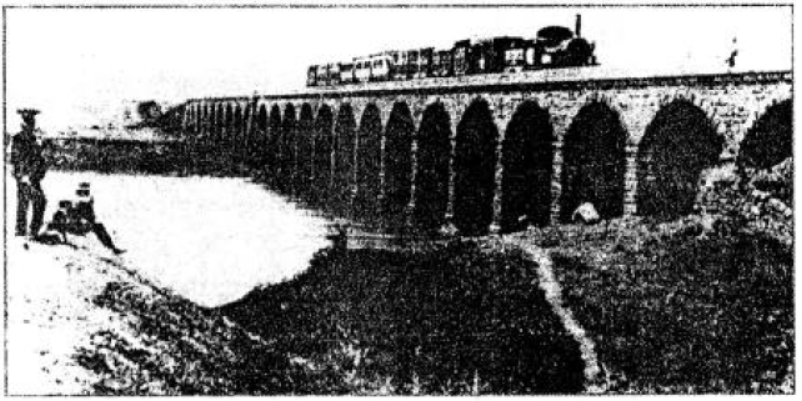
Question 1. Which important development does the picture depict?
Answer: The illustration depicts the opening of India's first passenger railway line in 1853, which connected Bombay and Thane.
In simple words: The picture shows the first train line in India, opened in 1853 between Bombay and Thane.
Exam Tip: Be sure to state the correct year (1853) and the two stations (Bombay and Thane) connected by this first railway.
Question 2. Write a short note on its development in India.
Answer: The colonial government constructed a network of railway lines primarily to transport agricultural raw materials from inland farms to ports for export, and to distribute British manufactured goods from ports to local markets. Although designed to serve British interests, the railways ultimately benefited the Indian public by making long-distance travel and transportation faster, more convenient, and more affordable.
In simple words: The British built railways to transport raw materials to ports and distribute British goods to markets. However, it also helped Indians by making travel and shipping much faster and cheaper.
Exam Tip: Point out the primary British motive (transporting raw materials and manufactured imports) alongside the secondary benefit to the Indian public (faster, cheaper travel).
Question 3. How did it prove to be a boon for the Indians?
Answer: The expansion of the railways served as a major social force by bringing people of different castes, regions, and religions together in shared train compartments, breaking down traditional social barriers. This increased contact helped foster a sense of national unity, allowing Indians to coordinate across regions and unite in a shared struggle against British rule.
In simple words: The railways brought people of all castes and religions together in the same carriages, which broke down old social barriers and helped them unite in the struggle for national freedom.
Exam Tip: Focus on how the railways broke down social barriers of caste and religion, fostering a shared national identity and coordinating the anti-colonial struggle.
Question 1. Identify him.
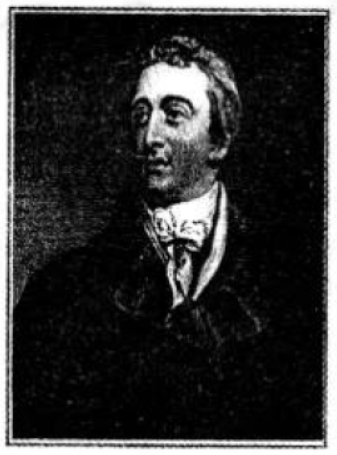
Answer: The portrait depicts Lord William Bentinck, who served as the Governor-General of India.
In simple words: The picture is of Governor-General Lord William Bentinck.
Exam Tip: Lord William Bentinck is famous for introducing progressive social reforms, including the abolition of Sati.
Question 2. What do you understand by ‘Sati’? Who put an end to this practice and why?
Answer: Sati was a cruel and inhumane social custom where a widow was coerced or forced to immolate herself on her husband's funeral pyre. This practice was widespread in several parts of India, particularly in Bengal. Following a determined campaign by Indian reformers like Raja Rammohan Roy, Governor-General Lord William Bentinck formally outlawed and banned the custom in 1829 to protect women's lives and end this social evil.
In simple words: Sati was a cruel practice where a widow was burned alive on her husband's funeral pyre, especially in Bengal. Lord William Bentinck officially banned it in 1829 after campaigns by Indian reformers.
Exam Tip: Define Sati clearly, identify Lord William Bentinck as the Governor-General who banned it, and include the landmark year 1829.
Question 3. Mention four social reforms introduced by the British.
Answer: Four major social reforms introduced by the British administration in India include:
1. The formal abolition and ban on the practice of Sati in 1829.
2. Outlawing and actively banning the practice of female infanticide.
3. Banning the custom of human sacrifice performed to appease deities.
4. Passing the Hindu Widows' Remarriage Act in 1856 under Lord Dalhousie, which legalized the remarriage of widows.
In simple words: Four major reforms were: banning the practice of Sati, outlawing female infanticide, stopping child sacrifices, and passing the 1856 law that allowed widows to remarry.
Exam Tip: List all four distinct reforms, including the landmark 1856 Widow Remarriage Act, to secure full marks.
Exercises
A. Fill in the blanks:
1. The Bengal famine of 1770 was one of the most terrible famines in human history.
2. A large share of revenue collected by the Company in India had to be paid to the British government as home charges.
3. Under the Mahalwari system the revenue settlement was made with the village as a whole.
4. To eliminate competition from India’s traditional industries the British transformed India into a supplier of raw material and a market for british products.
5. Before the advent of the British the Indian craftspeople operated at two levels - the rural and the urban levels.
6. Before the advent of the British the Indian textile industry was the finest and the largest in the world.
7. After the Battle of Plassey the Company used its political power to destroy the Indian handicraft industry and promote British industries.
8. With the spread of the Industrial Revolution in England, Indian markets were flooded with cheap, machine made textiles of British mills.
9. By 1850, India became a major importer of english textiles.
10. Lord Dalhousie introduced the railway system in India in 1853.
11. The Grand Trunk Road from Calcutta to Peshawar was reconstructed by the British in the 19th century.
B. Match the following:
| Column A | Column B (Correct Match) |
|---|---|
| 1. Permanent Settlement | (c) Fixed revenue |
| 2. Shipbuilding industry | (e) Vishakhapatnam |
| 3. Lord Macaulay | (d) Anglicist |
| 4. Charter Act of 1813 | (a) encouraged education of Indians |
| 5. Transport and communication development | (b) Lord Dalhousie |
C. Choose the correct answer:
Question 1. Which treaty granted the English East India Company the right to collect revenue from Bihar, Bengal, and Orissa?
(a) Treaty of Allahabad
(b) Treaty of Madras
(c) Treaty of Benaras
(d) None of the options
Answer: (a) Treaty of Allahabad
In simple words: The Treaty of Allahabad in 1765 granted the British East India Company the Diwani rights to collect tax revenues from Bihar, Bengal, and Odisha.
Exam Tip: State the name of the treaty and the year 1765 to get full marks on Diwani rights questions.
Question 2. To remove the defect of the revenue system, Lord Cornwallis introduced which system in 1793?
(a) Permanent Settlement
(b) Ryotwari System
(c) Mahalwari System
(d) None of the options
Answer: (a) Permanent Settlement
In simple words: To stabilize land tax collection, Lord Cornwallis introduced the Permanent Settlement in Bengal in 1793, fixing land tax rates permanently.
Exam Tip: Remember both the governor-general (Lord Cornwallis) and the introduction year (1793) for the Permanent Settlement.
Question 3. The Ryotwari system of revenue collection was introduced in which presidency?
(a) Madras presidency
(b) Calcutta presidency
(c) Bombay presidency
(d) None of the options
Answer: (a) Madras presidency
In simple words: The Ryotwari system, where tax was collected directly from the farmers (ryots), was first introduced in the Madras Presidency.
Exam Tip: Distinguish this from the Permanent Settlement by noting that Ryotwari dealt directly with the cultivators in the South.
Question 4. The Charter Act of 1813 directed the Company to spend how many rupees on the education of Indians?
(a) 1 lakh rupees
(b) 10 lakh rupees
(c) 15 lakh rupees
(d) None of the options
Answer: (a) 1 lakh rupees
In simple words: The Charter Act of 1813 marked the first time the British government allocated state funds - 1 lakh rupees - for Indian education.
Exam Tip: State '1 lakh rupees' as the historic amount allocated under this act for promoting education.
Question 5. The first railway line in India connected which two stations?
(a) Bombay to Thana
(b) Bombay to Poona
(c) Bombay to Calcutta
(d) None of the options
Answer: (a) Bombay to Thana
In simple words: Opened in 1853, India's very first passenger train ran along a short line connecting Bombay with Thana.
Exam Tip: List 'Bombay to Thana' and the year '1853' as the key facts for India's first railway line.
D. State whether the following are true or false:
1. Before the advent of the British more than 95 per cent of Indians lived in villages.
Answer: True
2. The Indian peasants were satisfied with the Company’s revenue collection methods.
Answer: False
3. The Permanent Settlement assured the Company a fixed revenue at a fixed time even during natural calamities.
Answer: True
4. Lord Macaulay insisted that Western education should be imparted through the medium of the vernacular languages.
Answer: False (Correct statement: Lord Macaulay insisted that Western education should be imparted through the medium of English.)
5. The development of transport and communication systems did not benefit Indians in any way.
Answer: False (Correct statement: The development of transport and communication systems benefited Indians in unexpected ways, such as fostering a sense of national unity and promoting trade.)
E. Answer the following questions in one or two words/ sentences:
Question 1. Why did the Indian peasants begin to grow cash crops ?
Answer: Because the British administration strictly demanded land revenue in cash rather than in grain, Indian farmers were forced to cultivate high-value cash crops such as jute, cotton, and sugarcane, which they could quickly sell in local markets for ready money.
In simple words: Since the British demanded tax payments in cash, farmers started growing cash crops like cotton and sugarcane so they could sell them quickly for money.
Exam Tip: State cash-based tax demands as the primary cause for farmers transitioning to cash crops.
Question 2. How did the Company utilize the revenues from Bengal ?
Answer: The East India Company spent the tax revenues collected from Bengal to fund their operations in several ways:
1. Paying the high salaries and savings of British administrative and military officials.
2. Financing the Company's commercial trade activities.
3. Purchasing local agricultural raw materials to ship directly to England's expanding factories.
In simple words: The Company used Bengal's tax money to pay the salaries of British officers, cover trade expenses, and buy Indian raw materials to ship to factories in England.
Exam Tip: Mention that tax revenues were directly used to buy Indian raw materials for export to England.
Question 3. What were the drawbacks of Warren Hastings’s five-year revenue settlement ?
Answer: The five-year land bidding system introduced by Warren Hastings had several major disadvantages:
1. Because land contracts were re-auctioned every five years, the temporary tax collectors had no long-term security or interest in maintaining the quality of the soil.
2. To maximize their short-term profits before the next auction, these tax collectors exploited and overtaxed the peasants to meet high state targets.
In simple words: Since land contracts were re-auctioned every five years, collectors had no interest in helping the land and focused only on overtaxing the poor peasants to meet high revenue targets.
Exam Tip: Focus on two points: the lack of long-term interest by temporary zamindars, and the extreme exploitation of the peasants.
Question 4. What was the significance of the Charter Act of 1813 in the context of British educational policy in India?
Answer: The Charter Act of 1813 was highly significant as the first official state step toward public education in India. It directed the East India Company to allocate an annual sum of 1 lakh rupees to support local education and promote the study of modern science and literature. However, because the act failed to provide specific implementation guidelines, the funds lay unused for nearly twenty years.
In simple words: The Charter Act of 1813 was important because it was the first time the British government allocated funds - 1 lakh rupees - for Indian education, although it lacked clear guidelines on how to spend it.
Exam Tip: Highlight that it allocated '1 lakh rupees' as the first state budget for education, but lacked clear guidelines.
Question 5. In what way would westernized Indians help to promote the interests of British manufacturers?
Answer: English education reforms served British manufacturing interests in two major ways:
1. It produced a loyal, English-speaking administrative class that helped British officials run the massive empire efficiently.
2. It fostered a highly westernized class of consumers who rejected traditional Indian goods, preferring and purchasing British-manufactured products instead.
In simple words: Westernized education created a class of English-speaking clerks to run the government, and fostered consumer tastes that preferred British-made goods over local crafts.
Exam Tip: Explain how changing local consumer tastes toward British imports helped increase profits for manufacturers in England.
Question 6. How did knowledge of contemporary nationalist movements in Europe inspire the Indians?
Answer: Studying European struggles for freedom and national unification inspired educated Indians, filling them with a strong desire to build a progressive, independent, prosperous, and united country.
In simple words: Learning about European freedom struggles inspired Indians to unite and fight to build a free, strong, and progressive nation.
Exam Tip: Connect this learning to the rise of early Indian national consciousness and the anti-colonial struggle.
Question 7. Mention any two positive effects of the introduction of English in the Indian educational system.
Answer: Although designed to produce loyal clerks, English education had several unintended positive effects on Indian society:
1. It made educated Indians acutely aware of the harmful economic and political impacts of foreign colonial rule.
2. Exposure to the writings of modern European philosophers inspired an appreciation for democratic values, civil liberties, and self-governance.
In simple words: First, it helped Indians understand the harmful impacts of British rule. Second, studying European philosophy inspired them with democratic ideals like freedom and self-government.
Exam Tip: Focus on the rise of anti-colonial awareness and the adoption of democratic principles as the two main positive outcomes.
Question 8. Which section of Indians gained from the British commercial policies ?
Answer: Under early British commercial policies, certain specialized sectors and urban groups experienced temporary growth, such as merchants in major trading centers dealing in gold and silver ornaments, copper and brassware, and local metal workers.
In simple words: A few specialized urban craftsmen, such as those making gold and silver ornaments or copper and brassware, saw some gains from early trade policies.
Exam Tip: List specialized urban craft centers - such as brassware and jewelry workers - as the textbook examples of groups that managed to find opportunities.
Question 9. How would the improved transport and communication system benefit the Indian later ?
Answer: The construction of railways, telegraphs, and metalled roads ultimately served Indian interests in unexpected ways. Beyond boosting regional trade and commerce, these systems connected people from different regions, helping break down local barriers and fostering a strong sense of national unity and patriotism that drove the freedom struggle.
In simple words: The transport and communication networks helped connect people across different regions, boosting local trade while building national unity and patriotism for the freedom struggle.
Exam Tip: State that the physical connection provided by roads and railways was crucial in building national consciousness and coordinating the national movement.
F. Answer the following questions briefly:
Question 1. In the context of Permanent Settlement of Bengal answer the following:
(a) Explain the special features of the Permanent Settlement.
(b) What are its advantages ?
(c) Briefly describe its disavantages
Answer: The Permanent Land Revenue Settlement, introduced by Lord Cornwallis in Bengal in 1793, shaped the agrarian economy in several ways:
(a) Special Features of the Permanent Settlement:
1. Permanent Land Ownership: The local tax collectors (zamindars) were recognized as the permanent legal owners of the land. This change transformed tax collectors into powerful landlords.
2. Hereditary and Transferable Rights: The zamindar's ownership rights became hereditary, and they were granted the legal right to sell, gift, or mortgage their properties.
3. Loss of Peasant Rights: The traditional cultivators were reduced to mere tenants on their ancestral lands, losing their security of tenure. They had to pay high rents to the zamindars, who could increase rates arbitrarily.
4. Fixed State Revenue: The land revenue owed to the British government was fixed permanently, meaning the Company could never increase its demands.
5. Sunset Law: Zamindars had to deposit their tax dues by a specific date every year. If they failed to pay on time, the government confiscated and auctioned off their estates.
(b) Advantages of the System:
1. Stable Revenue: The Company secured a fixed, predictable income stream every year, even during crop failures or natural disasters.
2. Cheap Collection: Tax collection became simpler and cheaper, as the zamindars replaced thousands of paid government tax officers.
3. Political Support: By creating this privileged landlord class, the British gained a loyal and powerful social ally in India.
4. Land Development: Because the revenue rate was fixed, some zamindars invested in improving agricultural output to keep the extra profits for themselves.
(c) Disadvantages of the System:
1. Oppression of Peasants: Cultivators were left entirely at the mercy of the landlords, who frequently raised rents, used physical coercion, or evicted tenants who could not pay, leading to widespread rural poverty.
2. Fixed State Treasury: Since the tax rate was permanently fixed, the colonial government could not benefit from rising agricultural prices or increased production.
3. Rise of Absentee Landlords: Many wealthy zamindars moved to urban areas, leaving land management to local agents who sublet the land to tenants at high rates. This chain of middle-men kept raising rents, passing the entire financial burden down to the poorest, actual cultivator at the bottom of the ladder.
In simple words: The Permanent Settlement made tax collectors the permanent owners of the land, while reducing farmers to tenants with no rights. Although it gave the British a stable income and loyal allies, it caused massive oppression and poverty for actual farmers because landlords kept raising rents to maximize their own profits.
Exam Tip: For this essay-style question, clearly separate your answer into three sections: (a) Features, (b) Advantages, and (c) Disadvantages.
Question 2. With reference to Ryotwari and Mahalwari systems answer the following:
(a) Explain the features of the Ryotwari system.
(b) What were the features of the Ryotwari system.
(c) What were the fundamental changes introduced by these systems in the traditional land system of the country ?
Answer:
(a) Features of the Ryotwari System:
1. Direct Ownership: The individual cultivator (ryot) was recognized as the legal owner of the land, provided they paid the state tax on time.
2. Direct Payment: Revenue was collected directly from the cultivator by government treasury officers, eliminating landlords or middle-men.
3. Periodic Revision: Unlike the Permanent Settlement, the tax rate was not fixed forever. It was fixed for a 30-year period, after which it was revised upward.
4. Rigid Collection: Tax collection was extremely strict, offering no relief or tax cuts even during severe famines or crop failures.
(b) Features of the Mahalwari System:
1. Village Ownership: The land was owned collectively by the entire village community (known as a 'mahal').
2. Group Assessment: The land revenue settlement was negotiated and settled with the village as a single collective unit.
3. Headman's Role: The village headman collected the tax from the households and deposited it with the British tax officers.
(c) Impact on the Traditional Land System:
The introduction of these colonial land systems brought fundamental changes to India's rural economy:
1. Commercialization of Land: Land was turned into private property and a tradeable commodity, which could be bought, sold, or mortgaged for loans.
2. Disintegration of Village Life: The age-old stability, shared resources, and self-sufficiency of Indian villages were broken, leading to the collapse of traditional rural communities and a rise in peasant debt.
In simple words: In the Ryotwari system, the government collected tax directly from the farmers for a 30-year period. In the Mahalwari system, tax was settled with the entire village as a group. These systems turned land into private property that could be sold, destroying the self-sufficient nature of Indian villages.
Exam Tip: In part (a), note that Ryotwari eliminated the middle-men. In part (b), define 'Mahal' as a village unit, and in part (c), emphasize how land became a tradeable commodity.
Question 3. The first century of British rule resulted in the decay and destruction of traditional India trade and industry. Explain this statement with reference to the following:
(a) Political powers of the Company
(b) Collapse of ruling dynasties and ruling courts
(c) Decline of modern India industries.
Answer:
(a) Misuse of the Company's Political Power: Following the Battle of Plassey in 1757, the East India Company used its growing political power to weaken Indian handicraft industries and promote goods imported from Britain. They forced Indian weavers to sell their handloom fabrics to the Company at extremely low, unprofitable rates. Furthermore, they forced these weavers to buy inferior raw cotton at high prices from Company agents, who had bought it cheap from Indian farmers.
(b) Collapse of Royal Courts and Patronage: The conquest and expansion of British rule led to the rapid collapse of native Indian states, princely kingdoms, and noble courts (including the Mughal court). This change deprived traditional artisans, weavers, and metalworkers of the essential royal patronage they had relied on for centuries, leading to the decline of traditional luxury handicrafts.
(c) Suppression of Modern Indian Industries: The colonial government actively discouraged the growth of modern factories and industries within India to prevent local competition with British firms and keep India economically dependent. Consequently, almost all manufactured items of daily use - including needles, pins, sewing machines, threads, soaps, cycles, paper, and medicines - had to be imported from England, leaving India's economy underdeveloped.
In simple words: First, the Company used its power to force Indian weavers to sell their clothes cheap while buying raw cotton at high prices. Second, the collapse of royal courts took away the main buyers of high-quality handicrafts. Third, the British discouraged local modern factories, making India depend on importing everyday items like soap, thread, and paper from England.
Exam Tip: Address all three sub-headings, showing how political power, loss of princely patronage, and the suppression of local manufacturing combined to destroy India's traditional economy.
Question 4. The Charter Act of 1813 passed by the British Parliament was the first major step to introduce changes in the Indian system of education. In this context discuss:
(a) The general directives issued to the Company in the Charter Act of 1813 and its inherent weakness
(b) The Great Debate over the content and medium of education
(c) The introduction and spread of Western education
Answer:
(a) Directives of the 1813 Charter Act and Its Weaknesses: The Charter Act of 1813 directed the East India Company to spend an annual sum of 1 lakh rupees on educating the Indian public and promoting scientific knowledge. This marked the first state budget allocated for education in India. However, the act had a major weakness: it failed to specify how, where, or through which languages the money should be spent. Because of this lack of direction, the funds remained completely untouched for two decades.
(b) The Orientalist-Anglicist Debate: The delay in spending the funds led to a heated debate between two groups over the medium and content of education:
- The Orientalists: Favored promoting traditional Indian learning, classics, and literature using native classical languages alongside regional vernaculars.
- The Anglicists: Led by Lord Macaulay, insisted that the state should only fund modern Western sciences and literature, using English as the sole medium of instruction.
(c) Introduction and spread of Western Education: Ultimately, the Anglicists won the debate. The British government began establishing English-medium schools and colleges for select groups of Indian students. In 1844, English was declared the official administrative language of the courts, and the government announced that graduates from English-medium schools would be preferred for civil service jobs. This policy quickly boosted the popularity and spread of English education across the country.
In simple words: The 1813 Act allocated 1 lakh rupees for education, but the money was not spent for twenty years due to a debate between the Orientalists (who wanted traditional studies in Sanskrit and Persian) and the Anglicists (who wanted Western studies in English). The Anglicists won, and in 1844, English was made the official language for government jobs, making English schools highly popular.
Exam Tip: Define the 'Orientalists' and 'Anglicists' clearly in part (b), and explain how the 1844 government job resolution boosted English education in part (c).
Question 5. The Wood’s Despatch introduced further changes in the Indian educational system. With reference to the above statement, answer the following questions:
(a) What was the purpose behind the introduction of Western education in India?
(b) How did the introduction of Western education benefit the British?
(c) Explain how
1. Western education and
2. The English language led to the rise of a spirit of nationalism among the Indians.
Answer:
(a) Purpose Behind Western Education in India: The British government introduced English education for several strategic reasons:
1. To train a local, subordinate administrative class of Indians who were 'Indian in blood and color, but English in taste, opinions, morals, and intellect'.
2. To significantly reduce administrative costs, as hiring Indian clerks for lower-level posts was much cheaper than importing expensive British officials.
3. To foster westernized consumer tastes among educated Indians, creating a steady demand for British imports and helping manufacturers in England.
4. To instill a sense of respect and admiration for British rule, thereby securing the foundations of the empire.
(b) Benefits to the British: The educational reforms successfully produced a reliable, English-educated Indian workforce to run the daily machinery of the colonial government. It also created a loyal, urban elite class of consumers who valued British culture and preferred imported goods over local products.
(c) Unintended Rise of Indian Nationalism: While designed to strengthen the empire, Western education had unintended positive outcomes that the British did not foresee:
1. Anti-Colonial Awareness: It helped educated Indians analyze the harmful economic and political impacts of foreign colonial rule, uniting them in opposition.
2. Democratic Ideals: Exposure to the writings of modern European political philosophers inspired a deep appreciation for self-rule, individual liberties, and democratic institutions, which served as the intellectual foundation of the Indian national movement.
In simple words: The British introduced English education to create cheap local clerks, foster a taste for British goods, and build respect for their empire. However, it backfired by introducing Indians to European ideas of liberty and democracy, helping them unite and organize a powerful national movement for independence.
Exam Tip: In part (a), focus on the need for cheap clerks and creating consumer demand for imports. In part (c), explain how democratic philosophy and anti-colonial awareness drove nationalism.
Question 6. With reference to the transport and communication system in India, answer the following questions:
(a) Why and how did the British develop proper transport and communication facilities in India?
(b) How did the railways serve the interests of the British?
(c) Explain how the improved transport and communication system proved beneficial for Indians.
Answer:
(a) Development of Transport and Communication: During the 18th century, India's internal transport networks were poorly developed. The British administration realized that building a modern communication infrastructure was vital to secure their military control and support their industrial and trade growth. To achieve this, they worked systematically to connect major administrative cities, sea ports, agricultural production zones, and trade markets. They built metalled roads, introduced steamship services, dug canals, and laid down an extensive network of railway lines.
(b) Benefits to British Imperial Interests: The railway network served vital colonial goals:
1. It enabled the rapid movement of British troops and military equipment across different regions to suppress rebellions and maintain order.
2. It facilitated the quick and cheap transportation of agricultural raw materials from inland farms to ports for export, while distributing British manufactured goods into rural markets.
(c) Unintended Benefits to the Indian Public: Although built for colonial exploitation, the modernized transport and communication network ultimately benefited Indians:
1. It connected people from different regions, helping break down local prejudices and fostering a strong sense of shared national identity and patriotism.
2. It enabled national leaders and political activists to travel easily, hold cross-regional meetings, and coordinate a unified anti-colonial movement that eventually led to India's independence.
In simple words: The British built roads and railways to quickly move troops during rebellions and transport trade goods. However, this network also helped Indians by connecting different regions, making travel easier, and bringing people together to build national unity for the freedom struggle.
Exam Tip: In part (b), emphasize the dual military-commercial purpose of railways. In part (c), explain how physical connectivity fostered national unity and helped coordinate the freedom struggle.
G. Picture Study
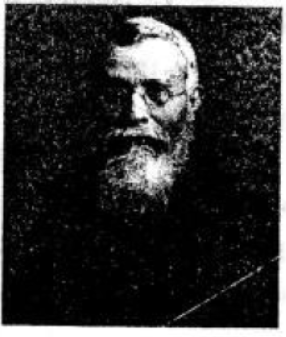
Question 1. Identify the person.
Answer: The portrait depicts Dadabhai Naoroji, one of the most prominent early nationalist leaders of India.
In simple words: The person shown in the picture is Dadabhai Naoroji.
Exam Tip: Clearly write his name as 'Dadabhai Naoroji' and identify him as the 'Grand Old Man of India'.
Question 2. What did he think about the British rule in India ?
Answer: As one of the early nationalist thinkers, Dadabhai Naoroji held a critical view of colonial rule. He famously described British administration in India as an "everlasting... foreign invasion that was utterly though gradually destroying the country" due to its systematic economic exploitation.
In simple words: Dadabhai Naoroji believed that British rule was like a slow, continuous foreign invasion that was gradually destroying India's economy.
Exam Tip: Incorporate his famous quote describing British rule as a continuous, destructive foreign invasion to write an excellent answer.
Question 3. Explain any three ways in which he felt that the Indian economy was being exploited by the British.
Answer: Dadabhai Naoroji formulated the famous 'Drain of Wealth' theory to explain how the British administration systematically exploited the Indian economy:
1. Salary Transfers: A major portion of the high salaries paid to British officials and Company employees, funded entirely by Indian tax revenues, was shipped back to England as private savings.
2. Resource Extraction: India's valuable agricultural resources - including cotton, jute, indigo, tea, and coffee - were exported to England at extremely low prices to support British industries.
3. Revenue-Funded Exports: The Company used taxes collected from Indian subjects to buy local goods, which they then exported to Europe, leaving India with no financial or material return.
4. Outflow of Gifts and Bribes: Huge sums of money acquired by colonial officials through administrative bribes, gifts, and illegal commissions were continuously transferred out of the country to Britain.
In simple words: First, the high salaries of British officials were paid from Indian taxes and sent to England. Second, valuable raw materials like cotton and indigo were exported cheap to feed English factories. Third, the British used Indian tax money to buy local goods and exported them for free, draining the country's wealth.
Exam Tip: You only need to explain three points clearly - such as the transfer of official salaries, raw material exports, and using local taxes to fund free exports to Britain.
Free study material for History Civics
Step-by-Step Solutions for Class 8 History Civics Chapter 07 Impact Of British Rule On India
Verified Problem Answers for Class 8 History Civics Chapter 07 Impact Of British Rule On India
Review accurate ICSE solutions for Chapter 07 Impact Of British Rule On India tailored for Class 8 History Civics students. Use these step-by-step notes to simplify difficult textbook exercises and improve exam readiness.
Concept Clarification for Chapter 07 Impact Of British Rule On India
Every exercise question in this chapter includes step-by-step working steps, allowing you to self-evaluate, catch mistakes early, and understand the underlying logic.
Effective Revision Strategies for Chapter 07 Impact Of British Rule On India
Wrap up your chapter revision by verifying core concepts against standard ICSE question formats. All resources on our platform are free to access.
FAQs
You can download the verified Goyal Brothers solutions for Chapter 07 Impact Of British Rule On India on StudiesToday.com. Our teachers have prepared answers for Class 8 History Civics as per 2026-27 ICSE academic session.
Yes, our solutions for Chapter 07 Impact Of British Rule On India are designed as per new 2026 ICSE standards. 40% competency-based questions required for Class 8, are included to help students understand application-based logic behind every History Civics answer.
Yes, every exercise in Chapter 07 Impact Of British Rule On India from the Goyal Brothers textbook has been solved step-by-step. Class 8 students will learn History Civics conceots before their ICSE exams.
Yes, follow structured format of these Goyal Brothers solutions for Chapter 07 Impact Of British Rule On India to get full 20% internal assessment marks and use Class 8 History Civics projects and viva preparation as per ICSE 2026 guidelines.