

Goyal Brothers Solutions for Class 8 History Civics: Chapter 06 Traders To Rulers Ii
Access the official Goyal Brothers textbook solutions for Class 8 History Civics, updated for the 2026-27 academic year. This digital resource is structured to help students build strong conceptual clarity and prepare effectively for school examinations.
Chapter-wise Solutions: Chapter 06 Traders To Rulers Ii
Navigate directly to the Chapter 06 Traders To Rulers Ii solutions using the digital viewer below. Organizing your study sessions chapter-by-chapter allows for seamless offline study and quick reference during revision.
Time To Learn
I. Fill in the blanks:
1. The British had to face the challenge of the rulers of Hyderabad and Mysore, Marathas after the conquest of Bengal.
2. The new Nizam of Hyderabad, Salabat Jung initially had cordial relations with the English.
3. Lord Wellesley made the Nizam of Hyderabad enter the Subsidiary Alliance system.
4. The English fought four wars with rulers of Mysore, known as Anglo-Mysore wars.
5. It took the British 43 years to defeat the Marathas in three Anglo-Maratha wars.
6. Lord Dalhousie annexed Awadh on basis of misgovernance.
II. Match the contents of Column A and Column B:
| Column A | Column B (Correct Match) |
|---|---|
| 1. 1767-69 | (e) First Anglo-Mysore War |
| 2. 1773 | (a) Regulating Act passed |
| 3. 1803 | (f) Treaty of Bassein |
| 4. 1845 | (d) First Anglo-Sikh War |
| 5. 1849 | (c) Punjab annexed to British Empire |
| 6. 1848-1856 | (b) British expansion under Lord Dalhousie |
III. State whether the following statements are True or False:
1. The Subsidiary Alliance system was started by Lord Cornwallis.
Answer: False
2. The capture of the port of Mahe by the British led to the Second Anglo-Mysore War in 1780.
Answer: True
3. Tipu won a great battle against his three enemies, the English, Nizam and the Marathas in 1792.
Answer: False
4. The war of succession among the Marathas in 1772 gave a chance to the English to interfere in Maratha politics.
Answer: True
5. The Second Anglo-Maratha war was fought when Lord Wellesley was the Governor General of India.
Answer: True
6. Jhansi and Nagpur were annexed under the pretext of misgovernance.
Answer: False
IV. Answer the following questions:
Question 1. What were the results of the First Anglo-Mysore War?
Answer: Although the Marathas, the Nizam of Hyderabad, and the British initially formed an alliance against Mysore, Hyder Ali successfully used diplomacy to win over both the Marathas and the Nizam, leaving the British forces isolated. Despite facing early tactical setbacks, Hyder Ali emerged victorious. In 1769, he forced the British to sign a peace treaty under which both parties agreed to provide mutual military assistance in the event of an attack by any external power.
In simple words: Hyder Ali broke up the alliance against him by winning over the Marathas and the Nizam, leaving the British alone. After winning the war, he forced the British to sign a 1769 treaty promising mutual help if either was attacked.
Exam Tip: Identify the 1769 peace treaty and its key term - mutual military defense against external attacks - as the primary result.
Question 2. How did the British force win the Third Anglo-Mysore War?
Answer: During the Third Anglo-Mysore War (1790-1792), the British East India Company formed a strategic alliance with the Nizam of Hyderabad and the Maratha Empire. Facing these three combined forces, Tipu Sultan was defeated and forced to sign the Treaty of Seringapatam in 1792. Under the terms of this treaty, Tipu had to surrender nearly half of his kingdom, which was divided among the British, the Nizam, and the Marathas. He was forced to pay a massive war indemnity of Rs. 3.3 crores, and two of his sons were held as hostages by the British until the payment was completed.
In simple words: The British allied with the Nizam and the Marathas to defeat Tipu Sultan, forcing him to sign the 1792 Treaty of Seringapatam. He had to surrender half his land, pay Rs. 3.3 crores, and give two of his sons as hostages.
Exam Tip: Be sure to name the 1792 'Treaty of Seringapatam', state the partition of half of Tipu's territory, and mention the Rs. 3.3 crore indemnity.
Question 3. What were the causes of the Fourth Anglo-Mysore War? What were its results?
Answer: The peace established by the Treaty of Seringapatam was brief. The conflict restarted due to several key causes:
- Refusal of Subsidiary Alliance: Governor-General Lord Wellesley pressured Tipu Sultan to accept the Subsidiary Alliance system, which Tipu refused, wanting to maintain his independence.
- French Alliance Fears: Tipu sent envoys to seek French assistance. Fearing a French military landing in India, the British launched a preemptive strike in 1799.
Results of the War:
The British, joined by the Nizam of Hyderabad (while the Marathas remained neutral), defeated Mysore. The promised French support never arrived, and Tipu Sultan was killed defending his capital on May 4, 1799. Following his death, the British annexed key parts of Mysore and placed the remaining territory under a puppet ruler.
In simple words: The war was caused because Tipu Sultan refused to sign the Subsidiary Alliance and tried to get military help from the French. The British attacked in 1799, and Tipu was killed defending his capital on May 4, 1799.
Exam Tip: Identify Tipu's rejection of the 'Subsidiary Alliance' and his negotiations with the French as the primary causes, and his death on May 4, 1799, as the main result.
Question 4. Name the four different centres of Maratha power.
Answer: The four principal administrative seats of the Maratha Confederacy were:
1. The Peshwa at Pune.
2. The Scindia at Gwalior.
3. The Holkar at Indore.
4. The Bhonsle at Nagpur.
In simple words: The four main centers of Maratha power were the Peshwa at Pune, the Scindia at Gwalior, the Holkar at Indore, and the Bhonsle at Nagpur.
Exam Tip: Match each prominent Maratha family name with their respective city to provide a complete answer.
Question 5. What were the causes and results of the First Anglo-Maratha War? When was it fought?
Answer: The First Anglo-Maratha War was triggered by a succession dispute that broke out in 1772 following the death of Peshwa Madhav Rao I. The conflict pitted Raghunath Rao, backed by the British, against the infant Peshwa Madhav Rao II, supported by the Maratha chiefs under Nana Phadnavis. The war lasted for seven years as an indecisive struggle. It concluded in 1782 with the signing of the Treaty of Salbai. Under this treaty, Madhav Rao II was formally recognized as the rightful Peshwa, the British gained control of Salsette island, and both sides agreed to maintain peace, which lasted for twenty years.
In simple words: The war was caused by a succession dispute in 1772 between Raghoba (supported by the British) and Madhav Rao II (supported by Nana Phadnavis). It ended in 1782 with the Treaty of Salbai, recognizing Madhav Rao II as Peshwa and bringing 20 years of peace.
Exam Tip: State the war's timeline (1775-1782), identify the 'Treaty of Salbai' (1782) as the settling treaty, and mention that it recognized Madhav Rao II as Peshwa.
Question 6. Who was the Governor-General of India during the Second Anglo-Maratha War? What was the significance of this battle?
Answer: Lord Wellesley was the Governor-General of India during the Second Anglo-Maratha War (1803-1805).
The significance of this war lies in how it weakened Maratha power and expanded British territory:
1. In 1803, Peshwa Baji Rao II signed the Treaty of Bassein, accepting the Subsidiary Alliance system in exchange for British protection against the Holkars.
2. Leading Maratha chiefs like the Scindias and Bhonsles rejected this treaty as a surrender of sovereignty and declared war on the British.
3. The British forces successfully defeated the combined armies of Scindia and Bhonsle, forcing both chiefs to sign Subsidiary Alliances.
4. The Marathas had to cede valuable territories, including Ahmednagar, Bharuch, Cuttack, and Balasore, to the Company. This conflict dealt a severe blow to the unity and prestige of the Maratha Confederacy.
In simple words: Lord Wellesley was the Governor-General. The war was significant because the British defeated the Scindias and Bhonsles, forced them to accept the Subsidiary Alliance, and took valuable lands like Cuttack and Ahmednagar, severely weakening the Marathas.
Exam Tip: Identify Lord Wellesley as the Governor-General and highlight the 1803 'Treaty of Bassein' alongside the loss of key territories like Cuttack as major outcomes.
Question 7. Why was the Third Anglo-Maratha War fought? What were its results?
Answer: The Third Anglo-Maratha War (1817-1818) was fought because the Maratha chiefs felt deeply humiliated by the restrictive terms of the Subsidiary Alliance. Peshwa Baji Rao II began organizing the Maratha chiefs in a secret plan to overthrow British control. This war took place during the Governor-Generalship of Lord Hastings. Upon discovering the Peshwa's plans, Hastings forced Baji Rao II to sign the Treaty of Pune in 1817, requiring him to cede the Konkan region and give up his leadership of the Maratha Confederacy. Simultaneously, the Scindias were forced to sign the Treaty of Gwalior to assist the British against the Pindari raiders.
Results of the War:
1. In a final bid for independence, Baji Rao II raised an army and attacked the British Residency at Pune in 1817.
2. After nearly two years of warfare, the Maratha forces were completely defeated, and large parts of their territories were annexed by the British.
3. The hereditary office of the Peshwa was abolished, and Baji Rao II was pensioned off to Bithur.
4. The defeat completely shattered the Maratha dream of empire, leaving the British as the supreme, undisputed power in India.
In simple words: The war was fought in 1817-1818 because the Marathas felt humiliated by British treaties and tried to unite to drive them out. They were completely defeated, the office of the Peshwa was abolished, their lands were annexed, and the British became the supreme rulers of India.
Exam Tip: Specify the abolition of the Peshwa's hereditary office and the complete annexation of their territories as the most critical results of this final war.
Question 8. State very briefly why the Marathas failed against the British.
Answer: The Marathas failed to resist the British due to several key factors:
1. Inferior Resources and Organization: They lacked the financial resources, modern military organization, and disciplined command structure of the British.
2. Lack of Unity: The Maratha state operated as a loose confederation of rival chiefs (such as the Holkars, Scindias, and Bhonsles) who were frequently divided by mutual jealousy, internal conflicts, and political treachery.
3. Poor Intelligence: Unlike the British, who used an advanced espionage and intelligence-gathering network, the Marathas neglected military intelligence.
4. Leadership Void: In their later years, the Marathas lacked capable, unified leadership and failed to cultivate national sentiment, allowing individual rivalries to override their collective defense.
In simple words: The Marathas failed because they were divided by internal jealousy and lacked a unified plan. They also had poorer weapons and military organization compared to the British, who used a superior spy network.
Exam Tip: List key internal weaknesses, such as the loose confederacy structure, internal rivalries among chiefs, and a lack of modern military intelligence, as primary causes of failure.
Question 9. Explain the doctrine of Lapse. Name the other methods used by Lord Dalhousie to expand the British power in India.
Answer: The Doctrine of Lapse was an annexation policy introduced by Lord Dalhousie. Under this rule, if the ruler of a dependent princely state died without a direct, natural male heir, the state's territory would automatically 'lapse' and merge into British India. The policy strictly refused to recognize adopted sons as legal successors to the throne. Using this doctrine, the British annexed several states, including Satara, Jaitpur, Baghat, Udaipur, Sambhalpur, Jhansi, and Nagpur.
Other expansionist methods used by Lord Dalhousie included:
1. Direct Military Conquest (War): Used to annex Punjab in 1849.
2. Annexation on Grounds of Misgovernance: Used to depose the ruler and annex the state of Awadh in 1856.
In simple words: The Doctrine of Lapse stated that if a local ruler died without a natural son, his kingdom would automatically be taken over by the British, as adopted sons were not recognized. Other methods Dalhousie used were direct war (to annex Punjab) and claiming poor governance (to annex Awadh).
Exam Tip: Define the core rule of the Doctrine and list the three distinct methods of expansion: Doctrine of Lapse, outright war, and annexation on grounds of maladministration.
V. Word Hunt
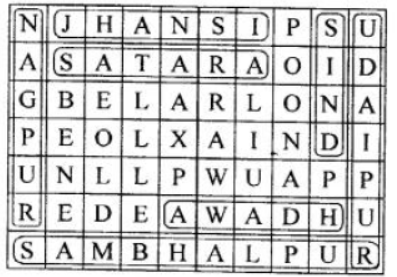
Question. Look for names of places which Dalhousie annexed and write down why these were annexed.
Answer: Based on the grid study, the eight annexed territories and the reasons for their annexation are:
1. Jhansi: Annexed under the Doctrine of Lapse because the ruler passed away without leaving a natural male heir.
2. Satara: Annexed under the Doctrine of Lapse as the ruler died without a direct male successor.
3. Nagpur: Annexed under the Doctrine of Lapse because there was no natural male heir to succeed the throne.
4. Sambhalpur: Annexed under the Doctrine of Lapse due to the lack of a natural male successor.
5. Udaipur: Annexed under the Doctrine of Lapse after the ruler died without a natural heir.
6. Baghat: Annexed under the same Doctrine of Lapse policy due to the absence of a direct male successor.
7. Awadh: Annexed in 1856 by Lord Dalhousie on the grounds of widespread misgovernance and maladministration.
8. Punjab: Annexed through direct military defeat and conquest following the Second Anglo-Sikh War in 1849.
In simple words: Lord Dalhousie annexed states like Jhansi, Satara, and Nagpur using the Doctrine of Lapse when their rulers died without natural sons. He annexed Punjab through war and Awadh by accusing its king of poor governance.
Exam Tip: Clearly categorize the annexed states by their respective methods: Doctrine of Lapse (Jhansi, Satara, Nagpur, etc.), direct war (Punjab), and maladministration (Awadh).
VI. Picture Study
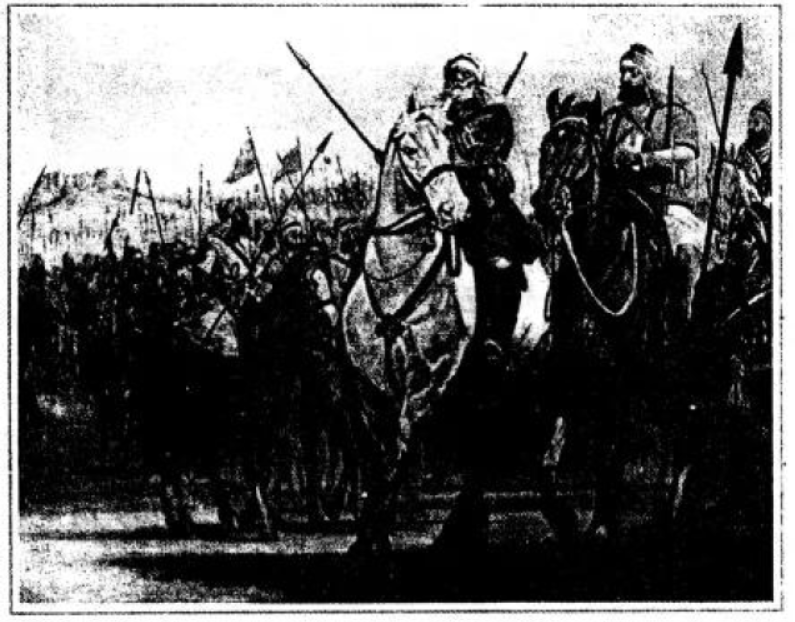
Question 1. What was the political condition of Punjab after the death of Maharaja Ranjit Singh?
Answer: Following the demise of Maharaja Ranjit Singh, Punjab entered a period of extreme political instability and administrative breakdown. For the subsequent six years, various rival claimants and factions engaged in violent power struggles and conspiracies to seize control of the throne.
In simple words: After Maharaja Ranjit Singh died, Punjab suffered from severe political instability and internal fights among rival claimants trying to take the throne.
Exam Tip: Describe the period as one of severe political instability and factional fighting among rival claimants to the throne.
Question 2. When was the first Anglo-Sikh war fought?
Answer: The First Anglo-Sikh War began in December 1845.
In simple words: The first Anglo-Sikh war started in December 1845.
Exam Tip: Simply write the month and year to answer this direct question.
Question 3. What were the causes and results of the First Anglo-Sikh War?
Answer: The conflict was triggered when Maharani Jindan Kaur, acting as regent for Maharaja Ranjit Singh's young son, encouraged the Sikh army to cross the Sutlej River to resist British expansion, leading to the outbreak of the First Anglo-Sikh War in 1845.
Results of the War:
The Sikh forces were defeated and forced to sign the humiliating Treaty of Lahore in 1846. Under its terms, the Sikh state lost significant territory (including the Jalandhar Doab), had to pay a heavy war indemnity, and was forced to accept a British Resident at the Lahore court.
In simple words: The war started because Maharani Jindan Kaur encouraged the Sikh army to resist British expansion. The Sikhs were defeated and had to sign the Treaty of Lahore in 1846, losing land and accepting a British Resident at court.
Exam Tip: Identify Maharani Jindan Kaur's encouragement to the Khalsa as the main cause, and the 1846 'Treaty of Lahore' (with loss of territory and placement of a British Resident) as the primary result.
Exercises
A. Fill in the blanks:
1. Madras, Bombay and Calcutta became the headquarters of the British settlements in the southern, western and eastern regions, respectively.
2. In 1717, the Mughal emperor granted the United East India Company the right to carry on duty-free trade in Bengal, Bihar and Orissa.
3. The French East India Company was established in 1664 C.E.
4. The British and the French fought the Carnatic Wars in India to establish their monopoly in trade.
5. Bengal in the 18th century was the richest and the most fertile province in India.
6. In 1757 Robert Clive recovered Calcutta which had been captured by Siraj-ud-Daulah in 1756.
7. Mir Jafar was deposed because he was unable to meet the demands of the British.
8. In 1765, Awadh was returned to Shuja-ud-Daulah but Kora and Allahabad were taken away and given to Shah Alam II.
9. Shah Alam II granted the Company the Diwani of Bengal, Bihar and Orissa in 1765.
10. Warren Hastings deposed and pensioned off the Nawab of Bengal and brought Bengal under the direct, and complete control of the Company.
B. Match the following:
| Column A | Column B (Correct Match) |
|---|---|
| 1. Carnatic Wars | (e) Anglo-French rivalry |
| 2. Farman | (b) duty-free trade |
| 3. Battle of Plassey | (d) Siraj-ud-Daulah |
| 4. Robert Clive | (c) reconquered Calcutta |
| 5. Battle of Buxar | (f) Mir Qasim |
| 6. Governor of Bengal | (a) Warren Hastings |
C. Choose the correct answer:
Question 1. The English East India Company was established in which year?
(a) 1600 CE
(b) 1700 CE
(c) 1800 CE
(d) None of the options
Answer: (a) 1600 CE
In simple words: The English East India Company was officially founded in 1600 CE through a royal charter by Queen Elizabeth I.
Exam Tip: Keep 1600 CE in mind as the founding year of the Company.
Question 2. The English East India Company set up its first factory in which city?
(a) Surat
(b) Agra
(c) Broach
(d) None of the options
Answer: (a) Surat
In simple words: The British opened their very first Indian trading post at Surat on the western coast.
Exam Tip: Surat is the correct location for their first authorized factory in India.
Question 3. The largest and the most prosperous European settlement in Bengal was the British settlement at which location?
(a) Calcutta
(b) Burdwan
(c) Murshidabad
(d) None of the options
Answer: (a) Calcutta
In simple words: The British settlement in Calcutta grew to become the most important and prosperous European trade center in Bengal.
Exam Tip: Calcutta was the most dominant European trading center in eastern India during this era.
Question 4. Alivardi Khan was succeeded by which ruler as Nawab of Bengal?
(a) Siraj-ud-Daulah
(b) Mir Qasim
(c) Shuja-ud-Daula
(d) None of the options
Answer: (a) Siraj-ud-Daulah
In simple words: Following Alivardi Khan's death, his young grandson Siraj-ud-Daulah took over as the Nawab of Bengal.
Exam Tip: Clearly write 'Siraj-ud-Daulah' as the successor to Alivardi Khan in Bengal.
Question 5. Robert Clive hatched a plot with which commander to replace Siraj-ud-Daulah?
(a) Mir Jafar
(b) Mir Qasim
(c) Alivardi Khan
(d) None of the options
Answer: (a) Mir Jafar
In simple words: Robert Clive conspired with the Nawab's chief commander, Mir Jafar, promising him the throne in exchange for betraying the Nawab at Plassey.
Exam Tip: Identify Mir Jafar as the co-conspirator who helped the British win the Battle of Plassey.
Question 6. The Battle of Plassey was fought in which year?
(a) 1757
(b) 1764
(c) 1772
(d) None of the options
Answer: (a) 1757
In simple words: The historic Battle of Plassey took place in 1757, laying the foundations of British political power in India.
Exam Tip: Match the Battle of Plassey with the year 1757, and the Battle of Buxar with 1764.
Question 7. The Dual Government in Bengal was introduced by which British official?
(a) Robert Clive
(b) Warren Hastings
(c) Lord Cornwallis
(d) None of the options
Answer: (a) Robert Clive
In simple words: Robert Clive set up the Dual Government system in Bengal in 1765, dividing power and responsibilities between the Company and the Nawab.
Exam Tip: Remember that Robert Clive introduced the Dual Government in 1765, and Warren Hastings abolished it in 1772.
D. State whether the following are true or false:
1. The Carnatic Wars were fought between the British and the French.
Answer: True
2. The employees of the Company were entitled to both private trade as well as duty-free trade.
Answer: False (Correct statement: The employees of the Company were permitted to carry on private trade but they were not entitled to the Company’s privilege of duty-free trade.)
3. The English East India Company was given the right to issue passes or dastaks for the free movement of their goods.
Answer: True
4. The British army was defeated in the Battle of Buxar.
Answer: False (Correct statement: The British army won the Battle of Buxar.)
5. The Treaty of Allahabad was signed between the British Company and Mir Qasim.
Answer: False (Correct statement: The Treaty of Allahabad was signed between the British and Shuja-ud-Daulah.)
6. Warren Hastings laid the foundation of an organized system of government in Bengal.
Answer: True
E. Answer the following questions in one or two words/ sentences:
Question 1. Who granted the English East India Company the exclusive right to trade with the East ?
Answer: Queen Elizabeth I of England granted the Company its exclusive royal charter to trade with eastern nations on December 31, 1600.
In simple words: Queen Elizabeth I of England gave the Company the exclusive right to trade with eastern countries.
Exam Tip: Name 'Queen Elizabeth I' as the sovereign who granted the original charter in 1600.
Question 2. Name the British trading settlements in (a) Madras (b)Calcutta
Answer: The fortified British trade settlements in these ports were:
(a) In Madras: Named Fort St. George, established on land granted by a local ruler.
(b) In Calcutta: Named Fort William, established and fortified in 1690 CE.
In simple words: Their fortified post in Madras was called Fort St. George, and their post in Calcutta was called Fort William.
Exam Tip: Match Madras with 'Fort St. George' and Calcutta with 'Fort William' for a complete answer.
Question 3. What important right did the Mughal emperor Farrukhsiyar grant the English East India Company ?
Answer: In 1717, the Mughal Emperor Farrukhsiyar issued a royal decree granting the East India Company the right to carry on duty-free trade in Bengal, Bihar, and Odisha, exempting them from paying local customs duties and significantly increasing their profits.
In simple words: In 1717, Emperor Farrukhsiyar granted the Company the right to trade in Bengal, Bihar, and Odisha without paying any customs taxes.
Exam Tip: Identify 'duty-free trade rights' as the crucial privilege obtained.
Question 4. Why were European traders attracted to the Bengal province inthe 18th century?
Answer: During the 18th century, Bengal was the wealthiest and most fertile province in India, celebrated as the 'paradise of the earth'. Its thriving textile and agricultural production attracted merchants from multiple European countries.
In simple words: Bengal was the wealthiest and most fertile province in India, famous as the 'paradise of the earth', which attracted European merchants looking for rich trade.
Exam Tip: Describe Bengal as the richest and most fertile province of India, often referred to as the 'paradise of the earth'.
Question 5. What privileges did the farman of 1717 confer on the English East India Company?
Answer: The 1717 farman granted several major commercial privileges to the Company:
1. It allowed them to carry on duty-free trade, importing and exporting goods in Bengal without paying any customs duties to the state.
2. It authorized the Company to issue custom passes to ensure the uninterrupted, tax-free transport of their trade goods.
In simple words: The 1717 farman allowed the Company to import and export goods in Bengal without paying taxes, and granted them the right to issue trade passes called dastaks.
Exam Tip: Specify the right to conduct 'duty-free trade' and the authority to issue 'dastaks' as the two primary privileges.
Question 6. Why did the farman of 1717 become a bone of contention between the nawabs of Bengal and the British Company?
Answer: The 1717 farman became a major source of conflict because the Nawabs of Bengal insisted that British merchants should pay local trade taxes just like Indian traders. The British refused to comply, citing their royal farman. This constant disagreement over tax exemptions and the abuse of trade passes eventually led to open wars.
In simple words: The Nawabs wanted the British to pay regular trade taxes like local Indian merchants, but the British refused, leading to severe clashes and wars.
Exam Tip: Focus on the Nawabs' objection to the loss of tax revenue and the Company's refusal to pay local customs duties as the main issue.
Question 7. Why did the British fortify their trade settlement in Calcutta?
Answer: The British began building military fortifications around Calcutta because they anticipated an outbreak of war with their European rivals, the French, who had their own fortified trade base nearby at Chandernagore. This military build-up, combined with their refusal to pay local taxes, angered the Nawab, Siraj-ud-daulah.
In simple words: The British built military fortifications in Calcutta because they expected a war with the French (who were based at Chandernagore), ignoring the Nawab's orders.
Exam Tip: Identify the fear of military conflict with the French at Chandernagore as the reason the British fortified Calcutta.
Question 8. Why did Siraj-ud-Daulah attack Calcutta in 1756?
Answer: When the British began fortifying Calcutta, Nawab Siraj-ud-daulah ordered both the British and the French to immediately stop constructions and dismantle their defenses to prevent foreign military clashes on his territory. While the French agreed, the British refused to comply. Angered by this defiance, the Nawab marched on Calcutta in 1756 with a large force and captured Fort William.
In simple words: The Nawab ordered both the British and French to stop building military forts. The French agreed but the British refused, prompting the Nawab to attack and capture Fort William in 1756.
Exam Tip: State that the British refusal to dismantle their unauthorized fortifications in Calcutta prompted Siraj-ud-daulah's 1756 attack.
Question 9. What important trading right was granted to the English East India Company after its victory in the Battle of Plassey?
Answer: Following their victory at the Battle of Plassey, the Company secured two major concessions from the new Nawab:
1. The undisputed, official right to carry on completely free, tax-exempt trade throughout Bengal, Bihar, and Odisha.
2. The valuable revenue-collection rights of the 24 Parganas district.
In simple words: After winning at Plassey, the British got the absolute right to trade tax-free in Bengal, Bihar, and Odisha, and were granted the tax revenue of the 24 Parganas.
Exam Tip: List both key outcomes: undisputed tax-free trade rights across Bengal, and the acquisition of the zamindari of the 24 Parganas.
Question 10. State the political significance of the Battle of Buxar.
Answer: The Battle of Buxar was highly significant because:
1. It granted the Company immense political influence and control over both the neighboring kingdom of Awadh and the Mughal Emperor Shah Alam II.
2. It firmly laid down the political and territorial foundations of the British Empire in India, converting a trading body into a ruling power.
In simple words: The Battle of Buxar was important because it gave the British control over the Mughal Emperor and Awadh, firmly establishing the foundations of British rule in India.
Exam Tip: Focus on how defeating the combined forces of the Mughal Emperor and Awadh established the Company as the real rulers of northern India.
Question 11. Name the Indian signatories of the Treaty of Allahabad.
Answer: The Indian rulers who signed the 1765 Treaty of Allahabad with Robert Clive were Shuja-ud-daulah and Shah Alam II.
In simple words: The Indian signatories were Shuja-ud-daulah, the Nawab of Awadh, and Shah Alam II, the Mughal Emperor.
Exam Tip: Provide both names clearly: Shuja-ud-daulah of Awadh and the Mughal Emperor Shah Alam II.
Question 12. In which year was the Dual Government abolished and by whom?
Answer: The Dual Government system in Bengal was officially abolished in 1772 by Warren Hastings.
In simple words: The Dual Government was ended in 1772 by Warren Hastings.
Exam Tip: State the year and the Governor clearly.
F. Answer the following questions briefly:
Question 1. The Battle of Plassey was a major turning point in the history of India. In this context answer the following questions:
(a) Give an account of the events leading from the conspiracy to replace Siraj-ud-Daulah to his eventual defeat in the Battle of Plassey.
(b)State the results of the Battle of Plassey.
(c) Why is this battle considered a major turning point in the history of India?
Answer:
(a) Events Leading to the Defeat of the Nawab: Robert Clive conspired with the Nawab's chief commander, Mir Jafar, promising to place him on the throne of Bengal if he helped defeat Siraj-ud-daulah. During the Battle of Plassey in 1757, a major portion of the Nawab's army under Mir Jafar's command remained completely inactive. Realizing he had been betrayed, Siraj-ud-daulah fled the battlefield but was subsequently captured and executed, resulting in an easy victory for the Company.
(b) Results of the Battle of Plassey:
1. The English East India Company obtained the undisputed right to conduct tax-free trade in Bengal, Bihar, and Odisha.
2. The Company received the lucrative zamindari of the 24 Parganas district.
3. The newly appointed Nawab, Mir Jafar, paid the Company and its officials over Rs. 300 lakhs in war compensation and gifts.
(c) Significance as a Historical Turning Point:
The battle is considered a major turning point because:
1. It paved the way for establishing British political control over Bengal, which eventually spread across the rest of India.
2. It transformed a commercial trading company into a powerful regional political player.
3. It granted the British access to Bengal's massive financial resources, which they used to fund their armies, defeat the French in the Third Carnatic War, and conquer other parts of the subcontinent.
In simple words: The battle was won because Mir Jafar betrayed the Nawab and kept his troops out of the fight. The results were that the British got tax-free trade rights, the revenue of 24 Parganas, and Rs. 300 lakhs from Mir Jafar. It is a turning point because it turned a trading company into a ruling political power with access to Bengal's massive wealth.
Exam Tip: For part (a), describe Mir Jafar's betrayal. For part (b), list the three main results. For part (c), explain how it transformed the Company from traders to political rulers.
Question 2. Mir Qasim was a competent ruler, determined to free himself from foreign control. In this context answer the following:
(a) What steps did Mir Qasim take to strengthen his position? Why did he abolish all duties on internal trade?
(b) Trace the events from the outbreak of war (1763) between Mir Qasim and the British up to the Battle of Buxar in 1764.
(c) Explain the importance of the Battle of Buxar.
Answer:
(a) Steps Taken by Mir Qasim: To reduce his dependence on the British, Mir Qasim re-organized Bengal's finances and raised a modern, disciplined army trained by European mercenaries. He abolished all customs duties on internal trade for local merchants because Company employees were abusing their duty-free permits and selling them to Indian traders. This abuse deprived the state treasury of valuable customs revenue and put local traders at a major disadvantage. By removing all internal duties, he placed Indian merchants on an equal footing with the British.
(b) Events Leading to the Battle of Buxar: Mir Qasim’s decision to remove internal trade duties angered British merchants, who refused to accept equal trade status with Indians. This dispute led to an outbreak of war in 1763, where Mir Qasim was defeated and replaced by Mir Jafar. Determined to reclaim his throne, Mir Qasim fled to Awadh, where he formed a military alliance with Shuja-ud-daulah and the Mughal Emperor, Shah Alam II. This combined allied army clashed with British forces at Buxar in 1764 and was decisively defeated.
(c) Importance of the Battle of Buxar: The British victory at Buxar was highly significant because:
1. It established the Company as the undisputed rulers of Bengal, Bihar, and Odisha.
2. It granted them immense political influence and control over the neighboring state of Awadh and the Mughal Emperor.
3. It laid down the firm political and territorial foundations of the British Empire in India.
In simple words: Mir Qasim strengthened his position by training a modern army and improving state finances. He abolished all internal trade taxes to stop the British from abusing tax-free permits and to help local merchants compete. This angered the British, leading to a war in 1763. Mir Qasim fled, formed an alliance with the Nawab of Awadh and the Mughal Emperor, but was defeated at Buxar in 1764, making the British the masters of Bengal.
Exam Tip: In part (a), explain that he abolished internal duties to create a level playing field for Indian merchants. In part (c), state that Buxar consolidated the gains of Plassey and gave the British control over northern India.
Question 3. With reference to the Treaty of Allahabad and its impact,answer the following:
(a) Mention the terms of agreement between Robert Clive and Shuja-ud-Daulah in this treaty.
(b) Explain how the treaty between Robert Clive and the Mughal emperor Shah Alam II legalized the English East India’s Company’s control over Bengal.
(c) Give an account of the events that followed the death of Mir Jafar, leading to the establishment of the Company as the real ruler of Bengal.
Answer:
(a) Agreement with Shuja-ud-daulah: Under the terms of the Treaty of Allahabad, Awadh was restored to Shuja-ud-daulah, with several key conditions:
1. The districts of Kora and Allahabad were separated from Awadh and given to the Mughal Emperor.
2. The Nawab had to pay a massive war indemnity of Rs. 50 lakhs to the Company.
3. The British agreed to defend Awadh from external threats, with the Nawab paying for the maintenance of British troops stationed there, converting Awadh into a protective buffer state between Bengal and the Marathas.
(b) Legalizing Control through Shah Alam II: The British granted the Mughal Emperor Shah Alam II the districts of Kora and Allahabad along with an annual pension of Rs. 26 lakhs. In return, the Emperor officially granted the Company the Diwani of Bengal, Bihar, and Odisha, as well as judicial authority over civil disputes. This royal grant formally legalized British political control over Bengal.
(c) Events Following Mir Jafar's Death: Following Mir Jafar's death in 1765, his young son was placed on the throne of Bengal after signing a treaty that effectively stripped him of power. The treaty required him to disband his regional army and transfer his 'Nizamat' powers to a deputy nawab selected by the British. Since this deputy nawab could not be dismissed by the Nawab, the Company gained complete control over Bengal's administration, reducing the Nawab to a dependent pensioner.
In simple words: The Treaty of Allahabad returned Awadh to its Nawab for a fee of Rs. 50 lakhs, making it a buffer state. The Mughal Emperor granted the British the Diwani of Bengal in exchange for a pension, making their rule legal. When Mir Jafar died in 1765, his son was forced to disband his army and hand over administrative control to a British-appointed deputy, making the Company the real rulers.
Exam Tip: In part (a), mention the Rs. 50 lakh indemnity and the buffer state concept. In part (b), focus on how the Diwani grant officially legalized British revenue collection.
Question 4. With reference to the establishment of Dual Government in Bengal (1765-72) answer the following:
(a) Why was the government introduced in Bengal by Robert Clive referred to as ‘Dual Government’?
(b) What were the advantages and disadvantages of this system for the Company and the nawab respectively?
(c) The evils of the Dual Government led to the collapse of the administration and the economy. Explain.
Answer:
(a) Concept of Dual Government: Introduced by Robert Clive in 1765, this system divided authority between two separate administrative heads:
- The Nawab: Retained responsibility for civil administration, law and order, and criminal justice.
- The Company: Held military control and the right to collect and spend all state revenues.
Because Bengal was ruled by two distinct masters, the system was called 'Dual Government'.
(b) Advantages and Disadvantages:
- The Company gained absolute financial and military power without any public responsibilities or administrative burdens.
- The Nawab was left with the entire burden of running the administration without any financial resources or real authority.
Furthermore, Company agents and tax collectors abused their positions, overtaxing the peasantry and reducing them to extreme poverty, while the Company ignored public welfare.
(c) Collapse of Administration and Economy: The system's weaknesses became clear during the devastating Bengal Famine of 1770, where nearly one-third of the population perished. Neither the impoverished Nawab nor the unsympathetic Company took action to provide relief. The Company interfered constantly in local affairs through their appointed deputy nawab but refused to take responsibility for public welfare. This systemic corruption led to a total collapse of Bengal's economy, prompting the Court of Directors to appoint Warren Hastings in 1772 to abolish the system and bring Bengal under direct Company administration.
In simple words: Clive's Dual Government divided power: the Nawab had the responsibility of maintaining law and order but had no money, while the British collected all the revenue but had no responsibility. This led to extreme corruption and poverty, and during the terrible 1770 famine, neither side helped the starving public, causing a total collapse of Bengal's economy.
Exam Tip: In part (a), define Dual Government as the division between Diwani and Nizamat. In part (b), summarize this imbalance as 'power without responsibility'.
G. Picture Study
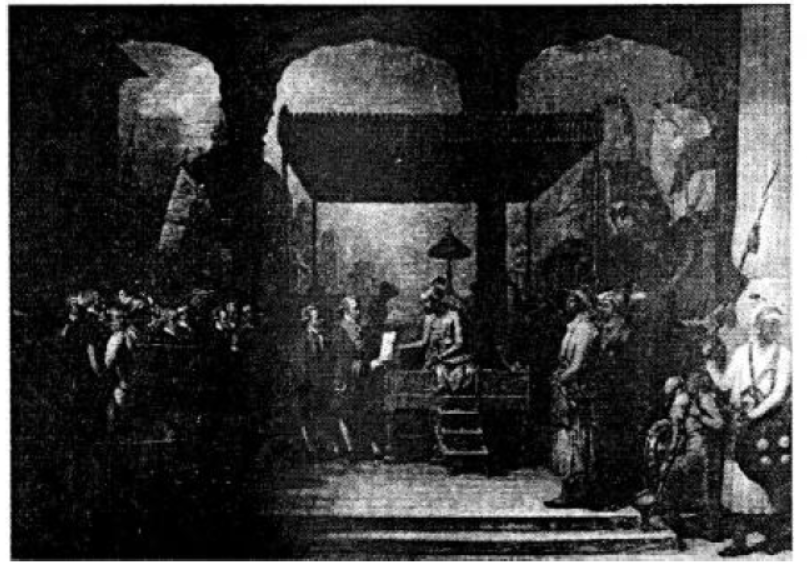
Question 1. Identify the Mughal emperor and the British governor
Answer: The historical painting depicts the Mughal Emperor Shah Alam II and the British Governor Robert Clive during the signing of the Treaty of Allahabad.
In simple words: The picture shows the Mughal Emperor Shah Alam II and the British Governor Robert Clive.
Exam Tip: Identify the two figures as the Mughal Emperor Shah Alam II and Robert Clive, the Governor of Bengal.
Question 2. What is the significance of this grant of the Diwani?
Answer: The grant of the Diwani was highly significant because it gave the British East India Company the legal right to collect revenues and decide civil court cases in Bengal, Bihar, and Odisha, making them the actual rulers of Bengal.
In simple words: It was significant because it gave the British the legal right to collect taxes in Bengal, Bihar, and Odisha, giving them real control over the region's wealth.
Exam Tip: Explain that the Diwani grant legalized the Company's revenue collection and civil judicial control over Bengal.
Question 3. Give a brief account of the battle that preceded this event. When did it take place?
Answer: This historic event was preceded by the Battle of Buxar, fought on October 22, 1764, where British forces defeated the combined allied armies of Nawab Mir Qasim, Shuja-ud-daulah, and the Mughal Emperor.
In simple words: It was preceded by the Battle of Buxar in October 1764, where the British defeated the combined armies of the Mughal Emperor, the Nawab of Awadh, and Mir Qasim.
Exam Tip: Name the 'Battle of Buxar' and state the correct year as the preceding conflict.
Question 4. What is the importance of this battle?
Answer: The Battle of Buxar was highly important because it established British supremacy in northern India. It led to the defeat of Mir Qasim, the temporary reinstatement of Mir Jafar, and forced the Mughal Emperor to sign away Bengal's revenues.
In simple words: The battle was important because it defeated Mir Qasim, reinstated Mir Jafar, and established the British as the supreme power in northern India.
Exam Tip: Emphasize that the victory at Buxar converted the Company from commercial merchants into the real political masters of Bengal.
Additional Questions
Expansion of British Power in India
Exercises
A. Fill the in the blanks:
1. The five centres of Maratha power were:
- The Sindhias of Gwalior
- The Holkars of Indore
- The Bhonsle family of Nagpur
- The Gaekwad family of Baroda
- The Peshwa of Poona (Pune)
2. The Governors-General during the First and Second Anglo-Maratha Wars were Warren Hastings and Lord Wellesley, respectively.
3. The Second Anglo-Maratha War was a severe blow to the Sindhia and Bhonsle of the Marathas.
4. Lord Dalhousie adopted three methods to make the British the paramount power in India.
5. Jhansi was annexed by Dalhousie on the basis of the Doctrine of Lapse.
6. Dalhousie annexed Awadh on the grounds of Maladministration or Misgovernment.
B. Match the following:
| Column A | Column B (Correct Match) |
|---|---|
| 1. Subsidiary Alliance | (d) Lord Wellesley |
| 2. Hyder Ali | (c) Ruler of Mysore |
| 3. Ranjit Singh | (a) Ruler of the Sikh kingdom |
| 4. Doctrine of Lapse | (e) Lord Dalhousie |
| 5. English East India Company | (b) paramount power in India |
C. Choose the correct answer:
Question 1. The First Anglo-Maratha War was fought during the Governor-Generalship of which official?
(a) Lord Cornwallis
(b) Lord Wellesley
(c) Warren Hastings
(d) None of the options
Answer: (c) Warren Hastings
In simple words: The First Anglo-Maratha War took place under the administration of Governor-General Warren Hastings, ending with the Treaty of Salbai in 1782.
Exam Tip: Associate the First Anglo-Maratha War with Warren Hastings, and subsequent wars with Wellesley and Hastings.
Question 2. The Maratha chiefs were united under the leadership of which leader during the First Anglo-Maratha War?
(a) Nana Phadnavis
(b) Baji Rao II
(c) Madhav Rao II
(d) None of the options
Answer: (a) Nana Phadnavis
In simple words: Nana Phadnavis was the influential minister who united the Maratha chiefs behind the young Peshwa Madhav Rao II during this conflict.
Exam Tip: Identify Nana Phadnavis as the key Maratha statesman who successfully resisted British plans during the first war.
Question 3. After the Third Anglo-Maratha War, the British placed a descendant of Shivaji on the throne of which state?
(a) Satara
(b) Nagpur
(c) Jhansi
(d) None of the options
Answer: (a) Satara
In simple words: Following the defeat of the Peshwa, the British established a small, dependent state in Satara and placed Shivaji's descendant on its throne.
Exam Tip: Satara was created as a dependent state for Shivaji's descendants after the Peshwaship was abolished in 1818.
Question 4. Punjab was annexed by which British Governor-General in 1849?
(a) Lord Minto
(b) Lord Dalhousie
(c) Lord Wellesley
(d) None of the options
Answer: (b) Lord Dalhousie
In simple words: Lord Dalhousie annexed Punjab in 1849 following the defeat of the Sikh forces in the Second Anglo-Sikh War.
Exam Tip: Identify Lord Dalhousie as the Governor-General who completed the annexation of Punjab in 1849.
Question 5. The widespread resentment against annexations expressed itself in which historic revolt?
(a) Revolt of 1849
(b) Revolt of 1861
(c) Revolt of 1857
(d) None of the options
Answer: (c) Revolt of 1857
In simple words: Widespread public anger and resentment over British land grabs and annexations culminated in the great Revolt of 1857.
Exam Tip: Highlight the annexation policies as major political causes of the 1857 Uprising.
D. State whether the following are true or false:
1. After Hyder Ali’s death, his son Tipu Sultan continued the Anglo-Maratha Wars.
Answer: True
2. The Subsidiary Alliance system was used by the British to bring Indian rulers under British control without any war.
Answer: True
3. The Subsidiary Alliance proved very advantageous for the Indians.
Answer: False (Correct statement: The Subsidiary Alliance proved very advantageous for the British.)
4. The adopted son of Peshwa Baji Rao II was denied the pension that his father used to get from the British.
Answer: True
5. By 1856, the English East India Company had brought the whole of India under its control.
Answer: True
E. Answer the following questions in one or two words/ sentences:
Question 1. What was the main objective of the Subsidiary Alliance system?
Answer: The subsidiary Alliance system was a method perfected by Lord Wellesley to subjugate Indian powers without the cost and bother of war. Any Indian ruler whose security was threatened was encouraged to seek help from and enter into an alliance with the British, who promised to protect the ruler from external attacks and internal revolts. The Indian ruler had to accept certain terms and conditions.
In simple words: The main goal was to bring Indian kingdoms under British control without fighting expensive wars, by offering them protection in exchange for control over their external affairs and paying for British soldiers.
Exam Tip: Define the system's objective as a way to establish British supremacy and military control over Indian states without direct warfare.
Question 2. What happened when the administration of a subsidiary state collapsed?
Answer: When the administration collapsed, the British used it as an excuse for annexing the kingdom on grounds of misgovernment.
In simple words: When a subsidiary state's government failed, the British used the disorder as an excuse to step in and annex the kingdom.
Exam Tip: Focus on how internal administrative failure was used by the British as a justification to annex the state on grounds of 'misgovernment'.
Question 3. Why did Peshwa Baji Rao II sign the Subsidiary Alliance?
Answer: In 1802, Peshwa Baji Rao II, supported by Sindhia, was defeated by Holkar. Baji Rao II fled to Bassein where he signed the Subsidiary Treaty as a price for British protection and support. He was escorted back to Poona by British soldiers.
In simple words: Baji Rao II signed the alliance because his army was defeated by the Holkars in 1802. He fled to Bassein and accepted British protection in exchange for help to get his throne back.
Exam Tip: Identify his defeat by the Holkar chief in 1802 and his subsequent flight to Bassein as the reasons he signed the Treaty.
Question 4. Why was Wellesley recalled from India during the Second Anglo-Maratha War?
Answer: Wellesley was recalled from India because the government in England was unhappy with the enormous expenditure involved in Wellesley’s policy of wars and expansion.
In simple words: Wellesley was called back to England because his policy of continuous wars and expansion was costing the Company too much money.
Exam Tip: Cite the 'enormous financial expenditure' and debt caused by his aggressive expansionist wars as the primary reason for his recall.
Question 5. How did the Subsidiary Alliance impact the (a) economy (b) administration in Awadh?
Answer: (a) Awadh had signed a Subsidiary Alliance with Wellesley. He had to protect the nawab from external invasions and internal rebellions. It made the nawabs complacent and unconcerned about the affairs of the state. The payment of annual subsidies to the Company exhausted the state treasury.
(b) When the administration was on the verge of collapse, Dalhousie struck. He brought charges of misgovernment or maladministration against the nawab. On those grounds he deposed the nawab and annexed Awadh in 1856.
In simple words: First, paying the British for military protection drained Awadh's treasury. Second, because the Nawabs knew the British would protect them, they stopped caring about governing, allowing the administration to collapse. This allowed Dalhousie to annex Awadh in 1856.
Exam Tip: Connect the financial drain from army payments to the decline in administration, which gave Dalhousie the pretext to annex Awadh in 1856.
F. Answer the following questions briefly:
Question 1. With reference to the Subsidiary Alliance System perfected by Lord Wellesley, answer the following: (a) Why did Indian rulers sign the Subsidiary Alliance? State two important military terms and conditions imposed on the Indian rulers by this treaty. (b) The Subsidiary Alliance proved very beneficial for the British. Explain. (c) Discuss the disastrous effects of the Subsidiary Alliance on the Indian states.
Answer: (a) Indian ruler whose security was threatened was encouraged to seek help from and enter into an alliance with the British, who promised to protect the ruler from external attacks and internal revolts. The Indian rulers had to accept certain terms and condition in return for British protection under the Subsidiary Alliance like:
1. British troops would be permanently placed in the territory of the Subsidiary state.
2. The ruler would have to pay for the maintenance of the troops.
3. He could not employ any Europeans in his service or dismiss those who were already there.
4. He could not form an alliance with any other power or declare war against any power without the permission of the British.
5. He would acknowledge the British Company as the paramount power.
(b) The Subsidiary Alliance proved very advantageous for the British like:
1. The British maintained large armies at the expense of the Indian rulers.
2. The British acquired valuable territories as subsidiary payment. This led to the expansion of the British empire in India and an increase in its resources.
3. The influence of European rivals, especially the French, was excluded from the courts of the Indian rulers.
4. The British controlled the foreign policy of the Subsidiary states.
(c) The Subsidiary Alliance System had great effect on the subsidiary state like:
1. Loss of Sovereignty: Rulers lost their political independence, becoming completely dependent on British residents stationed at their courts.
2. Economic Ruin: Paying heavy annual subsidies completely drained state treasuries, forcing states into debt and collapse.
3. Administrative Neglect: Knowing they were protected from rebellions by British troops, local rulers became passive and ignored state governance, leading to administrative breakdown.
4. Military Disarmament: Native armies were disbanded, leaving thousands of soldiers jobless and creating widespread social distress.
In simple words: Rulers signed the alliance to get British protection from rivals. The conditions forced them to station British troops, pay for their maintenance, and stop hiring other Europeans. The British benefited by keeping a huge army at the rulers' expense and controlling their foreign policy. The disastrous effect on Indian states was the complete loss of their independence, economic ruin from heavy subsidies, and administrative collapse.
Exam Tip: For part (a), focus on troop maintenance and the ban on foreign relations. For part (b), explain the concept of 'maintaining an army at another's expense'. For part (c), describe the loss of independence and economic drain.
Question 2. Dalhousie was a great expansionist and adopted a number of methods to build an all-India empire. In this context, answer the following questions: (a) Mention the various methods adopted by Dalhousie and the territories annexed on the basis of these methods. (b) Under what circumstances did a subordinate state automatically ‘lapse’ and pass into the hands of the British? How did the rulers react to this policy? (c) Why did Nana Saheb become one of the leaders of the Revolt of 1857?
Answer: (a) Dalhousie adopted a number of methods to give the final touches to the work of empire-building in India. The methods he adopted were:
1. War-Punjab.
2. Doctrine of Lapse-Satara, Jhansi and Nagpur.
3. Annexation on grounds of maladministration-Awadh.
(b) Lord Dalhousie brought several subordinate states under the direct rule of the Company by annexing them on the basis of the Doctrine of Lapse. According to the Doctrine of Lapse, all subordinate states where the rulers died without a natural male heir would automatically ‘lapse’, i.e., pass into the hands of the British. Rulers without heirs could not adopt sons, according to the age-old Hindu and Islamic traditions, without the permission of the Company.
(c) Nana Saheb, the adopted son of Peshwa Baji Rao II, inherited his father’s personal property but was not given the pension that had been paid to his father. Nana Saheb became one of the important leaders of the Revolt of 1857.
In simple words: Dalhousie used war to take Punjab, the Doctrine of Lapse to take Jhansi and Satara, and accused Awadh of poor governance to annex it. The Doctrine of Lapse took away states when a ruler died without a natural son, refusing to recognize adopted heirs. Nana Saheb rebelled because the British refused to pay him the pension his adoptive father, Peshwa Baji Rao II, used to receive.
Exam Tip: In part (a), group his expansion methods clearly. In part (b), focus on how the rejection of traditional adoption customs caused deep resentment. In part (c), identify the denial of Peshwa Baji Rao II's pension as his main grievance.
Question 3. With reference to the annexation of Awadh discuss: (a) The effects of the Subsidiary Alliance on the administration in Awadh (b)The political scenario in India by 1856 (c) Any three factors responsible for the success of the British over their Indian rivals
Answer: (a) Awadh had signed Subsidiary Alliance with Wellesley. He had to protect the nawab from external invasions and internal rebellions. It made the nawabs complacent and unconcerned about the affairs of the state. The payment of annual subsidies to the Company exhausted the state treasury. When the administration was on the verge of collapse, Dalhousie struck. He brought charges of misgovernment or maladministration against the nawab. On these grounds he deposed the nawab and annexed Awadh in 1856.
(b) By 1856 the English East India Company had brought the whole of India under its control of the British. The British had eliminated all their rivals and established themselves as the paramount power in India.
(c) The factors responsible for the success of the British are:
1. Lack of unity among Indian rulers.
2. Lack of organized and efficient administration in Indian states.
3. Superior military resources of the company.
4. Superior economic resources of the company.
5. Naval supremacy of the British.
In simple words: Awadh's administration collapsed because the Nawab became negligent, knowing the British army would protect him, while his treasury was drained by high British taxes. This gave Dalhousie the excuse to annex Awadh in 1856. By 1856, the British had defeated all major rivals and ruled India. They succeeded due to their superior resources, modern military tactics, and the lack of unity among Indian kings.
Exam Tip: For part (a), show how the Subsidiary Alliance led to administrative neglect and the annexation of 1856. For part (c), list three factors, such as superior military resources, economic strength, and naval supremacy.
G. Picture study
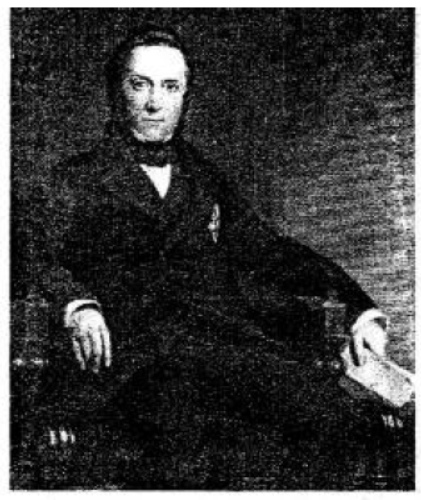
Question 1. Name the Governor General.
Answer: The portrait depicts Lord Dalhousie, who served as the Governor-General of India from 1848 to 1856.
In simple words: The picture shows Governor-General Lord Dalhousie.
Exam Tip: Identify the figure as Lord Dalhousie, the Governor-General famous for his aggressive annexation policies.
Question 2. What was the method adopted by him to subjugate the Indian territories ?
Answer: Governor General Dalhousie was a great imperialist who annexed several states on the basis of the Doctrine of Lapse.
In simple words: He primarily used a policy called the 'Doctrine of Lapse' to annex local kingdoms and bring them under British rule.
Exam Tip: Identify the 'Doctrine of Lapse' as his primary administrative policy for annexing subordinate states.
Question 3. Mention the terms and conditions under this method.
Answer: According to the Doctrine of Lapse, all subordinate states where the rulers died without a natural male heir would automatically ‘lapse’, i.e., pass into the hands of the British. Rulers without heirs could not adopt sons, according to the age-old Hindu and Islamic traditions, without the permission of the Company.
In simple words: If a ruler died without a natural son, his state was taken over by the British. Adopted sons were not allowed to inherit the throne, ignoring old traditions.
Exam Tip: Clearly state the primary condition: the automatic transfer of a state to British rule if its ruler died without a natural male heir, rejecting traditional adoption rights.
Question 4. Did this method have any advantage for the Indian rulers? Why ?
Answer: The annexation of these states caused widespread resentment among the Indian rulers and became a potent factor responsible for the outbreak of the Revolt of 1857.
In simple words: No, this method had no advantages for Indian rulers. It stripped them of their kingdoms, causing deep anger that ultimately triggered the Revolt of 1857.
Exam Tip: Clarify that the policy offered no benefits to Indian rulers, acting instead as a major political cause of the 1857 Uprising.
Free study material for History Civics
ICSE Textbook Solutions for Class 8 History Civics Chapter 06 Traders To Rulers Ii
ICSE Chapter Solutions: Class 8 History Civics Chapter 06 Traders To Rulers Ii
Strengthen your preparation with comprehensive answers for Class 8 History Civics Chapter 06 Traders To Rulers Ii. These expert-reviewed solutions make tracking your academic progress straightforward and efficient.
Concept Clarification for Chapter 06 Traders To Rulers Ii
Tackle complex theorems and numerical problems easily by cross-referencing your working steps with our structured solution guides.
Effective Revision Strategies for Chapter 06 Traders To Rulers Ii
Pair your solution review with additional practice papers to test your execution speed and ensure total preparedness for school exams.
FAQs
You can download the verified Goyal Brothers solutions for Chapter 06 Traders To Rulers Ii on StudiesToday.com. Our teachers have prepared answers for Class 8 History Civics as per 2026-27 ICSE academic session.
Yes, our solutions for Chapter 06 Traders To Rulers Ii are designed as per new 2026 ICSE standards. 40% competency-based questions required for Class 8, are included to help students understand application-based logic behind every History Civics answer.
Yes, every exercise in Chapter 06 Traders To Rulers Ii from the Goyal Brothers textbook has been solved step-by-step. Class 8 students will learn History Civics conceots before their ICSE exams.
Yes, follow structured format of these Goyal Brothers solutions for Chapter 06 Traders To Rulers Ii to get full 20% internal assessment marks and use Class 8 History Civics projects and viva preparation as per ICSE 2026 guidelines.