

Revision Notes for Full Course Environmental Chemistry: Environmental Chemistry
Review targeted revision notes for Full Course Environmental Chemistry with the NEET Chemistry Environmental Chemistry Revision Notes. Built according to official educational guidelines for the 2026-27 academic year, these downloadable summaries for Environmental Chemistry support daily study and last-minute exam readiness.
Review Environmental Chemistry for Full Course Environmental Chemistry
Access the complete concept summary PDF for Environmental Chemistry below. Regular review of these targeted notes builds familiarity with complex Full Course Environmental Chemistry themes and helps secure higher marks in final school evaluations.
Environmental Chemistry
Components of Environment:
It is the atmosphere condition in which the presence of certain concentration produce harmful effects on man and his environment. These substances include:
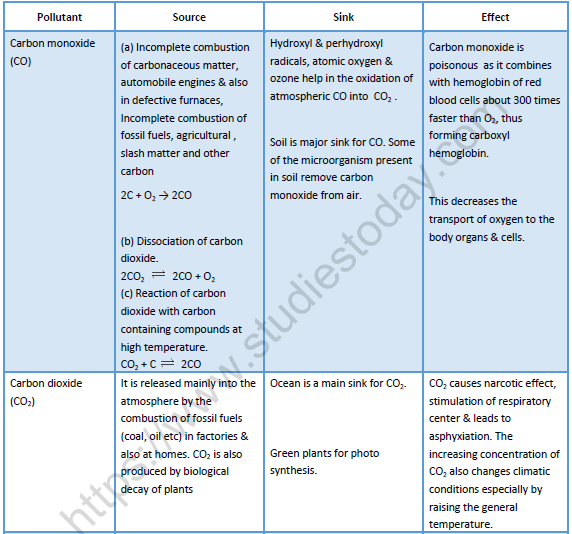
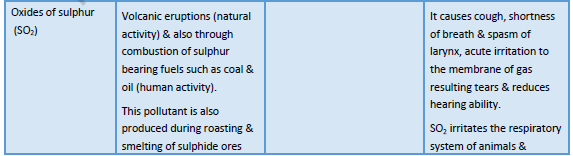
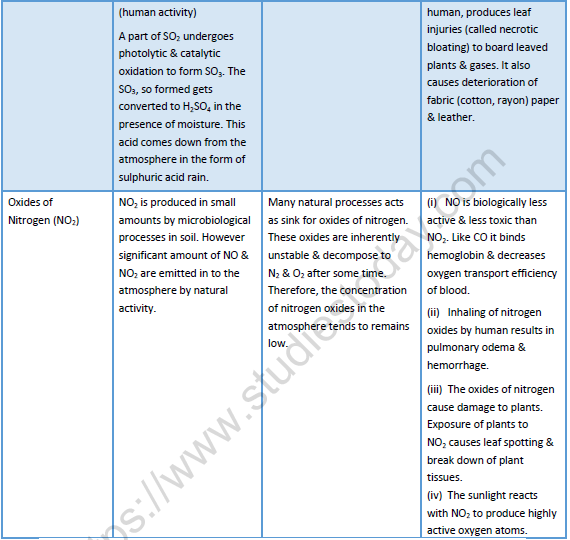
Stratospherical Pollution: (ozone layer & its depletion):
Role of Ozone Layer: protecting earth from the UV radiation coming from the sun. Depletion of Ozone Layer : The equilibrium between formation & destruction of ozone has been upset by influx of several substances into the atmosphere which react with ozone to destroy it.
Effect of Depletion of Ozone layer: The influx of UV radiation reaching the surface of earth would increase which would increase in risk to skin cancer due to exposure to UV radiation, UV radiations also tend to damage the immune system.
Acid Rain:
SO2, nitrogen oxides & acidic soots. Sulphurdioxide & nitrogen dioxide interact with water vapours in presence of sunlight to form sulphuric acid & nitric acid units.
radiations of short wavelength. As a result of this the temperature of earth stands rising. Eventually, earth starts emitting infrared radiations of longer wavelengths. The partially radiated infrared radiations from the earth are absorbed by the greenhouse gases. This results in excessive heating of Earth’s atmosphere. Thus the greenhouse gases add to the heating of atmosphere. This causes global warming. The atmosphere traps the sun’s heat near earth’s surface and keeps it warm. The reemission of the earth’s energy absorbed by CO2 and other greenhouse gases present near the earths surface and its radiation back to the earth is called green house effect.
Advantages of green house effect :
• It is necessary for evaporation of water, formation of clouds, rainfall etc.
• The warm atmosphere helps in rapid growth of plants, trees etc. Harmful effects of green house effect :
• High temperature of atmosphere may melt polar ice caps which are likely to raise the level of sea thereby sinking most of the coastal areas and causing large scale destruction.
• The high temperature may reduce crop product.
• The high temperature will reduce work efficiency of human being.
• Tropical rains and hurricane will become more frequent and also stronger causing more devastation.
• The change in ocean temperature will adversely affect the warm life.
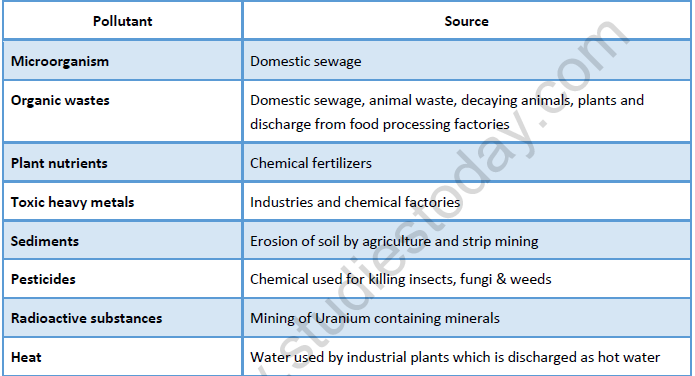
Biochemical Oxygen Demand (BOD) : The measure of the total contamination caused by compounds which can be oxidised in the presence of microorganisms. The BOD is taken as a realistic measure of water quality – clean water would have a BOD value of less than 5 ppm whereas highly polluted river water could have a BOD value of 17 ppm or more.
Land Pollution :
Caused by pesticides and other chemicals which are added to the soil to grow better crops.
Download NEET Revision Notes: Full Course Environmental Chemistry Environmental Chemistry
Key Concepts and Summary for Full Course Environmental Chemistry Environmental Chemistry
Access structured revision notes for Environmental Chemistry designed in alignment with the latest NEET curriculum for Full Course Environmental Chemistry. These summaries help clarify core themes and support effective daily study.
NCERT-Aligned Chapter Summary and Notes
Each chapter summary is structured around standard NEET textbooks, allowing students to check their understanding and clarify complex ideas early in their revision.
Next Steps in Your Exam Preparation
Explore our broader library of printable assignments, chapter notes, and mock tests designed to support continuous revision and secure higher marks in NEET assessments.
FAQs
You can download the teacher prepared revision notes for NEET Chemistry Environmental Chemistry Revision Notes from StudiesToday.com. These notes are designed as per 2026-27 academic session to help Full Course students get the best study material for Environmental Chemistry.
Yes, our NEET Chemistry Environmental Chemistry Revision Notes include 50% competency-based questions with focus on core logic, keyword definitions, and the practical application of Environmental Chemistry principles which is important for getting more marks in 2026 NEET exams.
Yes, our NEET Chemistry Environmental Chemistry Revision Notes provide a detailed, topic wise breakdown of the chapter. Fundamental definitions, complex numerical formulas and all topics of NEET syllabus in Full Course is covered.
These notes for Environmental Chemistry are organized into bullet points and easy-to-read charts. By using NEET Chemistry Environmental Chemistry Revision Notes, Full Course students fast revise formulas, key definitions before the exams.
No, all study resources on StudiesToday, including NEET Chemistry Environmental Chemistry Revision Notes, are available for immediate free download. Full Course Environmental Chemistry study material is available in PDF and can be downloaded on mobile.