NEET Biology Anatomy of Flowering Plants Notes

Read and download the NEET Biology Anatomy of Flowering Plants Notes. Designed for 2025-26, this advanced study material provides NEET Biology students with detailed revision notes, sure-shot questions, and detailed answers. Prepared by expert teachers and they follow the latest NEET, NCERT, and KVS guidelines to ensure you get best scores.

Advanced Study Material for NEET Biology Anatomy of Flowering Plants

To achieve a high score in Biology, students must go beyond standard textbooks. This NEET Anatomy of Flowering Plants study material includes conceptual summaries and solved practice questions to improve you understanding.

NEET Biology Anatomy of Flowering Plants Notes and Questions


While going through the chapter pay special attention to the following –
 
Terms and definitions –
 
(i) Promeristem
(ii) Dermatogen
(iii) Periblem
(iv) Plerome
(v) Idioblast
(vi) Aerenchyma
(vii) Prosenchyma
(viii) Phellem
(ix) Phelloderm
(x) Epiblema
(xi) Laticiferous tissue
(xii) Trichomes
 
Differences –
 
(1) Meristematic tissue and permanent tissue
(2) Promeristem, primary meristem and secondary meristems
(3) Apical, intercalary and lateral meristems
(4) Dermatogen, periblem and plerome
(5) Parenchyma, collenchyma and sclerenchyma
(6) Amphicribral and amphivasal vascular system
(7) Dorsiventral and isobilateral leaf
(8) Spring and autumn wood
(9) Heart wood and sapwood
 
  N. Grew. Father of plant anatomy and used the term tissue for the fi rst time.
  K.A. Chaudhary. Indian plant anatomist.
  Anatomy deals with internal organization of plants as observed after section cutting.
  Nageli is regarded as Father of Modern Anatomy.
  The internal structure of most plants (except some lower plants) is complex and different types of cells form the plant body.
  These cells are in groups to form tissue which, perform defi nite function.
 
THE TISSUE
 
• A group of structurally similar or dissimilar cells that perform a common function and have a common origin is called a tissue. A plant is made up of different kinds of tissues.
   The complex tissues are, however, composed of different kinds of cells and they perform different types of functions.
 
• Each tissue has a specifi c function to perform and different types of tissues of a plant body function in co-ordination with one another.
 
Kinds of Plant Tissues
 
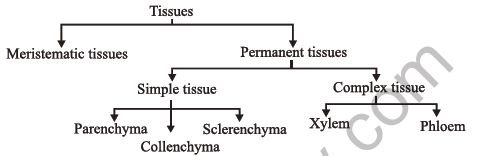
¶ Plant tissues are broadly classifi ed on the basis of stages of development into two categories:
 
• Meristematic tissue : They have the ability to divide.
• Permanent tissue : They have lost the ability to divide.
 
 
NEET Biology Anatomy of Flowering Plants Notes
 
Biotechnology Principles and Processes
NEET Biology Biotechnology Principles and Processes Notes
Chemical Coordination and Integration
NEET Biology Chemical Coordination and Integration Notes
Excretory Products and their Elimination
NEET Biology Excretory Products and their Elimination Notes
Principals of Inheritance and Variation
NEET Biology Principals of Inheritance and Variation Notes
Sexual Reproduction in Flowering Plants
NEET Biology Sexual Reproduction in Flowering Plants Notes
Strategies for Enhancement in Food Production
NEET Biology Strategies for Enhancement in Food Production Notes

NEET NEET Biology Anatomy of Flowering Plants Study Material

Students can find all the important study material for Anatomy of Flowering Plants on this page. This collection includes detailed notes, Mind Maps for quick revision, and Sure Shot Questions that will come in your NEET exams. This material has been strictly prepared on the latest 2026 syllabus for NEET Biology. Our expert teachers always suggest you to use these tools daily to make your learning easier and faster.

Anatomy of Flowering Plants Expert Notes & Solved Exam Questions

Our teachers have used the latest official NCERT book for NEET Biology to prepare these study material. We have included previous year examination questions and also step-by-step solutions to help you understand the marking scheme too. After reading the above chapter notes and solved questions also solve the practice problems and then compare your work with our NCERT solutions for NEET Biology.

Complete Revision for Biology

To get the best marks in your NEET exams you should use Biology Sample Papers along with these chapter notes. Daily practicing with our online MCQ Tests for Anatomy of Flowering Plants will also help you improve your speed and accuracy. All the study material provided on studiestoday.com is free and updated regularly to help NEET students stay ahead in their studies and feel confident during their school tests.

What is included in the advanced study material for NEET Biology Chapter Anatomy of Flowering Plants?

Our advanced study package for Chapter Anatomy of Flowering Plants includes detailed concepts, diagrams, Mind Maps, and explanation of complex topics to ensure NEET students learn as per syllabus for 2026 exams.

How do Mind Maps for Biology Chapter Anatomy of Flowering Plants help in revision?

The Mind Maps provided for Chapter Anatomy of Flowering Plants act as visual anchors which will help faster recall during high-pressure exams.

Are these Biology resources suitable for both classroom teaching and self-study?

Yes, teachers use our NEET Biology resources for lesson planning as they are in simple language and have lot of solved examples.

Is this advanced study material for Chapter Anatomy of Flowering Plants free to download in PDF?

Yes, You can download the complete, mobile-friendly PDF of the Biology Chapter Anatomy of Flowering Plants advanced resources for free.

Does this material cover rationalized content for the 2025-26 NEET session?

Yes, our subject matter experts have updated the Chapter Anatomy of Flowering Plants material to align with the rationalized NCERT textbooks and have removed deleted topics and added new competency-based questions.