

Selina Concise Solutions for Class 8 History Civics: Chapter 07 Impact of British Rule on India
Review the Selina Concise Solutions for ICSE Class 8 History Civics Chapter 7 Impact of British Rule on India designed for Class 8 History Civics students. Published under the latest ICSE guidelines for 2026-27, these chapter-wise solutions provide the foundational knowledge required for exam success.
Chapter-wise Solutions: Chapter 07 Impact of British Rule on India
Navigate directly to the Chapter 07 Impact of British Rule on India solutions using the digital viewer below. Organizing your study sessions chapter-by-chapter allows for seamless offline study and quick reference during revision.
I. Fill in the blanks:
Question 1. The British domination of India brought many changes in the __________, __________ and __________ life of India.
Answer: cultural, educational, social
In simple words: The British rule deeply impacted the way Indians lived, studied, and practiced their daily traditions.
Exam Tip: Be sure to write all three words - cultural, educational, and social - to get full marks, as these represent the main areas of Indian life changed by the British.
Question 2. The Indian villages were _________ communities before the coming of the British.
Answer: self sufficient village
In simple words: Before British rule, Indian villages were independent and could produce everything they needed on their own.
Exam Tip: Highlighting that villages did not depend on outside help before British rule is key to understanding how the old rural economy worked.
Question 3. The British charged revenue in _________ instead of kind.
Answer: cash
In simple words: The British made farmers pay their land taxes with paper money instead of crops.
Exam Tip: Remember that changing the tax payment from crops (kind) to cash forced Indian farmers to start selling their produce in the market quickly.
Question 4. The three kinds of land settlements made by the British were _________, _________ and _________.
Answer: Permanent settlement, Ryotwari settlement, Mahalwari settlement
In simple words: The British set up three different tax plans across India: the Permanent, Ryotwari, and Mahalwari systems.
Exam Tip: Memorize the spelling and names of these three land systems, as they are the most important economic policies of this chapter.
Question 5. A new class of landholders called _________ came into existence during this time.
Answer: Zamindars
In simple words: A new group of wealthy landlords, called Zamindars, was created under British rule.
Exam Tip: The Zamindars were not just landowners; they acted as tax collectors for the British government, which is their main role to remember.
Question 6. _________, is known as the founder of British system of education in India.
Answer: Lord Macaulay
In simple words: Lord Macaulay is the person who started the English-style school system in India.
Exam Tip: Make sure to spell "Macaulay" correctly, as names of key historical figures must be accurate in exams.
II. Match the contents of Column A and Column B:
Question 1. Match the historical terms, events, and years with their correct descriptions:
| Column A | Column B |
|---|---|
| 1. Ijaradari system | (a) Introduced by Lord Cornwallis |
| 2. Cotton, jute, poppy, sugarcane | (b) Linked with ports to make trade easier |
| 3. Ryotwari system | (c) First train from Mumbai to Thane |
| 4. Permanent Settlement | (d) Calcutta linked to coal fields |
| 5. 1854 | (h) Railway line joined Madras to Arakonam |
| 6. 1856 | (f) Collective responsibility of farmers to pay the revenue |
| 7. All major raw material producing areas | (g) Cash crops grown by farmers |
| 8. Mahalwari system | (i) Settlement made directly with cultivators |
| 9. 1853 | (j) Auctioning of revenue to the highest bidder for five years |
| 10. Zamindars | (e) A new middle class |
Answer:
| Column A | Column B (Matched) |
|---|---|
| 1. Ijaradari system | (j) Auctioning of revenue to the highest bidder for five years |
| 2. Cotton, jute, poppy, sugarcane | (g) Cash crops grown by farmers |
| 3. Ryotwari system | (i) Settlement made directly with cultivators |
| 4. Permanent Settlement | (a) Introduced by Lord Cornwallis |
| 5. 1854 | (d) Calcutta linked to coal fields |
| 6. 1856 | (h) Railway line joined Madras to Arakonam |
| 7. All major raw material producing areas | (b) Linked with ports to make trade easier |
| 8. Mahalwari system | (f) Collective responsibility of farmers to pay the revenue |
| 9. 1853 | (c) First train from Mumbai to Thane |
| 10. Zamindars | (e) A new middle class |
In simple words: This matching list pairs key colonial events, systems of tax, and crop types with their exact historical dates and descriptions.
Exam Tip: For matching questions, solve the easiest ones first - like matching the famous year 1853 with the first train line - to narrow down the remaining choices.
III. State whether the following statements are True or False:
Question 1. The British rule resulted in the destruction of Indian industry, trade and handicrafts.
Answer: True
In simple words: Yes, British business policies ruined local Indian crafts and trade networks.
Exam Tip: Remember that British policies favored factory-made imports, which directly crushed local handmade goods.
Question 2. The important centres for Indian goods were Dhaka, Benaras, Lucknow, Multan, Ahmadabad, etc.
Answer: True
In simple words: These cities were indeed famous hubs where high-quality Indian goods were produced and sold.
Exam Tip: Knowing these historical cities helps in answering map and short questions about pre-colonial trade centers.
Question 3. The British greatly developed Indian agriculture.
Answer: False
In simple words: This statement is false because British tax laws actually harmed Indian farming and led to poverty.
Exam Tip: The British only focused on growing cash crops to profit their own industries, ignoring the basic food needs of Indian farmers.
Question 4. Lord Cornwallis intoduced the Permanent Land Settlement in India.
Answer: True
In simple words: It is true that Lord Cornwallis was the British official who started the Permanent Land Settlement system.
Exam Tip: Always associate Lord Cornwallis with the Permanent Settlement introduced in Bengal in 1793.
Question 5. The first railway line was built during Lord Dalhousie’s time.
Answer: True
In simple words: Yes, the first train tracks were laid in India when Lord Dalhousie was in charge.
Exam Tip: Lord Dalhousie is highly famous for introducing the telegraph, modern postal systems, and railways to India.
Question 6. The British took interest in building up transport and communication system to help them in trade and military affairs.
Answer: True
In simple words: It is true that the British built roads and trains to move their army and trade goods quickly, not to help ordinary Indians.
Exam Tip: Always focus on the British motives of "trade" and "military" when explaining why they modernized communication systems.
Question 7. The English took great interest in Indian culture and promoted it
Answer: False
In simple words: The British did not support Indian culture; instead, they believed Western culture was much better.
Exam Tip: British educational policy aimed to replace traditional systems with English and Western sciences.
Question 8. The English took interest in education of Indians only because they needed low paid, English speaking clerks.
Answer: True
In simple words: Yes, the main reason the British taught English to Indians was to hire cheap office workers for their administration.
Exam Tip: This administrative need is a fundamental concept that explains why English-medium schooling was introduced in India.
Question 9. The new education policy benefitted only the upper and th middle class.
Answer: True
In simple words: Yes, only wealthy and middle-class families had access to and benefited from the new English schools.
Exam Tip: Mass education was neglected, meaning the poorer sections of society did not benefit from colonial educational reforms.
Question 10. The Company promoted education of girls and technical education.
Answer: False
In simple words: This is false because the East India Company did not pay attention to teaching girls or technical skills.
Exam Tip: Women's education and vocational training were mostly neglected until much later in the colonial era.
IV. Answer the following questions:
Question 1. Mention the social evils prevalent in India during British rule.
Answer: In pre-colonial and early colonial India, several cruel social practices were widespread. The most extreme was Sati, where widows were forced or pressured to burn alive on the cremation pyres of their deceased husbands. Another terrible practice in certain regions was the killing of female infants. Some groups also performed human sacrifices, including offering young children, to appease their religious deities. Additionally, widows were strictly forbidden from marrying again, while practices such as child marriages and polygamy were widely accepted in daily society.
In simple words: India faced many harmful customs like Sati, child marriage, preventing widows from remarrying, child sacrifice, and the killing of baby girls.
Exam Tip: When writing this answer, list each social practice clearly using bullet points to help the examiner read your points easily.
Question 2. Why did India’s foreign trade decline during the British rule?
Answer: Before the British took over, India exported high-quality textiles, wool, silk, and beautiful items made of gold, silver, iron, and copper. However, British trade rules diverted India's wealth back to England, causing local industries and crafts to collapse. Local craftspeople lost the crucial support and financial backing they used to get from kings and royal courts. Ultimately, the British reshaped India's economy so it would only supply raw materials to English factories and buy finished products imported from Britain.
In simple words: India's trade collapsed because British policies drained its wealth. Local artisans lost the support of royals, and India was forced to export cheap raw materials and import expensive British goods.
Exam Tip: Highlight the shift of India's role from a producer of finished goods to an exporter of raw materials - this is the most critical economic point.
Question 3. During the British rule, “India was a loser both ways - as a buyer and also a seller.” Explain.
Answer: The British exploited India's economy by buying raw agricultural materials from Indian farmers at extremely cheap prices to feed their factories back home. At the same time, they flooded Indian markets with cheap, machine-made goods produced in England, which crushed local competitors. This meant India lost out on both sides: it got very little money for its raw resources and was forced to spend its wealth on imported foreign products.
In simple words: India lost money both ways because the British bought its raw materials for very little and forced Indians to buy expensive machine-made goods from England.
Exam Tip: Use the words "cheap raw materials" and "expensive imported goods" to clearly show the double loss India suffered.
Question 4. Why did the English East India Company feel the need for educational; reforms?
Answer: The East India Company sought educational changes for three main reasons. First, they wanted to train a group of bilingual Indians who could act as translators between British officers and the millions of local people. Second, they hoped to create a class of Indians who, while local by birth, would adopt British tastes, views, morals, and thinking. Lastly, they wanted to secure a cheap supply of English-speaking clerks to do basic office work in their government and business offices.
In simple words: The British changed schools to create translation helpers, make Indians admire British culture, and get cheap office clerks to help run the government.
Exam Tip: Mentioning the phrase "creating a class of interpreters" is highly important, as this was the primary administrative goal of the British.
Question 5. Who was Lord Macaulay? Why did he recommend the system of British education in India?
Answer: Lord Macaulay is known as the creator of English-style education in colonial India. He served as the legal advisor to Lord William Bentinck, the Governor-General of India. Macaulay urged that schools teach in English and focus on modern sciences and Western literature. He held a very poor view of traditional Indian learning, believing it was far below European education, and famously claimed that a single shelf of a good European library was worth more than all the native literature of India and Arabia combined.
In simple words: Lord Macaulay was a British official who started English schools in India. He did this because he thought Western education was far better than traditional Indian knowledge.
Exam Tip: Quoting Macaulay's line about the "single shelf of a European library" shows the examiner that you understand his biased viewpoint.
Question 6. What were the main objectives of British education in India? Mention the steps recommended to implement the policy.
Answer: Lord Macaulay had three main goals for Indian education: to train a class of translators to bridge the gap between British rulers and the public, to create a group of Indians with Western tastes and values, and to secure cheap clerical staff for colonial offices. To put these ideas into action, several steps were taken: in 1835, Lord Bentinck made English the official language of school instruction; in 1844, the government declared it would hire only English-educated Indians for official jobs; and in 1854, the guidelines of Wood's Despatch were put in place, leading to the creation of universities in Mumbai, Kolkata, and Chennai.
In simple words: The goals were to create translators, spread Western habits, and train cheap clerks. The British did this by teaching in English, giving government jobs only to English-speakers, and opening major universities.
Exam Tip: Structure this answer in two parts: first state the three clear objectives, then list the historical years (1835, 1844, 1854) to show the implementation steps.
Question 7. Describe the recommendations in Wood’s Despatch and their effects.
Answer: Wood's Despatch declared that the main goal of the government's school system was to spread Western education, including European science, literature, arts, and philosophy. Its key suggestions and outcomes included: 1. It declared English as the best language for college studies while still recognizing the value of local languages. 2. It proposed opening elementary schools in villages, high schools teaching both English and local languages, and district colleges. 3. It suggested giving financial help to privately run schools. 4. It set up public education offices run by a Director in five major provinces to check school progress. 5. It created universities in Calcutta, Bombay, and Madras based on the style of London University. 6. It stressed the importance of job-related skills and technical schools. 7. It recommended opening centers to train teachers, modeled on English schools. 8. It supported and encouraged education for girls.
In simple words: Wood's Despatch made Western science and arts the main focus of Indian education. It set up primary schools, high schools, universities, teacher training centers, and supported education for girls.
Exam Tip: Memorize at least four of these points. Wood's Despatch is often called the "Magna Carta of English Education in India" - mentioning this can earn extra points.
Question 8. Discuss various aspects of the drain of wealth.
Answer: The 'Economic Drain' refers to the systematic export of India's money and natural resources to Britain without any fair material return. This loss of wealth was unique to British rule; previous Indian rulers always spent the tax money they collected inside the country, but the British spent Indian taxes directly in Britain. This drain started in Bengal in 1757, as East India Company employees sent home massive personal fortunes extorted from local rulers, merchants, and citizens, totaling nearly £6 million between 1758 and 1765 - four times the local ruler's total tax income. After taking over Bengal's tax system (Diwani) in 1765, the Company used local taxes to buy Indian goods and export them for profit. Between 1765 and 1770, they exported about £4 million worth of goods - one-third of Bengal's net tax revenue - giving India nothing in return. This drain of wealth grew even larger after 1858.
In simple words: The economic drain meant the British took India's taxes and resources back to Britain instead of spending them in India. They bought Indian products using India's own tax money and sent them away, making the country poor.
Exam Tip: Be sure to mention the year 1765 (when the Company got the Diwani rights) as it marks the moment when Indian taxes were first used directly to buy goods for export.
V. Picture Study -
(A) Look at the picture.
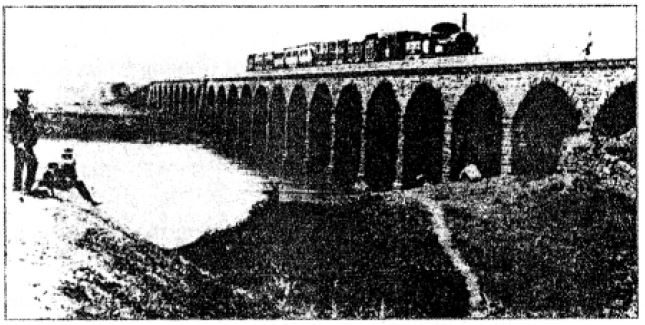
Question 1. Which important development does the picture depict?
Answer: The picture shows the launch of India's very first railway line, which was opened in 1853 to connect Bombay and Thane.
In simple words: The picture shows the first train line built in India, which ran between Bombay and Thane in 1853.
Exam Tip: Always remember the year 1853 and the two stations - Bombay and Thane - for objective questions about railways.
Question 2. Write a short note on its development in India.
Answer: The British built railway lines to carry raw materials from remote areas to factories and to ship finished goods from factories to major markets. Over time, Indians also benefited from the train network because it made traveling and shipping goods much faster, easier, and cheaper.
In simple words: The British built railways to move materials to factories and goods to markets quickly. This also made traveling much faster and cheaper for ordinary Indians.
Exam Tip: Emphasize that the primary motive of the British was economic, but it ended up helping Indians travel more easily.
Question 3. How did it prove to be a boon for the Indians?
Answer: The railway network acted as a great uniting force by bringing people of all different castes and religions together in the same carriages. This helped break down social divisions and allowed Indians to connect, share ideas, and eventually join hands to fight against British rule.
In simple words: Trains helped people of different castes and religions travel together. This made them feel united, helping them join hands to fight against British rule.
Exam Tip: Focus on how the physical closeness of train travel helped break down caste barriers and fostered a sense of national unity.
(B) This is the picture of a Governor-General.
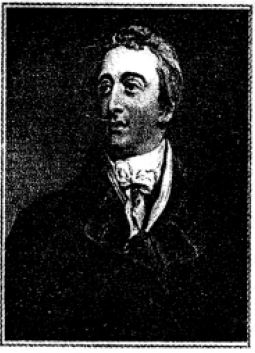
Question 1. Identify him.
Answer: The British official shown in the portrait is Lord William Bentinck.
In simple words: This is a picture of Lord William Bentinck.
Exam Tip: Learn to recognize portraits of key Governor-Generals like Bentinck and Dalhousie, as picture-based questions are common.
Question 2. What do you understand by ‘Sati’? Who put an end to this practice and why?
Answer: Sati was a cruel social custom where a widow was burned alive on her deceased husband's funeral pyre. It was practiced in many parts of the country, especially in Bengal. Lord William Bentinck banned this practice in 1829 because he believed it was a deeply inhumane and terrible evil.
In simple words: Sati was a custom where a widow was burned on her husband's funeral pyre. Lord William Bentinck banned it in 1829 because it was extremely cruel.
Exam Tip: Be sure to write the exact year of the abolition of Sati, which is 1829, as it is a key historical date.
Question 3. Mention four social reforms introduced by the British.
Answer: Four important social welfare measures introduced by the colonial administration were: 1. The official ban of the Sati practice in 1829. 2. The outlawing of killing female newborn babies (infanticide). 3. The ban on child sacrifices made for religious rituals. 4. The legalization of widow remarriage through a law passed by Lord Dalhousie.
In simple words: The British banned Sati, stopped child sacrifice, outlawed female infanticide, and passed a law allowing widows to remarry.
Exam Tip: List these four reforms clearly in points and link Lord Dalhousie's name specifically to the Widow Remarriage Act.
Additional Questions
A. Fill in the blanks:
Question 1. The _________ famine of 1770 was one of the most terrible famines in human history.
Answer: Bengal
In simple words: The Bengal famine of 1770 was a massive and tragic event in Indian history.
Exam Tip: Remember that Bengal was hit hardest by famines due to high tax demands and crop failure.
Question 2. A large share of revenue collected by the Company in India had to be paid to the British government as _________.
Answer: home charges
In simple words: A big part of India's tax money was sent to England to pay for British administrative costs, known as home charges.
Exam Tip: "Home charges" is a specific economic term for administrative expenses paid to London; write it exactly as shown.
Question 3. Under the Mahalwari system the revenue settlement was made with the _________.
Answer: village as a whole
In simple words: In the Mahalwari system, tax rates were settled with the entire village together instead of individual farmers.
Exam Tip: Always remember that "Mahal" means a group of villages, which helps you recall that the tax was settled with the entire village unit.
Question 4. To eliminate competition from India’s traditional industries the British transformed India into a _________ and a _________.
Answer: supplier of raw material, market for British products
In simple words: The British wanted India to stop making its own goods and instead only sell cheap materials and buy English imports.
Exam Tip: This dual role - supplier of raw materials and market for finished goods - is central to explaining British industrial policy.
Question 5. Before the advent of the British the Indian craftspeople operated at two levels - the _________ and the _________ levels.
Answer: rural, urban
In simple words: Indian artisans worked in both quiet countryside villages and busy city markets before the British arrived.
Exam Tip: Remember that the pre-colonial craft system was well-organized across both villages (rural) and cities (urban).
Question 6. Before the advent of the British the Indian textile industry was the _________ and the _________ in the world.
Answer: finest, largest
In simple words: Before British rule, India made the best and the highest amount of cloth in the entire world.
Exam Tip: Use the words "finest" and "largest" to describe pre-colonial Indian textiles to score full marks.
Question 7. After the Battle of Plassey the Company used its political power to _________ the Indian handicraft industry and promote British industries.
Answer: destroy
In simple words: Following their victory, the British actively broke down India's traditional crafts to help their own factories sell more goods.
Exam Tip: The Battle of Plassey in 1757 is key because it gave the British the political power to control Indian trade and crafts.
Question 8. With the spread of the Industrial Revolution in England, Indian markets were flooded with _________ of British mills.
Answer: cheap, machine made textiles
In simple words: When British factories started using machines, they flooded Indian markets with cheap, mass-produced clothes.
Exam Tip: The words "machine made" explain why British goods were so cheap and hard for local weavers to compete with.
Question 9. By 1850, India became a major _________ of _________.
Answer: importer, English textiles
In simple words: By 1850, India was forced to buy a massive amount of cloth made in English factories.
Exam Tip: This represents a major shift: India went from being the world's biggest cloth seller (exporter) to a major buyer (importer) of English cloth.
Question 10. _________ introduced the railway system in India in 1853.
Answer: Lord Dalhousie
In simple words: Lord Dalhousie was the Governor-General who set up the railway network in 1853.
Exam Tip: Link the start of railways in 1853 directly to Lord Dalhousie's administrative works.
Question 11. The Grand Trunk Road from _________ to _________ was reconstructed by the British in the 19th century.
Answer: Calcutta, Peshawar
In simple words: The British rebuilt the famous Grand Trunk Road connecting Calcutta in the east to Peshawar in the west.
Exam Tip: Remember these two major historic city endpoints - Calcutta and Peshawar - for Grand Trunk Road questions.
B. Match the following:
Question 1. Match the historical items in Column A with their correct connections in Column B:
| Column A | Column B |
|---|---|
| 1. Permanent Settlement | (a) encouraged education of Indians |
| 2. Shipbuilding industry | (b) Lord Dalhousie |
| 3. Lord Macaulay | (c) Fixed revenue |
| 4. Charter Act of 1813 | (d) Anglicist |
| 5. Transport and communication development | (e) Vishakhapatnam |
Answer:
| Column A | Column B (Matched) |
|---|---|
| 1. Permanent Settlement | (c) Fixed revenue |
| 2. Shipbuilding industry | (e) Vishakhapatnam |
| 3. Lord Macaulay | (d) Anglicist |
| 4. Charter Act of 1813 | (a) encouraged education of Indians |
| 5. Transport and communication development | (b) Lord Dalhousie |
In simple words: This matching grid pairs main colonial policies, locations, and groups with their respective historical terms and figures.
Exam Tip: Associate Lord Macaulay with "Anglicist" because he strongly supported Western-style education over traditional methods.
C. Choose the correct answer:
Question 1. The Treaty of Allahabad/Madras/Benaras granted the English East India Company the right to collect revenue from Bihar, Bengal and Orissa.
(a) Allahabad
(b) Madras
(c) Benaras
Answer: (a) Allahabad
In simple words: The Treaty of Allahabad gave the British Company the legal right to collect taxes in Bihar, Bengal, and Orissa.
Exam Tip: This treaty was signed in 1765 after the Battle of Buxar, which is a key turning point in British economic control.
Question 2. To remove the defect of the revenue system Lord Cornwallis introduced the Permanent settlement/Ryotwari system/ Mahalwari system in 1793.
(a) Permanent settlement
(b) Ryotwari system
(c) Mahalwari system
Answer: (a) Permanent settlement
In simple words: Lord Cornwallis started the Permanent settlement in 1793 to fix issues with how land taxes were collected.
Exam Tip: Note the year 1793 - this date is highly linked with the Permanent Settlement in history exams.
Question 3. The Ryotwari system of revenue collection was introduced in Madras/Calcutta/Bombay presidency.
(a) Madras presidency
(b) Calcutta presidency
(c) Bombay presidency
Answer: (a) Madras presidency
In simple words: The Ryotwari system, where tax was collected directly from individual farmers, was first used in the Madras presidency.
Exam Tip: Remember that Thomas Munro was the main official who designed the Ryotwari system in the South.
Question 4. The Charter Act of 1813, directed the Company to spend 1/ 10/15 lakh rupees on the education of Indians.
(a) 1 lakh
(b) 10 lakh
(c) 15 lakh
Answer: (a) 1 lakh
In simple words: The law of 1813 ordered the British Company to set aside 1 lakh rupees every year to educate Indian citizens.
Exam Tip: This was the very first budget allocation for education in India under British parliamentary law.
Question 5. The first railway line was from Bombay to Poona/Thana/ Calcutta.
(a) Poona
(b) Thana
(c) Calcutta
Answer: (b) Thana
In simple words: The first-ever train in India ran along a track built between Bombay and Thana.
Exam Tip: This historic first journey took place on April 16, 1853, covering a short distance of 34 kilometers.
D. State whether the following are true or false:
Question 1. Before the advent of the British more than 95 per cent of Indians lived in villages.
Answer: True
In simple words: Yes, almost the entire population of India lived in rural village communities before British rule.
Exam Tip: This huge rural population shows why land revenue was the most important source of income for the British.
Question 2. The Indian peasants were satisfied with the Company’s revenue collection methods.
Answer: False
In simple words: No, Indian farmers were extremely unhappy because the British tax collection rules were cruel and expensive.
Exam Tip: The high taxes and strict deadlines often forced peasants to borrow money from greedy lenders, causing widespread anger.
Question 3. The Permanent Settlement assured the Company a fixed revenue at a fixed time even during natural calamities.
Answer: True
In simple words: Yes, the British got a guaranteed amount of tax money on time, even if crops failed due to floods or droughts.
Exam Tip: This absolute rigidity was a major benefit for the British treasury, but it was disastrous for Indian farmers.
Question 4. Lord Macaulay insisted that Western education should be imparted through the medium of the vernacular languages.
Answer: False
In simple words: This is false because Lord Macaulay wanted Western subjects to be taught only in the English language.
Exam Tip: Remember that Macaulay strongly opposed local (vernacular) languages for higher education.
Question 5. The development of transport and communication systems did not benefit Indians in any way.
Answer: False
In simple words: This is false because better transport ended up helping Indians travel, trade, and unite against the British.
Exam Tip: This is a "double negative" statement. Read carefully - even though the British had selfish motives, the transport network did end up helping Indians in unexpected ways.
E. Answer the following questions in one or two words/ sentences:
Question 1. Why did the Indian peasants begin to grow cash crops ?
Answer: Because the British demanded that land revenue be paid strictly in cash, farmers had to cultivate crops like cotton, sugarcane, and jute. These cash crops could be sold quickly in the market to get the paper money needed for taxes.
In simple words: Farmers grew cash crops because they needed ready money to pay the high land taxes demanded in cash by the British.
Exam Tip: Focus on the transition from "kind" (crop share) to "cash" payments as the main cause for growing market crops.
Question 2. How did the Company utilize the revenues from Bengal ?
Answer: The East India Company used Bengal's tax revenues to cover the salaries of colonial officers and to fund their business ventures. They also used this money to buy Indian goods and export them to support Britain's growing industries.
In simple words: The British used Bengal's tax money to pay their officials and buy Indian raw materials to send to factories in England.
Exam Tip: Mentioning that the Company used Bengal's own money to buy Indian exports is the core concept of the "Drain of Wealth."
Question 3. What were the drawbacks of Warren Hastings’s five-year revenue settlement ?
Answer: Under the five-year auction plan, the new tax collectors (zamindars) were never sure if they would keep their contracts at the next auction. Because of this, they did not care about improving the soil or farms, and instead overtaxed the poor farmers to meet their financial targets.
In simple words: The temporary tax collectors didn't care about the land because they might lose it at the next auction, so they just squeezed the farmers for money.
Exam Tip: Highlight the temporary nature of the contract as the main reason why landowners did not invest in agriculture.
Question 4. What was the significance of the Charter Act of 1813 in the context of British educational policy in India?
Answer: This law was highly significant because it ordered the Company to spend 1 lakh rupees annually on public instruction. It was the first official state step to encourage scientific knowledge and literature in India, though the law lacked clear rules on how to distribute the money.
In simple words: The Act of 1813 was the first time the British government set aside state money (one lakh rupees) to educate Indians, even though they didn't explain how to use it.
Exam Tip: Note that this act represents the starting point of official government involvement in Indian schooling.
Question 5. In what way would westernized Indians help to promote the interests of British manufacturers?
Answer: Creating a Westernized class helped British business in two major ways: 1. It produced English-literate graduates who could run the machinery of the empire cheaply. 2. It shaped a group of consumers who preferred Western culture and lifestyles, creating a strong market demand for British manufactured products.
In simple words: Westernized Indians learned English to work in government offices and began preferring Western lifestyles, which meant they bought British goods.
Exam Tip: Clearly separate your answer into the two goals: administrative help (clerks) and economic consumption (buying British imports).
Question 6. How did knowledge of contemporary nationalist movements in Europe inspire the Indians?
Answer: Reading about European struggles for freedom and national identity fired Indian thinkers with a strong desire to transform their own country into a progressive, modern, self-governing, and united nation.
In simple words: Learning about how European countries fought for their freedom made Indian intellectuals want to build a free and united India.
Exam Tip: Use terms like "spirit of unity" and "nationalism" to describe the emotional impact of European history on Indian leaders.
Question 7. Mention any two positive effects of the introduction of English in the Indian educational system.
Answer: English education had two major unintended positive consequences: 1. It helped Indians understand the political and economic harms of foreign colonial rule. 2. It introduced them to the writings of modern European thinkers, which built a strong appreciation for democratic institutions.
In simple words: Learning English helped Indians understand the bad effects of British rule and introduced them to democratic ideas.
Exam Tip: Be sure to frame these as "unintended" benefits - the British did not plan for English education to spark freedom movements!
Question 8. Which section of Indians gained from the British commercial policies ?
Answer: Certain sectors managed to thrive, including domestic steel, urban artisans specializing in gold and silver jewelry, copper and brassware manufacturers, and other highly skilled city craftsmen.
In simple words: Some Indian metalworkers, jewelry makers, and urban craftspeople found ways to benefit from British trade.
Exam Tip: Keep your answer brief and list the specific metal crafts and urban centers that saw growth.
Question 9. How would the improved transport and communication system benefit the Indian later ?
Answer: The new transport and communication systems ended up helping India in surprising ways. Besides boosting trade, it connected people from completely different parts of the country, building a shared national identity and a spirit of patriotism that became vital for the independence struggle.
In simple words: Better roads and trains connected people from different regions. This helped them feel like one nation and work together for freedom.
Exam Tip: Explain how physical networks (railways) transformed into psychological networks (nationalism and unity).
F. Answer the following questions briefly:
Question 1. In the context of Permanent Settlement of Bengal answer the following:
(a) Explain the special features of the Permanent Settlement.
(b) What are its advantages ?
(c) Briefly describe its disavantages
Answer:
(a) The Permanent Settlement system stood on two main pillars:
Hereditary Land Ownership 1. Tax collectors (zamindars) were recognized as the official permanent owners of the land under their control. The tax collector became the landlord. 2. This ownership was hereditary, allowing zamindars to bequeath, trade, or mortgage the land freely. 3. Actual farmers were reduced to mere tenants, losing their traditional ancestral rights and having to pay high rents that the zamindar could raise arbitrarily.
Unchanging Tax Rates 1. The amount of land revenue due to the British was set permanently and could never be raised. 2. Zamindars had to pay this fixed amount by a set date every year; failing to do so meant the state would seize and auction their properties.
(b) **Benefits of the System** 1. The British government received a guaranteed, predictable stream of money regardless of droughts or crop failures. 2. Collecting taxes became much simpler and more cost-effective since the state did not have to employ a massive army of tax collectors. 3. It created a powerful, loyal class of Indian landowners who supported British rule. 4. Landlords had an incentive to boost crop production to keep the extra profits for themselves.
(c) **Drawbacks of the System** 1. Farmers were left completely unprotected from greedy landlords who raised rents and threw them off their fields, leading to widespread starvation and poverty. 2. The government lost out on potential revenue growth even when land values and agricultural yields increased. 3. It fostered 'absentee landlordism,' where wealthy landowners lived in distant cities and leased their lands to middle-men who squeezed the tenant farmers for even more rent.
In simple words: The Permanent Settlement made zamindars the permanent owners of land with fixed taxes. While this gave the British a reliable income and loyal allies, it devastated the poor farmers who were exploited by greedy landlords.
Exam Tip: Clearly divide your answer into parts (a), (b), and (c) to match the question's structure, as examiners grade each sub-part separately.
Question 2. With reference to Ryotwari and Mahalwari systems answer the following:
(a) Explain the features of the Ryotwari system.
(b) What were the features of the Ryotwari system.
(c) What were the fundamental changes introduced by these systems in the traditional land system of the country ?
Answer:
(a) The Ryotwari framework had these key characteristics: 1. The individual farmer (ryot) was deemed the owner of the plot as long as tax obligations were met. 2. Taxes were paid straight to colonial tax collectors without intermediaries. 3. The tax rate remained fixed for a 30-year span, after which it was subject to review and revision. 4. The tax collection process was extremely strict, meaning no tax relief was granted even during total crop failures.
(b) The Mahalwari framework was structured around a 'Mahal,' which refers to a collective village or group of villages. In this model: - The village community collectively owned the agricultural land. - Tax assessments were settled with the entire village as a unit rather than individual farmers. - The village chief or local leader (talukdar) gathered the taxes and delivered them to British collectors.
(c) These colonial land reforms brought major structural changes to traditional Indian farming. Land was turned into a tradeable commodity - a new type of private property that could be sold, transferred, or mortgaged. This broke down the age-old cooperative structure of Indian villages, leading to the collapse of traditional rural communities.
In simple words: The Ryotwari system made individual farmers the landowners paying taxes directly to the state, while the Mahalwari system treated the entire village as a single unit for tax collection. Both systems turned land into private property, destroying the old village lifestyle.
Exam Tip: Be sure to write about the Mahalwari system for part (b) as outlined in the study guide, despite the double "Ryotwari" label in the question text.
Question 3. The first century of British rule resulted in the decay and destruction of traditional India trade and industry. Explain this statement with reference to the following:
(a) Political powers of the Company
(b) Collapse of ruling dynasties and ruling courts
(c) Decline of modern India industries.
Answer:
(a) Following their victory at the Battle of Plassey in 1757, the East India Company wielded political control to suppress Indian artisans and clear the way for British goods. Local weavers were forced to sell their products to the Company at rock-bottom prices. To make matters worse, they had to buy low-quality raw cotton at inflated rates from British middlemen, who had purchased it cheaply from local farmers.
(b) As British territorial control expanded, traditional Indian kingdoms and royal courts (including the Mughal court) dissolved. This collapse took away the vital financial support and patronage that local craftspeople had relied on for generations, causing a massive decline in traditional Indian crafts.
(c) The colonial administration actively suppressed the rise of modern factories in India to maintain its economic dependency. Consequently, the country was forced to import everyday items - such as needles, sewing thread, soap, bicycles, medicine, paper, and biscuits - directly from factories in England.
In simple words: The British used their political power to force weavers to sell cheap and buy raw materials at high prices. When royal courts fell, artisans lost their patrons, and the British blocked new Indian factories so they could sell their own imports.
Exam Tip: For part (a), mentioning the Battle of Plassey (1757) helps show the exact historical moment the British gained political control over Indian trade.
Question 4. The Charter Act of 1813 passed by the British Parliament was the first major step to introduce changes in the Indian system of education. In this context discuss:
(a) The general directives issued to the Company in the Charter Act of 1813 and its inherent weakness
(b) The Great Debate over the content and medium of education
(c) The introduction and spread of Western education
Answer:
(a) The Charter Act of 1813 required the East India Company to allocate 1 lakh rupees annually for public instruction. Though it marked the first formal effort to support scientific and literary learning in India, the law had a major flaw: it provided no rules on how to distribute the funds. As a result, the money remained completely unused for twenty years while policymakers argued over educational priorities.
(b) This delay was caused by a major debate between two groups. The "Orientalists" advocated for preserving traditional Indian studies using classical languages like Sanskrit and Persian, along with regional languages. Conversely, the Anglicists, led by Lord Macaulay, argued that India should transition to modern Western education taught in English.
(c) Eventually, the government established English-medium schools and colleges targeting a small section of the Indian population. In 1844, English was declared the language of administration, and the state promised government jobs to those with Western qualifications, which accelerated the demand for English-medium education across the country.
In simple words: The 1813 Act set aside money for education, but a major argument broke out between those who wanted traditional Indian learning (Orientalists) and those who wanted Western education in English (Anglicists). The English-only policy won, and people started learning English to get government jobs.
Exam Tip: Be clear on the difference between "Orientalists" (traditional/local languages) and "Anglicists" (Western/English education) as this is a highly tested debate.
Question 5. The Wood’s Despatch introduced further changes in the Indian educational system. With reference to the above statement, answer the following questions:
(a) What was the purpose behind the introduction of Western education in India?
(b) How did the introduction of Western education benefit the British?
(c) Explain how 1. Western education and 2. The English language led to the rise of a spirit of nationalism among the Indians.
Answer:
(a) The British had several clear goals in introducing Western schooling: 1. They wanted to shape a group of Indians who were Westernized in their lifestyle, tastes, and intellect, but who could serve as cheap administrative helpers. 2. Hiring local staff for minor roles was far cheaper and easier than importing highly-paid British civil servants. 3. They hoped Westernized consumers would prefer English imports, boosting sales for British factories. 4. They believed Westernized education would make Indians respect and remain loyal to the Crown, strengthening British rule.
(b) The practical benefits for the colonial rulers were: 1. It created a steady stream of English-speaking clerks who handled the paperwork of the empire. 2. It successfully created a segment of society that distanced itself from traditional Indian culture and bought British-made goods instead.
(c) However, this educational change had unexpected consequences that fueled Indian nationalism: 1. It helped educated Indians analyze and recognize the economic exploitation of colonial rule. 2. Reading modern European thinkers inspired an appreciation for democracy, individual freedom, and self-rule.
In simple words: The British set up Western schools to train cheap clerks and make Indians love British goods. Instead, it backfired by teaching Indians about democracy and helping them unite against colonial rule.
Exam Tip: For part (c), make sure to emphasize the contrast between what the British planned (loyal subjects) and what actually happened (rebellious nationalists).
Question 6. With reference to the transport and communication system in India, answer the following questions:
(a) Why and how did the British develop proper transport and communication facilities in India?
(b) How did the railways serve the interests of the British?
(c) Explain how the improved transport and communication system proved beneficial for Indians.
Answer:
(a) Recognizing that India's existing transportation infrastructure was highly inadequate, the British set out to modernize it to secure their political control and boost colonial trade. They constructed metalled roads, canals, and a massive railway system to connect major cities, harbors, and farming regions.
(b) The railway network served British needs by enabling rapid military mobilization to crush local rebellions. It also made it extremely easy to transport Indian raw materials to ports and distribute British manufactured goods across inland markets.
(c) For Indians, these networks had major unintended benefits. It brought people from different regions closer together, breaking down provincial isolation. This contact nurtured a strong sense of national unity and patriotism, laying the groundwork for the organized struggle for independence.
In simple words: The British modernized transport to control the country and move goods easily. But for Indians, it was a blessing in disguise because it brought people from different states together, helping them unite for freedom.
Exam Tip: For part (b), remember the two main British interests: quick troop movement (military) and easy transport of materials (commercial).
G Picture Study:
This is the picture of an Indian nationalist.
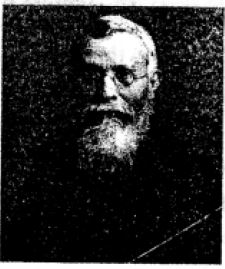
Question 1. Identify the person.
Answer: The individual depicted in the image is Dadabhai Naoroji.
In simple words: This is a picture of Dadabhai Naoroji.
Exam Tip: Remember that Dadabhai Naoroji is highly famous as the "Grand Old Man of India" and was one of the earliest nationalist leaders.
Question 2. What did he think about the British rule in India ?
Answer: As a prominent early nationalist leader, Dadabhai Naoroji viewed British dominance as an ‘everlasting.foreign invasion that was utterly though gradually destroying the country’, pointing out how it steadily ruined India's economy.
In simple words: Dadabhai Naoroji believed that British rule was like a slow, constant invasion that was gradually destroying India.
Exam Tip: Note how Naoroji focused on the "economic" destruction of India to explain why the colonial rule was harmful.
Question 3. Explain any three ways in which he felt that the Indian economy was being exploited by the British.
Answer: Dadabhai Naoroji highlighted several key ways the British exploited India's economy: 1. A massive portion of the salaries paid to British officers from Indian taxes was sent directly to England as personal savings. 2. India's valuable natural wealth - such as cotton, tea, coffee, indigo, and jute - was shipped to Britain without fair returns. 3. The Company used local tax revenues to purchase Indian products and then exported those goods to England for profit. 4. Significant sums of money gained by colonial officers through bribes and informal gifts were transferred out of India.
In simple words: Naoroji argued that the British drained India's economy by sending officials' salaries home, exporting natural resources like cotton and tea, and transferring bribes and tax money directly to England.
Exam Tip: These points form the core of Naoroji's famous "Drain of Wealth" theory, which is highly tested in secondary school exams.
Free study material for History Civics
Verified Textbook Solutions for Class 8 History Civics Chapter 07 Impact of British Rule on India
Download ICSE Answers for Class 8 History Civics Chapter 07 Impact of British Rule on India
Review accurate ICSE solutions for Chapter 07 Impact of British Rule on India tailored for Class 8 History Civics students. Use these step-by-step notes to simplify difficult textbook exercises and improve exam readiness.
Detailed Problem Solving for ICSE Class 8 History Civics
Tackle complex theorems and numerical problems easily by cross-referencing your working steps with our structured solution guides.
Next Steps in Your Class 8 History Civics Preparation
Pair your solution review with additional practice papers to test your execution speed and ensure total preparedness for school exams.
FAQs
You can download the verified Selina Concise solutions for Chapter 07 Impact of British Rule on India on StudiesToday.com. Our teachers have prepared answers for Class 8 History Civics as per 2026-27 ICSE academic session.
Yes, our solutions for Chapter 07 Impact of British Rule on India are designed as per new 2026 ICSE standards. 40% competency-based questions required for Class 8, are included to help students understand application-based logic behind every History Civics answer.
Yes, every exercise in Chapter 07 Impact of British Rule on India from the Selina Concise textbook has been solved step-by-step. Class 8 students will learn History Civics conceots before their ICSE exams.
Yes, follow structured format of these Selina Concise solutions for Chapter 07 Impact of British Rule on India to get full 20% internal assessment marks and use Class 8 History Civics projects and viva preparation as per ICSE 2026 guidelines.