

Selina Concise Solutions for Class 8 History Civics: Chapter 10 Struggle for Freedom I
Access the official Selina Concise textbook solutions for Class 8 History Civics, updated for the 2026-27 academic year. This digital resource is structured to help students build strong conceptual clarity and prepare effectively for school examinations.
Chapter-wise Solutions: Chapter 10 Struggle for Freedom I
Access the complete PDF for Chapter 10 Struggle for Freedom I below. This focused excerpt allows students to isolate specific topics for thorough review and uninterrupted reading, complementing standard ICSE textbooks.
Question 1. Fill in the blank: The British shattered the _________ village economy.
Answer: self sufficient
In simple words: The British rule ruined the village system where people used to produce everything they needed themselves.
Exam Tip: Remember that villages in India were independent and made their own goods before the British arrived.
Question 2. Fill in the blank: The controversial Ilbert Bill incident took place in _________.
Answer: 1883
In simple words: This famous event happened in the year 1883.
Exam Tip: Note down the exact year 1883, as this event led to the foundation of the Indian National Congress.
Question 3. Fill in the blank: The Arms Act forbade the Indians from _________.
Answer: possessing arms
In simple words: This law stopped Indian people from keeping any weapons.
Exam Tip: Memorize the term "possessing arms" to explain how the British disarmed Indians.
Question 4. Fill in the blank: The President of the first session of the Congress was _________.
Answer: W.C. Bannerji
In simple words: W.C. Bannerji was the very first leader to lead a Congress meeting.
Exam Tip: Be careful with the spelling of W.C. Bannerji (or Bonnerjee) as given in your textbook.
Question 5. Fill in the blank: Bal Gangadhar Tilak raised the slogan “Swaraj is my _________”.
Answer: birthright
In simple words: Tilak said that freedom belongs to every person from the day they are born.
Exam Tip: The word "birthright" is crucial here, as it shows the shift to radical demands.
Question 6. Fill in the blank: The three prominent leaders of the Radical Nationalists group were Lala Lajpat Rai, Bal Gangadhar Tilak, and _________.
Answer: Bipin Chandra Pal
In simple words: These three leaders were often called "Lal-Bal-Pal" and wanted quick changes.
Exam Tip: Learn the names of all three leaders together, as they are often asked as a group.
Question 7. Fill in the blank: Mahatma Gandhi was born on 2nd October 1869 at _________.
Answer: Porbandar
In simple words: Gandhi was born in a coastal town named Porbandar in Gujarat.
Exam Tip: Porbandar is the correct geographical location for Gandhiji's birth.
Question 8. Fill in the blank: Gandhiji’s method of agitation were Satyagraha, _________ and strikes.
Answer: boycott
In simple words: Gandhiji showed people how to fight peacefully by refusing to buy British goods.
Exam Tip: "Boycott" is an important term that means refusing to buy or use products from the rulers.
Question 9. Fill in the blank: The incident at Chauri Chaura took place on _________.
Answer: 5th February 1922
In simple words: This violent event in Chauri Chaura occurred on February 5, 1922, which made Gandhiji end his protest.
Exam Tip: Write the full date - 5th February 1922 - for maximum marks.
Question 10. Match the contents of Column A with those of Column B:
| Column A | Column B |
|---|---|
| 1. Annie Besant | (a) Khilafat Movement |
| 2. Morley-Minto Reforms | (b) Home Rule League |
| 3. Muslim League | (c) 1909 |
| 4. Surat Split | (d) Nawab Salimullah Khan |
| 5. Ali brothers | (e) 1907 |
Answer:
| Column A | Column B |
|---|---|
| 1. Annie Besant | (b) Home Rule League |
| 2. Morley-Minto Reforms | (c) 1909 |
| 3. Muslim League | (d) Nawab Salimullah Khan |
| 4. Surat Split | (e) 1907 |
| 5. Ali brothers | (a) Khilafat Movement |
In simple words: This table connects each historic person, law, or group with its correct partner or date.
Exam Tip: Always check the historical connections, like Annie Besant starting the Home Rule League or the Surat Split happening in 1907, to get these matching questions fully correct.
Question 11. State whether the following statement is true or false: The Congress was started in 1885.
Answer: True
In simple words: The Indian National Congress indeed began in the year 1885.
Exam Tip: Remember that Allan Octavian Hume helped set up the Congress in late 1885.
Question 12. State whether the following statement is true or false: Unification of India as one political unit was achieved by the Indians themselves.
Answer: False
In simple words: It was actually the British administration that brought India together under one rule.
Exam Tip: The political joining of India happened mainly due to British laws and administrative systems.
Question 13. State whether the following statement is true or false: The British treated the Indians at par with themselves.
Answer: False
In simple words: The British rulers did not treat Indian people equally and kept them away from big jobs.
Exam Tip: Think about the racial bias and discrimination that the British showed towards Indians.
Question 14. State whether the following statement is true or false: A prominent leader of the Early Nationalist groups was S.N. Bannerjee.
Answer: True
In simple words: Surendranath Banerjee was indeed a major leader of the early moderate group.
Exam Tip: Be ready to name Surendranath Banerjee as a key moderate leader in your exams.
Question 15. State whether the following statement is true or false: The religious and social reform movement divided the Indians.
Answer: False
In simple words: The social reforms actually brought people closer and helped build a sense of unity.
Exam Tip: Social reforms worked to end bad customs, which helped unite different groups of Indians.
Question 16. State whether the following statement is true or false: The Home Rule League was formed under the leadership of Tilak.
Answer: True
In simple words: Bal Gangadhar Tilak was one of the key leaders who started the Home Rule League.
Exam Tip: Note that both Tilak and Annie Besant started separate Home Rule Leagues in 1916.
Question 17. State whether the following statement is true or false: Chauri Chaura is a place in Madhya Pradesh.
Answer: False
In simple words: Chauri Chaura is actually a town located in Uttar Pradesh, not Madhya Pradesh.
Exam Tip: Remember that Chauri Chaura is located near Gorakhpur in Uttar Pradesh.
Question 18. State whether the following statement is true or false: Rowlatt Act was passed in 1923.
Answer: False
In simple words: The controversial Rowlatt Act was actually passed in 1919.
Exam Tip: 1919 is the year of the Rowlatt Act and the tragic Jallianwala Bagh incident.
Question 19. How did unification of India help to bring about a feeling of nationalism among the Indians?
Answer: Putting India under one single government helped grow the love for the nation. Under British control, the entire country was joined as one political area. Having the same laws and rules everywhere made people feel that they were all one.
In simple words: When the whole country got the same laws, people started feeling like they belonged to one nation.
Exam Tip: Mention how having the same laws and administration across the country created a strong sense of unity.
Question 20. How did modern education bring about unity among Indians?
Answer: Indians who learned English could now read books and ideas from western countries. They learned about big changes in the West, like the American and French Revolutions. This taught them about freedom, equal rights, and love for their country. Social change movements also helped a lot. All of this helped bring people closer and made them united.
In simple words: Learning Western ideas made educated Indians want freedom and equal treatment just like in Europe and America.
Exam Tip: Highlight the influence of the French and American Revolutions on Indian thinkers when discussing modern education.
Question 21. Name two early all-India associations.
Answer: Two early groups formed across India were:
1. The British Indian Association, which started in 1851.
2. The Bombay Association, which began in 1852.
In simple words: These were some of the very first groups created to talk about Indian problems.
Exam Tip: Write down the correct years along with the names of these early political groups.
Question 22. Why was the need for establishing an all-India organisation, representing Indian opinion, an urgent necessity?
Answer: People wanted a single group for the whole country for a long time. The main reasons for this were the harsh rules made by the British during the 1870s and 1880s. In 1883, the controversial Ilbert Bill was introduced. It allowed Indian judges to try Europeans in court. However, the British people protested, and the bill was taken back. This unfair action made Indians realize they must form a national group to protect their rights.
In simple words: The British took away a law that would let Indian judges try European criminals. This unfair act showed Indians that they needed a national group to speak for them.
Exam Tip: Focus on the Ilbert Bill of 1883 as the key spark that showed Indians they needed their own national voice.
Question 23. Differentiate between the methods of Early Nationalists and Radical Nationalists.
Answer: The Early Nationalists trusted British justice. They believed India could grow while remaining part of the British Empire. Instead of complete freedom, they only asked for self-rule under British control.
After 1905, new leaders like Bal Gangadhar Tilak, Lala Lajpat Rai, and Bipin Chandra Pal changed this approach. They wanted complete self-rule, called "Swaraj." They did not believe in sending prayers and requests to the British. Instead, they wanted the common people to stand up and use their own power. Tilak stated, "Swaraj is my birthright and I must have it."
The methods of these Radical Nationalists included:
1. Getting the common public to join the freedom fight.
2. Using local festivals to make people aware of their political rights.
3. Using new protest methods like strikes and refusing to buy foreign goods.
In simple words: Early nationalists used peaceful requests, while radical nationalists wanted to involve ordinary people and boycott British goods to win self-rule.
Exam Tip: Clearly contrast "Prayers and Petitions" of the moderates with "Boycott and Mass Action" of the radicals to show the main difference.
Question 24. Which factors contributed to the building up of the feeling of nationalism in India?
Answer: Many different things helped build the feeling of love for the nation in India. These main factors were:
1. Anger and unhappiness with British control.
2. Bringing the country under one single government and law system.
3. New financial and trade changes.
4. The spread of modern school education.
5. The work done by local newspapers and printing presses.
In simple words: Unfair British laws, new schools, newspapers, and having one government made Indians feel like one family.
Exam Tip: List all five points clearly using simple bullet points to score maximum marks.
Question 25. List down the aims of the Muslim League.
Answer: The main goals of the Muslim League were:
1. To encourage support and trust towards the British rulers.
2. To look after and support the rights and benefits of Muslim people.
3. To make sure that Muslims did not feel angry or unfriendly towards other groups in the country.
In simple words: The League wanted to keep Muslims loyal to the British, protect Muslim rights, and avoid fights with other religious groups.
Exam Tip: Present the aims as a neat numbered list, highlighting the words "loyalty to government" and "protecting Muslim interests."
Question 26. Describe the provisions of the Government of India Act (1919).
Answer: This law made the local law-making councils bigger, and most of their members were now chosen by votes. It also started a new double-rule system called Dyarchy in the states. Under this ruleset, important areas like money, law, and police were "reserved" under the Governor. Easier areas like schools, hospitals, and local councils were "transferred" to Indian ministers who answered to the local assembly.
In simple words: The 1919 law split power into two parts: British officers kept control of money and safety, while Indian leaders got charge of schools and health.
Exam Tip: Remember the term "Dyarchy" and explain how power was divided into "reserved" and "transferred" subjects.
Question 27. Describe the constructive programme introduced by Gandhiji.
Answer: Gandhiji's social work and helpful plans turned the freedom fight into a movement for everyone. He tried hard to stop the bad practice of untouchability. He also worked to help village people live better lives. Since most Indians lived in small towns, he believed India could only grow if villages grew. He helped start small businesses in these areas and made home-spun cloth, called Khadi, very popular. The spinning wheel, or Charkha, became a powerful sign of self-reliance. He believed that freedom was useless if people were not treated equally.
In simple words: Gandhiji helped village people, fought against caste bias, promoted home-made cloth, and said true freedom means everyone is equal.
Exam Tip: Write about "Charkha", "Khadi", and "removing untouchability" as key parts of Gandhiji's constructive work.
Picture Study:
(A) This picture shows three Radical Nationalist leaders.
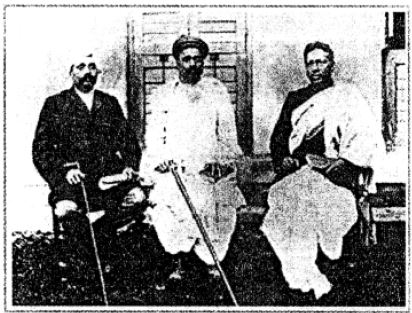
Question 28. Identify and name the three Radical Nationalist leaders shown in the picture.
Answer: Lala Lajpat Rai, Bal Gangadhar Tilak, and Bipin Chandra Pal.
In simple words: The three leaders are known as Lal, Bal, and Pal.
Exam Tip: Make sure to know which leader is which in the famous trio photograph.
Question 29. What methods of protest did these Radical Nationalist leaders suggest?
Answer: They recommended using Swadeshi (local goods) and boycotting foreign products. They also wanted large numbers of common people to participate in the movement.
In simple words: They wanted people to buy Indian products, stop using British things, and join the fight together.
Exam Tip: The two main strategies to mention are "boycott" and "Swadeshi."
Question 30. What famous slogan was raised by Bal Gangadhar Tilak?
Answer: Tilak raised the well-known slogan: "Swaraj is my birthright and I must have it."
In simple words: He said that self-rule is something everyone deserves from birth.
Exam Tip: Quote the slogan exactly with quotation marks for full marks.
(B) Look at the given picture.
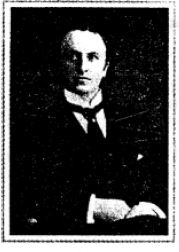
Question 31. Identify and name the British officer shown in the picture.
Answer: The officer in the image is Lord Curzon.
In simple words: This is Lord Curzon, who was the British Viceroy of India.
Exam Tip: Lord Curzon is famously known for dividing Bengal in 1905.
Question 32. When did the partition of Bengal take place?
Answer: The division of Bengal happened in the year 1905.
In simple words: Bengal was split in 1905.
Exam Tip: 1905 is an essential year to remember in the history of the Indian national movement.
Question 33. What was the actual reason behind the partition of Bengal?
Answer: The real goal was to weaken the growing fight for freedom and to create division and dislike between Hindus and Muslims.
In simple words: The British split Bengal to stop Indians from uniting and fighting together.
Exam Tip: Always mention "divide and rule" and "weakening the national movement" as the real motives.
Question 34. What official excuse did the British give for the partition of Bengal?
Answer: The British claimed that Bengal was too massive to be run properly by one administration.
In simple words: They said the state was too big to govern easily.
Exam Tip: The keyword here is "administrative convenience" or "too large to be governed efficiently."
Additional Questions - Rise of Indian Nationalism
Question 35. Fill in the blank: Modern Indian nationalism arose to meet the challenge of _________.
Answer: Foreign domination
In simple words: Indian patriotism grew to fight against rule by outsiders.
Exam Tip: Use the term "foreign domination" to explain why Indian nationalism started.
Question 36. Fill in the blank: Exploitation of India by the British was direct and harsh before 1857; after 1857 it became _________ and _________.
Answer: subtle, systematic
In simple words: After the big fight in 1857, the British looted India in a quiet and planned way.
Exam Tip: Remember both words: "subtle" (hidden) and "systematic" (organized).
Question 37. Fill in the blank: The _________ Rebellion was an armed rebellion of the Sikhs against the British policy of divide and rule.
Answer: Kukas
In simple words: The Kuka movement was a fight by Sikh people against British tricks to divide them.
Exam Tip: The Kuka Rebellion is a key example of armed resistance in Punjab.
Question 38. Fill in the blank: The English language acted as a _________ language among the educated Indians.
Answer: link
In simple words: English helped educated people from different states talk to one another easily.
Exam Tip: "Link language" is the standard term for how English connected different parts of India.
Question 39. Fill in the blank: A.O. Hume laid the foundation of the _________ in December 1885.
Answer: Indian National Congress
In simple words: Allan Octavian Hume helped start the Indian National Congress.
Exam Tip: A.O. Hume was a retired British officer who helped form the Congress.
Question 40. Match the following:
| Column A | Column B |
|---|---|
| 1. Kukas | (a) rediscovered India’s glorious past |
| 2. Santhal uprising | (b) followers of Guru Ram Singh |
| 3. William Jones | (c) Ilbert Bill controversy |
| 4. ‘Vande Mataram’ | (d) Bihar |
| 5. Lord Ripon | (e) evoked patriotic emotions |
Answer:
| Column A | Column B |
|---|---|
| 1. Kukas | (b) followers of Guru Ram Singh |
| 2. Santhal uprising | (d) Bihar |
| 3. William Jones | (a) rediscovered India’s glorious past |
| 4. ‘Vande Mataram’ | (e) evoked patriotic emotions |
| 5. Lord Ripon | (c) Ilbert Bill controversy |
In simple words: This match pairs up historical events, people, and songs with their correct details.
Exam Tip: Make sure to link the Santhal uprising to Bihar and William Jones to studying India's history.
Question 41. ‘Vande Mataram’ was written by
(a) Swami Vivekananda
(b) Raja Ram Mohan Roy
(c) Bankim Chander Chattopadhyaya
(d) None of the options
Answer: (c) Bankim Chander Chattopadhyaya
In simple words: The national song "Vande Mataram" was composed by Bankim Chander Chattopadhyaya.
Exam Tip: Do not confuse the writer of Vande Mataram with Rabindranath Tagore, who wrote the national anthem.
Question 42. Who approved the Ilbert Bill?
(a) Lord Ripon
(b) Lord Lytton
(c) Lord Dalhousie
(d) None of the options
Answer: (a) Lord Ripon
In simple words: Lord Ripon was the kind Viceroy who tried to bring equal court rules for Indians.
Exam Tip: Lord Ripon approved the bill, while Lord Lytton was known for repressive policies.
Question 43. The Indian National Congress was established in
(a) 1883
(b) 1885
(c) 1890
(d) None of the options
Answer: (b) 1885
In simple words: The Congress party was formed in late 1885.
Exam Tip: 1885 is one of the most important dates in Indian history; make sure to memorize it.
Question 44. The first session of the Indian National Congress was attended by how many delegates?
(a) 62
(b) 72
(c) 82
(d) None of the options
Answer: (b) 72
In simple words: Exactly 72 people from all over India came to the first Congress meeting.
Exam Tip: The number 72 is frequently asked in multiple-choice questions about the Congress.
Question 45. The first session of the Indian National Congress was presided over by
(a) W.C. Bannerjee
(b) Surendranath Banerjea
(c) A.O. Hume
(d) None of the options
Answer: (a) W.C. Bannerjee
In simple words: Woomesh Chandra Bannerjee was the president of the very first meeting.
Exam Tip: A.O. Hume started the Congress, but W.C. Bannerjee was its first president.
Question 46. State whether the following statement is true or false: The Revolt of 1857 had failed to rid India of foreign rule.
Answer: True
In simple words: Even though the 1857 fight was huge, the British kept ruling India.
Exam Tip: The revolt was a big step, but British control continued for ninety more years.
Question 47. State whether the following statement is true or false: Western education and modern ideas could not bring the Indians together.
Answer: False
In simple words: Western learning actually helped bring Indians from different regions closer.
Exam Tip: Remember that Western ideas of liberty and equality helped unite Indian thinkers.
Question 48. State whether the following statement is true or false: Racial arrogance and racial discrimination by the British caused great resentment among Indian intellectuals.
Answer: True
In simple words: Educated Indians were very angry because the British treated them as inferior.
Exam Tip: Highlight "racial discrimination" as a major cause of anger against the British.
Question 49. State whether the following statement is true or false: The Ilbert Bill had to be amended as the European reacted violently to it.
Answer: True
In simple words: The British changed the Ilbert Bill because white people protested against it angrily.
Exam Tip: The bill had to be modified because of the pressure from European residents in India.
Question 50. State whether the following statement is true or false: A.O. Hume was not supported by nationalist Indian leaders.
Answer: False
In simple words: Indian leaders actually worked closely with A.O. Hume to build the Congress.
Exam Tip: A.O. Hume received complete backing from major Indian nationalist leaders of that time.
Question 51. Define nationalism.
Answer: Nationalism means loving your country deeply and staying loyal to it. It is the belief that your nation's needs and safety are very important and must be protected.
In simple words: Nationalism is a strong feeling of love and pride for your own country.
Exam Tip: Use simple terms like "loyalty", "devotion", and "patriotism" to explain nationalism clearly.
Question 52. Name any two Western scholars who researched the Indian past and rediscovered its rich heritage.
Answer: Two European scholars who studied India's history were William Jones and Alexander Cunningham.
In simple words: These scholars helped Indians learn about their own beautiful and rich past.
Exam Tip: Memorize William Jones and Alexander Cunningham as key researchers of Indian history.
Question 53. How did the British economic policies in India transform India into an agricultural colony.
Answer: The British planned their trade rules to make India just a farming colony. India was forced to send raw goods to Britain and buy ready-made British products in return.
In simple words: The British took cheap raw materials from India and sold their own expensive factory goods back to us.
Exam Tip: Use the key phrase "supplier of raw materials and buyer of manufactured products" to score full marks.
Question 54. Why was the Ilbert Bill introduced and by whom?
Answer: Lord Ripon brought in this bill to stop some unfair court rules. The law wanted to allow Indian judges to run trials for Europeans accused of crimes.
In simple words: Lord Ripon introduced the bill so Indian judges could judge European criminals equally.
Exam Tip: Mention "Lord Ripon" and the permission for "Indian judges to try Europeans" in your answer.
Question 55. When and where was the first session of the Indian National Congress held?
Answer: The initial meeting of the Congress took place in Bombay in December 1885.
In simple words: The first Congress meeting was held in Bombay in the month of December 1885.
Exam Tip: Write both the place (Bombay) and the month/year (December 1885) for a complete answer.
Question 56. There were many factors that led to the rise of nationalism in India. In the light of this statement, answer the following questions:
(a) In what way did the Revolt of 1857 impact the rise of nationalism in India?
(b) What changes did Western education bring about in the traditional Indian outlook?
(c) The English language acted as a link language among the Indians. Explain.
Answer:
(a) After the 1857 fight, the British began looting India in a quiet, planned way. This hurt almost every group of Indian people. However, it took many years for Indians to understand how British rule was making them poor. Many armed fights happened after 1857. One such fight was the Kuka rebellion. It stood against the British plan to separate Hindus and Muslims.
(b) The British started Western schools to make Indians loyal workers and buyers of British things. But Western education did much more. It brought new scientific knowledge and logical thinking to India. Great ideas about human values, democracy, and freedom changed how people thought. A small group of English-educated Indians grew up, who later became the main leaders of the freedom movement.
(c) English acted as a connecting language for educated Indians across different states. It played a major part in bringing together people who spoke different regional languages. The language barrier was gone because English became a common way to talk. Educated middle-class Indians could now share their plans and thoughts in English. This shared language helped them feel like they belonged to one big nation.
In simple words: The 1857 revolt showed how British rules caused poverty. Western schools taught ideas of freedom, and English helped leaders from different states talk to each other and unite.
Exam Tip: For part (a) focus on the Kuka rebellion; for (b) focus on democracy and rational thinking; for (c) focus on breaking language barriers.
Question 57. In the context of the causes of the rise of Indian nationalism, answer the following questions:
(a) How did the British administrative system indirectly create conditions favourable for the growth of Indian nationalism.
(b) Examine the role of modern transport and communication in fostering unity and nationalism among the people.
(c) How did the rediscovery of India’s glorious past prepare the ground for the growth of the national spirit among the Indians.
Answer:
(a) The British joined a divided India into one single country under their control. They brought in the same modern system of government in all areas. The exact same laws were used for everyone. People from different states, castes, and groups had to follow these same rules. This slowly made them feel that they belonged to the same land and were all Indians.
(b) This feeling of being one country grew stronger when the British built roads, trains, and the post and telegraph system. People could travel and talk to each other much more. Old caste rules became weaker. People from distant places came closer. They saw that they had the same problems, the same hopes, and the same goals. They felt like they were one nation.
(c) Finding out about India's great history helped a lot. This past included the deep ideas of Vedic thinking, the great kingdoms of the Mauryas and Guptas, and the art of the Mughals. Scholars like William Jones and Alexander Cunningham studied old Indian sites and books to show this rich history. Learning this gave Indians self-respect and pride, making them hope for a free and strong India.
In simple words: Standard laws, fast trains, letters, and learning about India's proud history made people feel united and proud of their country.
Exam Tip: Clearly connect each factor (laws, trains, history) to how it helped people feel united as one nation.
Question 58. With reference to the rise of Indian nationalism, answer the following questions:
(a) What was the role of vernacular press and literature in the rise of Indian nationalism?
(b) How did the British economic policies lead to the growth of Indian nationalism?
(c) Mention the discriminatory British policies that were greatly resented by the Indian intellectuals.
Answer:
(a) Local language newspapers did a great job of spreading new ideas and making people aware. Indian leaders used newspapers to write against British rules and show the bad side of foreign power. They made ideas like democracy and local rule popular. They urged Indians to unite and work for the welfare of the nation. National literature also inspired the spirit of nationalism among the people. Novels, essays and patriotic poems written by well-known authors and poets fired the imagination of the common people and gave rise to powerful patriotic feelings. Bankim Chandra Chattopadhyaya's famous song 'Vande Mataram' still makes Indians feel proud today.
(b) The British took India's riches away to Britain, leaving the people very poor. Indian industries were ruined, leading to deep poverty and terrible famines. The British government did not care. Educated Indians saw how serious this was and knew they needed control over their own money and trade.
(c) The unfair rules made by the British were:
1. Indians were stopped from using parks, clubs, libraries, and train compartments that were kept only for white people.
2. High-paying jobs in the government were kept only for the British. For example, Surendranath Banerjee was removed from his civil service job for a minor reason.
3. British trade rules hurt Indian business to help British business. Lord Lytton's unfair laws caused great anger among educated Indians.
In simple words: Newspapers wrote about freedom, British taxes made India poor, and unfair rules treated Indians like second-class citizens. This made everyone want freedom.
Exam Tip: Mention the song "Vande Mataram" and the "Drain of Wealth" as vital terms for high marks in this topic.
Question 59. In the context of the Indian National Congress, answer the following questions:
(a) Briefly discuss the Ilbert Bill controversy and show how it hastened the establishment of the Indian National Congress.
(b) What role did A. O. Hume play in the establishment of the Indian National Congress?
(c) Mention the main aims of the Congress.
Answer:
(a) Lord Ripon wanted to stop some of the unfair laws in the country. He approved the Ilbert Bill, which would let Indian judges run trials for Europeans. However, the white people in India reacted with great anger. The government had to change the bill. This shocked Indian leaders and showed them the deep bias of the British. It made them realize they needed a strong national group to stand up for their rights. Soon, in 1883, Surendranath Banerjee started the Indian National Conference, which led to the birth of the Congress two years later.
(b) Allan Octavian Hume was one of the key creators of the Indian National Congress. In March 1885, he took the initiative to call a meeting of educated Indians, which led to the first Congress session in December. His goal was to help Indians get a larger share in running their own country.
(c) The first goals of the Congress were:
1. To build friendly relationships among workers in different parts of India.
2. To make the feeling of national unity stronger.
3. To collect the demands of the people and present them to the British government.
4. To educate and guide public opinion across the nation.
In simple words: The Ilbert Bill showed that the British did not treat Indians as equals. A.O. Hume helped start the Congress so Indian leaders could meet, unite, and present their requests to the government.
Exam Tip: Focus on the role of A.O. Hume as the main founder of the Congress, and be ready to list the main aims of the Congress.
Picture study:
This is a picture of a person who was dismissed from the Indian Civil Service by the British on flimsy grounds
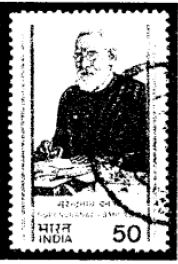
Question 60. Identify the person shown in the picture.
Answer: The person in the image is Surendranath Banerjee.
In simple words: This is Surendranath Banerjee, a famous moderate leader of the early Congress.
Exam Tip: He was one of the first Indians to pass the Indian Civil Service exam but was unfairly dismissed.
Question 61. Name the conference that Surendranath Banerjee held in 1883.
Answer: He organized the Indian National Conference in 1883.
In simple words: He called a meeting named the Indian National Conference.
Exam Tip: The Indian National Conference of 1883 was the predecessor to the Indian National Congress.
Question 62. What was the outcome of the Indian National Conference in 1883?
Answer: This conference paved the way for the creation of the Indian National Congress in 1885.
In simple words: This meeting helped Indian leaders join together to form the Indian National Congress two years later.
Exam Tip: The conference merged into the Indian National Congress to create one unified platform.
Question 63. What were the main aims of the Indian National Congress?
Answer: The major goals were to make the national bond stronger, bring leaders from different regions together, and present public demands to the rulers.
In simple words: The aims were to unite all Indians, make friends among leaders, and ask the British for reforms.
Exam Tip: Refer back to the four main aims of the Congress (friendly relations, national unity, presenting demands, training public opinion).
Additional Questions - The Indian National Movement (1885-1916)
Question 64. Fill in the blank: The early nationalists spread _________ among the people.
Answer: political awareness
In simple words: Early leaders helped people understand how the government worked and what their rights were.
Exam Tip: "Political awareness" is the exact term to describe how the early moderates educated the public.
Question 65. Fill in the blank: The assertive nationalists believed that British rule in India was not a _________ but a _________.
Answer: blessing, curse
In simple words: Radical leaders believed that British rule was completely bad for India.
Exam Tip: Remember both words: "blessing" and "curse".
Question 66. Fill in the blank: After the partition of Bengal, the assertive nationalists adopted the methods of _________, _________ and _________ to achieve the goal of _________.
Answer: boycott, swadeshi, national education, swaraj
In simple words: Radicals wanted to buy local goods, leave British products, open national schools, and get self-rule.
Exam Tip: Memorize the four key terms: boycott, swadeshi, national education, and swaraj.
Question 67. Fill in the blank: Separate electorates meant that the _________ voters could elect _________ representatives.
Answer: Muslim, Muslim
In simple words: This system allowed only Muslim people to vote for Muslim candidates.
Exam Tip: Separate electorates were introduced in 1909 to divide the voting system along religious lines.
Question 68. Fill in the blank: Gandhi spent about 22 years in _________ as a practising lawyer.
Answer: South Africa
In simple words: Gandhiji worked as a lawyer in South Africa for over twenty years.
Exam Tip: South Africa is the place where Gandhiji first tested his methods of peaceful protest.
Question 69. Match the following:
| Column A | Column B |
|---|---|
| 1. Dadabhai Naoroji | (a) 1905 |
| 2. Assertive nationalists | (b) separate electorates |
| 3. Partition of Bengal | (c) satyagraha |
| 4. Muslim League | (d) immediate freedom from British rule |
| 5. Gandhiji | (e) early nationalists |
Answer:
| Column A | Column B |
|---|---|
| 1. Dadabhai Naoroji | (e) early nationalists |
| 2. Assertive nationalists | (d) immediate freedom from British rule |
| 3. Partition of Bengal | (a) 1905 |
| 4. Muslim League | (b) separate electorates |
| 5. Gandhiji | (c) satyagraha |
In simple words: This table links leaders and groups to their correct periods, goals, and terms.
Exam Tip: Make sure to associate Dadabhai Naoroji with early nationalists and Partition of Bengal with 1905.
Question 70. The history of the Indian national movement is broadly categorized into how many phases?
(a) three
(b) four
(c) five
(d) None of the options
Answer: (a) three
In simple words: The struggle for freedom is divided into three main time periods.
Exam Tip: The three phases are the Moderate phase, Assertive phase, and Gandhian phase.
Question 71. Who was an important assertive nationalist leader?
(a) Bal Gangadhar Tilak
(b) Dadabhai Naoroji
(c) Surendranath Banerjea
(d) None of the options
Answer: (a) Bal Gangadhar Tilak
In simple words: Bal Gangadhar Tilak was a major leader who wanted quick and active protests.
Exam Tip: Tilak is a prime example of an assertive or radical leader.
Question 72. The British followed the policy of divide and rule by dividing which state on communal lines?
(a) Bengal
(b) Punjab
(c) Gujarat
(d) None of the options
Answer: (a) Bengal
In simple words: The British split the province of Bengal to divide Hindus and Muslims.
Exam Tip: The division of Bengal in 1905 is the most famous example of the British "divide and rule" strategy.
Question 73. The Muslim League was established in
(a) 1905
(b) 1906
(c) 1913
(d) None of the options
Answer: (b) 1906
In simple words: The Muslim League was started in the year 1906.
Exam Tip: Remember that the League was formed in Dacca in December 1906.
Question 74. Gandhiji studied law in
(a) England
(b) South Africa
(c) France
(d) None of the options
Answer: (a) England
In simple words: Gandhiji went to London, England to study law.
Exam Tip: He studied law in England first, then went to South Africa to practice as a lawyer.
Question 75. State whether the following statement is true or false: The early nationalists believed in the sense of justice and fair play of the British.
Answer: True
In simple words: Early moderate leaders trusted that the British would be fair and honest with India.
Exam Tip: This deep faith in British justice is what characterized the early nationalist phase.
Question 76. State whether the following statement is true or false: The early nationalists presented their grievances to the British in the form of protests and strikes.
Answer: False
In simple words: Instead of strikes, early leaders used peaceful letters, meetings, and speeches to ask for help.
Exam Tip: Moderates relied on "Prayers and Petitions" rather than active street protests.
Question 77. State whether the following statement is true or false: The political beliefs, aims and methods of the assertive nationalists were the same as those of the early nationalists.
Answer: False
In simple words: The beliefs and protest methods of the radicals were completely different from the moderates.
Exam Tip: Assertive nationalists wanted direct action and mass participation, unlike the moderates.
Question 78. State whether the following statement is true or false: The assertive nationalists had no faith in the constitutional methods followed by the early nationalists.
Answer: True
In simple words: The radical leaders did not believe that writing polite requests to the government would ever work.
Exam Tip: Radical leaders called the moderate methods "political mendicancy" or begging.
Question 79. State whether the following statement is true or false: Tilak knew that the British would concede to the demand of swaraj easily without any struggle.
Answer: False
In simple words: Tilak was sure that the British would never give India self-rule unless people fought hard for it.
Exam Tip: Tilak always stressed that "Swaraj" must be won through intense public struggle.
Question 80. Mention two leaders of the early nationalist phase.
Answer: Two major leaders of the early moderate phase were Dadabhai Naoroji and Gopal Krishna Gokhale.
In simple words: These were the early leaders who used peaceful ways to ask for changes.
Exam Tip: Write any two names from Dadabhai Naoroji, Surendranath Banerjea, or Gopal Krishna Gokhale.
Question 81. Mention two leaders of the assertive nationalist phase.
Answer: Two prominent leaders of the radical phase were Bal Gangadhar Tilak and Bipin Chandra Pal.
In simple words: These were the leaders who wanted strong protests and self-rule immediately.
Exam Tip: Lala Lajpat Rai, Tilak, and Bipin Chandra Pal (Lal-Bal-Pal) are the most famous assertive leaders to remember.
Question 82. Why were the assertive nationalists disillusioned with the leadership of the early nationalists?
Answer: The radical leaders did not trust the peaceful, polite methods of the early leaders. They knew that the British would never give self-rule without a hard fight. They wanted to start active, strong protests against the government. They believed the common people must be involved in this fight. They also wanted to change the Congress from a simple debate group of rich men into a strong team of brave fighters.
In simple words: The radicals got tired of polite letters because they knew only strong protests by ordinary people would win freedom.
Exam Tip: Use terms like "mass involvement" and "active opposition" to show what the radicals wanted.
Question 83. When and why was Bengal partitioned?
Answer: The British split Bengal in 1905 to carry out their plan of separating Hindus and Muslims.
In simple words: Bengal was divided in 1905 to break Indian unity.
Exam Tip: Always include both the year (1905) and the British policy ("divide and rule") in your answer.
Question 84. Where and under whose leadership was the Muslim League established?
Answer: The Muslim League was started in December 1906 in Dacca under Nawab Salimullah Khan.
In simple words: It was created in December 1906 in Dacca, led by Nawab Salimullah Khan.
Exam Tip: Write the three key facts: December 1906, Dacca (Dhaka), and Nawab Salimullah Khan.
Question 85. Mention two objectives of the Muslim League?
Answer: Two main aims of the Muslim League were:
1. To make Muslims feel loyal to the British rulers.
2. To protect and support the political rights of the Muslim population.
In simple words: The League wanted Muslims to support the British and keep Muslim interests safe.
Exam Tip: Present the objectives clearly as two distinct points.
Question 86. Why was the introduction of separate electorates a death blow to national unity?
Answer: Separate voting meant dividing voters by their religion, caste, or job. For example, only Muslims could vote for Muslim leaders. This rule completely broke the unity of the country. It was the very first step that led to the division of India into separate nations.
In simple words: Splitting voters by religion stopped Hindus and Muslims from voting together, which eventually led to the partition of the country.
Exam Tip: Explain how separate electorates laid the foundation for the Partition of India.
Question 87. Why did the Indian nationalists support the war effort of the British when the First World War broke out?
Answer: At first, Indian leaders decided to support Britain in the war with soldiers and money. They sent over a million soldiers and lots of funds. The British said they were fighting to protect democracy and help countries rule themselves. This made Indian leaders believe that Britain would reward their help by giving India self-rule after the war.
In simple words: Indian leaders helped Britain in the war because they hoped Britain would give India freedom as a thank-you reward.
Exam Tip: Mention the British promise to "make the world safe for democracy" as the main reason why Indians trusted them.
Question 88. What was the main aim of the Home Rule Leagues?
Answer: The primary goal of these Leagues was to win self-rule for India within the British Empire once the war ended.
In simple words: They wanted India to have its own government under the British Crown.
Exam Tip: Use the phrase "self-government within the British Empire" to define the goal of the Home Rule Leagues.
Question 89. With reference to the early nationalists, discuss the following:
(a) Beliefs of the early nationalists
(b) Methods of the early nationalists
(c) Important contributions made by the early nationalists to the national movement?
Answer:
(a) Early moderate leaders believed that British rule brought many good things to India. They felt that India was not yet ready to rule itself, so staying under British control was better. They were sure they could convince the British to make changes that would help Indian citizens.
(b) Early leaders trusted British fairness, so they used peaceful and legal ways to ask for changes. They wrote polite letters about their problems and waited for the government to make new laws. They believed the rulers would slowly accept their demands. They taught people about politics, held meetings, and sent teams of leaders to England to request reforms.
(c) The key achievements of the early moderates were:
1. They built a strong starting base that helped later leaders make stronger demands.
2. They made people aware of their political rights and brought a sense of national unity. People began to think of themselves as one Indian nation.
3. They trained Indian citizens in political matters, teaching them about democracy, secularism, and freedom, which helped prepare for the next steps of the struggle.
In simple words: Early nationalists used peaceful requests, trusted British fairness, and helped build the foundation for future freedom struggles by educating people.
Exam Tip: Clearly list the "Three Ps" (Protest, Prayer, Petition) when describing the methods of the early nationalists.
Question 90. With reference to the rise of the assertive nationalists within the congress, discuss:
(a) The beliefs of the assertive nationalists
(b) The objectives of the assertive nationalists
(c) How the methods of the assertive nationalists differed from those of the early nationalists?
Answer:
(a) Radical leaders had zero trust in British fairness. They believed British rule was a complete curse, not a blessing. They were sure the British would never make real reforms for India's good. They knew British interests were opposite to Indian interests, and India could never grow under foreign rule.
(b) The goal of the assertive leaders was not slow, step-by-step changes, but getting total and immediate freedom (Swaraj) from British control.
(c) Moderates used peaceful, legal methods because they trusted the British. They wrote petitions, held meetings, and waited patiently for changes. However, radical nationalists had no faith in these slow methods. They argued that twenty years of writing polite requests and sending petitions had failed to bring any real results.
In simple words: Radicals did not trust the British and wanted immediate freedom, unlike the moderates who trusted the British and wanted slow, peaceful changes.
Exam Tip: Make sure to contrast "slow constitutional steps" of moderates with "immediate Swaraj" of radicals.
Question 91. With reference to the Lucknow Session of the Congress of 1916, answer the following questions:
(a) What was the Lucknow Pact ?
(b) What was the objective of the Lucknow Pact
(c) What were the results of Lucknow Pact ?
Answer:
(a) The Lucknow Pact was a formal agreement signed by the Congress and the Muslim League to work together for political changes in India.
(b) Through this agreement, both groups joined hands to demand Dominion Status (self-rule) for India. It was a massive step in bringing Hindus and Muslims together.
(c) This union between the Muslim League and the Congress, as well as the joining of moderates and radicals, created great excitement and made the freedom movement much stronger.
In simple words: The Lucknow Pact was an agreement in 1916 where Hindus, Muslims, moderates, and radicals all came together to demand self-rule from the British.
Exam Tip: Highlight "Hindu-Muslim unity" and "unity between moderates and radicals" as the two major results of the 1916 session.
Picture study:
This is the picture of a national leader.
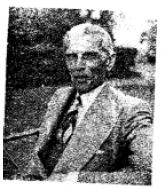
Question 92. Identify the person in the picture.
Answer: The person in the image is Muhammad Ali Jinnah.
In simple words: This is Muhammad Ali Jinnah, who was a major leader of the Muslim League.
Exam Tip: Jinnah played a key role in the later years of the nationalist movement.
Question 93. Which political organization did Muhammad Ali Jinnah join and when?
Answer: He joined the political group called the Muslim League in the year 1913.
In simple words: He became a member of the Muslim League in 1913.
Exam Tip: Jinnah was initially a member of the Congress before joining the Muslim League.
Question 94. When and by whom was the Muslim League founded?
Answer: The Muslim League was created in December 1906 under Nawab Salimullah Khan in the city of Dacca.
In simple words: It was set up in December 1906 in Dacca, led by Nawab Salimullah Khan.
Exam Tip: Dacca (now Dhaka) was the city where the League's first meeting took place.
Question 95. What were the objectives of the Muslim League?
Answer: The primary goals of this group were:
1. To build a feeling of support and loyalty to the British government among Muslims.
2. To safeguard and advance the political interests of the Muslim population.
3. To stop any feelings of anger or dislike towards other religious communities.
In simple words: The League worked to keep Muslims loyal to the British, protect their rights, and prevent fights with other groups.
Exam Tip: These objectives are identical to the goals discussed earlier, so keep them consistent.
Free study material for History Civics
Complete Guide and Answers: Class 8 History Civics Chapter 10 Struggle for Freedom I
Verified Problem Answers for Class 8 History Civics Chapter 10 Struggle for Freedom I
Strengthen your preparation with comprehensive answers for Class 8 History Civics Chapter 10 Struggle for Freedom I. These expert-reviewed solutions make tracking your academic progress straightforward and efficient.
Concept Clarification for Chapter 10 Struggle for Freedom I
Tackle complex theorems and numerical problems easily by cross-referencing your working steps with our structured solution guides.
Effective Revision Strategies for Chapter 10 Struggle for Freedom I
Explore our broader library of study materials and chapter notes to support your continuous revision and secure higher marks.
FAQs
You can download the verified Selina Concise solutions for Chapter 10 Struggle for Freedom I on StudiesToday.com. Our teachers have prepared answers for Class 8 History Civics as per 2026-27 ICSE academic session.
Yes, our solutions for Chapter 10 Struggle for Freedom I are designed as per new 2026 ICSE standards. 40% competency-based questions required for Class 8, are included to help students understand application-based logic behind every History Civics answer.
Yes, every exercise in Chapter 10 Struggle for Freedom I from the Selina Concise textbook has been solved step-by-step. Class 8 students will learn History Civics conceots before their ICSE exams.
Yes, follow structured format of these Selina Concise solutions for Chapter 10 Struggle for Freedom I to get full 20% internal assessment marks and use Class 8 History Civics projects and viva preparation as per ICSE 2026 guidelines.