

Official Class 4 Environmental Studies Worksheets: Chapter 27 Chuskit Goes to School
Access comprehensive chapter-wise worksheets for Chapter 27 Chuskit Goes to School using the CBSE Class 4 EVS Chustik Goes To School Worksheet. Designed to align with the 2026-27 academic syllabus for Class 4 Environmental Studies, these printable practice sets help students reinforce key concepts and improve their overall exam readiness.
Solved Practice Worksheets for Environmental Studies
Access the complete worksheet PDF for Class 4 Environmental Studies below. Regular practice with these targeted academic tasks builds familiarity with standard question patterns and helps secure higher marks in final school examinations.
Question 1. Identify the armed forces of our country.
Answer: The armed forces of our country are divided into three main branches based on the images shown in the worksheet:
1. Indian Army (represented by the battle tank)
2. Indian Air Force (represented by the fighter jets)
3. Indian Navy (represented by the warship and helicopter)
In simple words: The three main parts of our armed forces protect our land, sky, and water.
Exam Tip: Remember the three defense domains: land (Army), air (Air Force), and water (Navy).
Question 2. What does a medical officer do on the ship?
Answer: A medical officer on a ship is responsible for taking care of the health and medical needs of all the officers and sailors onboard. They provide first aid, treat illnesses, conduct routine health check-ups, and ensure that medical emergencies at sea are managed effectively.
In simple words: The medical officer is the doctor on the ship who keeps everyone healthy and treats the sick or injured crew members.
Exam Tip: Key responsibilities include providing first aid, treating injuries, and maintaining hygiene standards onboard.
Question 3. Find out the difference between a normal ship and a submarine.
Answer: A normal ship (such as a passenger or cargo ship) always sails on the surface of the water and remains above sea level. In contrast, a submarine is a special watercraft that is capable of traveling both on the water surface and deep underwater beneath the sea.
In simple words: A normal ship stays on top of the water, while a submarine can go deep down under the water.
Exam Tip: Highlight the ability to submerge underwater as the primary feature that distinguishes a submarine from ordinary ships.
Question 4. Name any two occupations which women were not allowed to do few years back.
Answer: Two occupations that women were traditionally not allowed to join or perform a few years back include:
1. Working as combat officers in the armed forces (such as fighter pilots or serving on warships)
2. Working in underground coal mines
In simple words: Earlier, women were not permitted to join certain tough jobs like defense combat roles or deep-mine work.
Exam Tip: Mentioning roles in defense forces or heavy industrial labor demonstrates a clear understanding of changing gender roles.
Question. Tick the correct answer
a. Chuskit lives in _______village in Ladakh.
(i)Khurja
(ii) Skitpo Pul
(iii) kosi
Answer : a. (ii) SkitoPul
b. People in Ladakh say this to their father.
(i)Abba le
(ii) Mama le
(iii) Amma le
Answer : (i) Abba le
Question. Match the following
a. Blind i. Who cannot speak
b. Lame ii. Who cannot hear
c. Deaf iii. Who cannot walk
d. Dumb iv. Who cannot see
Answer : a - iv
b - iii
c - ii
d - i
Question. Answer in one word
a. Whose dream was to go to school and study? _________
b. What did Chuskit do all the day long when she did not go to school? _______
Answer : a. Chuskit
b. Drawing
Question. Fill in the blanks
a. Children ________ the uneven road.
b. Since_____________ ,Chuskit could not use her legs.
Answer : a. levelled
b. birth
1. Fill in the blanks:
a. Chuskit is ________years old _______ who cannot ______.
b. She lives in ________ village in _______.
c. Abdul talked about his plan to the _________and ________.
d. They made a small _______ across the river.
2. Match the following:
a) A person who cannot speak blind
b) A person who cannot walk dumb
c) A person who cannot see lame
3. What was Chuskit’s dream?
4. Paste pictures of any two famous people who inspired of their physical problems achieved great success in life.
Write few sentences about them. [Hint: Louis Braille, Helen Keller]
Question 1. How do you go to school?
Answer: I go to school by school bus every day. Some of my friends walk to school, and a few come with their parents on bicycles or motorcycles.
In simple words: Write your own mode of transport used to travel from home to school.
Exam Tip: Personal experiences and observational questions require simple, honest, and direct answers.
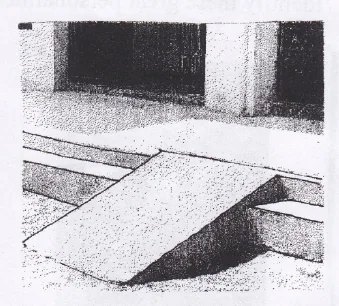
Question 2. Identify this. Do you have this in your school? How does it help the disabled person?
Answer: The picture shows a wheelchair ramp. Yes, we have a ramp in our school near the entrance. It helps disabled persons in wheelchairs or those using crutches to easily move up and down levels without needing to climb steps.
In simple words: The sloping path helps wheelchair users move smoothly between different levels.
Exam Tip: Always mention both identification and utility clearly when asked about special aids or infrastructure for differently-abled individuals.
Question 3. Is there any child like Chuskit in your school? How will you help the child?
Answer: There are children with special needs in our school. We can help them by walking alongside them, pushing their wheelchairs when needed, helping them carry their school bags, and being kind and supportive friends.
In simple words: We can help special children by being kind, supportive, and assisting them with physical tasks.
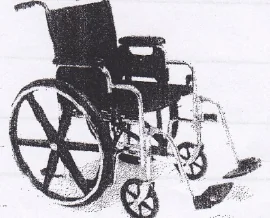
Name this used by the disabled.
Answer: A wheelchair.
In simple words: The wheelchair is the chair with wheels that disabled people use to move around.
Exam Tip: Emphasize empathy, inclusivity, and practical peer support in your answer.
MATCH THE FOLLOWING
Question 4. Match Column A with Column B.
| Column A | Column B |
|---|---|
| 1. A person who cannot speak | dumb |
| 2. A person who cannot hear | deaf |
| 3. A person who cannot walk | lame |
| 4. A person who cannot see | blind |
Answer: Correct pairs: 1 - dumb, 2 - deaf, 3 - lame, 4 - blind.
In simple words: Match each physical challenge with the correct term.
Exam Tip: Read both columns carefully and draw clean lines or write correct numbers next to each option.
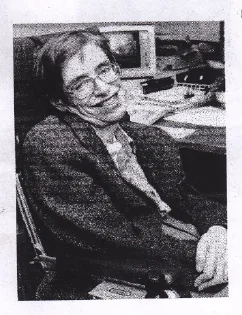
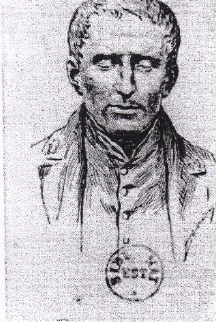
Question 5. Identify these great personalities and write few sentences about them.
Answer: 1. The first personality shown on the left is Stephen Hawking. He was a brilliant theoretical physicist and cosmologist who achieved world-renowned scientific success despite being paralyzed by motor neuron disease and communicating through a speech-generating device.
2. The second personality shown on the right is Louis Braille. He was a French educator and inventor of the Braille system, a reading and writing system used by visually impaired individuals worldwide.
In simple words: Stephen Hawking was a great scientist, and Louis Braille invented the reading system for blind people.
Exam Tip: Mention their main achievements and how they overcame physical challenges to inspire others.
Free CBSE Practice Worksheets: Class 4 Environmental Studies Chapter 27 Chuskit Goes to School
Practice Exercises for Class 4 Environmental Studies Chapter 27 Chuskit Goes to School
Explore reliable practice questions for Chapter 27 Chuskit Goes to School tailored for Class 4 Environmental Studies learners. Use these structured worksheets to evaluate exam preparedness and strengthen problem-solving skills throughout the 2026 academic session.
Step-by-Step Solutions and Practice Guidelines
Designed around the official curriculum for Class 4 Environmental Studies, these practice sheets guarantee standard compliance. Reviewing step-by-step solutions after completion sharpens your accuracy and clarifies complex sub-topics within Chapter 27 Chuskit Goes to School.
Enhance Speed with Online Practice
Consistent engagement with these exercises builds familiarity with recurring exam themes. If specific areas within Chapter 27 Chuskit Goes to School cause trouble, utilize our dedicated NCERT solutions for Class 4 Environmental Studies to clear up doubts immediately.
FAQs
You can download the latest chapter-wise printable worksheets for Class 4 Environmental Studies Chapter 27 Chuskit Goes to School for free from StudiesToday.com. These have been made as per the latest CBSE curriculum for this academic year.
Yes, Class 4 Environmental Studies worksheets for Chapter 27 Chuskit Goes to School focus on activity-based learning and also competency-style questions. This helps students to apply theoretical knowledge to practical scenarios.
Yes, we have provided solved worksheets for Class 4 Environmental Studies Chapter 27 Chuskit Goes to School to help students verify their answers instantly.
Yes, our Class 4 Environmental Studies test sheets are mobile-friendly PDFs and can be printed by teachers for classroom.
For Chapter 27 Chuskit Goes to School, regular practice with our worksheets will improve question-handling speed and help students understand all technical terms and diagrams.