

Physics Objective Questions and Answers: Units and Measurements
Access targeted multiple-choice questions for Units and Measurements designed to align with the latest JEE academic syllabus for JEE Physics. These objective practice sets help students evaluate their conceptual understanding and improve exam readiness.
Download Units and Measurements MCQs with Answers
Navigate directly to the 50 objective questions for Units and Measurements using the digital viewer below. Each practice set includes verified answer keys, allowing students to instantly cross-check their work and identify areas requiring further revision.
Question: The base quantity among the following is
- a) Length
- b) Area
- c) Speed
Answer: Length
Question: Which of the following is not a unit of time?
- a) Light year
- b) Hour
- c) Minute
Answer: Light year
Question: One astronomical unit is a distance equal to
- a) 1.496 × 10¹¹ m
- b) 9.46 × 10¹⁵ m
- c) 3 × 10⁸ m
- d) None of this
Answer: 1.496 × 10¹¹ m
Question: The volume of a cube having sides 1.2 m is appropriately expressed as
- a) 1.728 × 106 cm3
- b) 1.7 × 106 cm3
- c) 1.8 × 106 cm3
- d) All of these
Answer: 1.728 × 106 cm3
Question: Ampere second is a unit of
- a) Charge
- b) Current
- c) Energy
- d) Power
Answer: Charge
Question: The most precise reading of the mass of an object, among the following is
- a) 20.01 g
- b) 20 × 100 g
- c) 20.0 g
- d) 20 g
Answer: 20.01 g
Question: The most accurate reading of the length of a 6.28 cm long fibre is
- a) 6.5 cm
- b) 6 cm
- c) 5.99 cm
- d) 6.0 cm
Answer: 6.5 cm
Question: Which of the following is a unit that of force?
- a) mN
- b) N m
- c) nm
- d) N s
Answer: mN
Question: The value of 60° in radian is
- a)

- b)

- c)

- d) All of these
Answer:
Question: The total plane angle subtended by a circle at its centre is
- a)

- b)

- c)

- d)

Answer:
Question:

- a)

- b)

- c)

- d) All of these
Answer:
Question: One unified atomic mass unit represents a mass of magnitude
- a) 1.66 × 10⁻²⁷kg
- b) 1030 kg
- c) 1.66 × 1027 kg
- d) 10–30 kg
Answer: 1.66 × 10⁻²⁷kg
Question: If the average life of a person is taken as 100 s, the age of the universe on this scale is of the order
- a) 1010 s
- b) 108 s
- c) 1017 s
- d) 109 s
Answer: 1010 s
Question: Which of the following is the most precise measurement?
- a) 300 × 10–5 m
- b) 30 × 10–4 m
- c) 0.0030 m
- d) 3 × 10⁻³ m
Answer: 300 × 10–5 m
Question: The number of significant figures in a pure number 410 is
- a) Infinite
- b) One
- c) Three
- d) Two
Answer: Infinite
Question: Thickness of a pencil measured by using a screw gauge (least count .001 cm) comes out to be 0.802 cm. The percentage error in the measurement is
- a) 0.125%
- b) 2.43%
- c) 4.12%
- d) 2.14%
Answer: 0.125%
Question: The percentage error in the measurement of the voltage V is 3% and in the measurement of the current is 5%2%. The percentage error in the measurement of the resistance is
- a) 5%
- b) 1%
- c) 2%
- d) 3%
Answer: 5%
Question: The relative error in the measurement of the side of a cube is 0.027. The relative error in the measurement of its volume is
- a) 0.081
- b) 0.046
- c) 0.054
- d) 0.027
Answer: 0.081
Question: Zero error in an instrument introduces
- a) Systematic error
- b) Random error
- c) Least count error
- d) Personal error
Answer: Systematic error
Question: A packet contains silver powder of mass 20.23 g ± 0.01 g. Some of the powder of mass 5.75 g ± 0.01 g is taken out from it. The mass of the powder left back
- a) 14.48 ± 0.02 g
- b) 14.48 g ± 0.00 g
- c) 14.5 g ± 0.1 g
- d) 14.5 g ± 0.2 g
Answer: 14.48 ± 0.02 g
More Questions..............................
Question: The addition of three masses 1.6 g, 7.32 g and 4.238 g, addressed upto proper decimal places is
- a) 13.2 g
- b) 13.158 g
- c) 13.16 g
- d) 13.15 g
Answer: 13.2 g
Question: The area of a sheet of length 10.2 cm and width 6.8 cm addressed upto proper number of significant figures is
- a) 69 cm2
- b) 70 cm2
- c) 69.4 cm2
- d) 69.36 cm2
Answer: 69 cm2
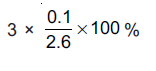
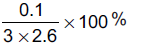
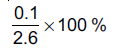
Question: The radius of a sphere is (2.6 ± 0.1) cm. The percentage error in its volume is
- a)
- b)
- c)
- d) None of this
Answer:
Question: The uncertain digit in the measurement of a length reported as 41.68 cm is
- a) 8
- b) 6
- c) 1
- d) 4
Answer: 8
Question: We can reduce random errors by
- a) Taking large number of observations
- b) By following proper technique of experiment
- c) Corrected zero error
- d) Al of this
Answer: Taking large number of observations
Question: The number of significant figures in the measured value 0.0204 is
- a) Three
- b) Five
- c) Four
- d) Two
Answer: Three
Question: The number of significant figures in the measured value 26000 is
- a) Two
- b) Five
- c) Three
- d) Infinite
Answer: Two
Question: The number of significant zeroes present in the measured value 0.020040, is
- a) Three
- b) One
- c) Two
- d) Five
Answer: Three
Question: The number of significant figures in the measured value 4.700 m is the same as that in the value
- a) 470.0 m
- b) 4070 m
- c) 0.047 m
- d) 4700 m
Answer: 470.0 m
Question: If a calculated value 2.7465 g contains only three significant figures, the two insignificant digits in it are
- a) 6 and 5
- b) 4 and 6
- c) 7 and 4
- d) 2 and 7
Answer: 6 and 5
Question: An object of mass 4.237 g occupies a volume 1.72 cm3. The density of the object to appropriate significant figures is
- a) 2.46 g cm–3
- b) 2.463 g cm–3
- c) 2.5 g cm–3
- d) 2.50 g cm–3
Answer: 2.46 g cm–3
Question: Round off the value 2.845 to three significant figures
- a) 2.84
- b) 2.85
- c) 2.80
- d) 2.83
Answer: 2.84
Question: A length 5.997 m rounded off to three significant figures is written as
- a) 6.00 m
- b) 5.99 m
- c) 5.95 m
- d) 5.90 m
Answer: 6.00 m
Question: The order of the magnitude of speed of light in SI unit is
- a) 8
- b) 16
- c) 4
- d) 7
Answer: 8
Question: The values of a number of quantities are used in a mathematical formula. The quantity that should be most precise and accurate in measurement is the one
- a) Having smallest magnitude
- b) Used in the numerator
- c) Having largest magnitude
- d) Used in the denominator
Answer: Having smallest magnitude
Question: What are the dimensions of the change in velocity?
- a) [LT–1]
- b) [MLT–1]
- c) [LT–2]
- d) None of this
Answer: [LT–1]
Question: The dimensional formula for energy is
- a) [ML2T–2]
- b) [MLT–2]
- c) [M–1L2T]
- d) All of these
Answer: [ML2T–2]
Question: The pair of the quantities having same dimensions is
- a) Wavelength, focal length
- b) Displacement, velocity
- c) Time, frequency
- d) Force, acceleration
Answer: Wavelength, focal length
Question: The dimensional formula for relative refractive index is
- a) [M0L0T0]
- b) [M1L0T0]
- c) [M1L1 T1]
- d) [MLT–1]
Answer: [M0L0T0]
Question: The dimensional formula [ML–1T–2] is for the quantity
- a) Pressure
- b) Acceleration
- c) Force
- d) Work
Answer: Pressure
Free study material for Physics
Multiple Choice Questions (MCQs) for JEE Physics Units and Measurements
Chapter MCQs with Answers for JEE Physics
Test your conceptual understanding of Units and Measurements with these targeted multiple-choice questions. Designed in alignment with the latest JEE curriculum for JEE Physics, these problem sets build accuracy and prepare students for objective exams.
Expert Practice Material for JEE Physics
Cross-reference your completed choices with comprehensive NCERT solutions for JEE Physics to ensure absolute clarity across all sub-topics in this chapter.
Complete Your Chapter Revision
Follow up your worksheet practice by attempting the interactive online Physics MCQ test for this chapter to evaluate your execution speed. All platform resources are free to access.
FAQs
You can get most exhaustive JEE Physics Units and Measurements MCQs Set 01 for free on StudiesToday.com. These MCQs for JEE Physics are updated for the 2026-27 academic session as per JEE examination standards.
Yes, our JEE Physics Units and Measurements MCQs Set 01 include the latest type of questions, such as Assertion-Reasoning and Case-based MCQs. 50% of the JEE paper is now competency-based.
By solving our JEE Physics Units and Measurements MCQs Set 01, JEE students can improve their accuracy and speed which is important as objective questions provide a chance to secure 100% marks in the Physics.
Yes, Physics MCQs for JEE have answer key and brief explanations to help students understand logic behind the correct option as its important for 2026 competency-focused JEE exams.
Yes, you can also access online interactive tests for JEE Physics Units and Measurements MCQs Set 01 on StudiesToday.com as they provide instant answers and score to help you track your progress in Physics.