

Download BITSAT MCQs for BITSAT Chemistry: Haloalkanes and Haloarenes
Access targeted multiple-choice questions for Haloalkanes and Haloarenes designed to align with the latest BITSAT academic syllabus for BITSAT Chemistry. These objective practice sets help students evaluate their conceptual understanding and improve exam readiness.
Chapter-wise Objective Questions: Haloalkanes and Haloarenes
Access the complete set of multiple-choice questions for Haloalkanes and Haloarenes below. This focused format allows students to isolate specific topics for thorough review and uninterrupted practice alongside official BITSAT textbooks.
Question: An aromatic compound has molecular formula C7H7Br. Give the possible isomers and the appropriate method to distinguish them
a) 3 isomers; by heating with AgNO3 solution
b) 4 isomers; by treating with AgNO3 solution
c) 4 isomers; by oxidation
d) 5 isomers; by oxidation
Answer: 4 isomers; by oxidation
Question: The boiling point of alkyl halide are higher than those of corresponding alkanes because of
a) Dipole-dipole interaction
b) Dipole-induced dipole interaction
c) H-bonding
d) None of the above
Answer: Dipole-dipole interaction
Question: The number of double bonds in gammexane is :
a) 0
b) 1
c) 2
d) 3
Answer: 0
Question: DDT is prepared by reacting chlorobenzene with
a) CHCl3
b) CCl3CHO
c) CCl4
d) C2H6
Answer: CCl3CHO
Question: In a SN2 substitution reaction of the type 
which one of the following has the highest relative rate ?
a) CH3 – CH2 – CH2Br
b)

c)

d) CH3CH2Br
Answer: CH3CH2Br
Question: The alkyl halide is converted into alcohol by :
a) Elimination
b) Halogenation
c) Addition
d) Substitution
Answer: Substitution
Question: A is an optically inactive alkyl chloride which on reaction with aqueous KOH gives B. B on heating with Cu at 300°C gives an alkene C, what are A and C
a) CH3CH2Cl, CH2 = CH2
b) Me3CCl, MeCH = CH.Me
c) Me3CCl, Me2 C =CH2
d) Me2 CH.CH2 Cl, Me2 C =CH2
Answer: Me3CCl, Me2 C =CH2
Question: In which of the following conversions, phosphorus pentachloride is used as the reagent?
a) H2C = CH2→ CH3CH2Cl
b) CH3CH2OH→ CH3CH2Cl
c) H3C-O- CH3 → CH3Cl
d) CH ≡ CH → CH2 = CHCl
Answer: CH3CH2OH→ CH3CH2Cl
Question: Which of the following order is not correct ?
a)

b)
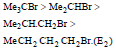
c)

d)

Answer:
Question: Which of the following will give vinyl chloride ?
a)

b)
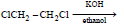
c)
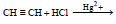
d) All
Answer: All
Question: The following reaction proceeds through the intermediate
RCOOAg + Br2 → + CO2 + AgBr
a) RCOO•
b) R•
c) Br•
d) All
Answer: All
Question: Function of AlCl3 in Friedel-Craft’s reaction is to
a) Produce nucleophile
b) Make new bond
c) Produce electrophile
d) Break bond
Answer: Produce electrophile
Question: When CH3CH2Br reacts with sodium acetylide, the main product is
a) 1-butane
b) 1-butyne
c) 1-butene
d) 3-butane
Answer: 1-butyne
Question: The alkyl halide is converted into alcohol by :
a) Elimination
b) Halogenation
c) Addition
d) Substitution
Answer: Substitution
Question: The number of double bonds in gammexane is :
a) 0
b) 1
c) 2
d) 3
Answer: 0
Free study material for Chemistry
Multiple Choice Questions (MCQs) for BITSAT Chemistry Haloalkanes and Haloarenes
Download Multiple Choice Questions: Haloalkanes and Haloarenes (BITSAT Chemistry)
Explore reliable practice questions for Haloalkanes and Haloarenes tailored for BITSAT Chemistry learners. Use these multiple-choice formats to evaluate preparedness and strengthen problem-solving skills.
Concept Clarification for Haloalkanes and Haloarenes
Built using the official NCERT book for BITSAT, these Chemistry objective sets provide reliable academic guidance. Pair your practice with our recommended NCERT solutions to master optimal problem-solving approaches.
Additional Study Resources for BITSAT Chemistry
Follow up your worksheet practice by attempting the interactive online Chemistry MCQ test for this chapter to evaluate your execution speed. All platform resources are free to access.
FAQs
You can get most exhaustive BITSAT Chemistry Haloalkanes and Haloarenes MCQs for free on StudiesToday.com. These MCQs for BITSAT Chemistry are updated for the 2026-27 academic session as per BITSAT examination standards.
Yes, our BITSAT Chemistry Haloalkanes and Haloarenes MCQs include the latest type of questions, such as Assertion-Reasoning and Case-based MCQs. 50% of the BITSAT paper is now competency-based.
By solving our BITSAT Chemistry Haloalkanes and Haloarenes MCQs, BITSAT students can improve their accuracy and speed which is important as objective questions provide a chance to secure 100% marks in the Chemistry.
Yes, Chemistry MCQs for BITSAT have answer key and brief explanations to help students understand logic behind the correct option as its important for 2026 competency-focused BITSAT exams.
Yes, you can also access online interactive tests for BITSAT Chemistry Haloalkanes and Haloarenes MCQs on StudiesToday.com as they provide instant answers and score to help you track your progress in Chemistry.