

Chemistry Objective Questions and Answers: Aldehycles Ketones and Carboxylic Acids
Access targeted multiple-choice questions for Aldehycles Ketones and Carboxylic Acids designed to align with the latest BITSAT academic syllabus for BITSAT Chemistry. These objective practice sets help students evaluate their conceptual understanding and improve exam readiness.
Download Aldehycles Ketones and Carboxylic Acids MCQs with Answers
Navigate directly to the 50 objective questions for Aldehycles Ketones and Carboxylic Acids using the digital viewer below. Each practice set includes verified answer keys, allowing students to instantly cross-check their work and identify areas requiring further revision.
Question: The reaction
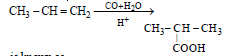
is known as
a) Wurtz reaction
b) Koch reaction
c) Clemmensen reduction
d) Kolbe’s reaction
Answer: Koch reaction
Question: The correct order of decreasing acid strength of trichloroacetic acid (A), trifluoroacetic acid (B), acetic acid (C) and formic acid (D) is :
a) B > A > D > C
b) B > D > C > A
c) A > B > C > D
d) A > C > B > D
Answer: B > A > D > C
Question: When 2-hydroxybenzoic acid is distilled with zinc dust, it gives
a) Phenol
b) Benzoic acid
c) Benzaldehyde
d) A polymeric compound
Answer: Benzoic acid
Question: Nucleophilic addition reaction will be most favoured in
a) (CH3)2C = O
b) CH3CH2CHO
c) CH3CHO
d) 
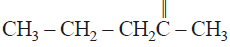
Answer: CH3CHO
Question: CCl3CHO (Chloral) does not give aldol condensation because
a) Of three highly electronegative Cl atoms.
b) Of steric hinderance caused by Cl atoms
c) It does not have a-H atom
d) All of these
Answer: It does not have a-H atom
Question: The preparation of ethyl acetoacetate involves
a) Wittig reaction
b) Cannizzaro’s reaction
c) Reformatsky reaction
d) Claisen condensation
Answer: Claisen condensation
Question: Which one of the following pairs is not correctly matched?
a) > C = O → > CH2 (Clemmensen reduction)
b) > C = O → > CHOH (Wolf – Kishner reduction)
c) COCl → – CHO (Rosenmund reduction)
d) – C º N → – CHO (Stephen reduction)
Answer: > C = O → > CHOH(Wolf – Kishner reduction)
Question: Which of the following esters cannot undergo Claisen self condensation ?
a) CH3CH2CH2CH2COOC2H5
b) C6H5–COOC2H5
c) C6H11CH2COOC2H5
d) C6H5CH2COOC2H5
Answer: C6H5–COOC2H5
Question: Schotten-Baumann reaction is a reaction of phenols with
a) Benzoyl chloride and sodium hydroxide
b) Acetyl chloride and sodium hydroxide
c) Salicylic acid and conc. H2SO4
d) Acetyl chloride and conc H2SO4
Answer: Benzoyl chloride and sodium hydroxide
Question: Identify X,


a) CH3OH
b) Ethyl alcohol
c) Methyl cyanide
d) Tert-Butyl alcohol
Answer: Tert-Butyl alcohol
Question: The reagent (s) which can be used to distinguish acetophenone from benzophenone is (are)
a) 2,4- Dinitrophenylhydrazine
b) Aqueous solution of NaHSO3
c) Benedict reagent
d) I2and NaOH
Answer: I2and NaOH
Question: Formic acid and acetic acid can be distinguished by
a) Phenyl hydrazine
b) NaHCO3
c) Tollen’s reagent
d) None of these
Answer: Tollen’s reagent
Question: When esters are hydrolysed the product gives hydrogen ions. The product which gives hydrogen ion is :
a) Acid
b) Alcohol
c) Both
d) Either acid or alcohol
Answer: Acid
Question: Which of the following compound can not used in preparation of iodoform?
a) CH3CHO
b) CH3COCH3
c) HCHO
d) 2- propanol
Answer: HCHO
Question: When sodium propionate is heated with sodalime which product is formed :
a) Propyl amine
b) Ethane
c) Acetone
d) Acetaldehyde
Answer: Ethane
Question: When Acetic Acid is heated with P2O5 the compound formed will be :
a) (CH3CO)2O
b) CH3COCH3
c) CH3CHO
d) CH4
Answer: (CH3CO)2O
Question: In which reaction, an aromatic aldehyde is treated with acetic anhydride in presence of corresponding salt of the acid to give an unsaturated aromatic acid ?
a) Friedel-Crafts reaction
b) Perkin’s reaction
c) Wurtz reaction
d) None of these
Answer: Perkin’s reaction
Question: In the reduction

the catalyst used is :
a) Ni
b) Pd
c) Pt
d) Any of these
Answer: Any of these
Question: The correct statement regarding a carbonyl compound with a hydrogen atom on its alpha carbon, is :
a) A carbonyl compound with a hydrogen atom on its alpha-carbon never equilibrates with its corresponding enol
b) A carbonyl compound with a hydrgen atom on its alpha-carbon rapidly equilibrates with its corresponding enol and this process is known as aldehyde-ketone equilibration.
c) A carbonyl compound with a hydrogen atom on its alpha-carbon rapidly equilibrates with its corresponding enol and this process is known as carbonylation
d) A carbonyl compound with a hydrogen atom on its alpha-carbon rapidly equilibrates with its corresponding enol and this process is known as keto-enol tautomerism.
Answer: A carbonyl compound with a hydrogen atom on its alpha-carbon rapidly equilibrates with its corresponding enol and this process is known as keto-enol tautomerism.
Question: If acetylchloride is reduced in the presence of BaSO4 and Pd, then
a) CH3CHO is formed
b) CH3COOH is formed
c) CH3CH2OH is formed
d) CH3COCH3 is formed
Answer: CH3CHO is formed
Question: Benzoic acid reacts with conc. HNO3 and H2SO4 to give :
a) 3-Nitrobenzoic acid
b) 4-Benzene sulphonic acid
c) 4-Nitrobenzoic acid
d) 2-Nitrobenzoic acid
Answer: 3-Nitrobenzoic acid
Question: Oxidation of acetaldehyde with selenium dioxide produces
a) Ethanoic acid
b) Methanoic acid
c) Glyoxal
d) Oxalic acid
Answer: Glyoxal
Question: An organic compound 'X' having molecular formula C5H10O yields phenyl hydrazone and gives negative response to the Iodoform test and Tollen's test. It produces n-pentane on reduction. 'X' could be :-
a) 2-pentanone
b) 3-pentanone
c) n-amyl alcohol
d) Pentanal
Answer: 3-pentanone
Question: Treatment of cyclopentanone

with methyl lithium gives which of the following species?
a) Cyclopentanonyl cation
b) Cyclopentanonyl radical
c) Cyclopentanonyl biradical
d) Cyclopentanonyl anion
Answer: Cyclopentanonyl anion
Question: When sodium propionate is heated with sodalime which product is formed :
a) Propyl amine
b) Ethane
c) Acetone
d) Acetaldehyde
Answer: Ethane
Free study material for Chemistry
Download Chapter MCQs: BITSAT Chemistry Aldehycles Ketones and Carboxylic Acids
Download Multiple Choice Questions: Aldehycles Ketones and Carboxylic Acids (BITSAT Chemistry)
Explore reliable practice questions for Aldehycles Ketones and Carboxylic Acids tailored for BITSAT Chemistry learners. Use these multiple-choice formats to evaluate preparedness and strengthen problem-solving skills.
Concept Clarification for Aldehycles Ketones and Carboxylic Acids
Each question includes structured solution keys mapped directly to standard BITSAT textbooks, helping students evaluate their reasoning and correct mistakes early in their revision.
Additional Study Resources for BITSAT Chemistry
Wrap up your chapter revision by testing your knowledge against standard question formats. Everything on our platform is provided free of charge.
FAQs
You can get most exhaustive BITSAT Chemistry Aldehycles Ketones and Carboxylic Acids MCQs for free on StudiesToday.com. These MCQs for BITSAT Chemistry are updated for the 2026-27 academic session as per BITSAT examination standards.
Yes, our BITSAT Chemistry Aldehycles Ketones and Carboxylic Acids MCQs include the latest type of questions, such as Assertion-Reasoning and Case-based MCQs. 50% of the BITSAT paper is now competency-based.
By solving our BITSAT Chemistry Aldehycles Ketones and Carboxylic Acids MCQs, BITSAT students can improve their accuracy and speed which is important as objective questions provide a chance to secure 100% marks in the Chemistry.
Yes, Chemistry MCQs for BITSAT have answer key and brief explanations to help students understand logic behind the correct option as its important for 2026 competency-focused BITSAT exams.
Yes, you can also access online interactive tests for BITSAT Chemistry Aldehycles Ketones and Carboxylic Acids MCQs on StudiesToday.com as they provide instant answers and score to help you track your progress in Chemistry.