

Class 8 History Civics Chapter 03 The American Civil War: Goyal Brothers Study Material
Access the official Goyal Brothers textbook solutions for Class 8 History Civics, updated for the 2026-27 academic year. This digital resource is structured to help students build strong conceptual clarity and prepare effectively for school examinations.
Chapter 03 The American Civil War Answer Guide
View or download the dedicated Chapter 03 The American Civil War resource below. This chapter-by-chapter structuring ensures easy navigation for daily study routines and immediate access to core academic concepts.
The American Civil War
I. Fill in the blanks:
1. The Civil War in the USA lasted for four years.
2. President Lincoln was assassinated in the year 1865.
3. The Northern states were mainly industrialised but in the South agriculture was the most important occupation.
4. The Southern farmers grew cotton and tobacco.
5. The Southern farmers needed slaves to work in their fields.
6. The anti-slavery people were called Abolitionists.
7. An Underground railroad was created to help the slaves to escape to Canada.
8. The election of Abraham Lincoln as President of America made the Southern states to separate from the Union.
9. In January 1863 President Lincoln abolished slavery.
10. The (Confederacy General Robert E. Lee surrendered to the Union; General U.S. Grant.
II. Match the contents of Column A and Column B:
| Column A | Column B (Correct Match) |
|---|---|
| 1. April 12, 1861 | (h) Civil War began in USA |
| 2. 1809 | (i) Birth of Abraham Lincoln |
| 3. 1860, November | (f) Abraham Lincoln elected President of USA |
| 4. February 1861 | (g) Southern states form a confederacy |
| 5. January 1863 | (d) Abolition of slavery |
| 6. 1864 | (c) Campaign of Generals Sherman and General Grant |
| 7. April 9, 1865 | (a) General Lee surrendered to General Grant |
| 8. April 14, 1865 | (b) Assassination of President Lincoln |
| 9. November 19, 1863 | (e) Gettysburg speech of Abraham Lincoln |
III. State whether the following statements are True or False:
1. Slavery was introduced in the United States in 1619.
Answer: False
2. When the Civil War broke out, the whole country practised slavery.
Answer: False
3. The Northern states considered slavery a blot on the fair name of the country.
Answer: True
4. Uncle Tom’s Cabin, a novel, highlighted the ugly side of slavery.
Answer: True
5. The Underground Railroad was a railway that carried slaves to Canada.
Answer: True
6. The question of States’ Rights was also a cause of the Civil War.
Answer: True
7. The Southern states established a new nation - the Confederate States of America.
Answer: True
8. Abraham Lincoln is remembered for abolishing slavery and saving the Union.
Answer: True
IV. Answer the following questions:
Question 1. Why was slavery important for the Southern States?
Answer: The economy of the Southern states relied heavily on massive agricultural estates cultivating cotton and tobacco. Slaves formed an indispensable foundation of this system, as these vast plantations depended entirely on unpaid labor. Consequently, planters believed that abolishing slave labor would lead to the total collapse of Southern agriculture.
In simple words: The South had huge cotton and tobacco farms that depended completely on the unpaid work of slaves. They believed their farming would fail without this cheap labor.
Exam Tip: Emphasize how the Southern plantation economy depended entirely on slave labor to harvest cash crops like cotton and tobacco.
Question 2. Name the states which established the Confederation.
Answer: A group of Southern states, including South Carolina, Mississippi, Alabama, Georgia, Louisiana, and Texas, withdrew from the Union to form an independent republic named the Confederate States of America. In February 1861, they selected Jefferson Davis as their provisional President.
In simple words: States like South Carolina, Mississippi, Alabama, Georgia, Louisiana, and Texas broke away from the United States to form the Confederacy, electing Jefferson Davis as their President in February 1861.
Exam Tip: List the original seceding states clearly (including South Carolina and Texas) and name Jefferson Davis as the President of the Confederacy.
Question 3. Describe Abraham Lincoln’s role in the Civil War.
Answer: Following Abraham Lincoln's election as President in 1860, several Southern states seceded to establish the Confederate States of America. When Confederate forces opened fire on Fort Sumter, Lincoln responded by declaring a blockade on Southern ports, officially starting the Civil War in 1861. Throughout the four-year war, Lincoln served as a determined leader focused on saving the American Union and defeating the secessionist states, which he treated as rebels. To weaken the South and align the Union with global moral values, he issued the Emancipation Proclamation in January 1863, abolishing slavery. This strategic decision earned the diplomatic support of European nations like Great Britain, preventing them from aiding the Confederacy. Ultimately, his leadership preserved the United States as a single nation and brought about the end of slavery.
In simple words: Lincoln led the country through the Civil War to keep the United States together. In January 1863, he issued the Emancipation Proclamation to free the slaves, which helped win the war and kept foreign powers from supporting the South.
Exam Tip: Describe his two primary objectives: preserving the unity of the country and ending the system of slavery through the 1863 Emancipation Proclamation.
Question 4. Why did the North oppose slavery?
Answer: The Northern states rejected slavery, viewing it as a moral disgrace that tarnished the nation's reputation. Economically, the North did not rely on agricultural slave labor because its wealth was built on rapid industrialization, manufacturing, and commerce. This industrial focus made the Northern economy highly prosperous, contrasting sharply with the agrarian and economically stagnant Southern states.
In simple words: The North opposed slavery because they viewed it as a moral disgrace. Also, unlike the South, their economy depended on modern factories and trade rather than farm slaves.
Exam Tip: Contrast the industrialized economy of the North, which did not need slave labor, with the rural, agrarian economy of the South.
Question 5. Describe the three main causes of the Civil War.
Answer: The three primary factors that triggered the American Civil War were:
1. The Dispute Over Slavery: The industrialized North had abolished slavery, while the agricultural South relied heavily on slave labor for economic survival. Active abolitionist campaigns in the North created intense political friction between the regions.
2. States' Rights and Federal Authority: The Southern states strongly opposed the centralizing policies of the Federal Government, insisting that individual states should govern their own internal institutions (such as slavery) without outside interference.
3. The Election of Lincoln (1860): The election of Abraham Lincoln in November 1860, whom the South viewed as hostile to their interests, served as the final trigger, causing the Southern states to secede and starting the war in 1861.
In simple words: The war was caused by deep disagreements over slavery, the struggle over whether states could make their own laws without federal interference, and the election of Abraham Lincoln in 1860, which led the South to break away.
Exam Tip: Discuss the three core issues: regional economic differences over slavery, the debate over states' rights, and Lincoln's election in 1860.
Question 6. What were the main results of the Civil War?
Answer: The American Civil War had several transformative outcomes:
1. Devastation and Reconstruction of the South: Since most of the battles were fought on Southern territory, the region suffered severe physical and economic ruin, requiring decades of reconstruction to recover.
2. Abolition of Slavery: The system of slavery was permanently and legally abolished across the entire United States.
3. Preservation of the Union: The conflict ended the threat of secession, establishing the principle that the United States is an indivisible union and confirming the supreme authority of the Federal Government.
4. Industrial and Economic Boom: The war accelerated the nation's industrial revolution, driving rapid economic growth and manufacturing expansion on an unprecedented scale.
In simple words: The war ended slavery forever, preserved the United States as an indivisible nation under federal law, and sparked a massive industrial boom, though the South suffered heavy damage and took decades to recover.
Exam Tip: List the three major constitutional outcomes: the abolition of slavery, the end of the state secession threat, and the consolidation of federal authority.
Additional Questions
Exercise
A.Fill in the blanks:
1. In the first half of the 19th century the only available source of labour in the United States of America was slaves.
2. The issue of slavery posed a serious threat to the integrity of the American nation.
3. The famous book, Uncle Tom’s Cabin was written by Harriet Beecher Stowe.
4. Abraham Lincoln, who became the president of the United States of America in 1860 was determined to save the slaves at all costs.
5. The American Civil War was fought on the issue of secession.
C.Choose the correct answer:
Question 1. The anti-slavery movement began in which states of the United States of America?
(a) Northern states
(b) Southern states
(c) Eastern states
(d) None of the options
Answer: (a) Northern states
In simple words: The campaign to abolish slavery grew rapidly in the industrialized Northern states, where citizens viewed the practice as a moral disgrace.
Exam Tip: Identify the Northern states as the birthplace of the anti-slavery (abolitionist) movement.
Question 2. The book Uncle Tom’s Cabin exposed the horrors of what?
(a) Slavery
(b) War
(c) Famine
(d) None of the options
Answer: (a) Slavery
In simple words: Harriet Beecher Stowe's famous novel vividly described the cruelty of slavery, turning Northern public opinion against the practice.
Exam Tip: Name 'slavery' as the institution exposed in 'Uncle Tom's Cabin', which acted as a catalyst for the Civil War.
Question 3. Who was appointed the president of the Confederate States of America?
(a) Jefferson Davis
(b) Abraham Lincoln
(c) Stonewall Jackson
(d) None of the options
Answer: (a) Jefferson Davis
In simple words: After the Southern states seceded, they appointed Jefferson Davis as their president in February 1861.
Exam Tip: Distinguish between the two presidents: Abraham Lincoln led the Union, while Jefferson Davis led the Confederacy.
Question 4. Who abolished slavery in America?
(a) Abraham Lincoln
(b) Jefferson Davis
(c) Ulysses Grant
(d) None of the options
Answer: (a) Abraham Lincoln
In simple words: President Abraham Lincoln officially ended slavery in the rebel Southern states through the Emancipation Proclamation in 1863.
Exam Tip: Lincoln's 1863 Emancipation Proclamation is the historic document that initiated the abolition of slavery.
Question 5. Which states decided to break away from the Union and form a Confederacy of their own?
(a) Northern states
(b) Southern states
(c) Eastern states
(d) None of the options
Answer: (b) Southern states
In simple words: The agricultural Southern states seceded from the United States to establish their own independent Confederacy.
Exam Tip: Clearly state that the agricultural Southern states seceded on the issue of states' rights and slavery.
D.State whether the following are true or false:
1. The southern states of America began an anti-slavery movement.
Answer: False
2. Abraham Lincoln became the 14th president of the United States in 1860.
Answer: False
3. The Civil War was fought over the issue of slavery.
Answer: False (Correct statement: It was fought because the southern states had left the Union, i.e., on the issue of secession.)
4. The American Civil War (1861-65) was one of the most bitter wars in the history of mankind.
Answer: True
5. After the American Civil War Lincoln made plans to repair the damages of the war and heal the wounds of the South.
Answer: True
E.Answer the following questions in one or two words/ sentences:
Question 1. What were the two major developments that took place in the United States of America in the first half of the 19th century?
Answer: During the early 19th century, the United States experienced two major developments:
1. The rapid westward expansion of national territories across the continent.
2. Outstanding industrial growth and technological development in the Northern states.
In simple words: The two main changes were the movement of people and territories further west, and the rapid growth of factories and industries in the North.
Exam Tip: Name 'westward expansion' and 'rapid industrialization' as the two defining trends of this era.
Question 2. Why was raw cotton from the southern states in the USA sent to Lancashire in England?
Answer: Southern planters exported raw cotton to the textile mills of Lancashire, England, to satisfy the massive demand for raw materials created by the British Industrial Revolution.
In simple words: Raw cotton was sent to Lancashire because the British Industrial Revolution had built huge textile mills that needed massive amounts of cotton.
Exam Tip: Explain that the British Industrial Revolution created a massive demand for raw cotton in places like Lancashire.
Question 3. Why were slaves considered a ‘necessity’ in the southern states of the USA?
Answer: In the rural Southern states, slaves were considered essential to cultivate large cash crops on cotton and sugar plantations. Because these crops were highly labor-intensive, the cheap, forced labor provided by slaves was seen as necessary for the survival of the agricultural economy.
In simple words: The South relied on large cotton and sugar plantations that needed massive amounts of cheap labor to run profitably, making slaves a necessity for their economy.
Exam Tip: Focus on how the labor-intensive nature of cash crops (cotton and sugar) made Southern planters dependent on slave labor.
Question 4. Why is Abraham Lincoln described as the ‘Great Emancipator’?
Answer: President Abraham Lincoln is celebrated as the 'Great Emancipator' because of his role in ending slavery. Guided by a determination to save the American Union - even through a devastating war - he issued the Emancipation Proclamation in 1863, legally freeing millions of enslaved African Americans in the South.
In simple words: He is called the 'Great Emancipator' because he stood firm to save the country and officially freed millions of Southern slaves through the 1863 Emancipation Proclamation.
Exam Tip: Link his title 'Great Emancipator' directly to his historic decision to issue the 1863 Emancipation Proclamation.
Question 5. Why did Lincoln declare war on the Confederacy?
Answer: President Lincoln launched military actions against the seceding Southern states because he was determined to preserve the territorial integrity of the United States and prevent the division of the country.
In simple words: He declared war because he was determined to protect the United States and prevent the Southern states from breaking away.
Exam Tip: Clarify that Lincoln's primary constitutional motive was preserving the Union, rather than ending slavery at the start.
Question 6. Why was the Confederacy defeated?
Answer: The Northern states possessed significantly superior economic resources, manufacturing capacity, and transport networks, which systematically exhausted the Confederacy's forces. This resource gap culminated in Confederate General Robert E. Lee's surrender to Union General Ulysses S. Grant in April 1865, ending the war.
In simple words: The North won because of its superior economic wealth, factories, and military supplies, which eventually forced Confederate General Robert E. Lee to surrender to General Ulysses Grant in April 1865.
Exam Tip: Identify the North's superior industrial resources and General Robert E. Lee's surrender in April 1865 as key factors.
Question 7. What fact was permanently established as a result of the Civil War?
Answer: The war settled the constitutional debate by confirming that the United States is an indivisible federal republic, establishing the principle that individual states have no legal right to secede from the Union.
In simple words: The war proved that the United States is a single, permanent nation, and that no individual state has the right to break away.
Exam Tip: State that the war established the 'indestructibility of the Union' and outlawed the right of secession.
Question 8. Why had the Civil War impoverished the southerners?
Answer: The Southern states were financially ruined because the vast majority of the battles and military campaigns were fought on Southern territory, destroying their farms, cities, and transport links.
In simple words: The South was economically ruined because almost all of the fighting took place on their land, destroying their fields and cities.
Exam Tip: Explain that because the South served as the primary battlefield, it suffered the worst physical and economic destruction.
F.Answer the following questions briefly:
Question 1. One of the great changes that took place in the United States of America in the first half of the 19th century was industrial growth and development. In this context, discuss:
(a) The serious problems arising from the cotton-growing industry in the southern states
(b) The anti-slavery movement leading to the growing tensions between the slave states and the abolition states
(c) The impact of Harriet Beecher Stowe’s famous book on the north-south conflict.
Answer:
(a) Issues of the Southern Cotton Industry: The rapid expansion of cotton farming in the South created a major labor problem. As cotton plantations grew, planters became increasingly dependent on enslaved laborers imported from Africa. Over time, this growing reliance turned slavery into a highly divisive political issue that directly threatened the survival of the United States.
(b) Rise of the Anti-Slavery Movement: A powerful abolitionist movement emerged in the Northern states. Because the North's economy was built on industrial manufacturing rather than agriculture, it had no need for slave labor and generally opposed the practice. In contrast, the agricultural South insisted that slave labor was essential to run their large plantations. Reports of the cruel and harsh treatment of slaves in the South outraged Northern public opinion, leading to growing political tension between the anti-slavery Northern states and the pro-slavery Southern states.
(c) Impact of 'Uncle Tom's Cabin': Harriet Beecher Stowe's influential novel, 'Uncle Tom's Cabin', exposed the cruel realities of slavery to a wide audience. The book deeply moved Northern readers, giving a major boost to the anti-slavery movement. This growing opposition alarmed the Southern states, prompting them to threaten secession to protect their interests.
In simple words: The growth of cotton farming made the South dependent on African slaves, turning slavery into a major political crisis. The industrial North, which had no need for slave labor, opposed the practice on moral grounds. The release of the book 'Uncle Tom's Cabin' further outraged the North, pushing the South to threaten secession.
Exam Tip: For this structured question, use clear sub-headings for parts (a), (b), and (c) to address cotton labor demands, Northern opposition, and Stowe's novel.
Question 2. Abraham Lincoln became the president of the United States during a very critical phase of American history. In this context discuss:
(a) Lincoln’s views on slavery
(b) The Gettysburg address in 1863
(c) The secession of the southern states and its consequences
Answer:
(a) Lincoln's Views on Slavery: Abraham Lincoln held a clear moral stance against the slave system, viewing it as a brutal and unjust institution. He opposed the practice on principle, arguing that human bondage was a fundamental violation of democratic values.
(b) The Gettysburg Address (1863): In his celebrated 1863 Gettysburg Address, Lincoln connected the fight to end slavery with the founding principles of liberty and equality. He proclaimed: "Four score and seven years ago, our fathers brought forth upon this continent a new nation, conceived in liberty and dedicated to the proposition that all men are created equal... that this nation, under God, shall have a new birth of freedom - and that government of the people, by the people, for the people, shall not perish from the earth."
(c) Southern Secession and Its Consequences: Angered by Lincoln's election, the Southern states broke away to establish the Confederate States of America under President Jefferson Davis. Determined to preserve the Union, Lincoln accepted war, which began in 1861. Although Confederate forces led by capable generals like Robert E. Lee achieved early victories, the North's superior industrial resources eventually wore down the South. The war concluded in April 1865 when General Lee surrendered to General Ulysses S. Grant. The conflict permanently preserved the United States as an indivisible federal republic and ended slavery, though it left the South economically ruined.
In simple words: Lincoln viewed slavery as a cruel violation of democracy. In his 1863 Gettysburg Address, he declared that the war was a fight to protect freedom and equality. Although the South seceded under Jefferson Davis, the North won the war by 1865, establishing that no state could break away.
Exam Tip: In part (b), quote the key lines of the Gettysburg Address regarding 'government of the people, by the people, for the people'.
Question 3. With reference to the American Civil War answer the following questions:
(a)Explain briefly the nature and fundamental cause of the Civil War.
(b)Give a brief account of the course of the Civil War
(c)State the positive and negative results of the war.
Answer:
(a) Nature and Primary Cause of the War: The American Civil War (1861-1865) was an exceptionally intense domestic conflict that claimed approximately 700,000 lives. The immediate cause of the war was the constitutional issue of secession, as the Southern states had withdrawn from the Union. President Lincoln maintained that no state held the legal right to secede, making it necessary to defeat the Confederacy to restore national unity.
(b) Course of the Civil War: In the early stages, the Confederate forces under President Jefferson Davis achieved notable battlefield victories. However, the tide turned when Lincoln issued the Emancipation Proclamation in 1863, freeing the slaves and depriving the South of its labor force. Union forces captured key cities like New Orleans and Vicksburg, splitting the Confederacy. The Union victory at the Battle of Gettysburg in July 1863 dealt a severe blow to the South, leading to General Robert E. Lee's surrender at Appomattox Court House in April 1865. The North's economic strength, industrial resources, and naval power secured their final victory.
(c) Results of the War:
- Negative Outcomes: The conflict caused massive loss of life, cost immense financial resources, and left the Southern states economically ruined.
- Positive Outcomes: The war successfully preserved the Union and abolished slavery. It also accelerated the nation's industrial revolution, prompting rapid development in rail transport, modern banking, and scientific farming, which eventually established the United States as a major global power.
In simple words: The war was fought to preserve the Union after the South seceded, claiming nearly 700,000 lives. After early Southern victories, the North used its superior resources and the 1863 Emancipation Proclamation to defeat the Confederacy by 1865. Although the war caused massive destruction, it ended slavery and sparked a major industrial boom.
Exam Tip: In part (a), distinguish between the underlying cause (slavery) and the immediate cause (secession). In part (c), list both the negative and positive results.
G. Picture study:
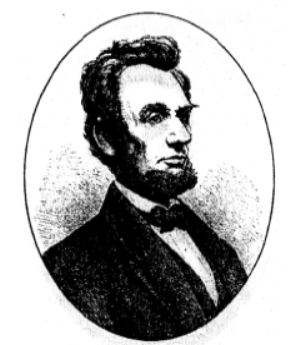
Question 1. Name the president.
Answer: The portrait depicts Abraham Lincoln, who served as the 16th President of the United States of America.
In simple words: The picture is of Abraham Lincoln, the 16th President of the United States.
Exam Tip: Identify him as Abraham Lincoln, who led the Union through the Civil War.
Question 2. Discuss his views on the institution of slavery.
Answer: President Lincoln held a strong moral opposition to slavery, describing it as an vicious and brutal system of human bondage. He remained firmly opposed to the practice throughout his political career.
In simple words: Lincoln strongly opposed slavery, viewing it as a cruel and unjust system of holding people in bondage.
Exam Tip: State his core belief: that slavery was a moral wrong and a direct violation of democratic values.
Question 3. How did he define democracy?
Answer: In his famous Gettysburg Address, Lincoln defined democracy as a "government of the people, by the people, for the people".
In simple words: Lincoln defined democracy as a government of the people, by the people, and for the people.
Exam Tip: Memorize his exact quote: 'government of the people, by the people, for the people' to answer this question.
Question 4. Why did he declare war on the southern states?
Answer: President Lincoln launched military actions against the Southern states because they had seceded from the United States. He maintained that the Union was permanent and indivisible, meaning no state had the legal right to break away.
In simple words: He declared war because the Southern states had seceded. He believed the Union was permanent and had to be preserved by defeating the Confederacy.
Exam Tip: Specify that Lincoln's primary motive was to preserve the Union and defend the Constitution against the act of secession.
Free study material for History Civics
Verified Textbook Solutions for Class 8 History Civics Chapter 03 The American Civil War
Detailed Textbook Solutions: Chapter 03 The American Civil War (Class 8 History Civics)
Review accurate ICSE solutions for Chapter 03 The American Civil War tailored for Class 8 History Civics students. Use these step-by-step notes to simplify difficult textbook exercises and improve exam readiness.
Detailed Problem Solving for ICSE Class 8 History Civics
Tackle complex theorems and numerical problems easily by cross-referencing your working steps with our structured solution guides.
Next Steps in Your Class 8 History Civics Preparation
Explore our broader library of study materials and chapter notes to support your continuous revision and secure higher marks.
FAQs
You can download the verified Goyal Brothers solutions for Chapter 03 The American Civil War on StudiesToday.com. Our teachers have prepared answers for Class 8 History Civics as per 2026-27 ICSE academic session.
Yes, our solutions for Chapter 03 The American Civil War are designed as per new 2026 ICSE standards. 40% competency-based questions required for Class 8, are included to help students understand application-based logic behind every History Civics answer.
Yes, every exercise in Chapter 03 The American Civil War from the Goyal Brothers textbook has been solved step-by-step. Class 8 students will learn History Civics conceots before their ICSE exams.
Yes, follow structured format of these Goyal Brothers solutions for Chapter 03 The American Civil War to get full 20% internal assessment marks and use Class 8 History Civics projects and viva preparation as per ICSE 2026 guidelines.